Why Climate Should Drive Your Packing List
Most packing mistakes don't come from choosing the wrong destination - they come from packing for a generic version of it. Tropical doesn't always mean hot and dry. Cold doesn't always mean snow. And "mild" can mean a dozen different things depending on altitude, coastal exposure, or time of year.
Climate affects every layer of what you carry: fabrics, footwear, outerwear, toiletries, and even how you organize your bag. The good news is that once you understand a few core climate variables, you can build a packing approach that actually works wherever you're going. See our climate-specific packing guide for destination-by-destination breakdowns.
| Key climate variables | Temperature, humidity, precipitation, altitude, and UV exposure |
| Most underestimated factor | Humidity - affects fabric performance and comfort more than temperature alone |
| Layering system components | Base layer, mid layer, outer shell |
| Best all-climate fabric | Merino wool - manages moisture, resists odor, performs in heat and cold |
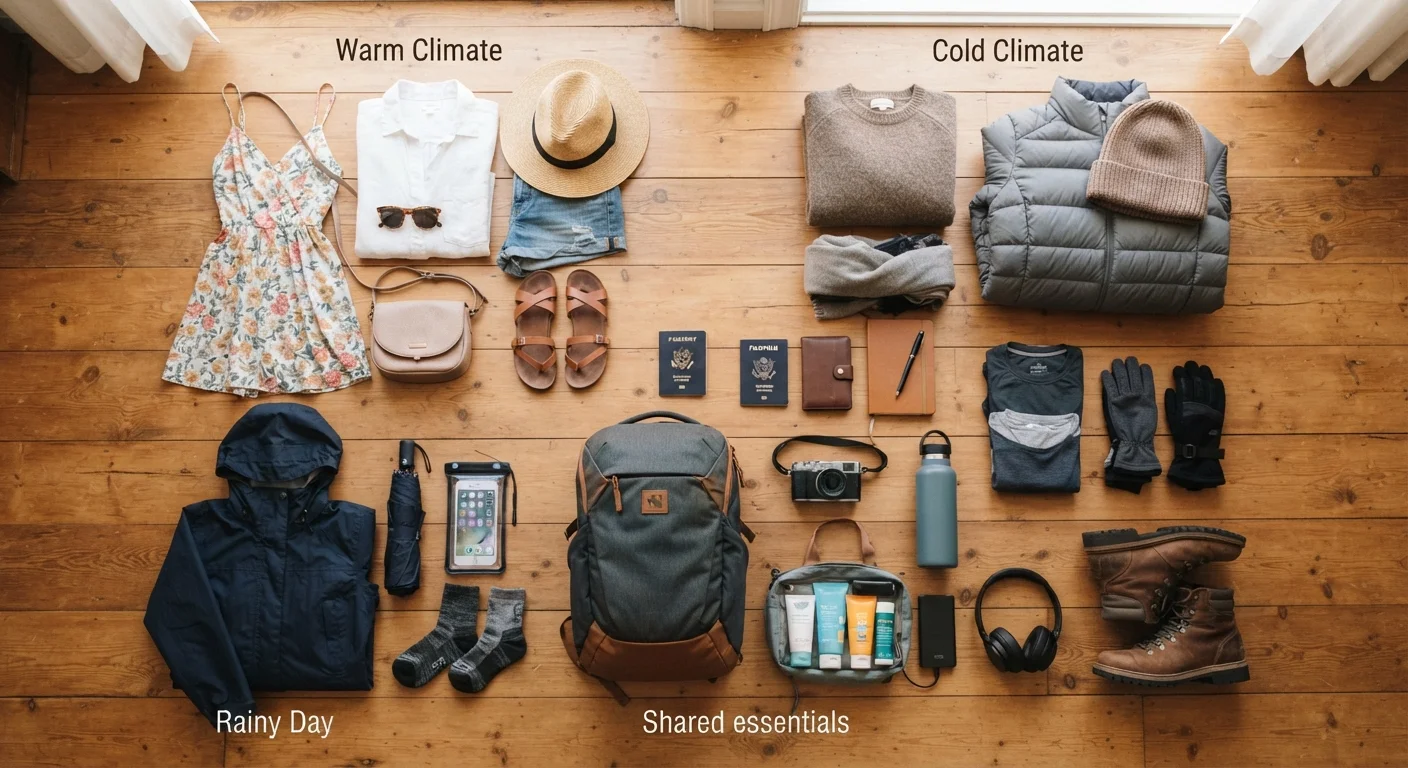
| Footwear rule of thumb | One pair of sandals + one closed-toe water-resistant shoe covers most scenarios |
| Rain gear priority | Packable waterproof jacket with hood over umbrella for travelers with luggage |
Hot and Humid Climates
High humidity is the variable most travelers underestimate. When moisture in the air is high, sweat doesn't evaporate efficiently - meaning cotton shirts that feel fine at home can feel suffocating in Southeast Asia or the Caribbean.
What to prioritize:
- Moisture-wicking synthetic fabrics or linen blends over cotton
- Loose, light-colored clothing that reflects heat and allows airflow
- A compact, fast-drying travel towel - hotel towels aren't always quick to dry either
- Sandals with good arch support for long walking days
- A small dry bag to protect electronics and documents from perspiration and rain
In humid destinations, you'll also want to think about chafe prevention and fungal skin issues - both are more common in wet heat. Merino wool, surprisingly, performs well even in humid conditions: it resists odor and manages moisture without the stiffness of synthetics. See fabric strategies for longer trips if you're trying to keep the bag light.
Moisture-wicking
A fabric property that pulls sweat away from the skin and toward the outer surface of the material, where it evaporates more quickly. Synthetic athletic fabrics and merino wool are common examples.
Base layer
The clothing worn closest to the skin in a layering system. Its job is to manage moisture and provide a thin layer of warmth without bulk.
Packable
Describes outerwear or gear designed to compress into a small pouch or stuff sack for easy storage. Packable jackets and rain gear are common travel choices because they take up minimal space.
UV exposure
The amount of ultraviolet radiation from the sun that reaches your skin. UV intensity increases at higher altitudes and in open, reflective environments like beaches or snow fields.
Cold and High-Altitude Environments
Cold climates require layering, and altitude adds an extra complication: temperatures can drop dramatically between midday and nightfall, even in locations that feel warm at sea level.
The layering logic:
- Base layer - moisture-wicking thermal fabric worn against the skin
- Mid layer - insulating piece like a fleece or down vest that traps warmth
- Outer layer - windproof and water-resistant shell to block the elements
Resist the urge to pack bulky items for every contingency. Three versatile layers that work together will outperform six individual items that don't. Extremities matter more than most travelers expect: quality gloves, warm socks (wool is reliable), and a hat account for a significant portion of how warm you feel overall.
At altitude specifically, UV exposure increases - pack SPF lip balm and sunscreen even if the temperature makes it feel unnecessary. And be aware that altitude sickness is a real health consideration; consult a healthcare professional before traveling to destinations significantly above sea level.
Wet and Rainy Seasons
Traveling during a rainy season doesn't have to mean misery - but packing incorrectly for it usually guarantees it. The key shift is thinking in terms of waterproof versus water-resistant: water-resistant gear handles a light drizzle; waterproof gear handles sustained downpours.
Essentials for wet climates:
- A packable rain jacket with a hood - not an umbrella, which is awkward with luggage
- Waterproof or quick-dry footwear; avoid canvas sneakers or suede entirely
- Dry bags or zip-lock bags inside your pack to protect electronics and documents
- Quick-dry clothing that doesn't stay wet and heavy for hours
- A small microfiber towel that dries in minutes
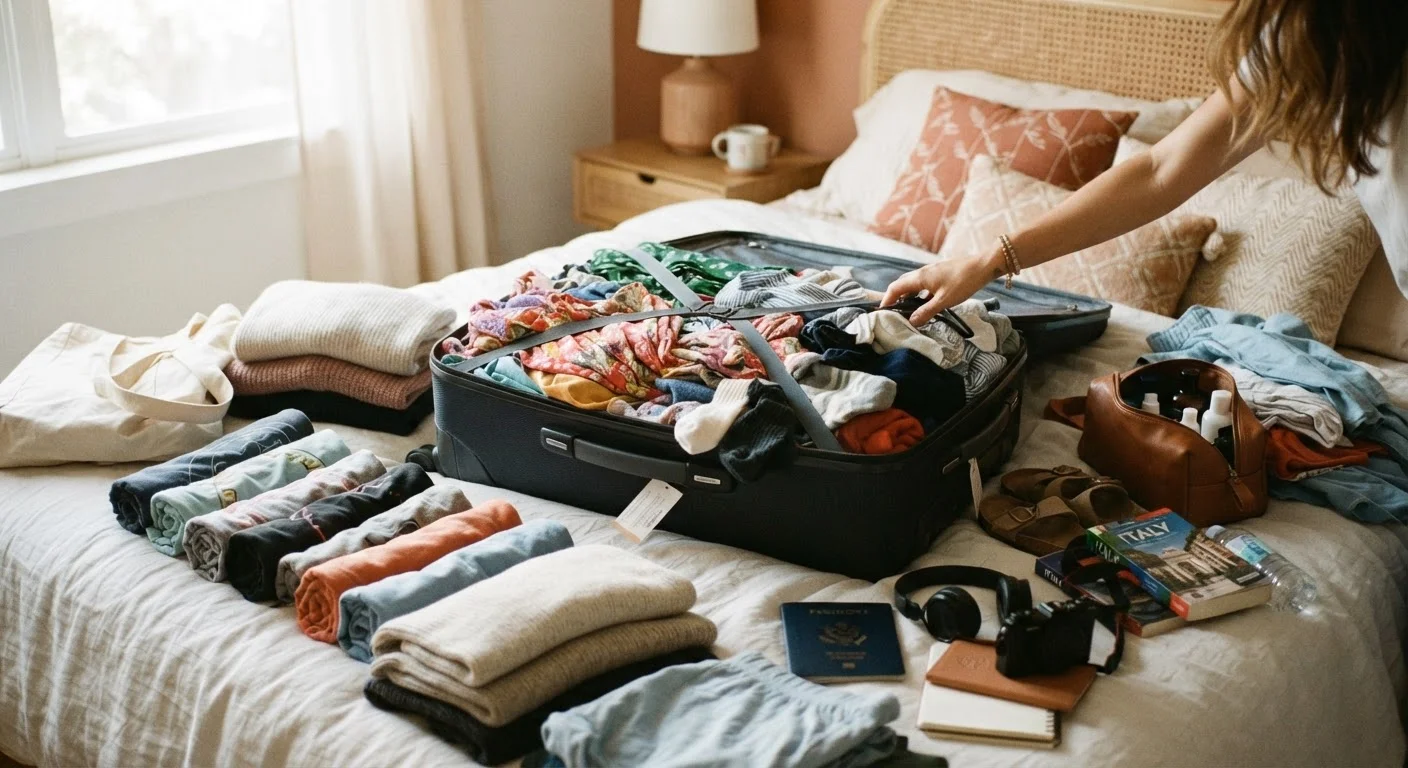
Overpacking "just in case" items is a common trap in rainy destinations - one good rain layer will cover most scenarios. The packing myths that lead to overpacking are especially common here, where travelers stuff bags with spare outfits for every possible soaking.
3-4°F
Temperature drop per 1,000 ft. gain in altitude
The standard environmental lapse rate means high-altitude destinations are meaningfully colder than valley temperatures suggest.
50%+
Relative humidity in tropical destinations
Many tropical and coastal regions regularly exceed 50-80% relative humidity, significantly affecting how clothing and sweat management perform.
Mixed and Transitional Climates
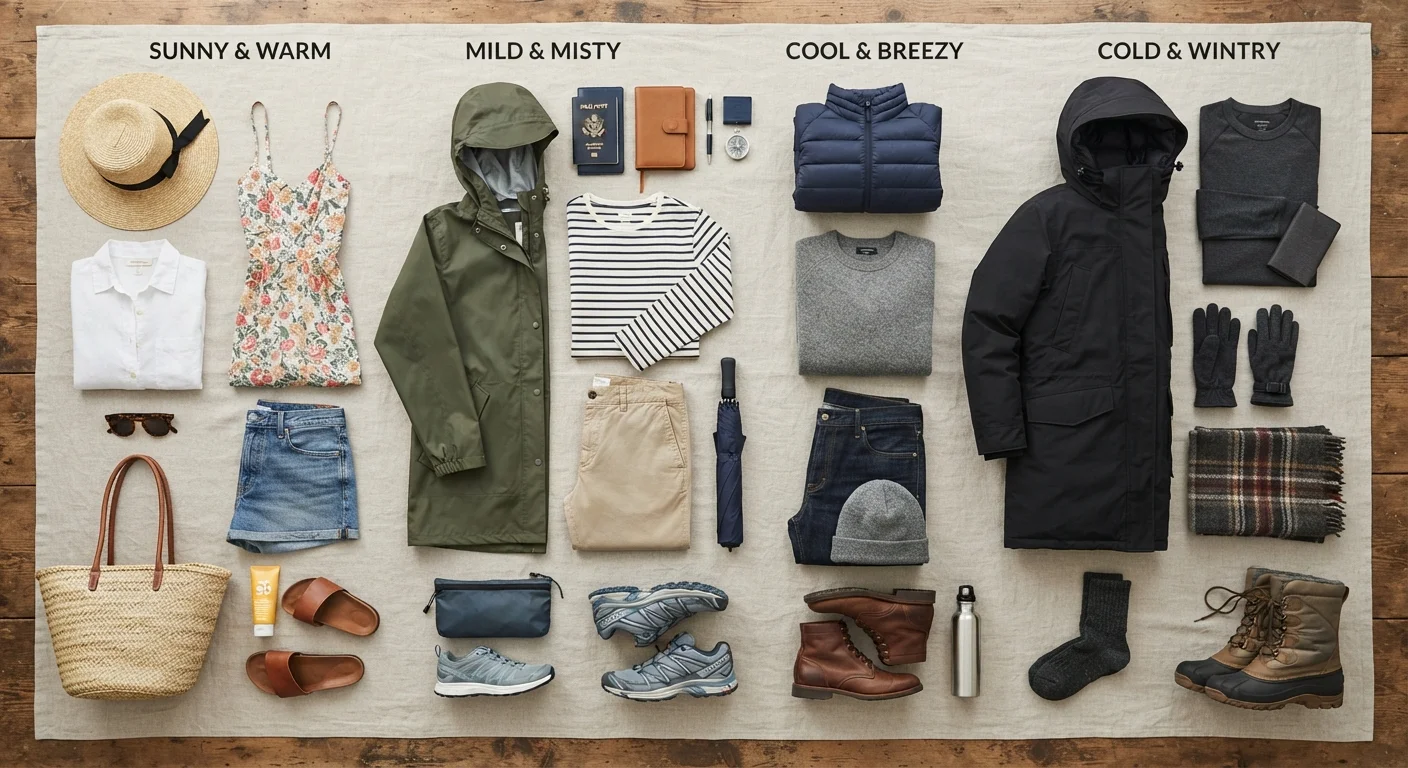
Many trips span more than one climate - a Mediterranean itinerary might involve warm coastal days and cooler inland evenings, while a Southeast Asian route could cross between dry and wet regions in the same week.
For mixed conditions, the organizing principle is versatility over volume. Each item you pack should work across at least two climate states. A lightweight merino long-sleeve, for example, serves as a base layer in the cold, a standalone shirt in cool weather, and a sun-protection layer in hot sun.
Think about footwear carefully: one pair of supportive sandals and one pair of closed-toe, water-resistant walking shoes can cover most mixed-climate scenarios without eating your entire luggage allowance.
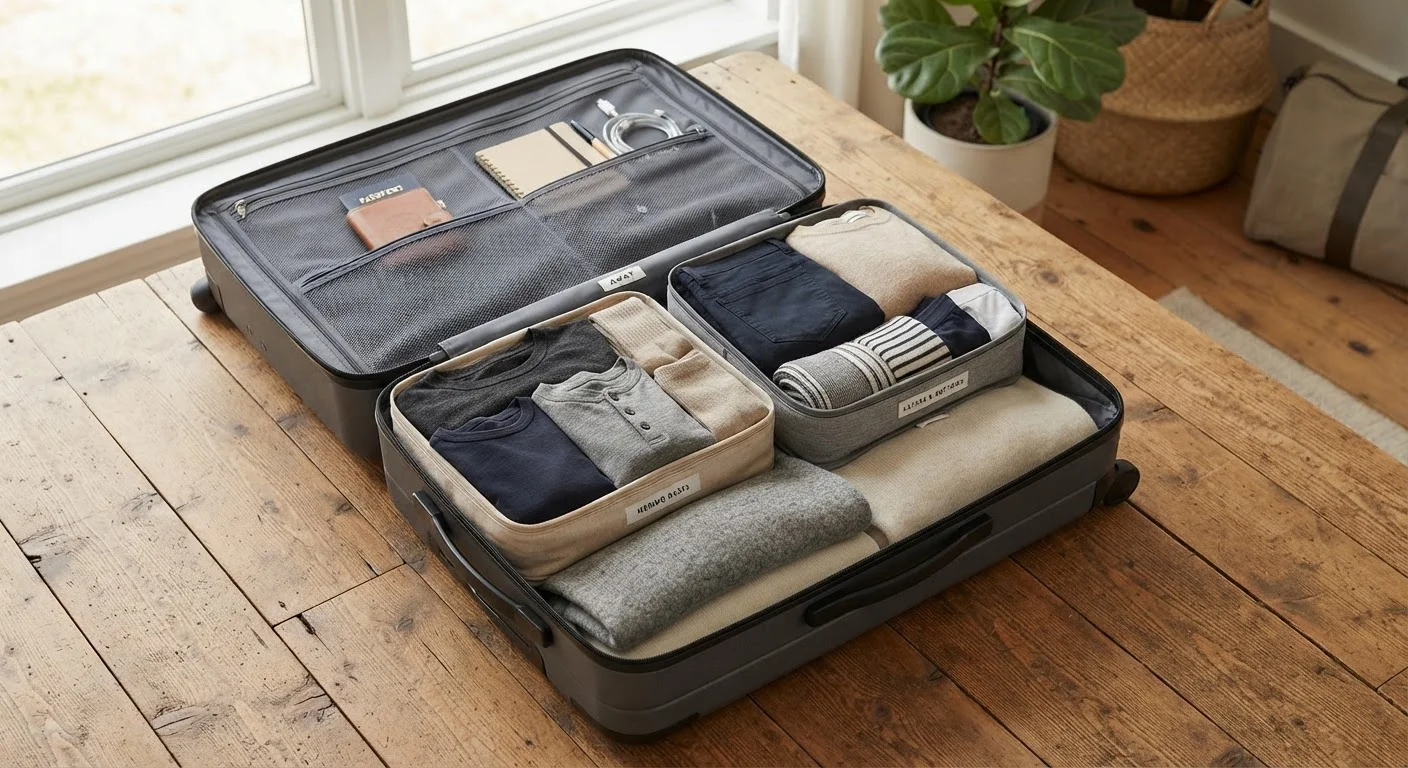
For organizing gear across these combinations, packing cubes and compression tools can help you segment climate-specific items so you're not unpacking everything at each stop. And if you want a broader strategy for keeping the bag manageable, packing light without sacrificing preparedness is a practical starting point.