Choosing the Right Bag
Before you fold a single shirt, settle on your bag - everything else flows from this choice. The two main options are a rolling suitcase and a travel backpack. Suitcases work well for trips with smooth airport floors and hotel stays; backpacks shine for multi-city trips where you're navigating cobblestones, stairs, and trains.
A general rule of thumb: a carry-on-sized bag (around 40-45 liters or within your airline's size limit) is enough for most trips up to two weeks if you pack efficiently. Checking a bag adds cost, wait time, and the risk of lost luggage - avoid it if you can.
Carry-on bag
A bag small enough to fit in an airplane's overhead bin or under the seat in front of you, avoiding checked luggage fees and wait times at baggage claim.
TSA liquids rule
A US Transportation Security Administration requirement that liquids in carry-on bags must be in containers of 3.4 oz (100ml) or less, all fitting in one quart-sized clear zip-top bag.
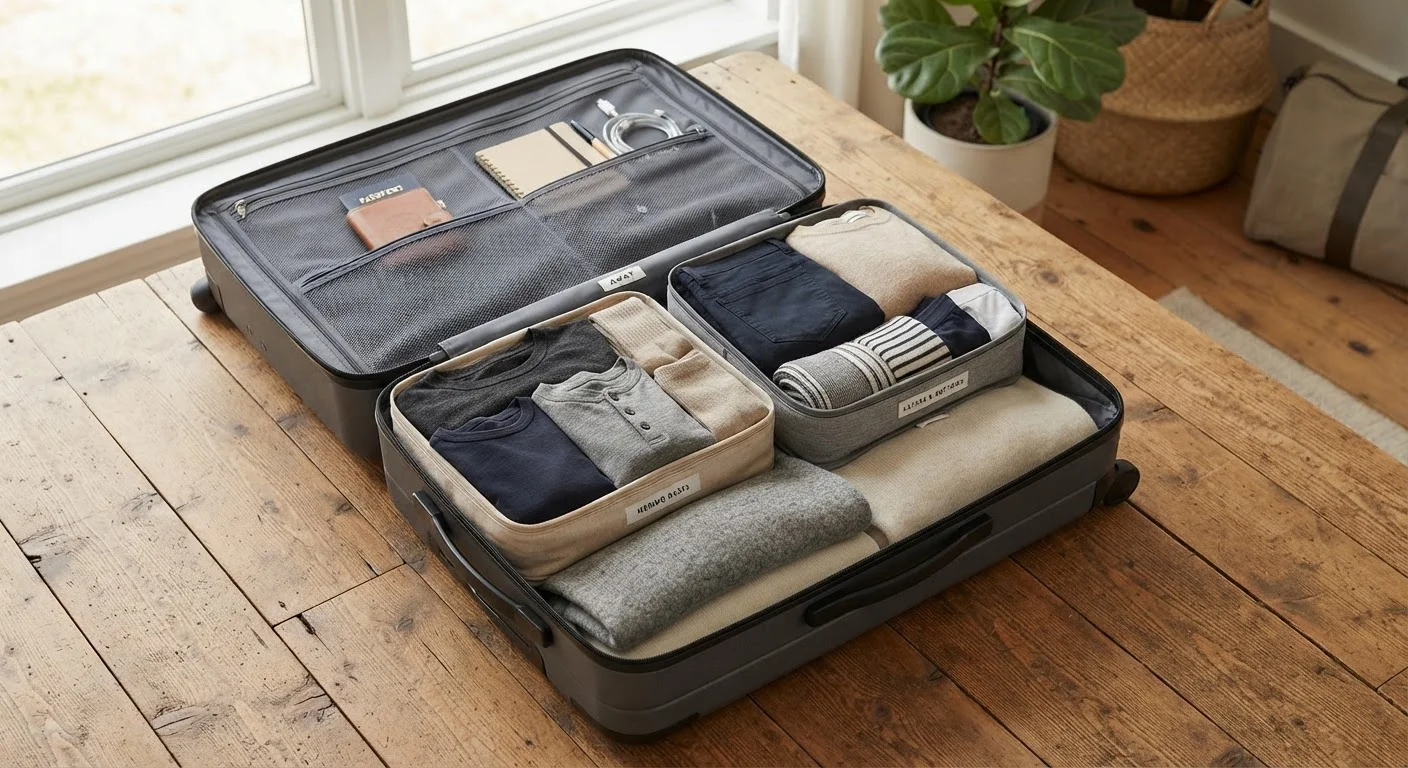
Packing cubes
Zippered fabric pouches used to separate and compress clothing categories inside a bag, making it easier to find items and keep your bag tidy.
Capsule wardrobe
A small collection of versatile, mix-and-match clothing items in compatible colours that can create many different outfits from fewer pieces.
Universal power adapter
A device that lets you plug your electronics into foreign power outlets, which often have different socket shapes and voltage than those at home.
If you're heading somewhere with dramatic weather changes, our climate-specific packing guide can help you decide how much space different destination types actually require.
Building Your Packing List
A written list is your most powerful packing tool. Without one, you'll either forget something critical or throw in extras you'll never use. Start with these core categories:
- Clothing - tops, bottoms, underwear, socks, shoes, one layer for cold
- Documents - passport, ID, boarding passes, hotel confirmations, insurance
- Tech - phone, charger, adapter, headphones, portable battery
- Toiletries - toothbrush, toothpaste, deodorant, skincare basics, any prescription medication
- Health & safety - basic first-aid items, any personal medications, hand sanitiser
Write the list first, then gather the items. Only pack what's on the list. This single habit eliminates most overpacking. For a shorter getaway, our weekend trip packing checklist gives you a ready-to-use version.
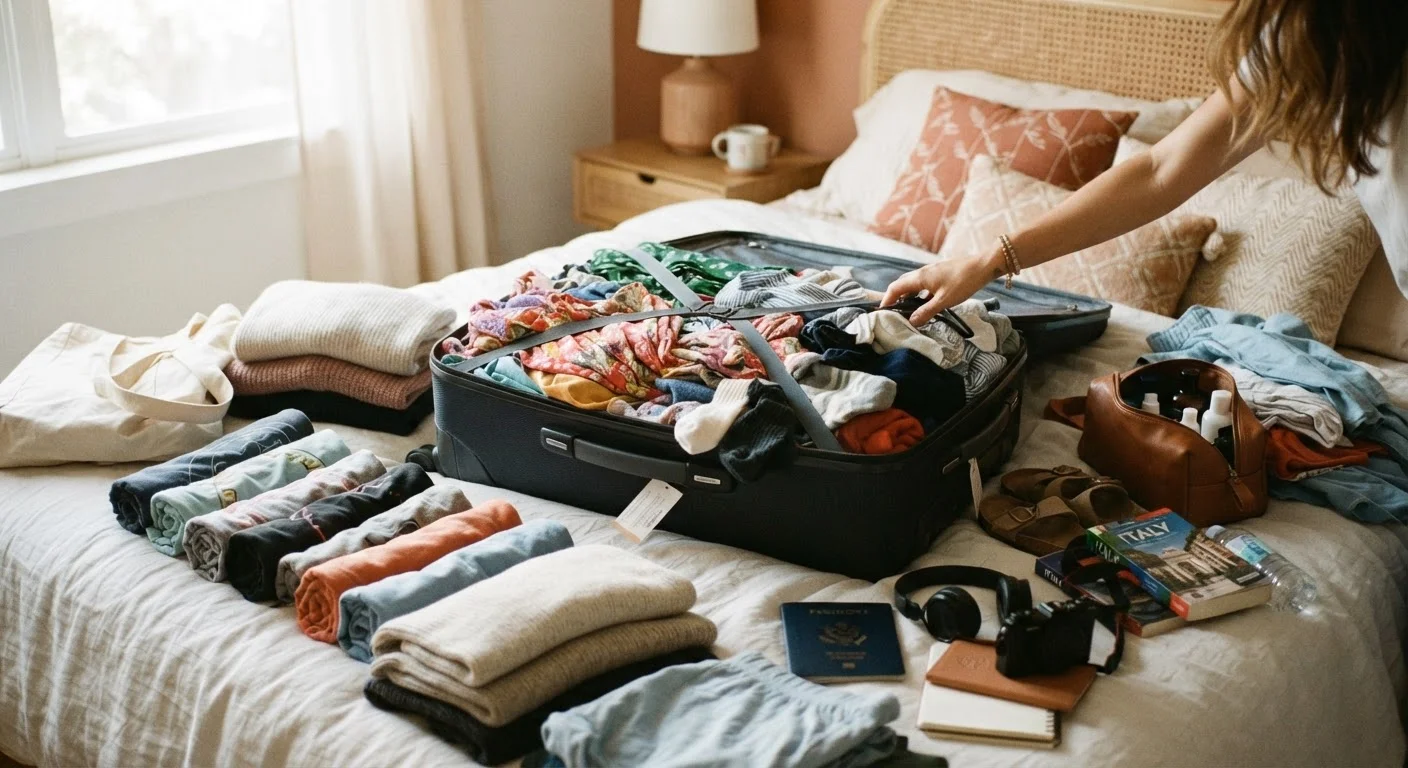
Do a Dry Run the Night Before
Lay every item on your bed before it goes in the bag. This visual check almost always surfaces duplicates, forgotten essentials, and things you genuinely don't need. It takes ten minutes and consistently produces a lighter, better-organised bag.
Clothing: Pack Smart, Not More
Clothing is where most first-time packers go wrong. The fix is a mix-and-match capsule: choose a neutral colour palette (navy, grey, white, black) so every top pairs with every bottom. A practical formula for a one-week trip looks like this:
- 3-4 tops
- 2 bottoms (one casual, one smart-casual)
- 1 lightweight layer or jacket
- 5-7 pairs of underwear and socks
- 2 pairs of shoes maximum (wear the bulkier pair on travel days)
Quick-dry and wrinkle-resistant fabrics are worth seeking out - they handle a hotel-sink wash and dry overnight. If you're going for two weeks or more, planning one laundry stop is more practical than doubling your clothing. Our two-week packing strategies guide walks through fabric choices and capsule wardrobes in depth.
Worried you'll want more outfit options? Read our piece on packing myths that fuel overpacking - it'll reframe the 'just in case' instinct entirely.
Documents, Tech, and Toiletries
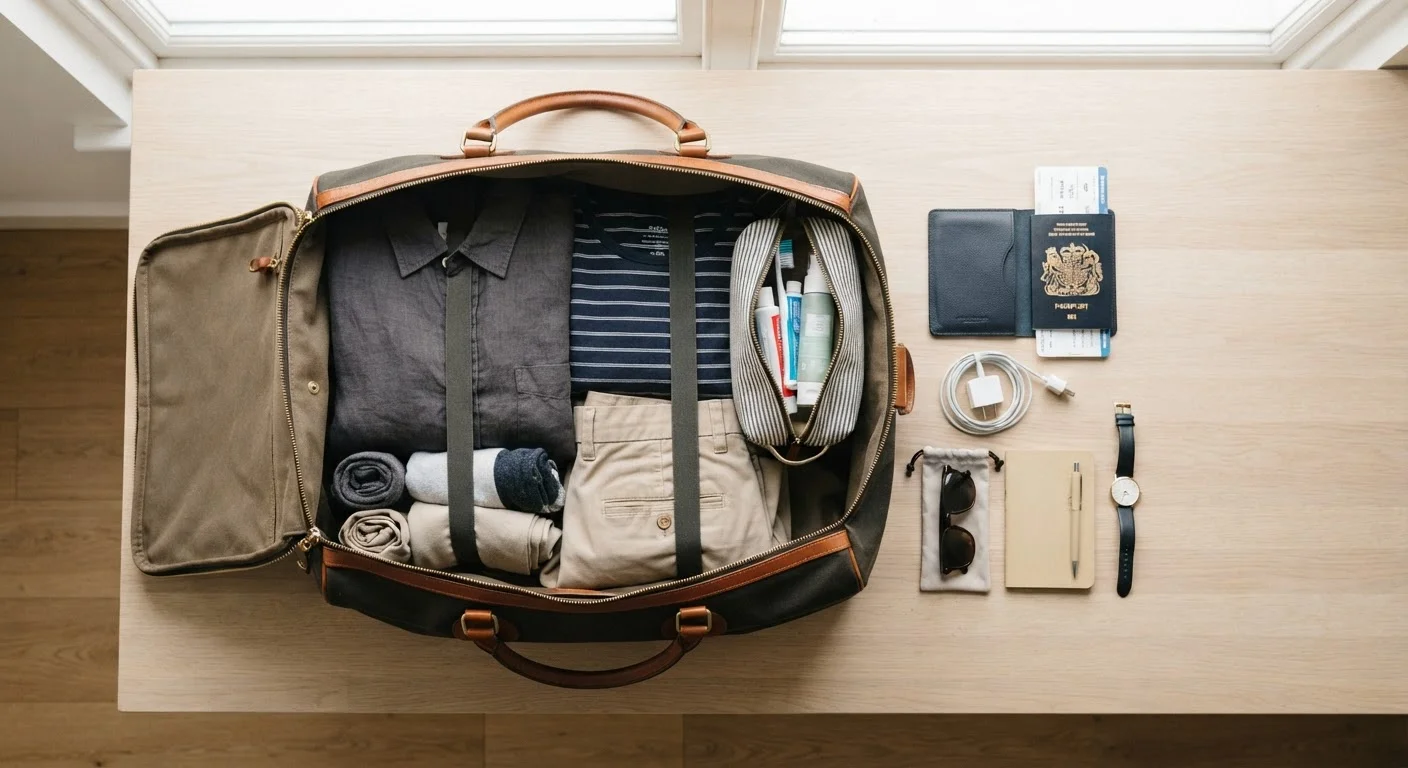
Documents always go in your carry-on - never checked luggage. Make both physical and digital copies of your passport, visa (if applicable), travel insurance policy, and accommodation confirmations. Email copies to yourself as a backup.
For tech, the essentials are a phone charger, a universal power adapter if travelling internationally, and a portable battery pack for long travel days. Check what plug types your destination uses before you leave - adapters are easy to forget.
For toiletries, TSA rules require liquids in carry-on bags to be in containers of 3.4 oz (100ml) or less, stored in a single quart-sized clear bag. Many toiletries - shampoo, conditioner, sunscreen - can be bought at your destination, which frees up significant space and weight.
Never Check Your Essential Documents
Checked bags can be delayed, misrouted, or temporarily lost. Keeping your passport, medication, travel insurance details, and any required health documents in your carry-on ensures you're never stranded without them. If your airline requires you to gate-check your carry-on, move these items to your personal item first.
If you're packing for an international trip, our international travel packing checklist covers entry requirements, health items, and destination-specific extras in more detail. Always verify entry requirements and health documentation with official government sources before departure, as these can change.
Organising and Closing Your Bag
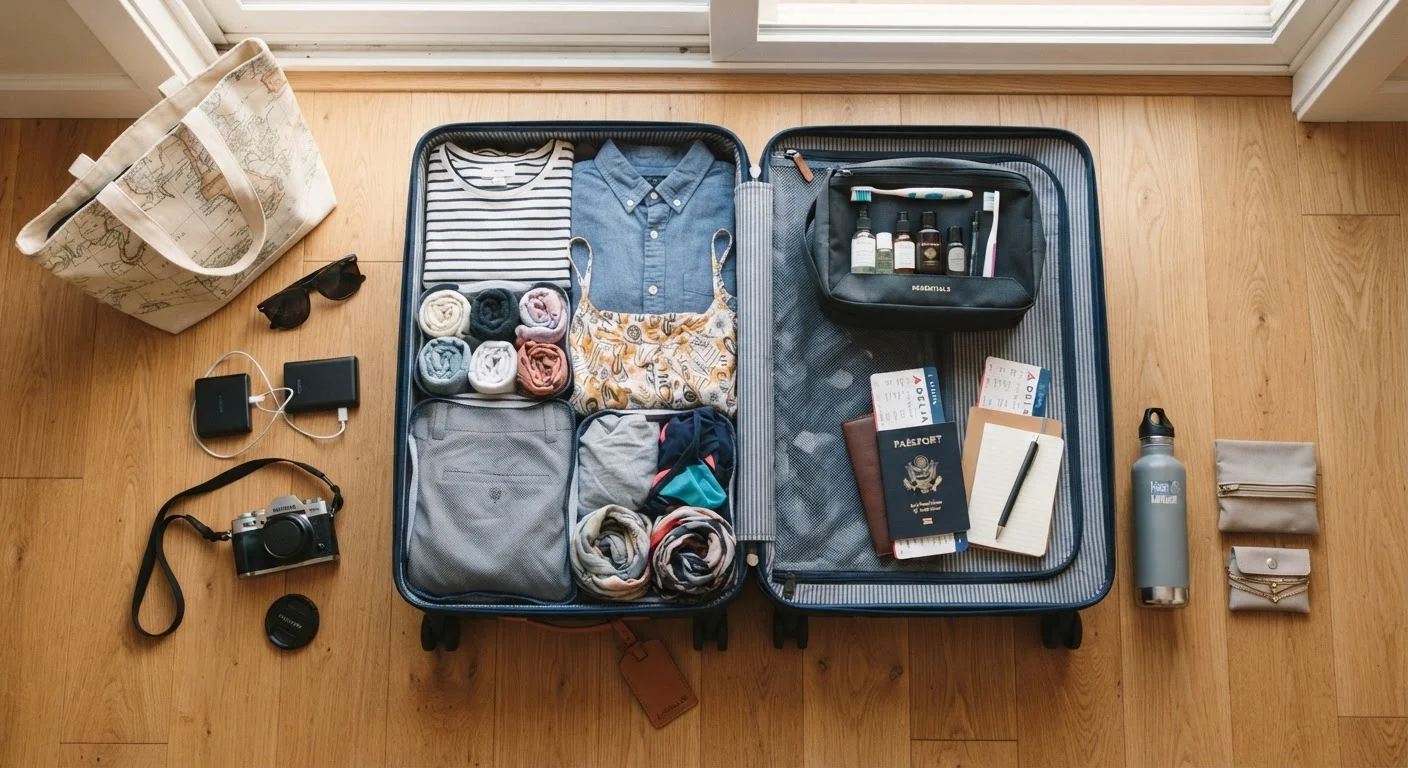
How you load your bag affects both how easy it is to live out of and how quickly you clear security. A simple system:
- Place shoes and heavy items (toiletry bag, tech pouch) at the bottom near the wheels or back panel.
- Roll or fold clothing into the main compartment - rolling is generally better for softer items and reduces creases.
- Keep your documents, valuables, and anything you'll need during the flight in the top or exterior pocket.
Do a final weigh-check before you head out. Most airlines set carry-on weight limits between 15-22 lbs (7-10 kg), though this varies. If your bag is too heavy, remove items rather than redistribute them to a checked bag - the goal is travelling lighter overall.
Once you've nailed the basics, the next step is building a travel kit you can reuse trip after trip. Our guide on building a reusable travel kit shows you how to keep your core essentials ready so future packing takes minutes, not hours. And if this is part of your broader trip prep, trip planning from scratch covers every stage from destination choice to departure day.