Why Most Travelers Pack Too Much
The average traveler packs for a version of their trip that never quite happens - the formal dinner that doesn't materialize, the cold snap that stays mild, the workout sessions that get replaced by long meals and late nights. This gap between imagined need and real use is the root cause of overstuffed bags and aching shoulders.
The good news: packing light isn't about deprivation. It's about packing smarter - choosing items that earn their weight by serving multiple purposes. The carry-on only mindset is really a thinking shift more than a packing technique, and once it clicks, you'll wonder why you ever lugged a checked bag.
Before diving into the steps below, gather your tools and confirm what you're working with.
Carry-on bag (max ~22" x 14" x 9")
Your main luggage container - check your airline's specific size limits before packing.
Personal item (tote or backpack)
Holds items you'll want during the flight: snacks, chargers, reading material.
Packing cubes or compression organizers
Keep clothing categories separated and compress soft items to reclaim space.
Travel-size reusable toiletry bottles
Transfer your preferred products into TSA-compliant containers (3.4 oz / 100 ml or less).
Neutral-toned, wrinkle-resistant clothing
Mix-and-match pieces that layer easily and look appropriate across multiple settings.
What you will need
Step-by-Step: How to Pack a Carry-On That Actually Works
Follow these five steps in order - the sequence matters. Skipping ahead to the physical packing before you've audited what you're bringing is what leads to the classic overpacking spiral.
Write your packing list before you open your bag
Resist the urge to start pulling things off shelves. Instead, open a notes app or grab a piece of paper and map out your actual itinerary: how many days, what activities, what the weather will be. Only then write down what you think you need - category by category (clothing, toiletries, electronics, documents).
This step alone prevents the biggest overpacking trap: grabbing things on impulse rather than on purpose.
Audit your clothing with a mix-and-match rule
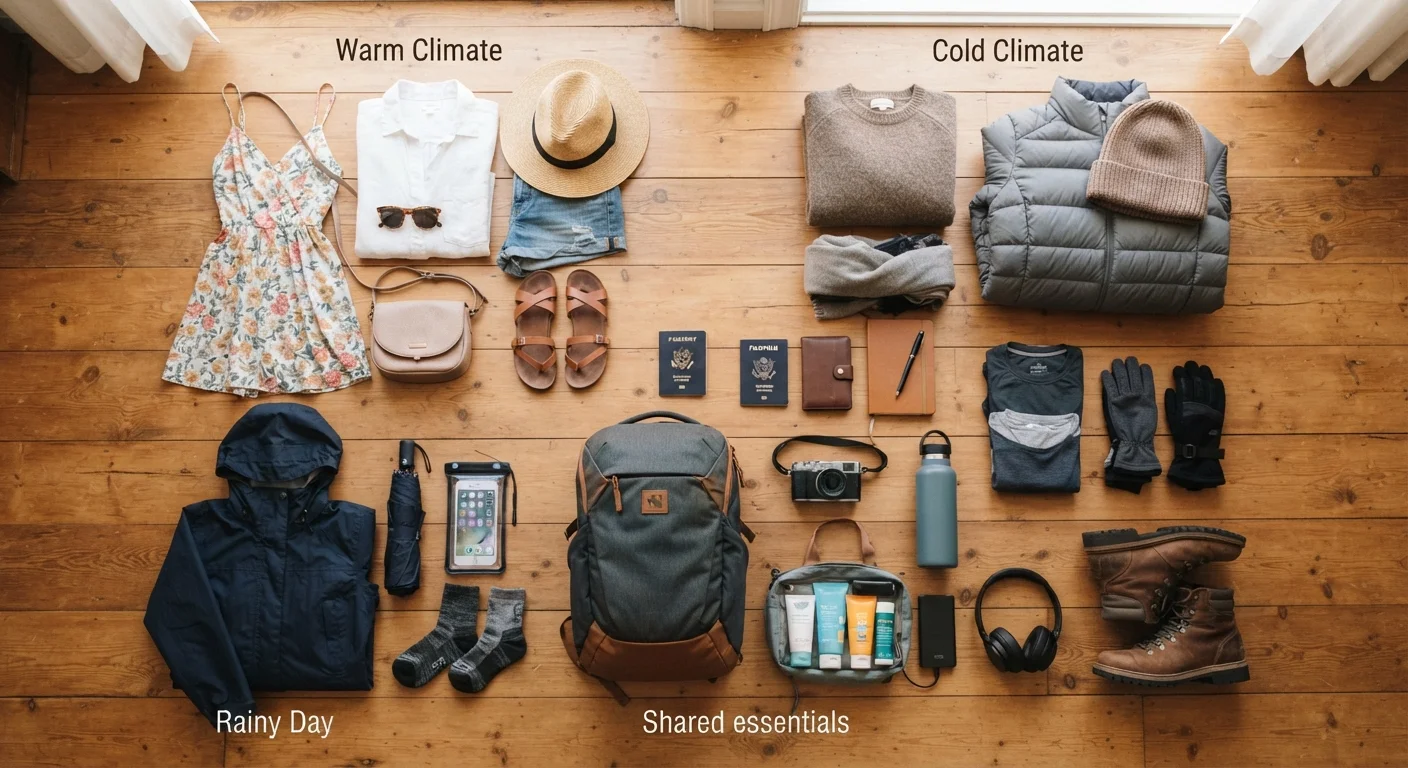
Lay every piece of clothing you've listed on your bed. Now apply a simple test: does this item work with at least two other pieces already in the pile? If it only pairs with one outfit, it's probably not earning its place.
Stick to a neutral base palette (navy, grey, black, white, olive) and build around 1-2 accent pieces. Aim for roughly 1-2 bottoms per 3-4 days of travel rather than one outfit per day. For longer trips, strategic clothing choices can get you through two weeks without daily laundry.
Cut your toiletries ruthlessly
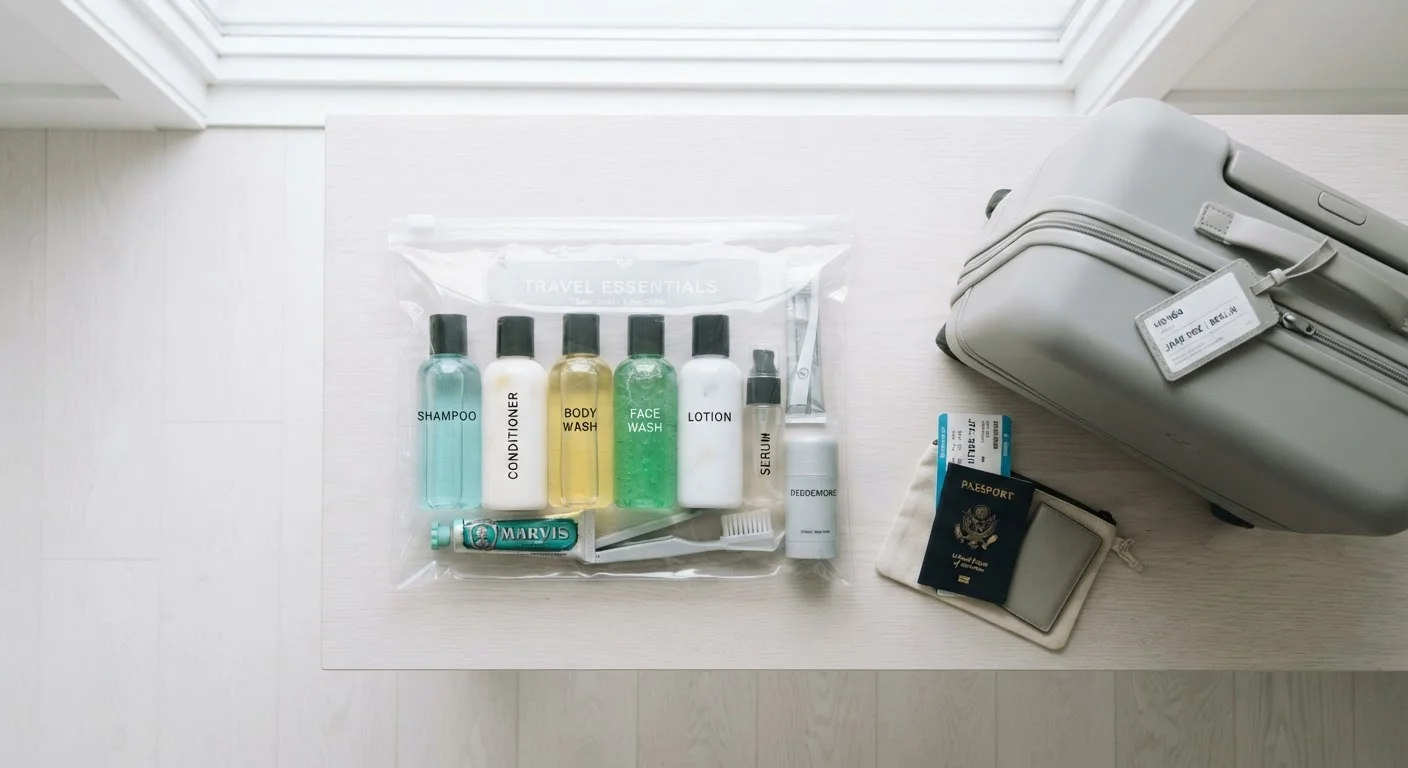
Toiletries are the most consistent space-waster in a carry-on. Decant only the amount you'll realistically use into reusable travel bottles - not full-trip amounts, just enough plus a small buffer. Many hotels and accommodations provide shampoo and body wash; verify before packing yours.
All liquids, gels, and aerosols in a carry-on must fit in a single quart-sized, resealable bag and be 3.4 oz (100 ml) or less per container. For a full breakdown, see our guide to navigating airport security rules for liquids.
Pack using the rolling and layering method
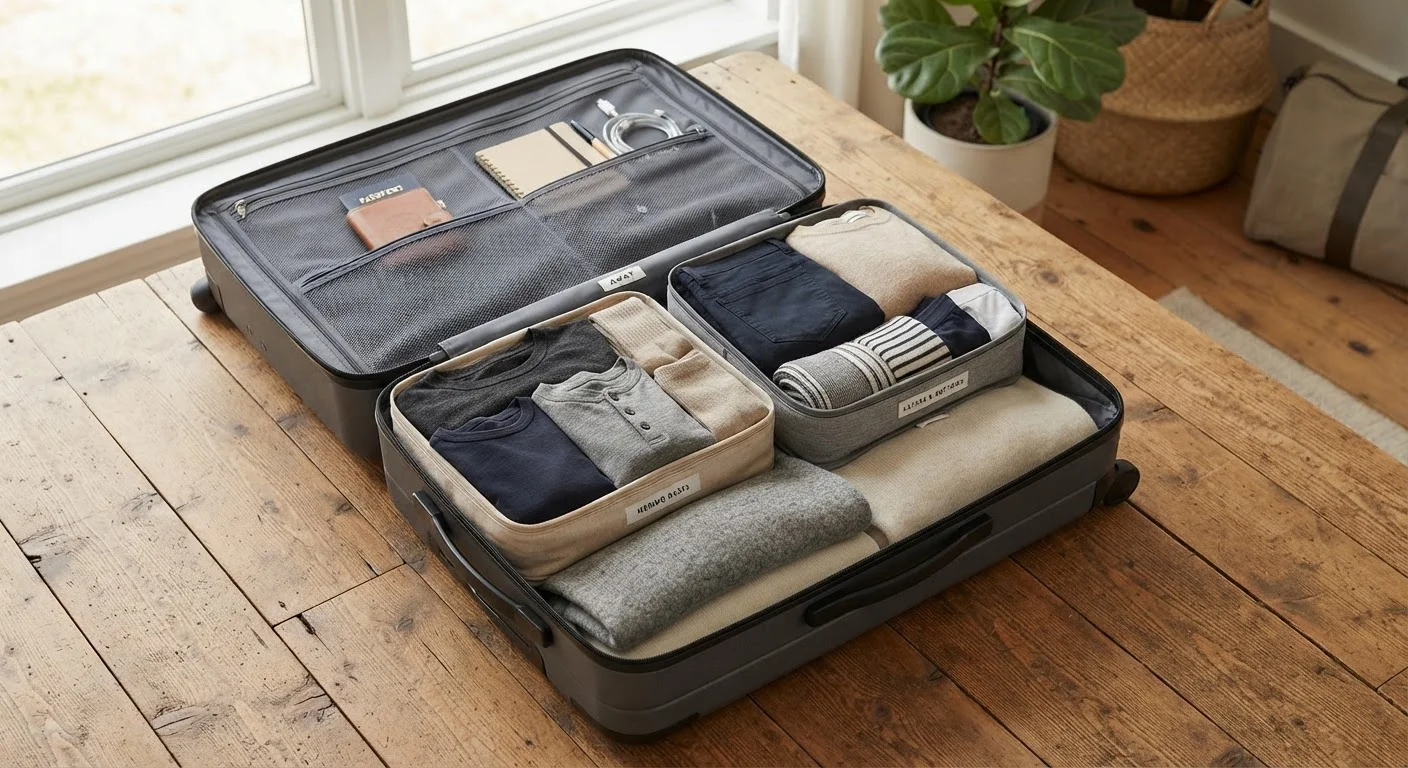
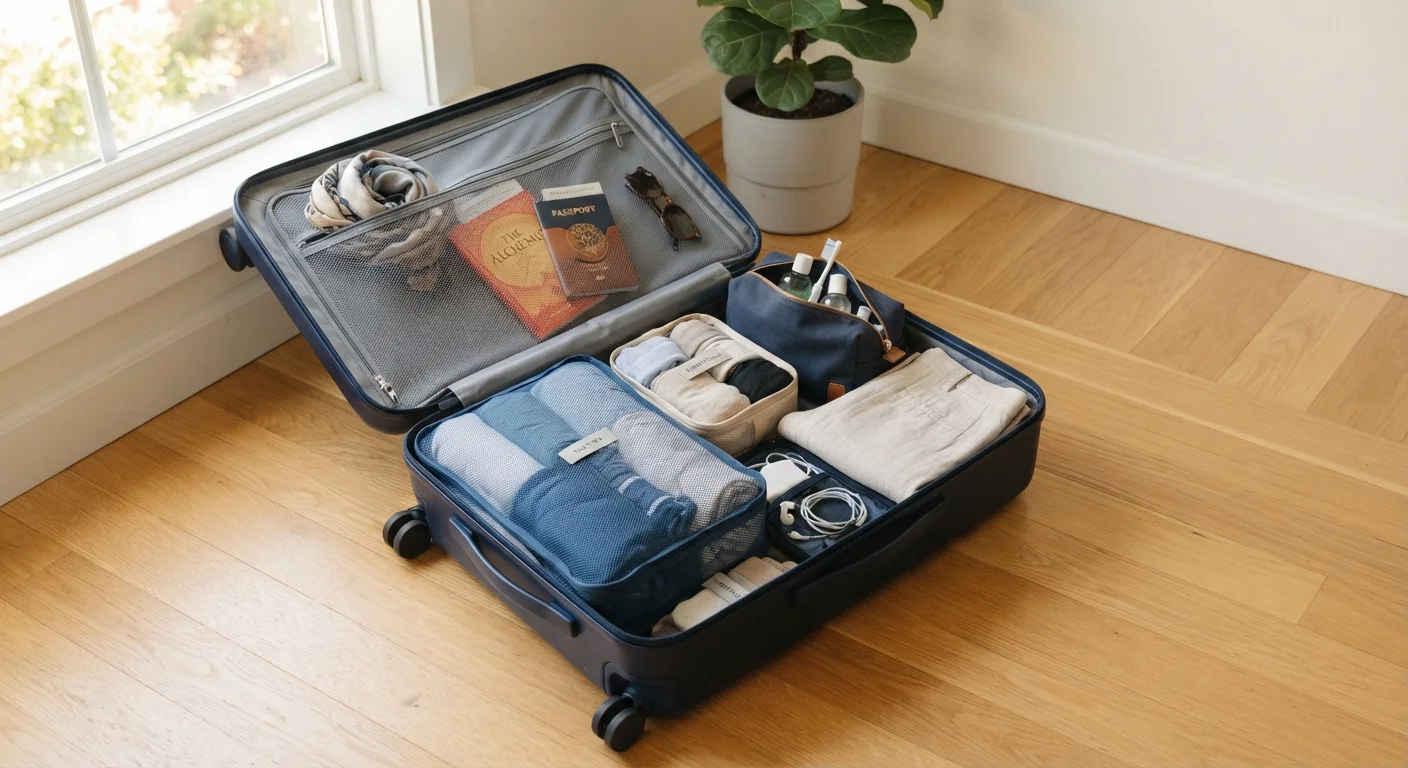
Roll soft items like t-shirts, underwear, and lightweight pants tightly - this reduces wrinkles and compresses volume better than flat folding for casual clothes. Place heavier items (shoes, toiletry bag) along the wheeled base of your suitcase or at the back of a backpack, closest to your body.
If you're using packing cubes, assign one cube per category (tops, bottoms, underwear/socks). Compression cubes can squeeze down a category that won't otherwise fit. Learn more about what packing cubes and compression bags actually do before investing in them.
Do a final weight and reality check
Once packed, lift your bag and hold it for 30 seconds. If that feels uncomfortable, something needs to come out - you'll carry this through airports, up stairs, and onto overhead bins. If your airline enforces a weight limit for carry-ons (common on budget and international carriers), use a luggage scale before you leave home.
Then do one final pass: look at your itinerary day by day. Is there anything in your bag you genuinely won't use on a specific day? That's your cut list. If you're still on the fence about checking a bag, weighing the real trade-offs between carry-on and checked luggage can help you decide.
The 'Wear It, Don't Pack It' Trick
On travel days, wear your bulkiest items - your heaviest shoes, your thickest jacket, your chunkiest sweater. These items take up the most bag space and add the most weight. Wearing them costs nothing and instantly frees room in your carry-on for everything else.
Common packing myths can also undermine good intentions. If you find yourself rationalizing items with 'just in case' thinking, our piece on packing myths that keep travelers overpacking is worth a read before you zip up.
Troubleshooting: When It Still Doesn't Fit
If you've followed every step and your bag still won't close comfortably, don't force it. Start by removing entire categories rather than trimming individual items - take out the 'just in case' shoes, the backup outfit, or the full-size book.
Don't Rely on Buying Things There
It's tempting to tell yourself you'll just pick up forgotten items at your destination. While this works for some basics, it can cost significantly more abroad or in tourist areas, and some specific items (medications, specialized gear, familiar brands) may be hard to find. Pack what you genuinely need; just pack less of everything else.
If you're consistently struggling to fit everything in, there are two honest solutions: pack less, or acknowledge that for this specific trip - the ski holiday, the two-week international adventure, the formal wedding weekend - a checked bag may genuinely be the right call. See our breakdown of why bags feel too heavy for a detailed look at the items travelers most often regret bringing.
Check Airline Rules Before Every Trip
Carry-on size and weight allowances vary significantly between airlines, routes, and even ticket types on the same airline. A bag accepted on one flight may be gate-checked or charged a fee on another. Always look up the current policy for every carrier on your itinerary - don't assume last trip's rules still apply.