
Why Packing Myths Are So Hard to Shake
Overpacking almost never happens because a traveller is careless. It happens because of deeply held beliefs about what travel requires - beliefs that feel logical right up until you're hauling a 50-pound bag up a cobblestone street at midnight.
The good news: most of these beliefs don't hold up once you look at them honestly. This article walks through the most common packing myths, pairs each one with the actual facts, and helps you build a lighter, smarter bag. If you're heading out for the first time, our complete starter guide for first-time packers covers everything from bag selection to document organisation.
Myth
I need to pack for every possible scenario - you never know what might come up.
Fact
Most 'just in case' scenarios never materialise, and almost anything you genuinely need can be bought or borrowed at your destination.
The 'just in case' mindset is the single biggest driver of an overweight bag. It feels responsible, but it treats every unlikely scenario as equally probable. A spare outfit for a formal event, a second pair of hiking boots, a full first-aid kit for a city trip - these feel sensible at home and become dead weight by day two. Build your packing list around what your itinerary actually requires, not a mental catalogue of worst cases. For a structured way to think this through, this guide on what to cut is a practical starting point.
Myth
More outfits mean more flexibility and less stress about what to wear.
Fact
Versatile pieces that mix and match provide far more flexibility than a large wardrobe of single-use outfits.
Packing seven outfits for seven days sounds efficient, but it almost always means seven items that each only work once. Four or five pieces chosen specifically because they layer, mix, and transition between casual and smart give you more real-world options - not fewer. Neutral colours help enormously. This approach also means a carry-on can genuinely handle a two-week trip; our article on packing light for a two-week trip goes deeper on fabric choices and clothing math.
Myth
Checking a bag is always worth it - you won't feel the cost that much.
Fact
Checked bag fees add up quickly, and a heavy bag creates ongoing physical and logistical costs throughout your trip.
The fee itself is one part of the picture. The bigger costs are time (waiting at baggage claim), risk (lost or delayed luggage), and the physical reality of moving a heavy bag through airports, transit systems, and accommodation. Many travellers also report that a checked bag gives them psychological permission to overpack further. Avoiding checked bags isn't about being extreme - it's about keeping your trip light in every sense. Packing light without leaving behind what you need shows how to get there without sacrificing comfort.
Myth
You can't do laundry easily while travelling, so you need enough clothes to last the whole trip.
Fact
Laundry options - laundromats, hotel services, hand-washing - are widely available in most destinations worldwide.
The assumption that laundry is difficult or unavailable while travelling is outdated for most destinations. Laundromats are common in cities across Europe, Asia, and the Americas. Many hotels and hostels offer laundry services or facilities. Even basic hand-washing in a sink with a travel detergent sachet handles light items overnight. Planning one laundry stop per week means you need far fewer clothes than you think. If you're unsure how different environments affect your clothing needs, our guide on climate and packing walks through the variables clearly.
Myth
Travel gear and gadgets make your trip smoother, so more is better.
Fact
Most travel accessories solve problems you won't actually encounter - and collectively they add significant weight.
The travel accessories market is very good at creating solutions to problems most travellers don't have. Neck pillows, portable fans, packing scales, redundant adapters, and rarely-used organisers all seem useful in isolation. Together, they can account for several pounds of bag weight. Our honest breakdown of travel gear worth bringing versus stuff that takes up space helps you separate the genuinely useful from the appealing-but-unnecessary.
What Smart Packing Actually Looks Like
Once the myths are out of the way, packing becomes a much calmer process. The key shift is moving from what might I need? to what will I actually use? That single question eliminates most of the weight.
~50%
Items packed but never used
Travel surveys consistently find that roughly half of packed items go unused on a typical trip, according to multiple luggage and travel behaviour studies.
23 kg
Typical checked bag weight limit
Most major airlines set a 23 kg (50 lb) checked bag allowance - a limit many overpacking travellers routinely reach before even adding toiletries.
1 bag
What experienced travellers typically use
Frequent travellers and long-term backpackers consistently report that a single carry-on is sufficient for trips of a week or more when clothing is chosen strategically.
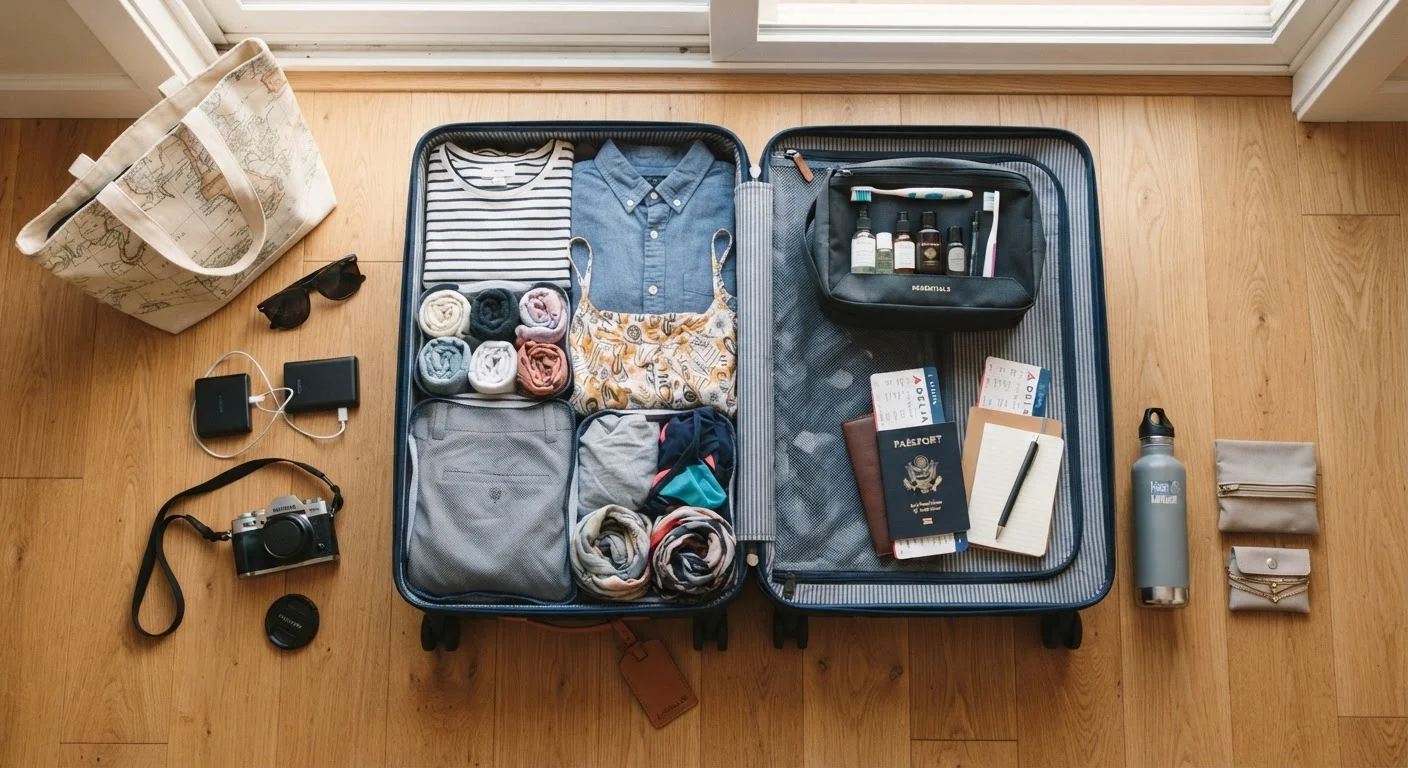
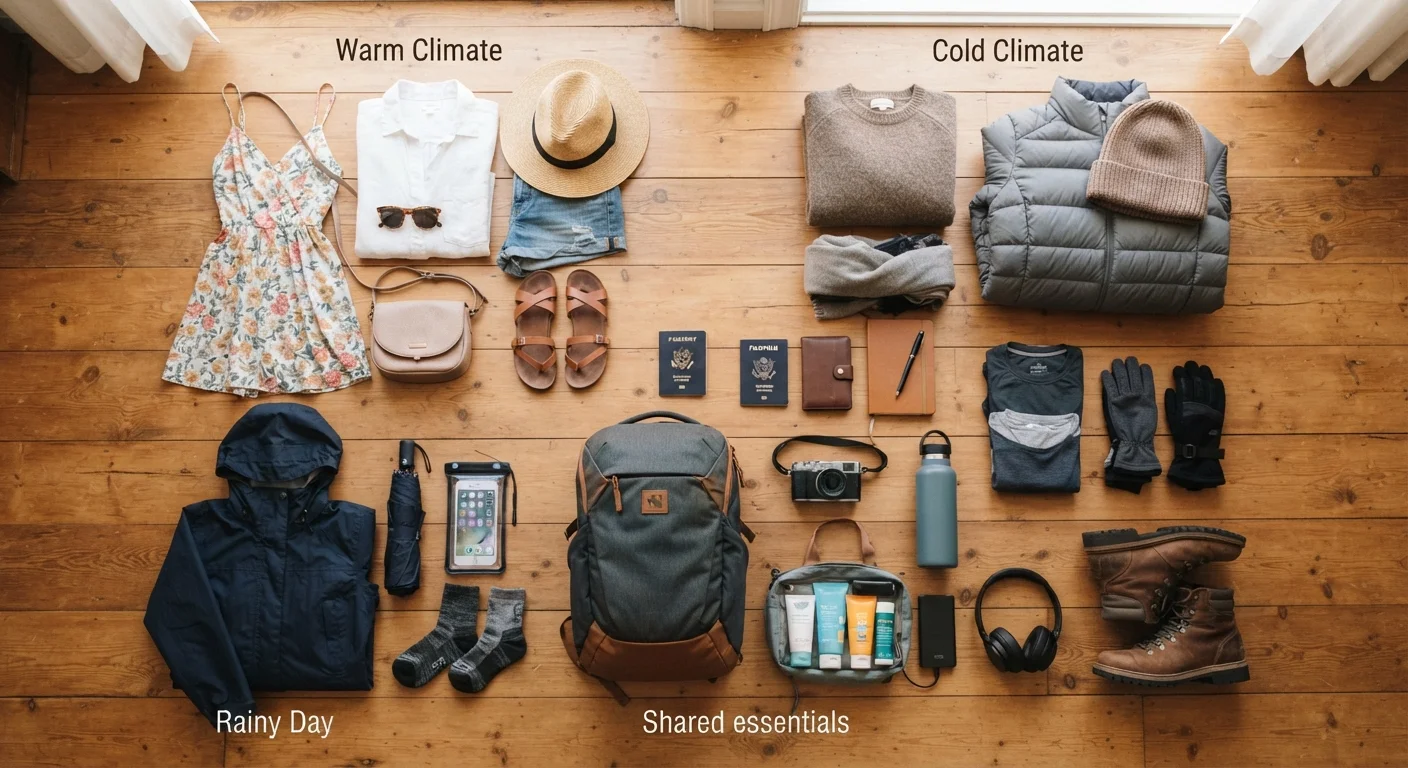
Start with a firm list and a firm bag - if it doesn't fit, something comes out rather than a bigger bag going in. Versatile, neutral-toned clothing that layers and mixes easily handles most situations without needing a dedicated outfit for every occasion. For warm, cold, wet, and mixed climates, our climate-specific packing guide shows exactly how to adapt your list without inflating it.
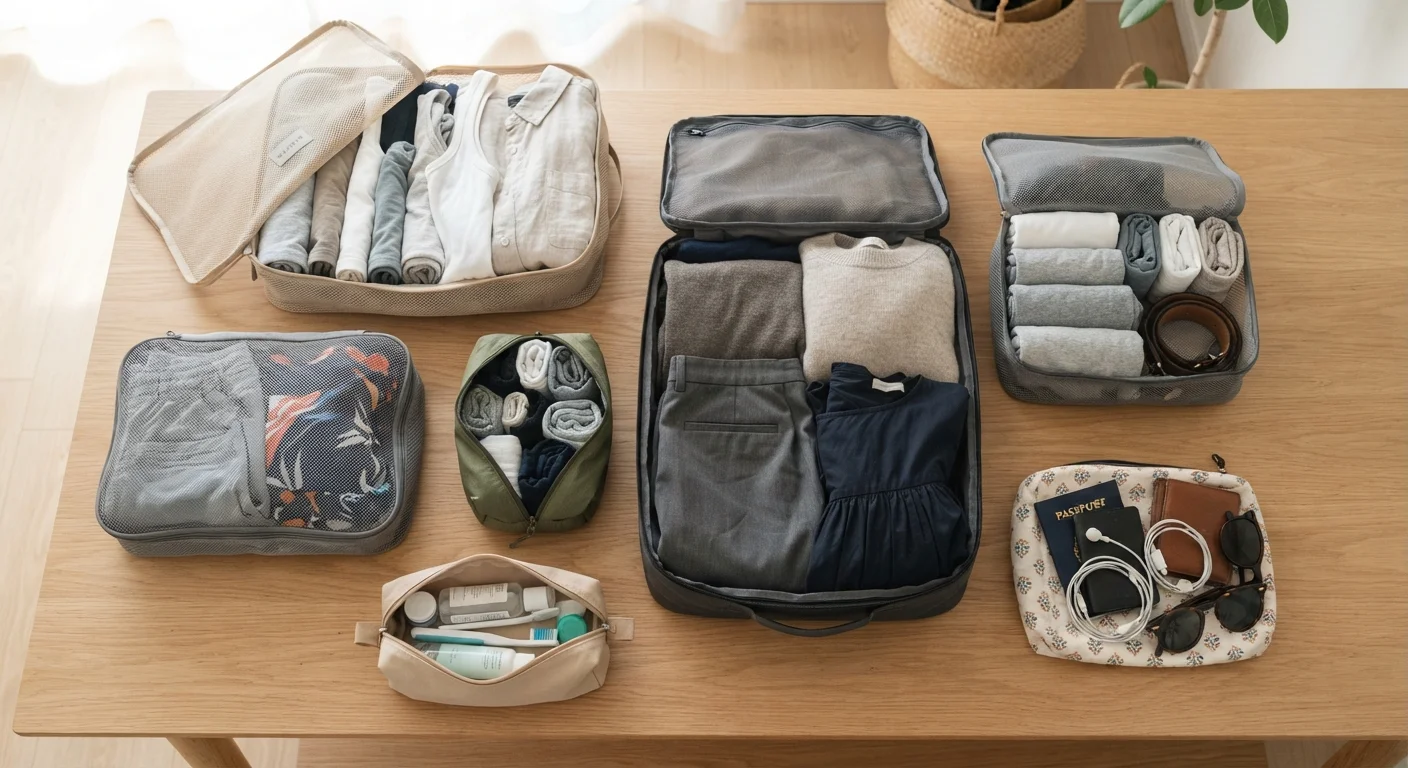
Packing organisers can help, but only if the items inside them are already edited. Our breakdown of packing cubes, compression bags, and organisers explains what each one genuinely does - and which ones are mostly just satisfying to buy. And if the carry-on-only life appeals to you, rethinking what you actually need is a great next read.
Don't Let Overpacking Inflate Your Budget
Checked bag fees, overweight luggage surcharges, and the cost of taxis needed because your bag is too heavy for public transit all add up. These are avoidable costs that have nothing to do with experiencing your destination. For broader strategies on keeping travel costs realistic, the myths around cheap travel article is worth a read before you book.