The Core Difference: Mobility vs. Capacity
Choosing between a rolling suitcase and a travel backpack isn't really about which bag is better - it's about which bag is better for how you actually travel. These two options serve genuinely different travel styles, and understanding that distinction saves a lot of frustration at baggage claim.
A rolling suitcase prioritizes organized capacity. You get compartments, a wide clamshell opening, and the ability to wheel your belongings rather than carry them. That's a serious advantage in airports, hotel corridors, and city sidewalks with smooth pavement. The moment you hit cobblestones, a steep staircase, or a gravel trail though, those wheels become a liability.
A travel backpack flips the equation. It moves wherever you move - up stairs, into overhead bins, across uneven ground. The trade-off is that everything has to be carried on your body, so weight discipline matters enormously. If you're the type who tends to overpack, a backpack will make you feel every extra pound. See our guide on cutting bag weight for practical help trimming down before you zip up.
| Criterion | Rolling Suitcase | Travel Backpack |
|---|---|---|
| Terrain versatility | Smooth surfaces only | Works anywhere |
| Carry-on friendly | Cabin-size models only | Most 40-46L packs qualify |
| Packing capacity | Higher - especially checked sizes | Moderate - packing discipline needed |
| Organization | Structured, compartmentalized | Varies; packing cubes help |
| Physical strain | Minimal - wheels carry the load | Moderate - weight on your body |
| Mobility in transit | Cumbersome on stairs/cobblestones | Hands-free, highly maneuverable |
| Best trip type | Single-destination, hotel stays | Multi-city, mixed accommodation |
When a Rolling Suitcase Makes More Sense
A rolling suitcase earns its place on trips where you're staying put. Think: one destination, hotel accommodation, and a relatively predictable itinerary. Business travel, beach vacations, and cruises are natural fits. You can pack more freely - shoes, toiletries in full-size bottles, a couple of outfit options you may or may not wear - without feeling the weight penalty physically.
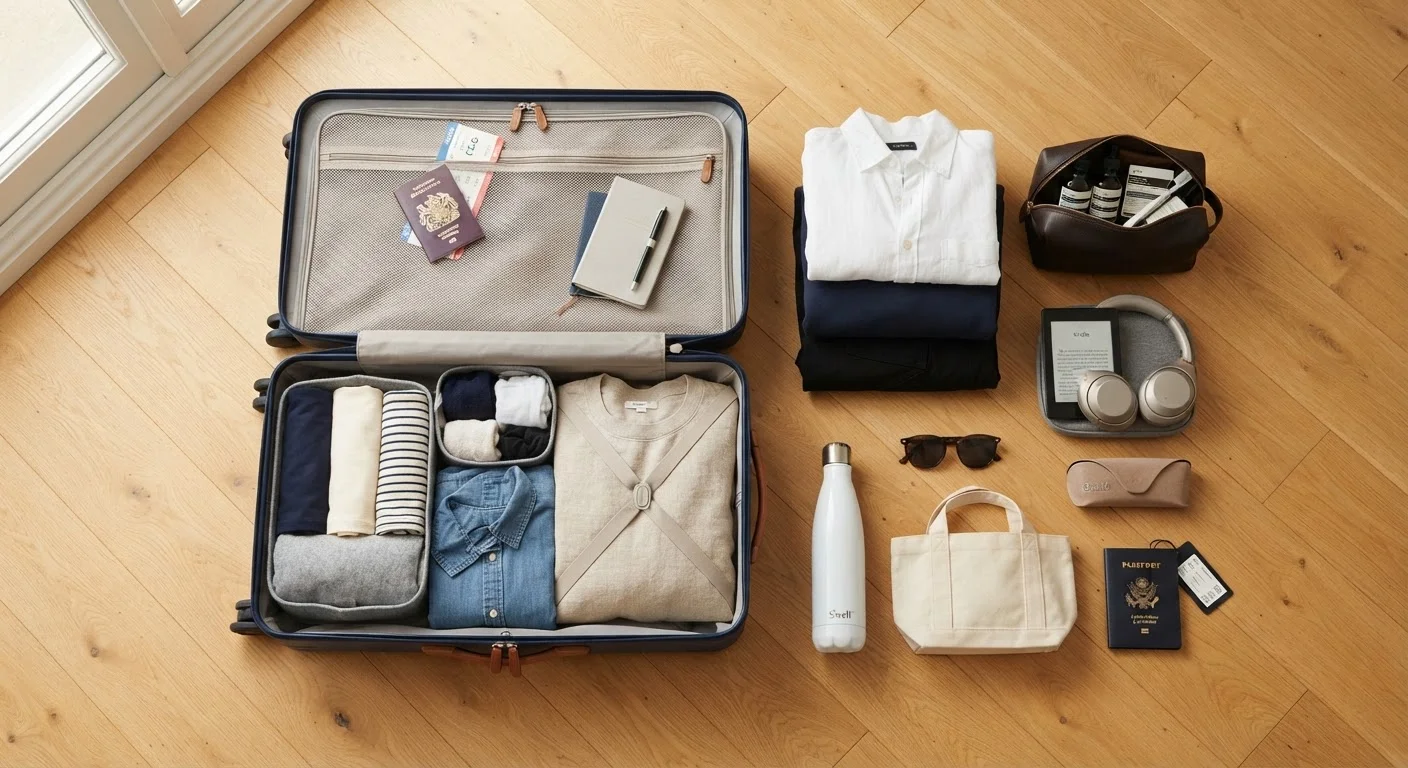
Organization is another genuine perk. Most suitcases offer a structured layout with dividers, compression straps, and dedicated pockets. If you like to know exactly where everything is without digging, a suitcase rewards that habit. For a deeper look at how luggage sizing affects what you can bring, check out our luggage sizes breakdown.
One underrated consideration: if you have any back, shoulder, or neck sensitivities, not having to carry your bag at all is a meaningful quality-of-life upgrade over a long travel day.
~40%
US travelers who check bags on domestic flights
Industry research consistently shows a large share of travelers still opt to check bags, though carry-on rates have risen alongside fee increases.
46L
Common maximum carry-on volume for travel backpacks
Many travel-specific backpacks are designed around this capacity to fit major airline carry-on size limits, though policies vary by carrier.
When a Travel Backpack Wins
Travel backpacks come into their own the moment your itinerary gets complicated. Multi-city trips, budget airline travel, hostel-hopping across Europe, or any destination with less-than-smooth infrastructure - these are backpack territory. Being able to sling your bag on your back, jump on a bus, and navigate a crowded market without bumping into everyone around you is genuinely freeing.
The financial upside is also real. Many travel backpacks in the 40-46L range are sized to pass as carry-on luggage on most major airlines, which means no checked baggage fees and no waiting at the carousel. That convenience adds up fast on a multi-leg trip. The carry-on only mindset guide walks through exactly how to make that approach work without feeling deprived.
Backpacks also handle terrain that would leave a suitcase stranded - cobblestones, dirt roads, boat gangways, and hostel bunk beds where stowing a large rolling bag simply isn't practical.
Airline Carry-On Rules Vary
Not all airlines define carry-on the same way. Budget carriers in particular may have stricter size and weight limits than major US airlines. Before assuming your backpack qualifies as a carry-on, verify the specific dimensions and weight allowances on your airline's website. Policies can differ even between fare classes on the same carrier.
What to Think About Before You Decide
A few honest questions can cut through the noise quickly:
- Where are you going? Smooth city infrastructure favors suitcases; rugged or varied terrain favors backpacks.
- How many places are you staying? One or two stops lean suitcase; three or more lean backpack.
- Are you checking bags or going carry-on only? Carry-on only nearly always means backpack - and it comes with real advantages. See carry-on vs. checked luggage trade-offs for a full comparison.
- Do you have physical considerations? Back or shoulder issues may make a rolling suitcase the smarter long-term choice regardless of trip style.
If you're curious about the suitcase side of the equation, hard-shell vs. soft-shell luggage is worth reading next. And for guidance on what actually belongs in whichever bag you choose, travel gear worth bringing vs. stuff that just takes up space offers an honest, no-hype breakdown.