The Real Cost Breakdown: Fees, Time, and Stress
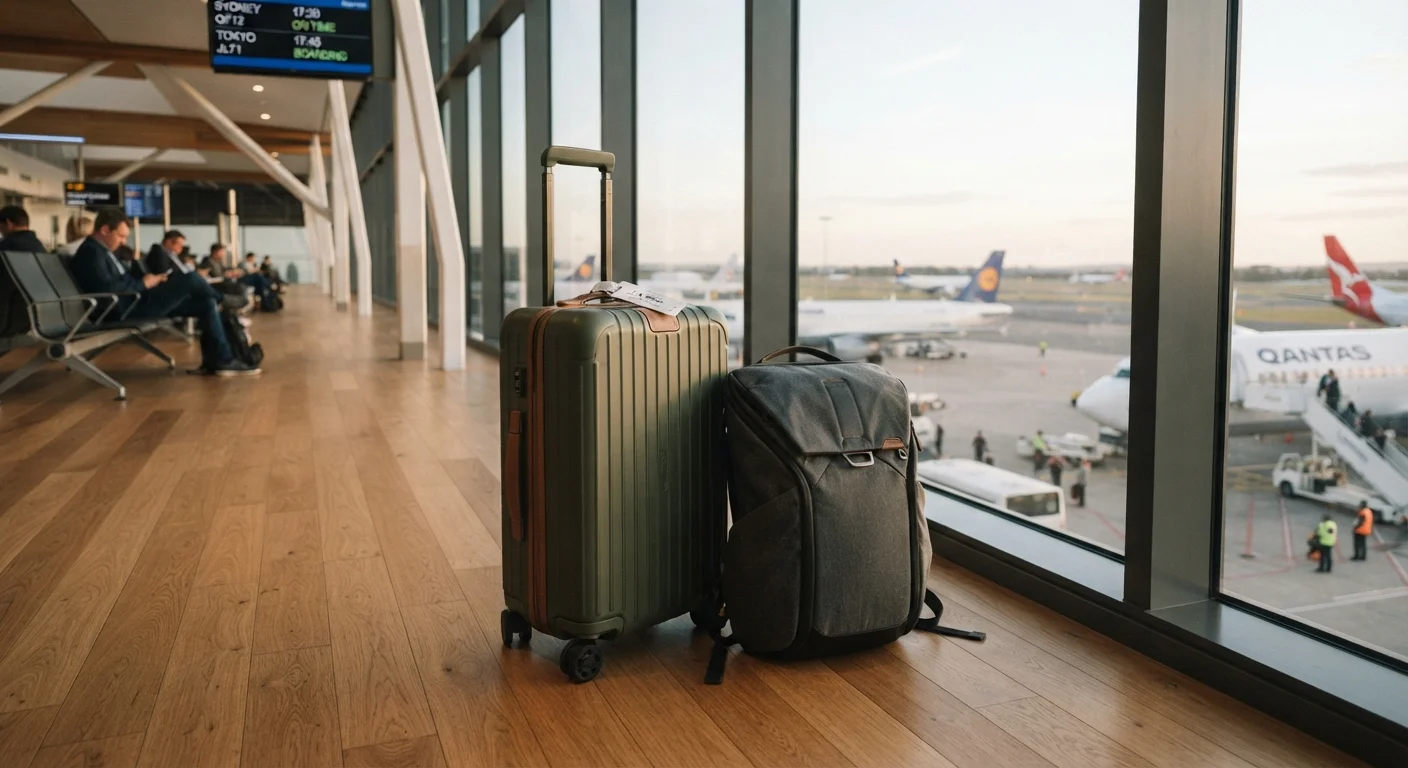
The most obvious difference between carry-on and checked luggage is money - but the full picture is more nuanced than bag fees alone. Most U.S. carriers charge between $30 and $40 for a first checked bag each way, which adds up quickly on a round trip. Budget airlines often charge for carry-ons too, so always read the fine print before assuming you're saving anything.
Time is the other currency at play. Travelers with carry-on bags typically save 20-45 minutes per trip by bypassing check-in counters and baggage claim. On a short trip, that's meaningful. On a long-haul journey where you're already committing hours, the time gap narrows.
Stress is harder to quantify but very real. Checked bags get delayed, lost, or damaged - rarely, but it happens. Carry-on bags stay with you, but overhead bin space isn't guaranteed, and a gate-checked bag at the last minute defeats much of the convenience.
~2M
Bags mishandled by U.S. airlines annually
According to the U.S. Department of Transportation's Air Travel Consumer Reports, U.S. carriers collectively mishandle roughly 2 million bags per year - a small fraction of total bags checked, but a real consideration.
$35
Average U.S. domestic checked bag fee (one way)
Most major U.S. carriers charge between $30 and $40 for a first checked bag one way; round-trip costs typically range from $60 to $80 per bag.
45 min
Estimated time saved per trip with carry-on only
Travelers who skip checked bags avoid both check-in queues and baggage claim waits, which commonly add 20-45 minutes to the airport experience depending on the airport and airline.
Packing Restrictions: What Each Approach Actually Allows
TSA security rules are the biggest functional constraint on carry-on travel. Liquids must be 3.4 oz (100 ml) or smaller and fit in a single quart-sized bag. That eliminates full-size sunscreen, shampoo, contact solution, and anything you'd buy at a duty-free shop. For a beach week or a camping trip, those restrictions become a genuine problem.
Sharp objects, certain tools, and sports equipment are off-limits in the cabin entirely. If your trip involves hiking poles, golf clubs, or a chef's knife set, checked luggage isn't a preference - it's a requirement.
Checked bags lift most of those constraints. You can pack full-size toiletries, bring wine from a vineyard visit, or pack the hiking gear you actually need. The tradeoff is that items in checked bags are out of your hands - literally - for the duration of the flight.
| Criterion | Carry-On Only | Checked Luggage |
|---|---|---|
| Typical added cost | Often free (varies by airline) | $30-$40 per bag, per way |
| Time at airport | Faster - skip check-in & baggage claim | Slower - queue for drop-off and pickup |
| Liquid restrictions | 3.4 oz max, quart-bag rule applies | No liquid size restrictions |
| Risk of loss or delay | Stays with you at all times | Small but real risk of misrouting |
| Space available | Limited - typically 22×14×9 in | Generous - typically 50 lb allowance |
| Best trip length | 1-5 days | 6+ days or gear-heavy trips |
If you're still deciding what bag type suits your travel style, our comparison of rolling suitcases vs. travel backpacks explores how bag format shapes your entire packing approach.
Trip Length, Style, and When to Commit to One Approach
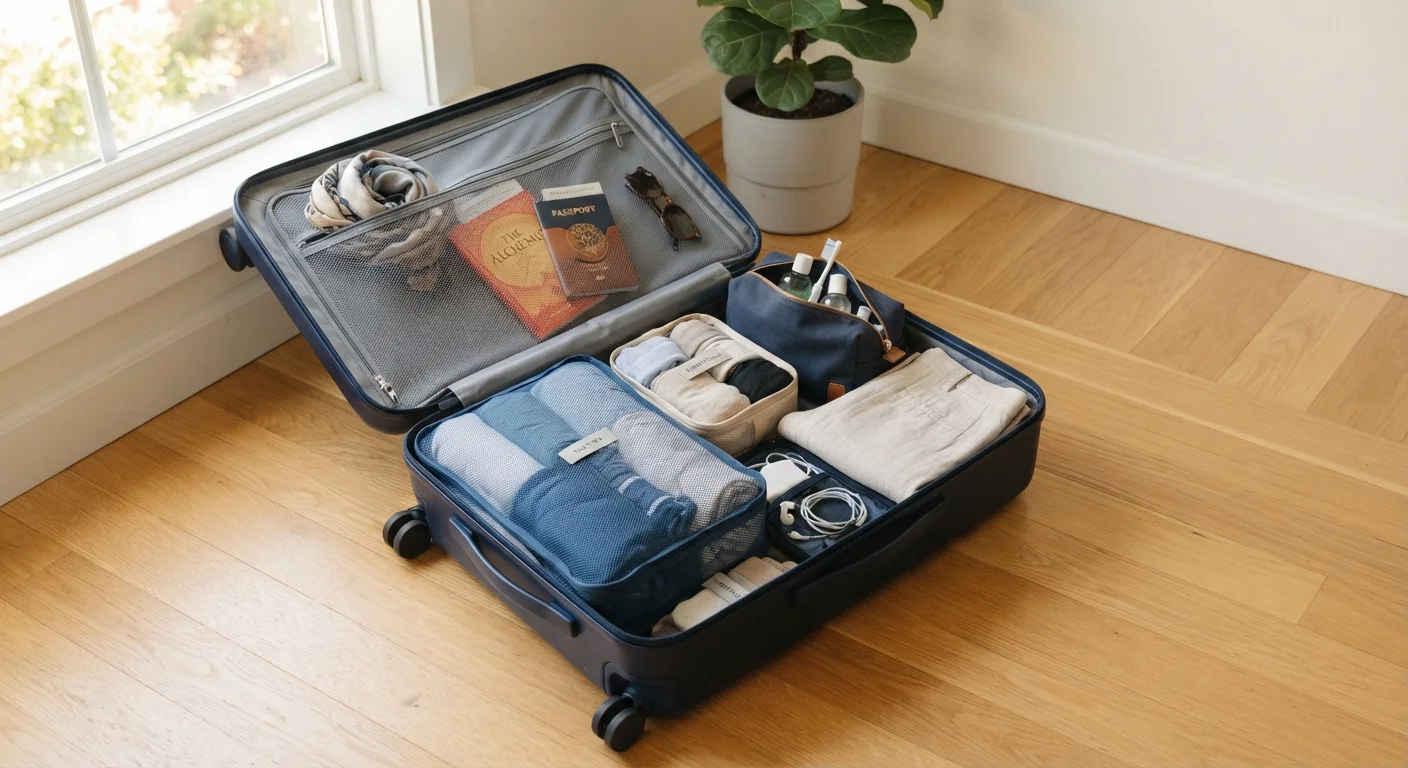
For trips under four or five days, carry-on only is almost always the more practical choice. The packing discipline it requires is manageable, and the time and cost savings are meaningful. The art of packing light is genuinely learnable - most travelers overestimate how much they need once they've done it a few times.
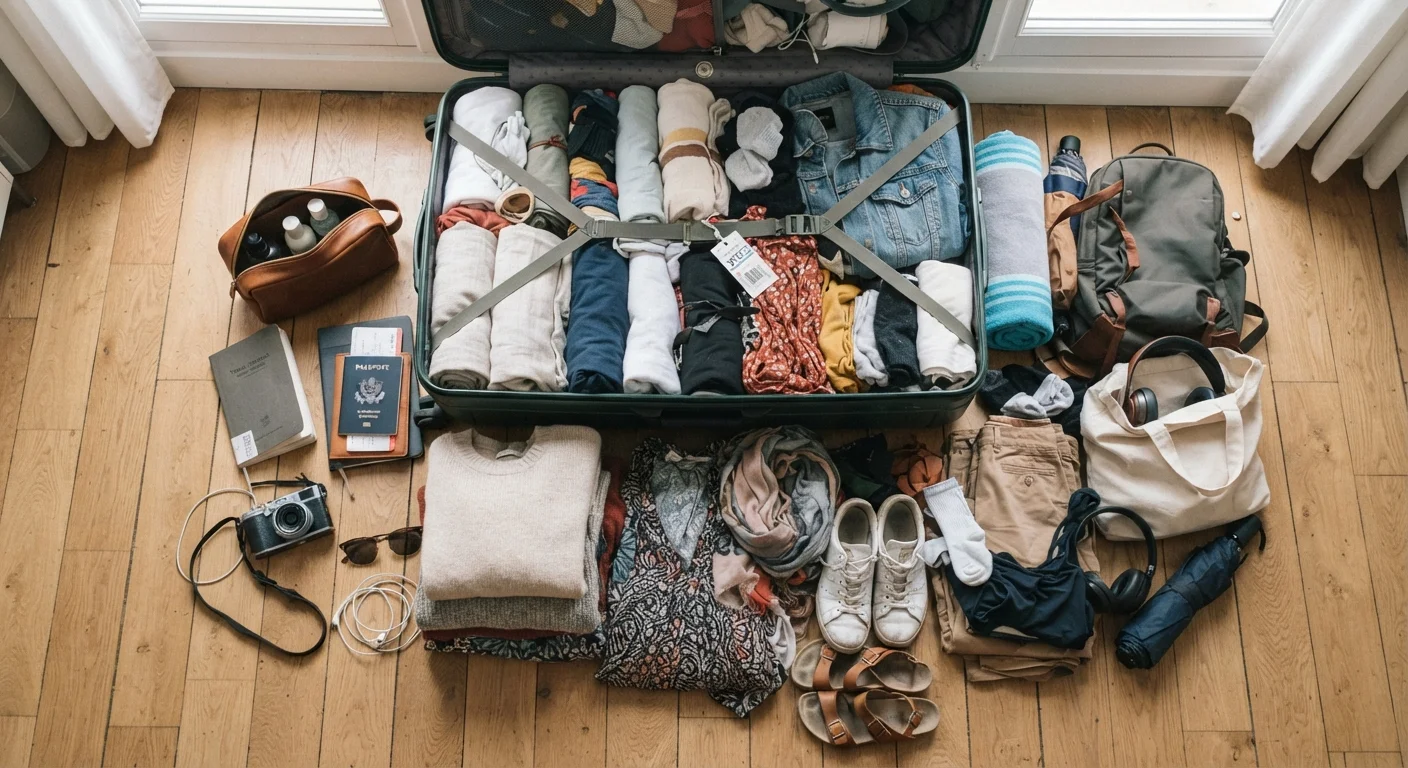
Beyond a week, the calculation shifts. Re-wearing and hand-washing works in some destinations better than others. Hot, humid trips or back-to-back formal events make it harder. If you're visiting multiple climates, a checked bag earns its fee.
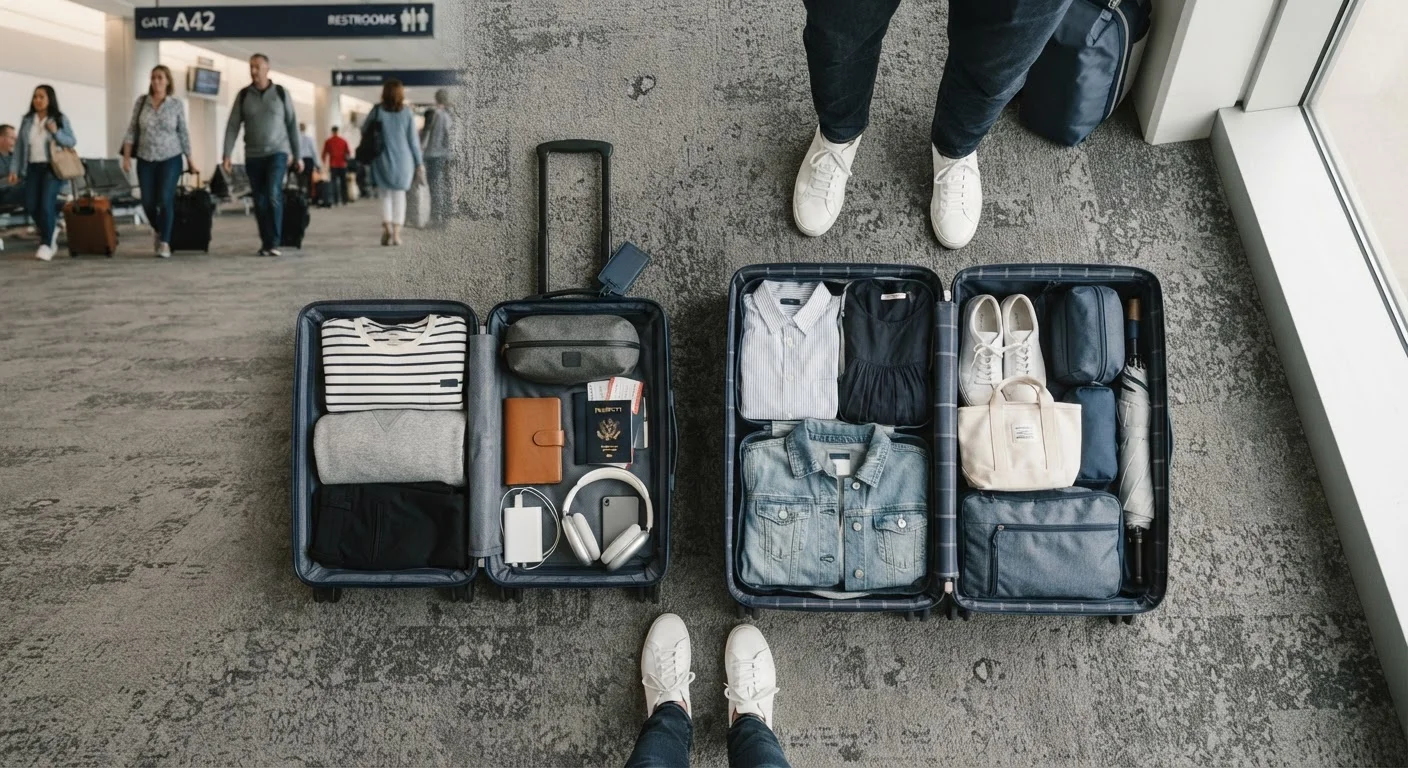
A hybrid strategy works well for mid-length trips: a carry-on for clothes, a personal item (backpack or tote) for electronics, documents, and a day's essentials. This approach keeps you mobile without extreme sacrifice. Our broader packing and gear hub has resources for every trip type if you want to dig deeper into strategy.
Always Verify Carry-On Size Rules Before You Fly
Carry-on size limits are not universal - they vary by airline and even by aircraft type. Most U.S. carriers allow roughly 22×14×9 inches, but budget carriers and regional jets sometimes set stricter limits. Check your specific airline's current policy when booking, not just when packing. A bag that fits on one carrier may be gate-checked on another.
Before locking in your approach, it's worth auditing what's actually in your bag. Our guide on why your bag always feels too heavy pinpoints the most common overpacking habits - and how to cut them without sacrificing comfort.