Why Overpacking Feels So Hard to Avoid
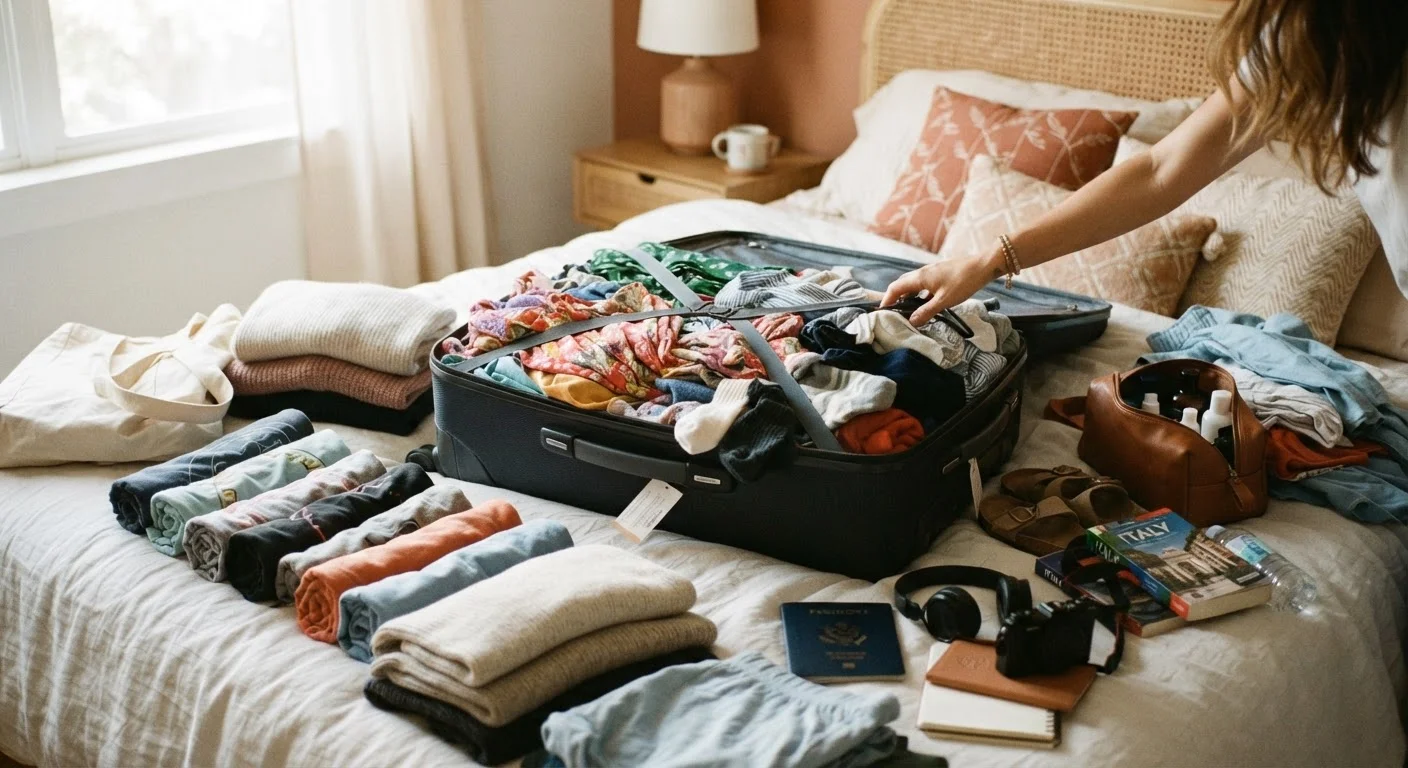
Almost every traveller overpacks at some point - and there's a good reason why. Packing happens at home, where you're imagining a trip rather than living it. That mental gap between 'what might happen' and 'what will actually happen' is where the extra weight sneaks in.
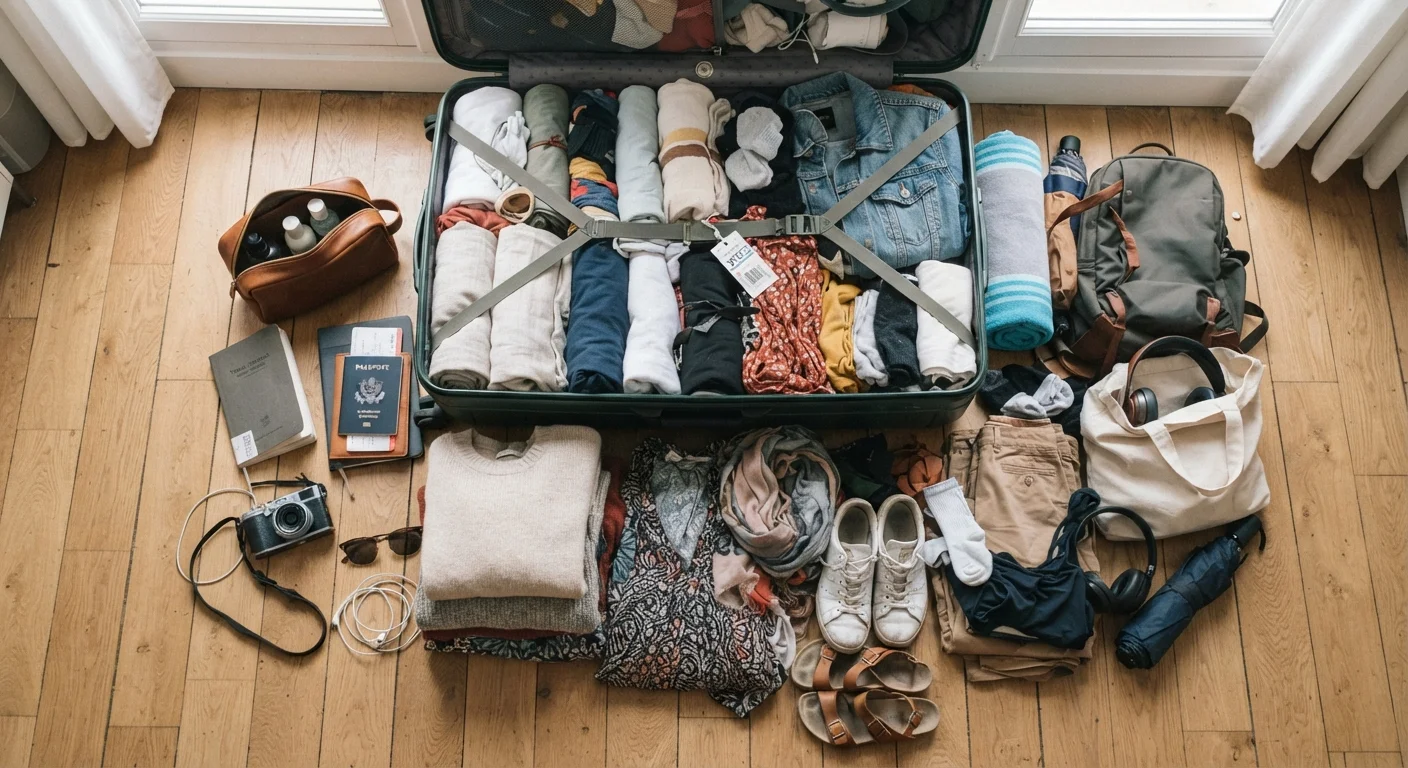
Anxiety plays a genuine role. When you're uncertain about a destination's weather, dress codes, or available shops, packing 'just in case' feels like sensible preparation. It's not recklessness - it's caution. But that caution, multiplied across a dozen small decisions, is what leaves you dragging a bag that's twice as heavy as it needs to be.
The good news: overpacking is a habit, and habits can change. The packing myths that drive this behaviour are surprisingly consistent across traveller types - which means the fixes are consistent too. Understanding why you're adding each item is the first step to making smarter calls.
~50%
Clothes never worn on a typical trip
Travel surveys and packing studies consistently find that roughly half the clothing travellers pack never gets worn during the trip.
3-5 lbs
Average weight of toiletries bag
Full-size products, multiples, and back-ups in a toiletries bag commonly weigh between three and five pounds - a significant portion of total bag weight.
The Most Common Overpacking Mistakes (And How to Fix Them)
These are the patterns that show up again and again - in travel forums, in post-trip regrets, and in bags left half-unpacked at the end of a trip. Recognising them is most of the battle.
Packing full-size toiletries instead of travel-size or solid alternatives.
Why it happens: Grabbing your everyday products feels convenient, and many travellers underestimate how much liquid weight adds up fast.
Bringing too many shoes 'just in case' different occasions arise.
Why it happens: Shoes feel essential for every scenario: walking, dinners out, the beach, a night out. But they're among the heaviest, bulkiest items in any bag.
Packing entire outfits instead of mix-and-match pieces.
Why it happens: Visualising specific outfits for each day feels organised, but it means every item only gets used once.
Loading up on travel gadgets and accessories that rarely get used.
Why it happens: Travel gear looks compelling in shops and online, and it's easy to convince yourself each item will be indispensable.
Not doing a bag audit after packing - just zipping it shut and hoping for the best.
Why it happens: Packing feels stressful, and once everything is in the bag, it's tempting to consider the task done.
Don't Pack for Every Possible Scenario
Packing for 'what if it gets cold' and 'what if there's a formal dinner' and 'what if I want to go hiking' is how a weekend bag turns into a checked suitcase. Most contingency items never get used. Focus on what your itinerary actually calls for - and trust that most destinations have shops if something unexpected comes up.
If you're working toward carry-on-only travel, the carry-on mindset shift is worth reading alongside this - it addresses the thinking changes that make lighter packing stick long-term.
Building a Smarter Pre-Trip Routine
The most effective packing isn't about willpower - it's about process. A few deliberate steps before you zip up make a bigger difference than any single item you cut.
- Start with a list, not the bag. Write down every item you think you need before touching your luggage. Seeing it all on paper makes over-planning obvious in a way that stuffing a bag doesn't.
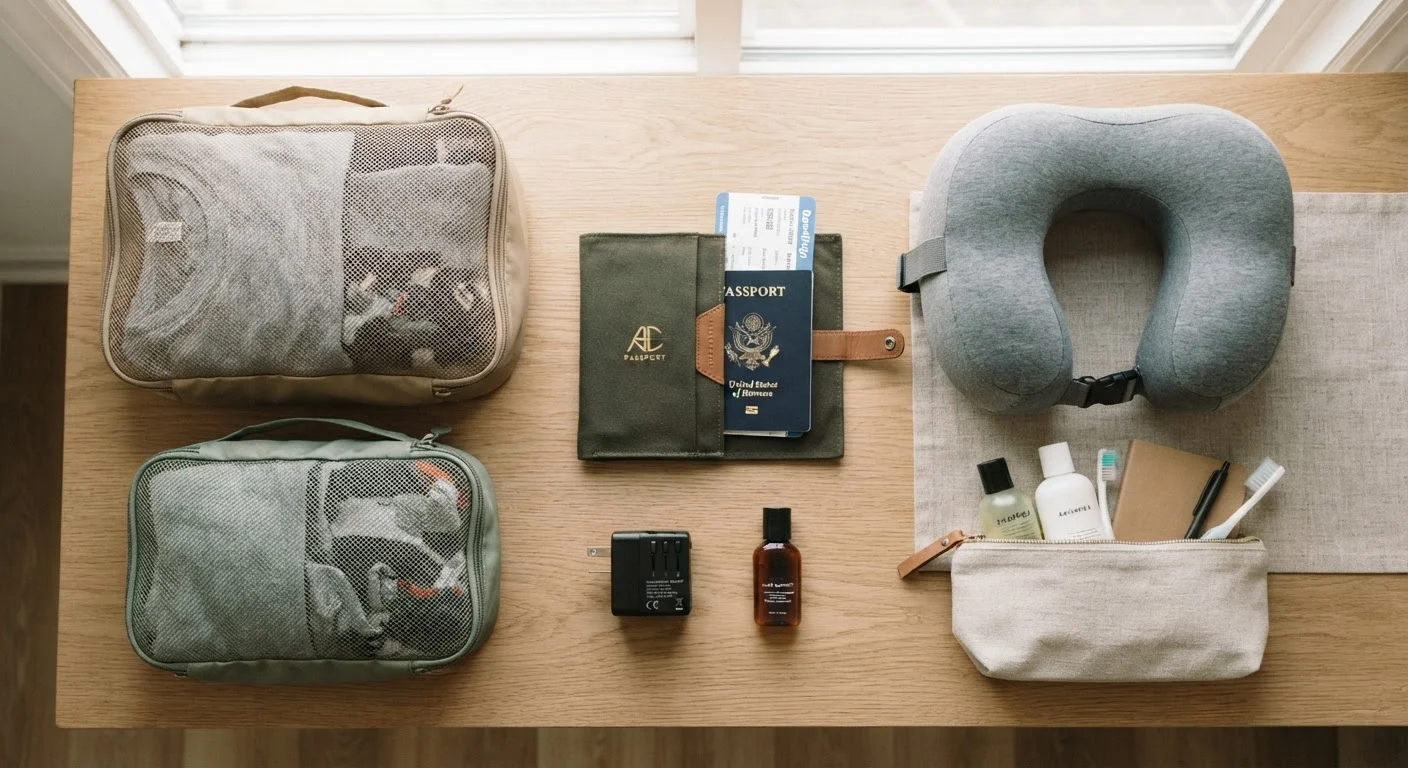
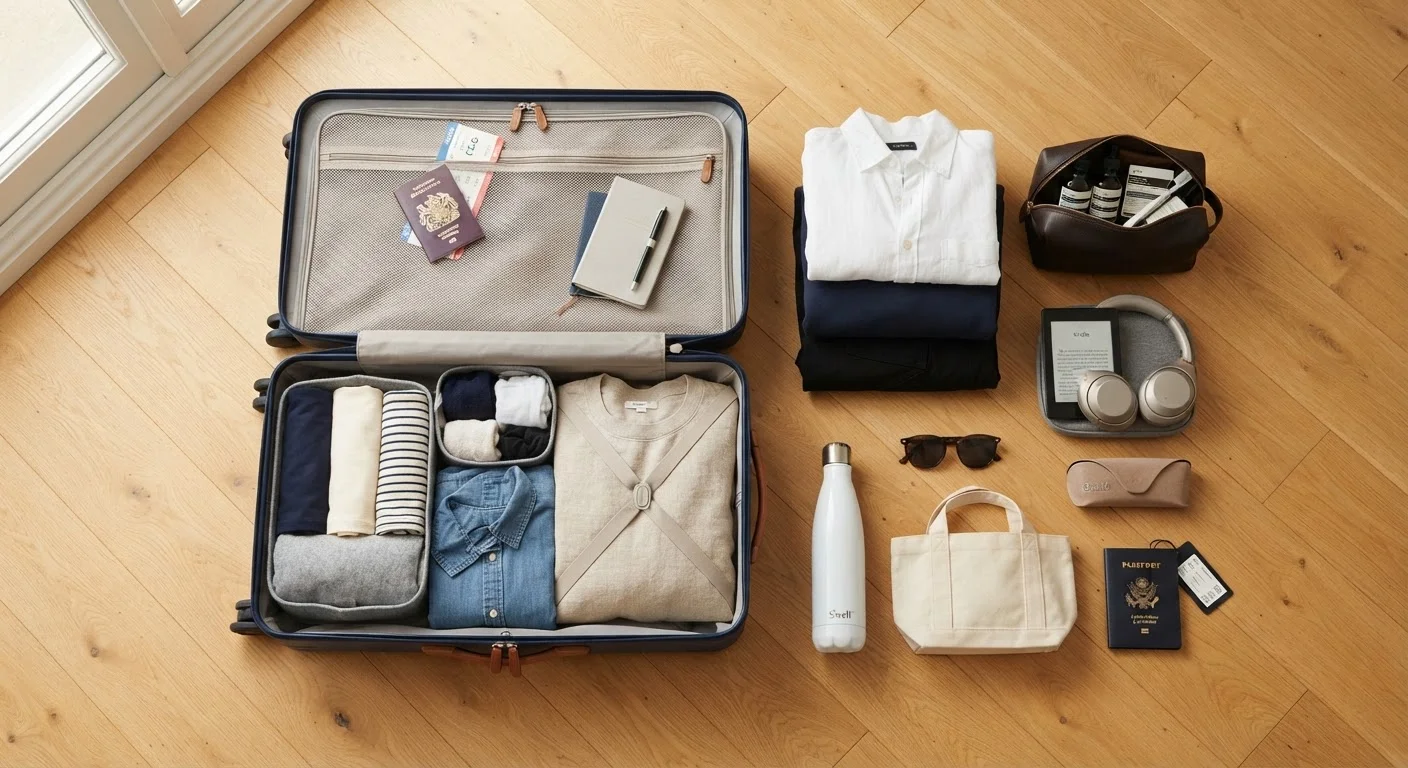
- Lay everything out first. Place all items on a flat surface and review them as a whole. It's easier to make cuts when you see the full picture at once.
- Pack, then remove 20%. Once your bag is packed, challenge yourself to take out roughly one in five items. You'll almost always find candidates.
- Weigh it before you leave. If your bag feels heavy at home, it will feel brutal after a long travel day. Use a luggage scale and set a personal weight limit.
Your Bag Gets Heavier at Every Airport
An overloaded bag doesn't just strain your shoulders - it slows you down, triggers checked baggage fees, and eats into the energy you need to actually enjoy your trip. The weight you add at home compounds with every souvenir, brochure, and impulse purchase you pick up on the road. Build in breathing room before you leave.
For a deeper dive into trimming your kit without leaving behind anything you'll actually miss, the practical guide to packing light walks through the full process step by step. And if you're still deciding between a rolling suitcase and a backpack, that choice itself shapes how much you can realistically carry - worth thinking through with our bag comparison guide.