Why Your Owner's Manual Is the Right Starting Point
Most drivers have seen the slim booklet tucked into their glovebox but never cracked it open. That's understandable - it doesn't make for light reading. But buried inside is something genuinely useful: a maintenance schedule written by the engineers who built your specific vehicle. No generic checklist, no upsell, just the intervals your car actually needs.
Generic service advice - like the old "change your oil every 3,000 miles" rule - is often outdated or simply doesn't apply to your car. (See our breakdown of common maintenance myths for more on that.) The manufacturer's schedule accounts for your engine design, transmission type, and the specific fluids used at the factory. That makes it the most accurate guide available to you.
If you've misplaced your manual, most manufacturers provide free digital versions on their official websites. Search for your make, model, and year - you'll typically find a downloadable PDF within a few clicks.
What you will need
How to Read and Use the Maintenance Schedule
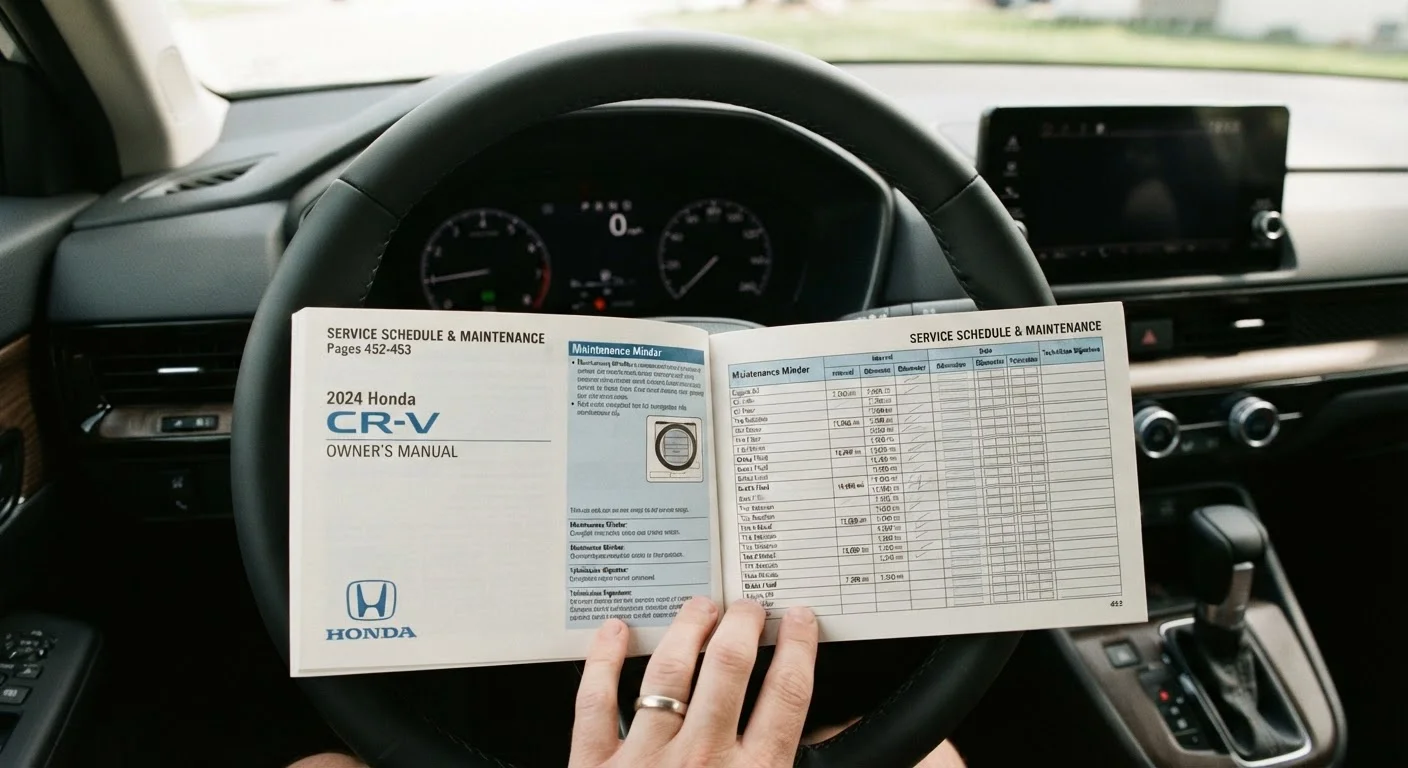
Once you have the manual in hand, the maintenance section is usually near the back, sometimes under headings like "Scheduled Maintenance," "Service Intervals," or "Maintenance Requirements." Here's how to work through it systematically.
Locate the maintenance section
Flip to the index and look for terms like "maintenance schedule," "service intervals," or "scheduled maintenance." Most manuals list this as a dedicated chapter. Note any page numbers for quick future reference.
Identify your schedule type
Determine whether your typical driving falls under normal or severe conditions (see the section below). This tells you which column or table in the schedule to follow.
Note every service item and its interval
Work through the schedule line by line. Common items include engine oil and filter, tire rotation, air filter, spark plugs, brake fluid, transmission fluid, and coolant. Each will list an interval in miles, months, or both - whichever comes first applies.
Check the recommended oil type
Your manual will specify the correct engine oil viscosity grade (such as 5W-30) and may indicate whether synthetic is required. Use this spec - not what a quick-lube shop recommends at the counter. Our guide to engine oil grades and types explains what those numbers mean if you're unsure.
Cross-reference with your current mileage
Compare each service interval against your odometer reading and the date of your last known service. This tells you what's due now, what's coming up soon, and what can wait. Prioritize anything overdue before moving on to upcoming items.
Staying on top of these intervals pays off beyond just avoiding breakdowns. It also helps you manage the real costs of ownership more predictably - something our guide to the financial side of car ownership covers in more depth.
Normal vs. Severe Driving Conditions - Which Schedule Applies to You?
This is where many drivers go wrong. Most owner's manuals include two maintenance tracks: one for normal driving and one for severe or special operating conditions. Severe conditions typically include:
- Frequent short trips under five miles, especially in cold weather
- Stop-and-go city driving for extended periods
- Towing, hauling heavy loads, or driving in hilly terrain
- Operating in extreme heat, cold, or dusty environments
If any of these describe your regular driving, the severe-condition schedule - with shorter service intervals - likely applies to you, even if your commute seems ordinary. Many urban drivers, for example, qualify for the severe track simply because of constant stop-and-go traffic.
When in Doubt, Use the Severe Schedule
If you're genuinely unsure which schedule applies to you, defaulting to the severe-condition intervals is a conservative but reasonable choice. The cost difference is modest, and it ensures your car is never under-maintained. Your dashboard warning lights can also signal when something needs attention sooner - see our guide to dashboard warning lights if you're unsure what a light means.
For a broader picture of how seasonal conditions affect your maintenance needs, our seasonal car maintenance guide walks through year-round tasks worth adding to your routine.
Keeping a Simple Service Record
Reading the schedule is only half the job - tracking what's been done is equally important. Without a record, it's easy to duplicate services you've already paid for or miss something overdue.
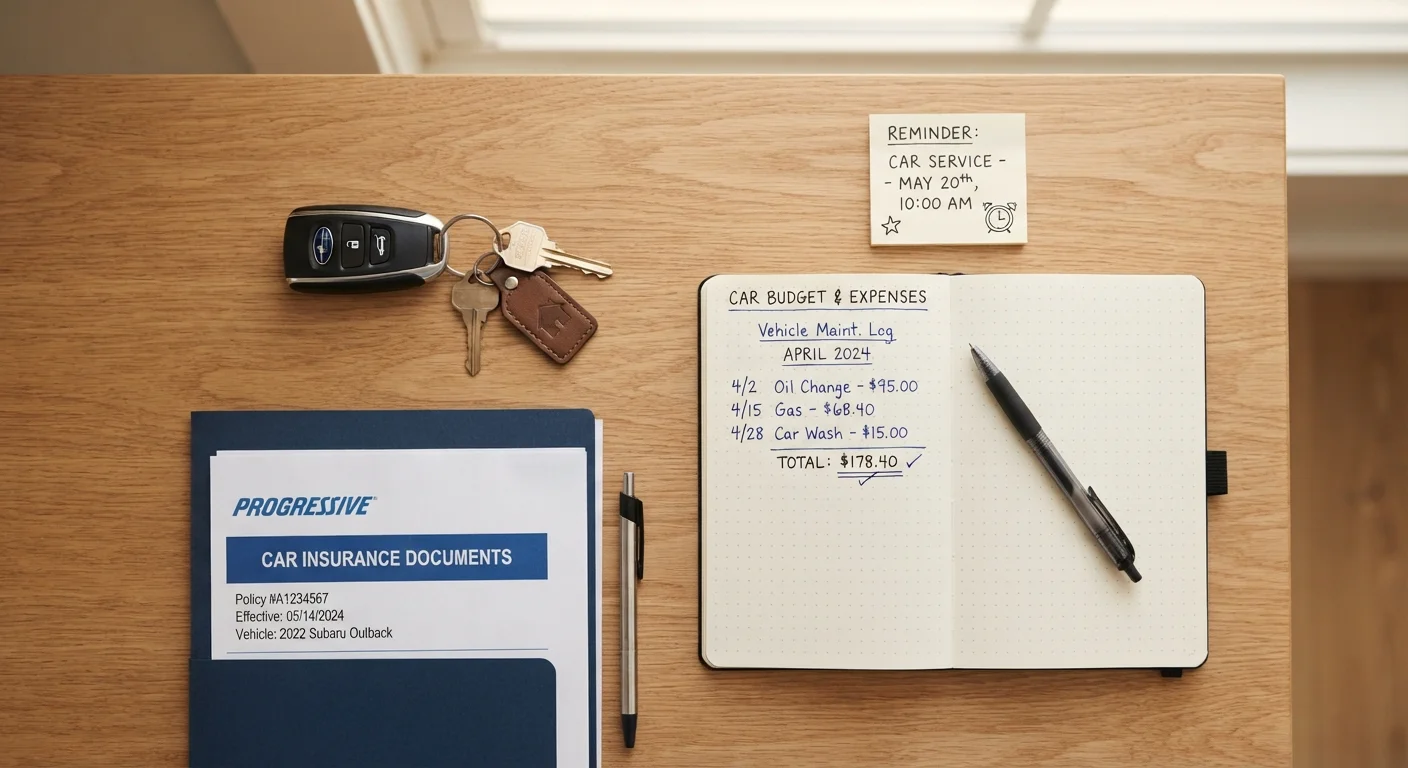
A basic approach works fine: keep a small notebook in the glovebox, or use the notes app on your phone. Log each service with the date, mileage, and what was done. If you take your car to a shop, ask for a written receipt and keep it with the manual.
This record also matters when you're deciding where to have your car serviced. Whether you use a dealership or an independent garage, having documented history gives any mechanic a clear picture without guesswork. Our guide to choosing where to service your car can help you weigh those options.
For a broader foundation on what routine upkeep involves, car maintenance from the ground up is a solid starting point for new drivers.