The Core Difference: Ownership vs. Use Rights
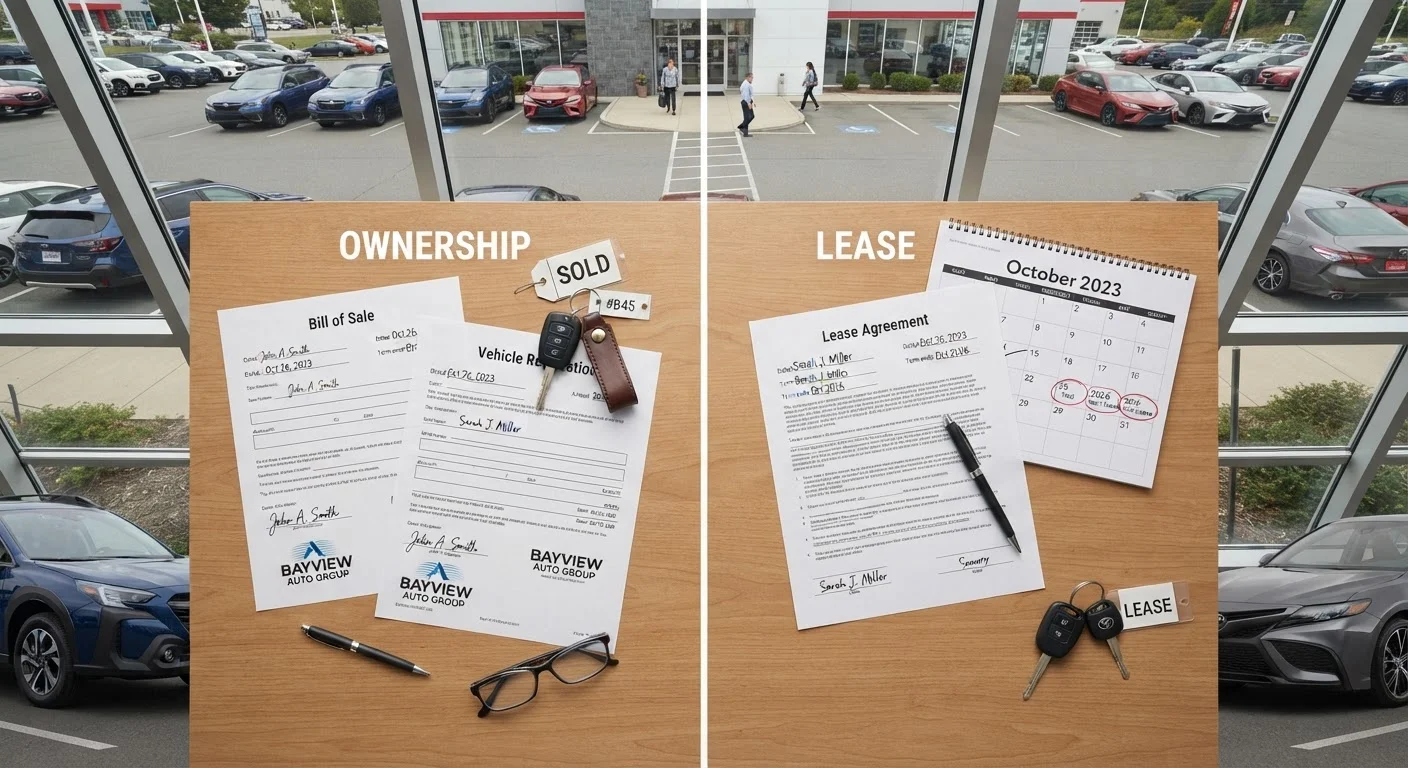
When you finance a car, you're taking out a loan to purchase it. You make monthly payments that cover the principal (the amount borrowed) and interest. Once you've made your final payment, you own the vehicle outright. The title is in your name from day one, and the lender simply holds a lien until the loan is repaid.
When you lease a car, you're essentially renting it for a set period - typically two to four years. You pay for the portion of the vehicle's value you use during that time, not the full price. At the end of the lease, you return the car to the dealer. You have the option to buy it at a pre-set price or walk away, but you build no equity during the lease term.
This distinction - ownership versus use rights - is the foundation of everything else that differs between these two arrangements. For a deeper look at how auto loan mechanics work, see how car financing actually works.
| Criterion | Financing | Leasing |
|---|---|---|
| Ownership | You own the vehicle | Dealer retains ownership |
| Monthly payment | Higher (full price + interest) | Lower (partial value + fees) |
| Mileage limits | None | Typically 10,000-15,000/yr |
| End of term | You own it outright | Return, buy, or re-lease |
| Equity built | Yes, over time | No |
| Modifications allowed | Yes | Generally no |
| Early exit costs | Possible prepayment fees | Often significant penalties |
| Wear-and-tear risk | Your responsibility as owner | Charges at lease-end |
Monthly Costs, Mileage, and the Fine Print
Lease payments are usually lower than loan payments for the same vehicle because you're only financing part of the car's value. However, leases come with conditions that matter a great deal in practice.
Mileage limits are standard in nearly all lease agreements - commonly 10,000 to 15,000 miles per year. Exceed that cap and you'll pay a per-mile fee at lease-end, which can be a significant surprise if you underestimated your driving. Wear-and-tear standards also apply: minor scuffs may be acceptable, but significant damage or non-stock modifications will cost you.
Financing has no mileage restrictions. You can drive as much as you need to, modify the vehicle, and sell it whenever you choose. The tradeoff is that loan payments are higher because you're paying down the entire purchase price over time.
~28%
Share of new vehicles acquired via lease in the US
Leasing has historically accounted for roughly a quarter to a third of new vehicle transactions, according to industry tracking data.
$0
Equity built through leasing
Unlike a financed purchase, lease payments do not reduce a balance you own - at term-end, the vehicle's residual value belongs to the lessor.
10-25¢
Typical per-mile overage charge
Excess mileage fees vary by lease agreement but commonly fall in the 10-25 cents per mile range, which can total hundreds of dollars at turn-in.
Both options involve financing costs. With a loan, you pay an APR (annual percentage rate). With a lease, dealers use a "money factor" - a decimal number that functions similarly to an interest rate. It's worth asking the dealer to explain this number so you can compare it fairly to a loan rate. For more on costs that can catch you off guard, read about auto loan pitfalls that catch new car owners off guard.
Which Makes More Financial Sense Over Time?
Leasing can look more affordable month to month, but it's important to consider the full picture. If you lease one vehicle after another, you always have a payment - there's no point at which the car is paid off and that expense goes away. With financing, once the loan term ends, your monthly obligation drops to zero (though maintenance and insurance continue).
That said, leasing isn't simply "throwing money away." You get reliable use of a vehicle, often with warranty coverage for the full lease period, and you avoid the risk of a large repair bill on an aging car. The right choice depends on your situation, not a universal rule.
Gap Insurance: Worth Knowing About
If a financed or leased vehicle is totaled or stolen, your auto insurance may only pay the car's current market value - which can be less than what you still owe or what the lease requires you to pay. "Gap" coverage (Guaranteed Asset Protection) is designed to cover that difference. Whether you finance or lease, ask your insurer whether gap coverage is included or available, and what it would cost. It's especially relevant in the early years of a loan or lease when the remaining balance is highest.
Consider the full cost of ownership beyond the payment itself. Registration, insurance, fuel, and maintenance all affect your real monthly outlay regardless of whether you finance or lease. Our guide to owning a car on a budget covers those overlooked expenses in detail. You may also want to review hidden costs that don't show up in the sticker price before signing anything.
This article provides general financial information for educational purposes only and is not personalized financial or legal advice. Consult a qualified financial professional before making decisions based on your individual circumstances.