Why Weather Demands More Than Just Slowing Down
Bad weather doesn't simply make the road slower - it changes the physics of what your car can do. Traction drops, stopping distances grow, and visibility narrows, sometimes all at once. Most drivers know to be cautious, but caution without a specific plan can lead to hesitation, overcorrection, or missed hazards.
The goal here isn't to make you anxious about driving in rain or snow. It's the opposite: understanding what each condition actually requires gives you a concrete response instead of vague worry. Drivers who know what to do are calmer, more consistent, and less likely to panic when something unexpected happens.
It's also worth noting that weather-related crashes are often not caused by the weather itself - they're caused by drivers who didn't adjust. Speed, following distance, and input smoothness are the three levers you control regardless of what's falling from the sky.
What you will need
Before You Hit the Road: Preparation
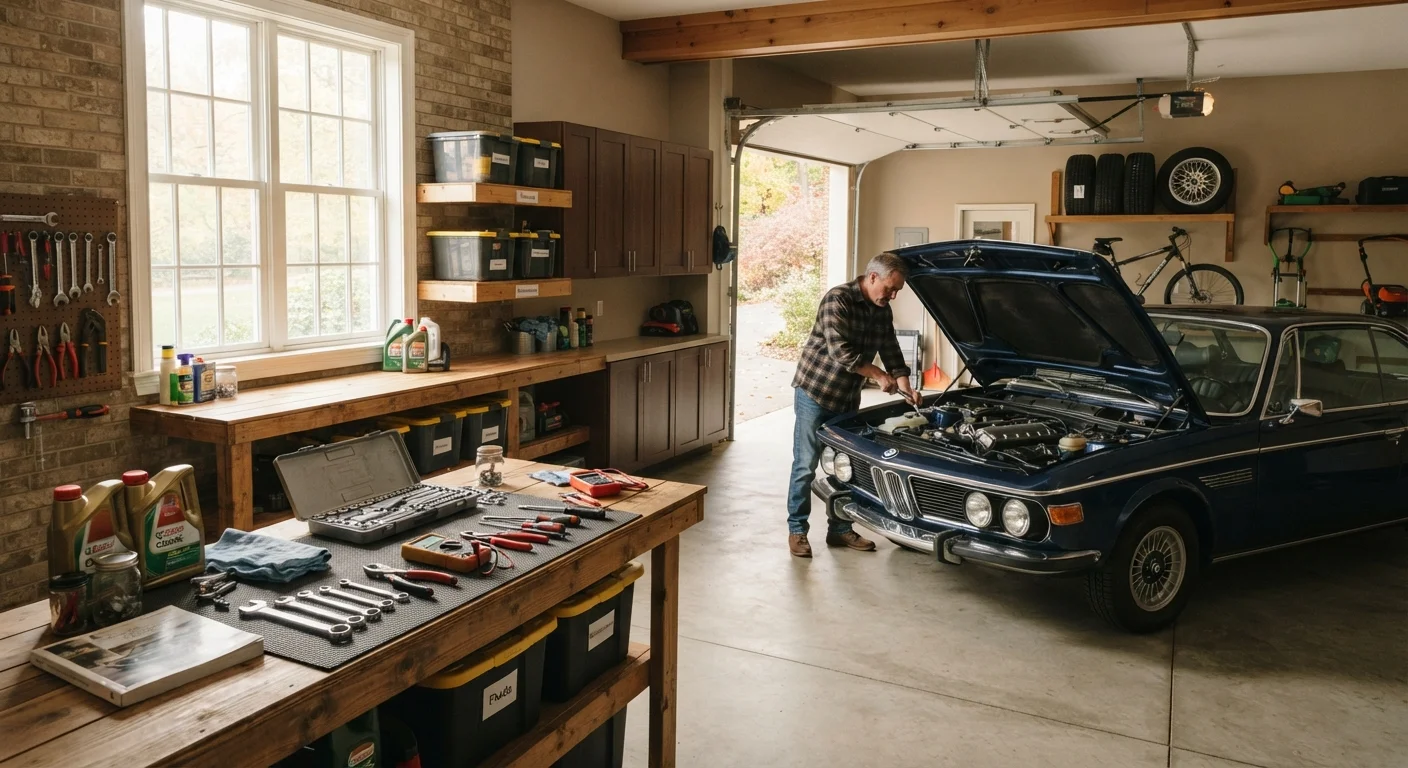
A significant part of driving safely in bad weather happens before you ever leave. Your vehicle's condition sets a hard limit on what's possible once you're out there. Worn tires, foggy headlights, or a cracked wiper blade can undermine every good decision you make behind the wheel.
Properly Inflated Tires
Cold air causes tire pressure to drop, reducing grip - check pressure before driving in winter conditions.
Winter or All-Season Tires
Tires rated for winter conditions maintain flexibility in cold temperatures, improving traction on ice and snow.
Ice Scraper and Snow Brush
Clearing all windows and lights before departure is a legal requirement in many states and a basic safety necessity.
Emergency Kit (blanket, flashlight, jumper cables)
If you become stranded in bad weather, basic supplies can make a significant difference while waiting for help.
Good preparation is also about information. Checking a weather forecast and understanding what type of conditions you'll encounter - freezing rain versus heavy snow versus dense fog - helps you decide whether to go, delay, or choose an alternate route. Common habits that erode safety often include skipping pre-trip checks, especially in a rush. Taking two or three extra minutes before departure in bad weather is never wasted time.
Step-by-Step: Driving Through It
Prepare your vehicle before you leave
Before pulling out of the driveway, spend a few minutes on the basics. Clear all snow or ice from every window, mirror, and light - not just the windshield. Check that your wipers work and that your washer fluid reservoir is full with a freeze-resistant mix. Confirm your headlights are on; in most states, if your wipers are on, your lights should be too (and in many states, it's the law).
See our seasonal car maintenance guide for a broader checklist of what to inspect before weather changes.
Reduce your speed - meaningfully, not marginally
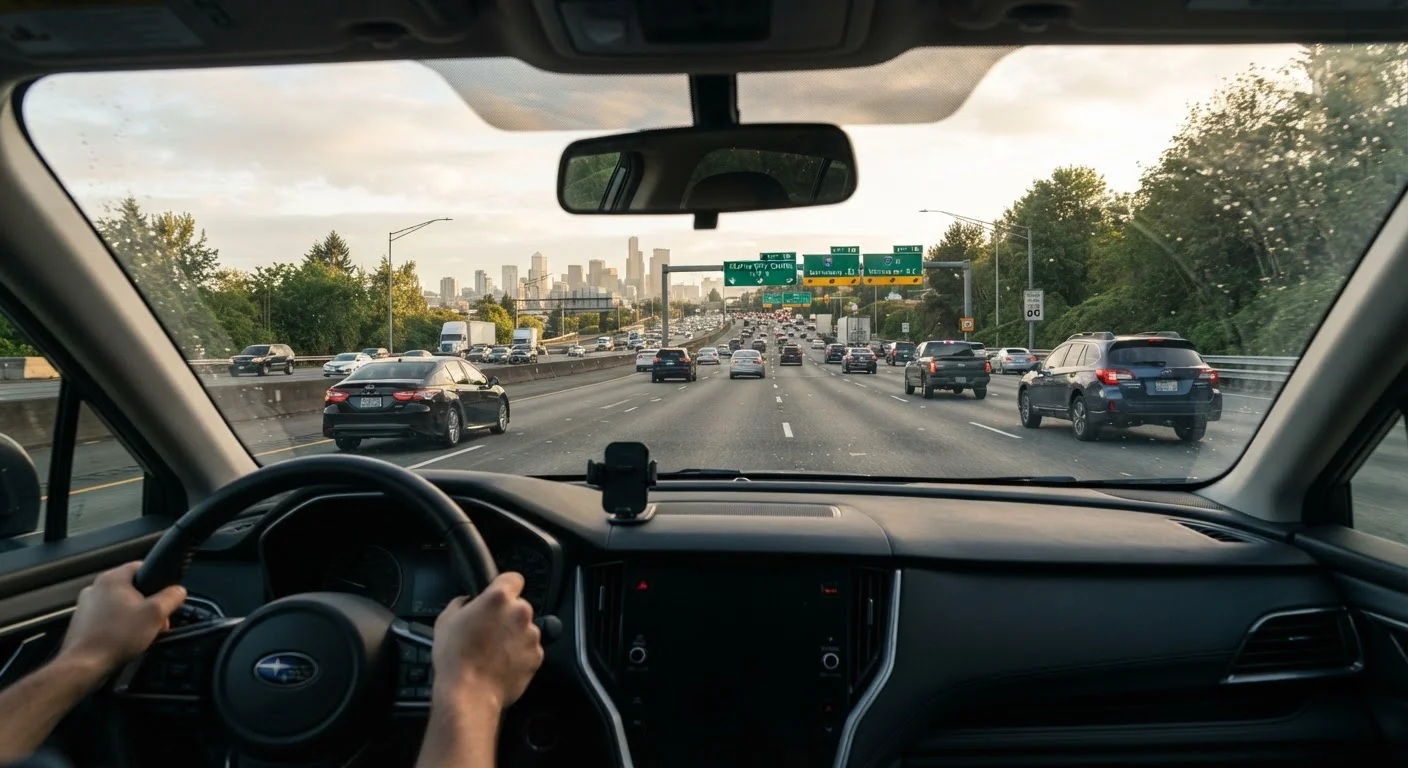
Speed limits are set for ideal conditions. In rain, snow, or fog, they are not a safe target - they're a legal ceiling. Reduce your speed enough that you could stop within the distance you can actually see. On a wet highway, that often means 10-15 mph below the posted limit. On snow or ice, the reduction should be more significant. The urge to keep pace with other traffic is common, but other drivers aren't always making good decisions either.
Increase your following distance
Stopping distance increases dramatically on wet or icy surfaces. A car traveling at 60 mph on dry pavement might stop in roughly 180 feet; on wet pavement that can extend to 270 feet or more. Doubling - or tripling - your normal following distance gives you time to respond if the driver ahead brakes suddenly.
[tip_callout]Adjust for the specific condition you're in
Different weather types call for different responses:
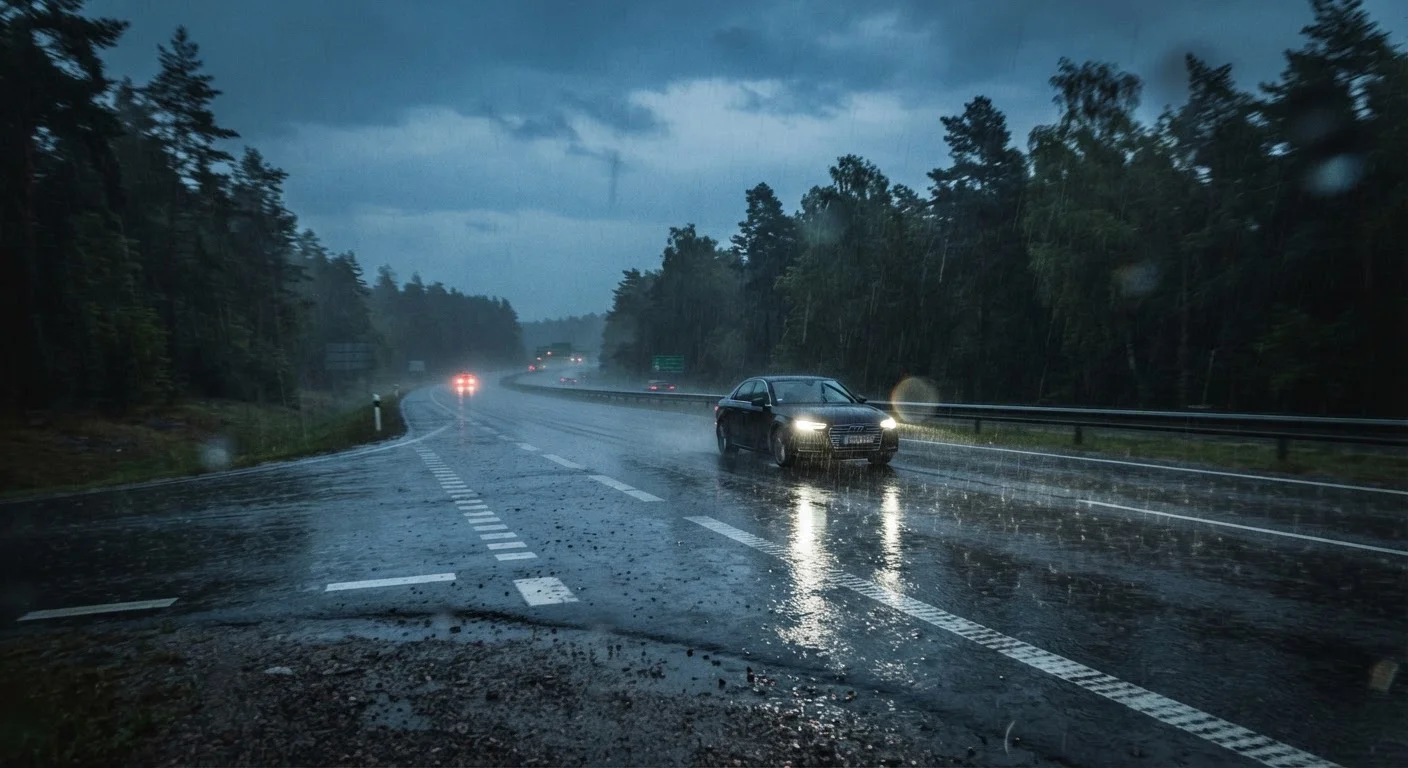
- Rain: Watch for hydroplaning (when tires ride on water instead of gripping the road). If it happens, ease off the gas smoothly and steer gently straight until traction returns. Do not brake hard.
- Ice and Snow: Accelerate and brake very gradually. Sudden inputs - on the gas, brake, or steering wheel - are the most common cause of skids.
- Fog: Use low-beam headlights, not high beams (high beams reflect off fog and reduce visibility). Reduce speed and listen as well as look.
- High Wind: Keep both hands firmly on the wheel. Be especially cautious on bridges, overpasses, and open stretches where gusts can push a vehicle sideways. Large trucks passing by also generate sudden wind bursts.
Use smooth, deliberate inputs throughout
On a slippery surface, abrupt steering, braking, or acceleration can break traction in an instant. Think of your inputs as gradual adjustments rather than quick reactions. Brake early and gently. Steer in smooth arcs. Accelerate steadily rather than in bursts. This is the core of driving on low-traction surfaces - it's a skill that comes with deliberate practice and builds real confidence over time.
For a broader framework on reading the road and managing risk, see defensive driving principles that apply in all conditions.
Know when to pull over or cancel the trip
Sometimes the right move is not to drive at all. Check weather forecasts before departure when a significant storm is expected. If conditions deteriorate sharply while you're on the road, find a safe place to stop - a rest area, parking lot, or wide shoulder - and wait. This isn't a failure of nerve; it's a sound judgment call that more experienced drivers make regularly.
When to Stop Driving Entirely
No destination is worth a serious crash. If visibility drops below a safe threshold, your vehicle is sliding unpredictably, or you feel unable to control the car, pull completely off the road - onto a shoulder or into a parking lot - and wait it out. Turn on your hazard lights so other drivers can see you. Resuming once conditions improve is always the right call.
Bad weather also tends to amplify fatigue. If you've already been driving for a while when conditions worsen, that matters - fatigue affects reaction time in ways that compound the risks of low-traction or low-visibility driving.
Black Ice Gives Almost No Visual Warning
Black ice forms when a thin layer of water freezes on pavement, and it's nearly transparent. Bridges, overpasses, and shaded road sections are especially prone to it even when other surfaces look clear. If your car suddenly feels loose or unresponsive at the steering wheel, ease off the gas gently - do not brake hard or jerk the wheel.