Why Beginners End Up with Too Many Tools
Walk into any garden centre and you'll find entire walls of tools - cultivators, weeders, soil blockers, long-handled dibbers, and speciality rakes that seem indispensable right up until they're gathering dust in the shed. For a new gardener, this can feel overwhelming before you've even put a seed in the ground.
The reality is that most everyday gardening tasks - planting, weeding, watering, pruning, and turning soil - are covered by a handful of well-chosen tools. The goal isn't to collect everything; it's to understand what each tool actually does so you can make confident, purposeful choices. Before you buy anything, it helps to know your space. Understanding your soil, sun exposure, and water access will clarify which tools you'll reach for most. See our guide to soil, sun, and water for a solid starting point.
Hand Trowel
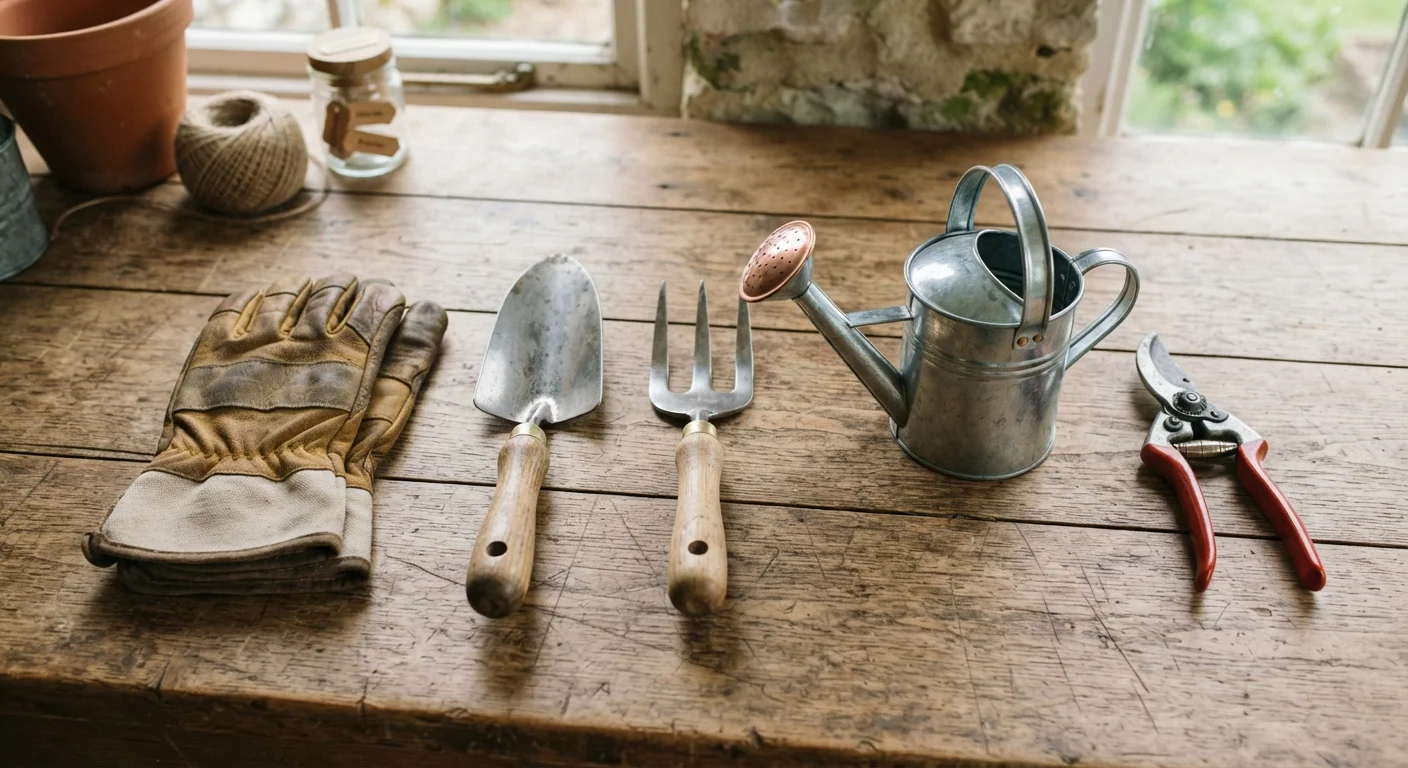
The hand trowel is the single most-used tool in any beginner's kit. It's a short-handled scoop used for digging planting holes, transferring seedlings, scooping compost, and working in confined spaces like containers or raised beds. Look for one with a stainless steel or carbon steel blade - these resist bending and rust better than cheaper alternatives. A comfortable grip is worth paying attention to; you'll use this tool for extended periods.
A wide blade is better for scooping soil, while a narrow blade is better for digging precise holes. If you can only buy one tool, make it this one.
The hand trowel is the most versatile tool a new gardener will ever own.
Hand Fork
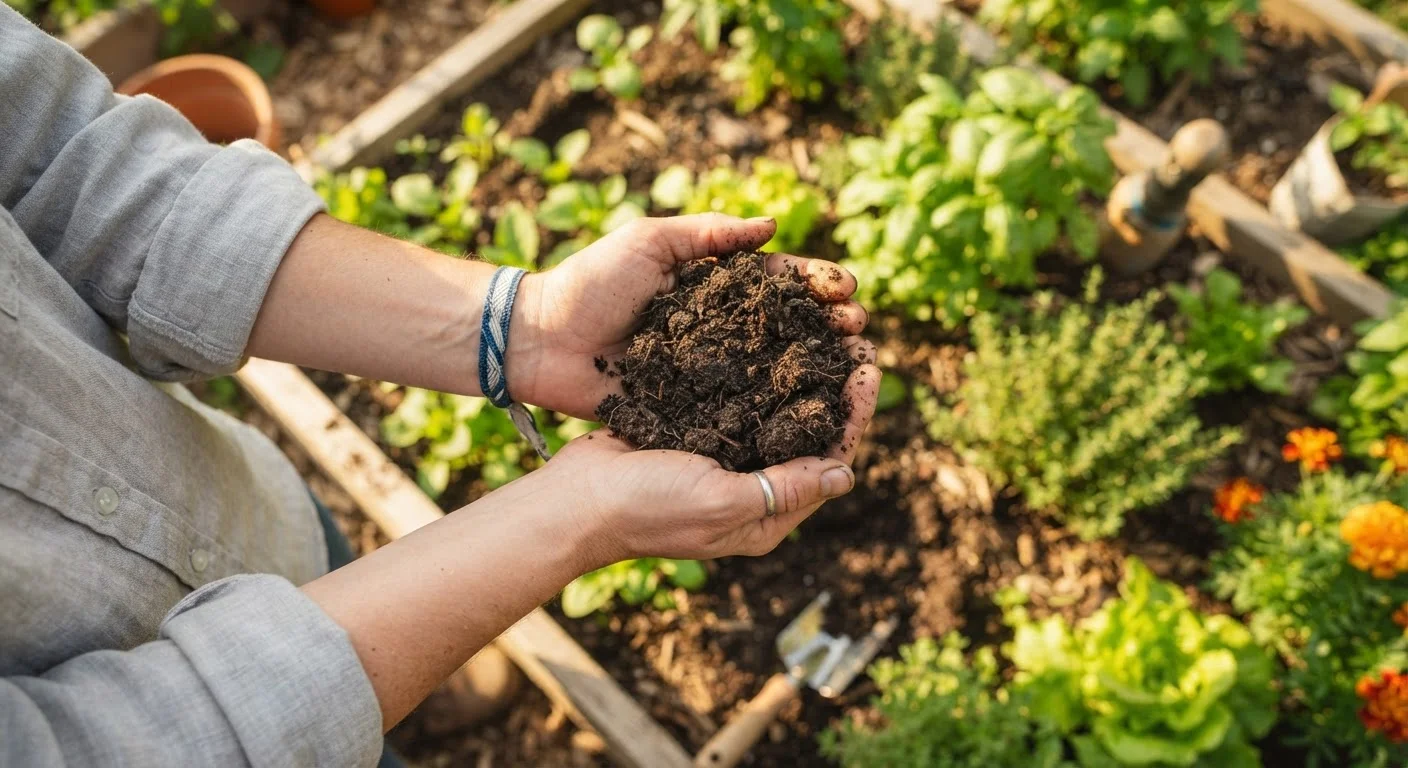
The hand fork (sometimes called a cultivator fork) looks like a miniature pitchfork and is used to loosen compacted soil, break up clumps, aerate around existing plants, and work compost into the top few inches of a bed. It's gentler than a trowel when working around established roots. Understanding what's already in your soil - and why its structure matters - helps you appreciate why this tool earns its place. Our guide to soil, potting mix, and compost explains the differences clearly.
A hand fork loosens soil without damaging the roots of nearby plants.
Pruning Shears (Secateurs)
Pruning shears - also called secateurs - are spring-loaded cutting tools designed for stems up to roughly three-quarters of an inch thick. They're used for deadheading spent flowers, cutting back overgrown stems, harvesting herbs and vegetables, and trimming shrubs. Sharp, clean cuts reduce disease entry points, so keeping the blades clean and occasionally sharpened is important.
There are two main types: bypass shears (which cut like scissors and are better for live growth) and anvil shears (which crush-cut and work well on dead wood). For a beginner, bypass shears are the more versatile starting point.
Clean cuts from sharp secateurs reduce the risk of disease entering your plants.
Watering Can
A watering can gives you precise, gentle control over where water goes - essential for seedlings and young transplants that can be disturbed or damaged by a strong hose jet. Look for a can with a detachable rose (the perforated head that breaks water into a gentle spray). A two-gallon capacity is manageable for most people without being too heavy when full.
Watering cans are especially valuable for indoor seed-starting, container gardens, and areas where a hose doesn't reach easily. They also encourage you to water deliberately rather than just blasting the whole bed.
A watering can with a rose attachment protects delicate seedlings from water damage.
Garden Gloves
Gloves protect your hands from thorns, rough soil, blisters, and irritating plant sap - and they make it far more comfortable to work for longer periods. Look for a pair that fits snugly (loose gloves reduce grip and dexterity), with a reinforced palm and fingertips for durability. Breathable fabric on the back reduces sweating during warmer months.
Having a second pair isn't excessive - one pair for light work like planting and one for heavier tasks like digging or handling thorny shrubs keeps both pairs in better condition longer.
Well-fitting gloves make gardening more comfortable and protect against common hand injuries.
Long-Handled Digging Spade
If you're gardening in the ground - not just containers - a full-size spade becomes essential. It's used for digging new beds, turning over soil, edging lawn borders, and transplanting larger plants. A flat-bladed spade is more versatile than a pointed one for most beginner tasks. Choose a handle length that lets you work without stooping; back strain from a too-short handle is a common and avoidable problem.
For container or small raised-bed gardening, you may not need a full spade at all in your first season. Buy it when your garden genuinely demands it.
A properly sized spade protects your back and handles the heavy soil work no hand tool can.
Hoe
A hoe is your main weapon against weeds in open garden beds. It's a long-handled tool with a flat or angled blade that you push and pull just below the soil surface to sever weed roots before they establish. A standard draw hoe works well for clearing larger areas; a stirrup hoe (also called a hula hoe) is a favourite for its efficiency - it cuts on both the push and pull stroke.
Hoeing when weeds are small - just sprouting - is far easier than tackling established ones. Regular light hoeing, before weeds flower and set seed, keeps beds manageable with minimal effort. For more on managing what grows where it shouldn't, see our natural pest control guide.
Hoeing small weeds early takes seconds; leaving them to establish takes hours.
Building Your Kit Without Overspending
Once you have the essentials, resist the urge to fill gaps with tools you haven't yet needed. A gap in your toolkit usually signals a gap in your gardening experience - and that's valuable information. When a genuine task comes up that your current tools can't handle well, then it's worth investing in something new.
Try Before You Buy When Possible
Handle tools in a store before purchasing - grip, weight, and balance vary significantly between models and affect comfort during extended use. Many garden centres allow you to hold tools at full length. If buying online, check the listed weight and handle length against your own height and hand size. A tool that feels awkward will get used less, which defeats the purpose entirely.
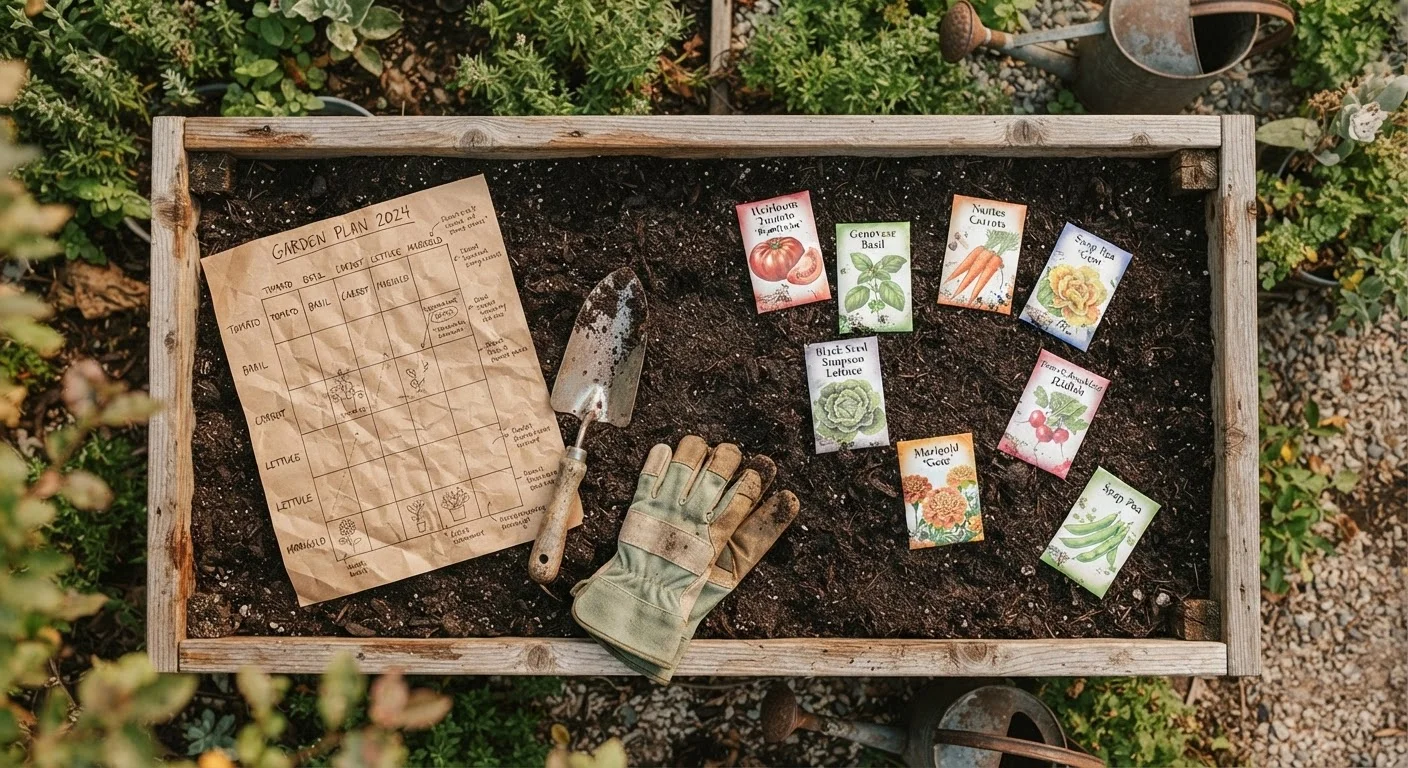
If budget is a concern, start with a hand trowel, a watering can, and a pair of gloves. Those three alone will get you through a first season of container or raised-bed gardening. For planning what goes in that garden and when, our garden-ready checklist walks you through every pre-planting step.
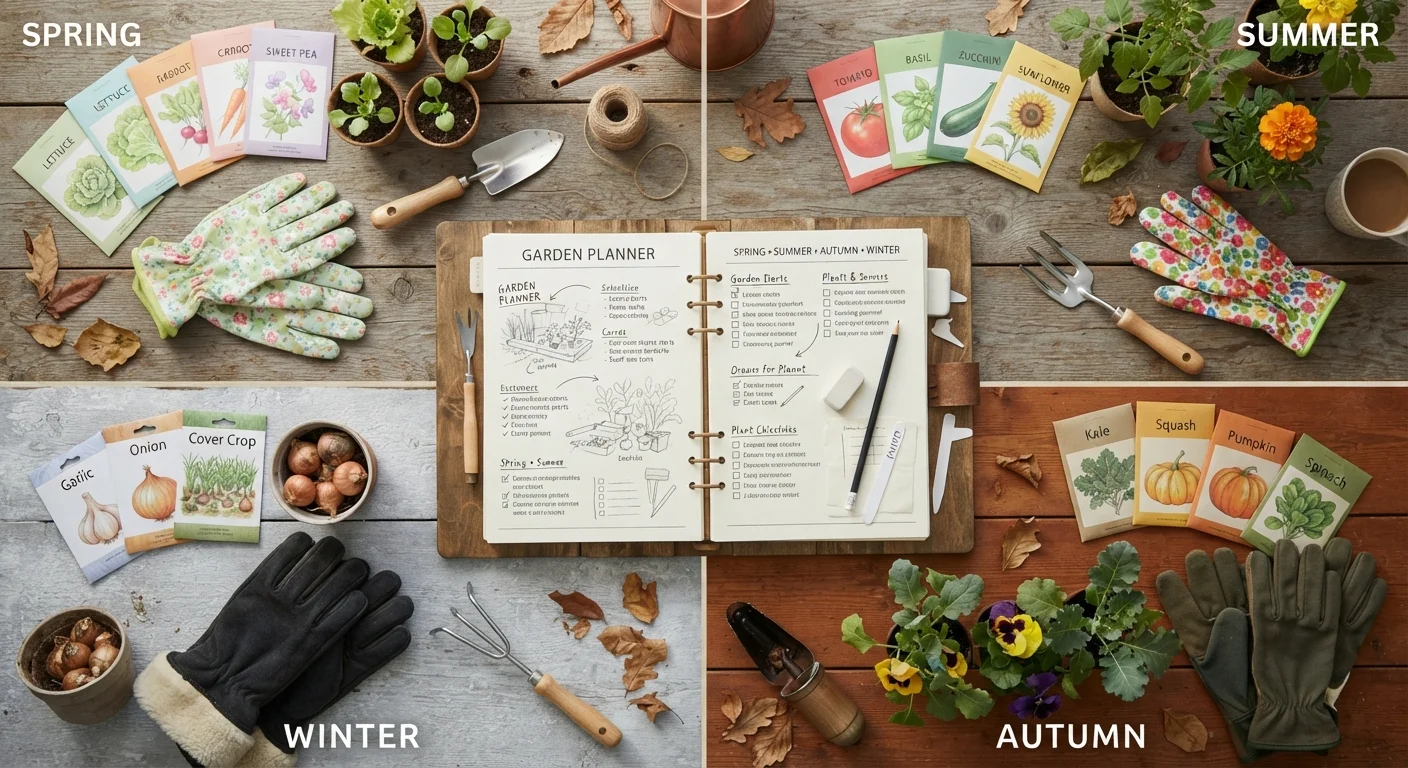
Good tool care is its own skill. Rinse soil off blades after each use, dry metal parts before storing, and occasionally rub wooden handles with a little linseed oil to prevent cracking. A well-maintained trowel can last a decade or more. For a broader look at seasonal tasks that will shape which tools see the most use, refer to our seasonal garden calendar.