Why These Three Elements Come First
Most first-time gardeners head straight to the garden center, fall in love with colorful plants, bring them home - and then wonder why they wilt or die within weeks. The missing step almost always comes down to the same three fundamentals: soil, sun, and water.
These aren't just background details. They're the conditions plants live inside every single day. Getting them right before you put anything in the ground means you're choosing plants that genuinely match your space, rather than fighting against it. It's the difference between a garden that produces and one that frustrates.
This guide walks you through each element in plain terms so you can assess your actual yard - not an imaginary ideal one - and make confident planting decisions from the start. Once you've worked through these basics, our garden-ready checklist can help you confirm everything is in order before a single seed goes in.
Getting to Know Your Soil
Soil is more than dirt - it's a living system that feeds, anchors, and hydrates your plants. Before amending or planting, spend a few minutes understanding what you're actually working with.
Loam
A well-balanced soil type that contains a mix of sand, silt, and clay. It drains adequately while retaining enough moisture and nutrients for most plants to thrive.
Soil pH
A measure of how acidic or alkaline your soil is, rated on a scale from 0 to 14. Most garden plants prefer a slightly acidic to neutral range, roughly 6.0 to 7.0.
Amendment
Any material mixed into soil to improve its texture, drainage, or nutrient content. Compost is the most common and widely recommended amendment for home gardens.
Full sun
A planting condition where a location receives at least six continuous hours of direct sunlight each day. Many vegetables and most flowering plants require full sun to produce well.
Drainage
How quickly water moves through and away from soil. Poor drainage - water that pools or sits too long - can suffocate plant roots and lead to disease.
Root zone
The area of soil directly around and beneath a plant's roots. Watering deeply enough to reach this zone encourages stronger, more drought-resistant root growth.
The Squeeze Test
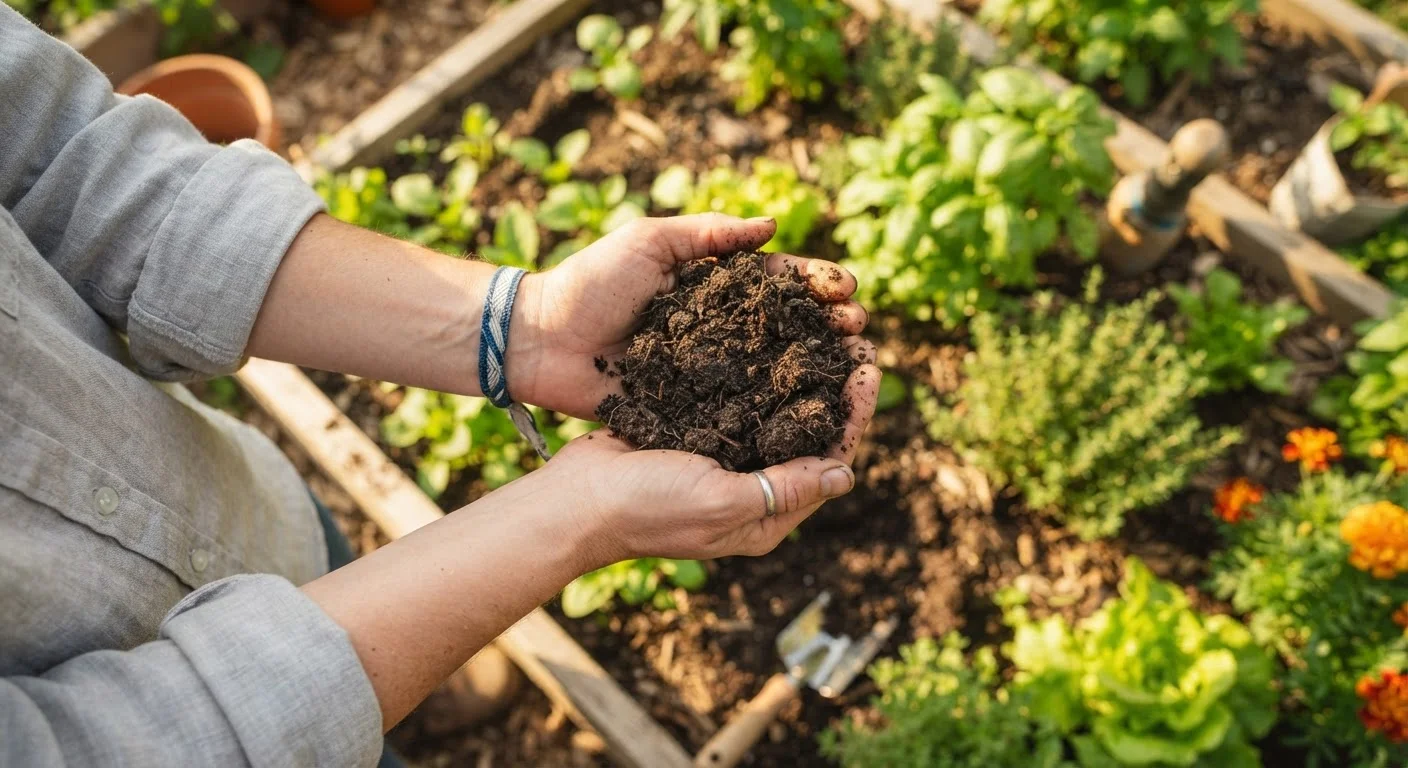
Dig a small handful of moist soil and squeeze it firmly, then open your hand. If it crumbles right away, you likely have sandy soil - it drains fast but doesn't hold nutrients well. If it holds a dense, sticky ribbon, you have clay soil - it retains moisture but can suffocate roots. If it holds shape briefly and then breaks apart cleanly, you have loam - the ideal blend for most gardens.
The pH Factor
Soil pH measures acidity and alkalinity on a scale from 0 to 14, with 7 being neutral. Most edible plants and common flowers thrive in a range of 6.0 to 7.0. Outside that window, plants can't absorb nutrients properly - even if those nutrients are present in the soil. An inexpensive test kit, available at most garden centers, gives you a quick reading and often includes simple guidance on adjusting your pH.
Improving What You Have
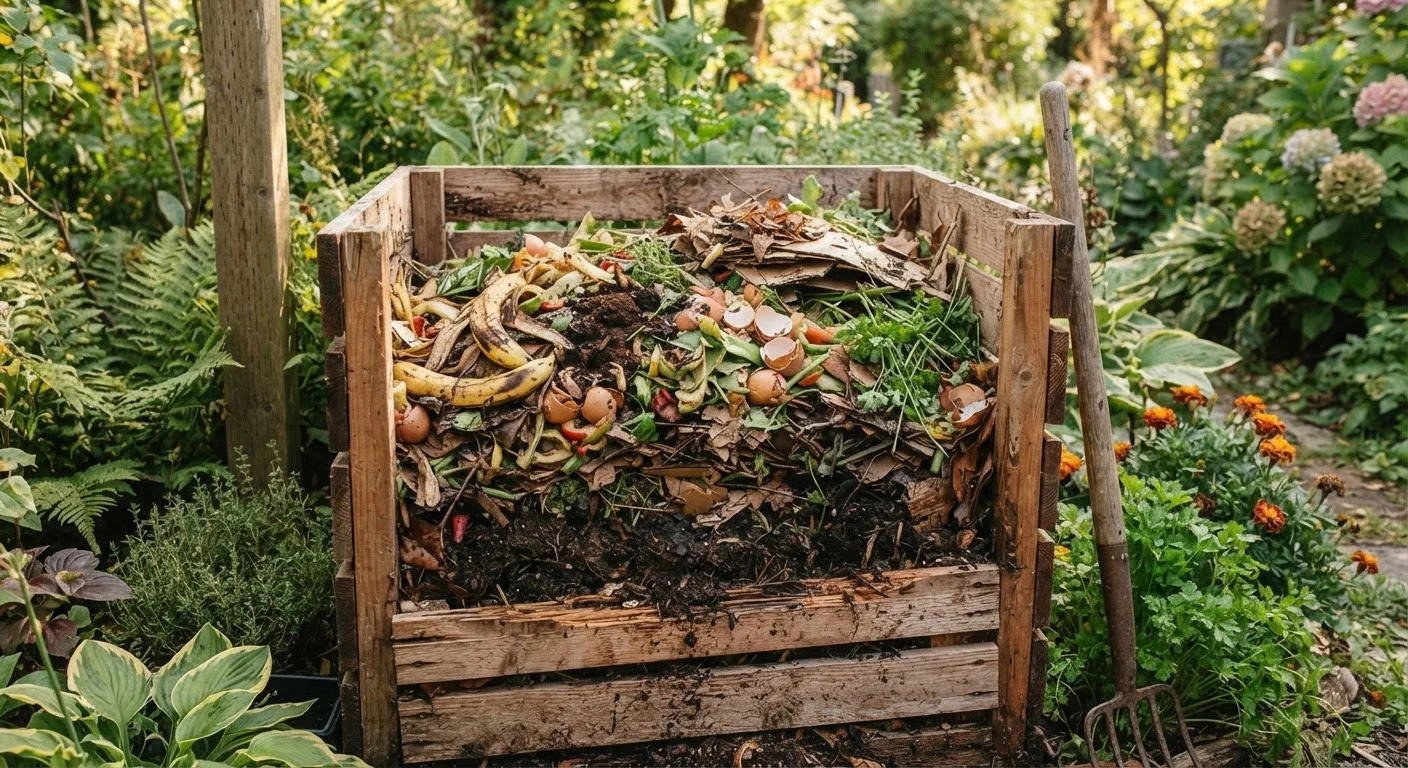
Compost is the go-to amendment for almost any soil problem. Working two to four inches into your existing soil improves drainage in clay and water retention in sandy ground. It also introduces beneficial microorganisms that support root health. If you'd like to build your own compost supply, our home composting guide walks you through setting up a simple system from scratch.
Reading the Sun in Your Yard
Sun exposure is one of the easiest things to get wrong because it changes throughout the day - and throughout the season. A spot that looks sunny in the morning may be shaded by a fence or tree by early afternoon.
Track Sun Before You Dig
Set a reminder to check your yard at 8 a.m., noon, and 4 p.m. on a clear day, and note which areas are in full sun, partial shade, or full shade at each time. A single-day observation gives you a reliable map you can use all season. Write it down or take photos - it's easy to forget by planting time.
Track It for a Full Day
Before choosing a planting location, spend one full day noting which parts of your yard receive direct sunlight and for how long. Morning-only sun tends to be gentler; afternoon sun is more intense. Most seed packets and plant tags use three standard categories:
- Full sun: 6 or more hours of direct sunlight daily
- Partial sun / partial shade: 3-6 hours daily
- Full shade: fewer than 3 hours daily
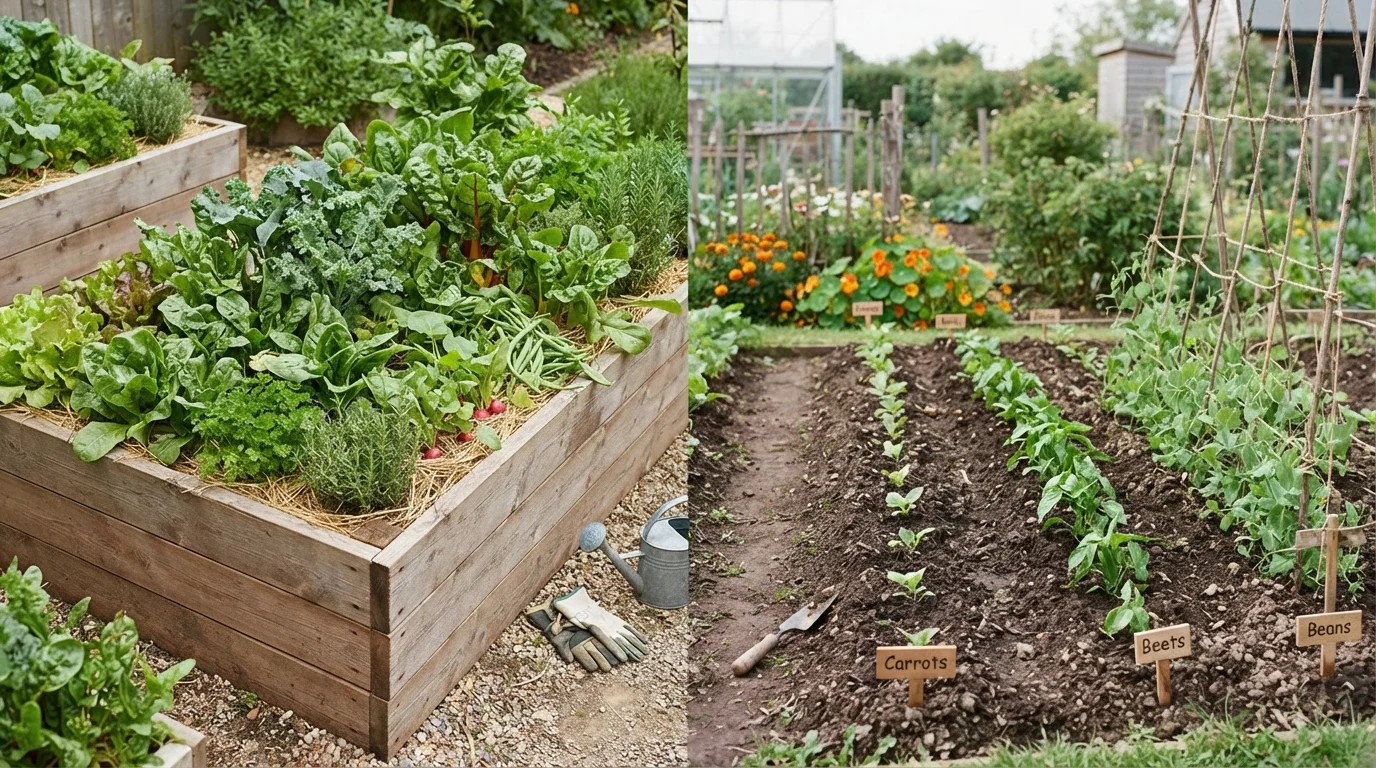
Matching a plant's light requirement to your actual site - rather than assuming a spot is sunny enough - is one of the simplest ways to avoid disappointment. Once you feel comfortable reading the sun in your yard, you'll also be better equipped to decide whether a raised bed or an in-ground plot makes more sense for your space. Our guide on raised beds vs. in-ground planting walks through how light and location factor into that choice.
Watering Basics: Less Guesswork, More Consistency
Overwatering kills more garden plants than drought does. It's a well-documented pattern among new gardeners who equate frequent watering with care. In practice, roots need air as well as moisture - waterlogged soil suffocates them.
Overwatering Is the Most Common Mistake
Yellowing leaves, soggy soil, and a smell of mildew near your plants are common signs of overwatering. Roots need oxygen as well as water, and soil that stays waterlogged starves them of it. Always check soil moisture with your finger before reaching for the hose.
The One-Inch Rule
A general benchmark for most vegetable and flower gardens is about one inch of water per week, combining rainfall and any irrigation you add. Rather than watering a little every day, watering deeply two or three times a week encourages roots to grow downward toward consistent moisture - building stronger, more resilient plants.
How to Check Before You Water
Push your finger one to two inches into the soil near the base of your plants. If it feels moist, wait. If it's dry at that depth, it's time to water. This simple check removes the guesswork and prevents the most common beginner mistake. Keep in mind that container plants and raised beds dry out more quickly than in-ground soil, so they may need more frequent attention.
Also worth noting: many gardening myths around watering - like the idea that wilting always means thirst - can lead beginners astray. Our article on common gardening myths covers several of these in detail.
Putting It All Together Before You Plant
Once you've assessed your soil, mapped your sunlight, and understood your watering approach, you're in a genuinely strong position to choose plants that will thrive in your actual conditions. This isn't about achieving perfection - it's about making informed decisions so you're not fighting your environment from the start.
A few practical next steps:
- Do your soil squeeze test and, if possible, a basic pH check.
- Observe your yard's sunlight for a full day and note which zones get full, partial, or no direct sun.
- Decide on your watering method - hand watering, a soaker hose, or drip irrigation - before your plants arrive.
- Choose plants whose label requirements match your actual conditions, not your hopes.
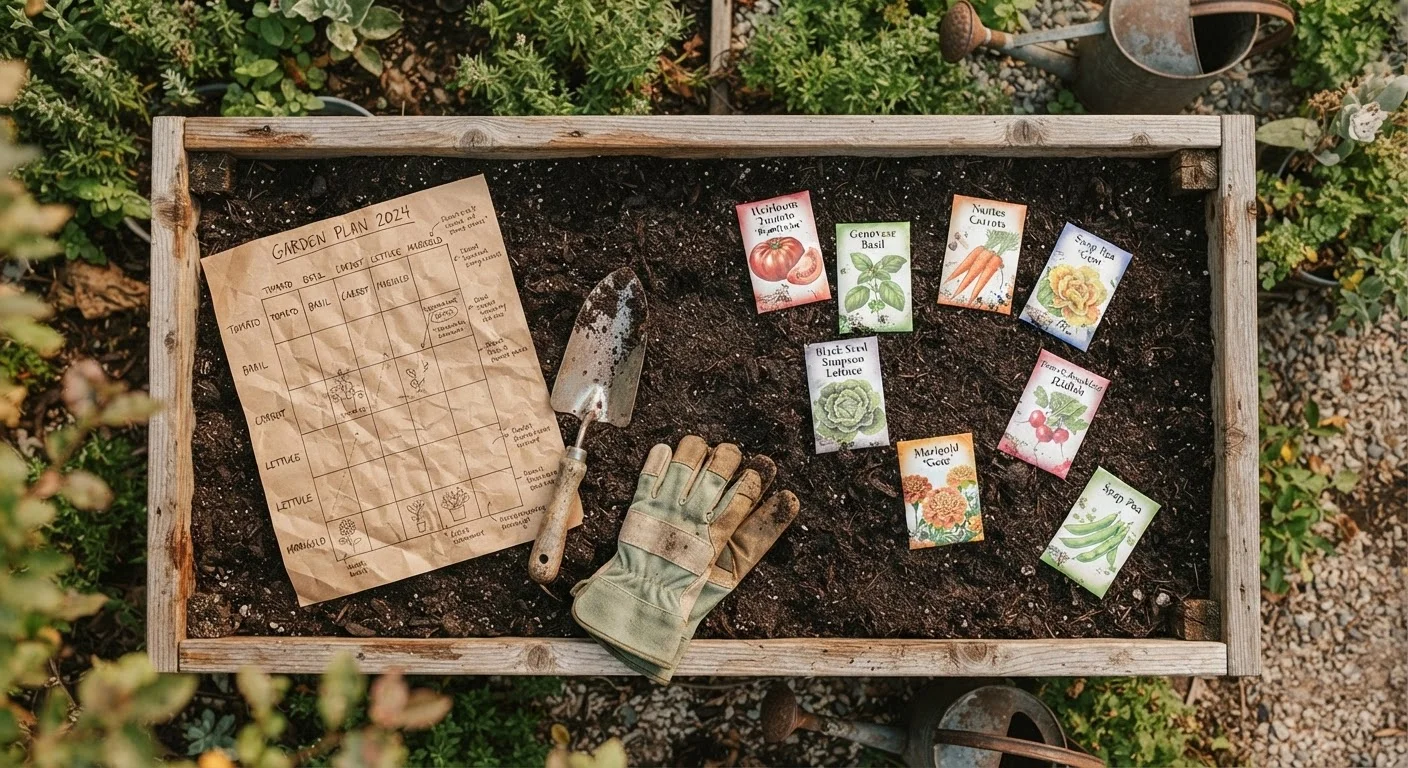
When you're ready to take the next step, our essential garden tools guide helps you figure out exactly what equipment you'll need - without overbuying. And if you want to decode what's printed on seed packages before shopping, understanding seed packets is a helpful read that pairs directly with this foundation.
Gardening rewards observation and patience more than effort alone. The time you spend learning your space now will pay off every season that follows.