Why Seasonal Decluttering Works Better Than One Big Purge
Most people wait until clutter becomes unbearable before doing anything about it. The problem with that approach is that a year's worth of accumulated belongings is genuinely exhausting to sort through, and decision fatigue sets in fast. Seasonal decluttering - working through your home roughly four times a year - spreads that effort into manageable sessions and keeps spaces from reaching a tipping point.
Think of it like routine maintenance. Just as you change air filters or clean gutters on a schedule, clearing out unused items on a seasonal rhythm means no single session feels like a crisis. If you're weighing different ways to approach the work, see our comparison of category-based vs. room-by-room decluttering to find the approach that suits your home and lifestyle.
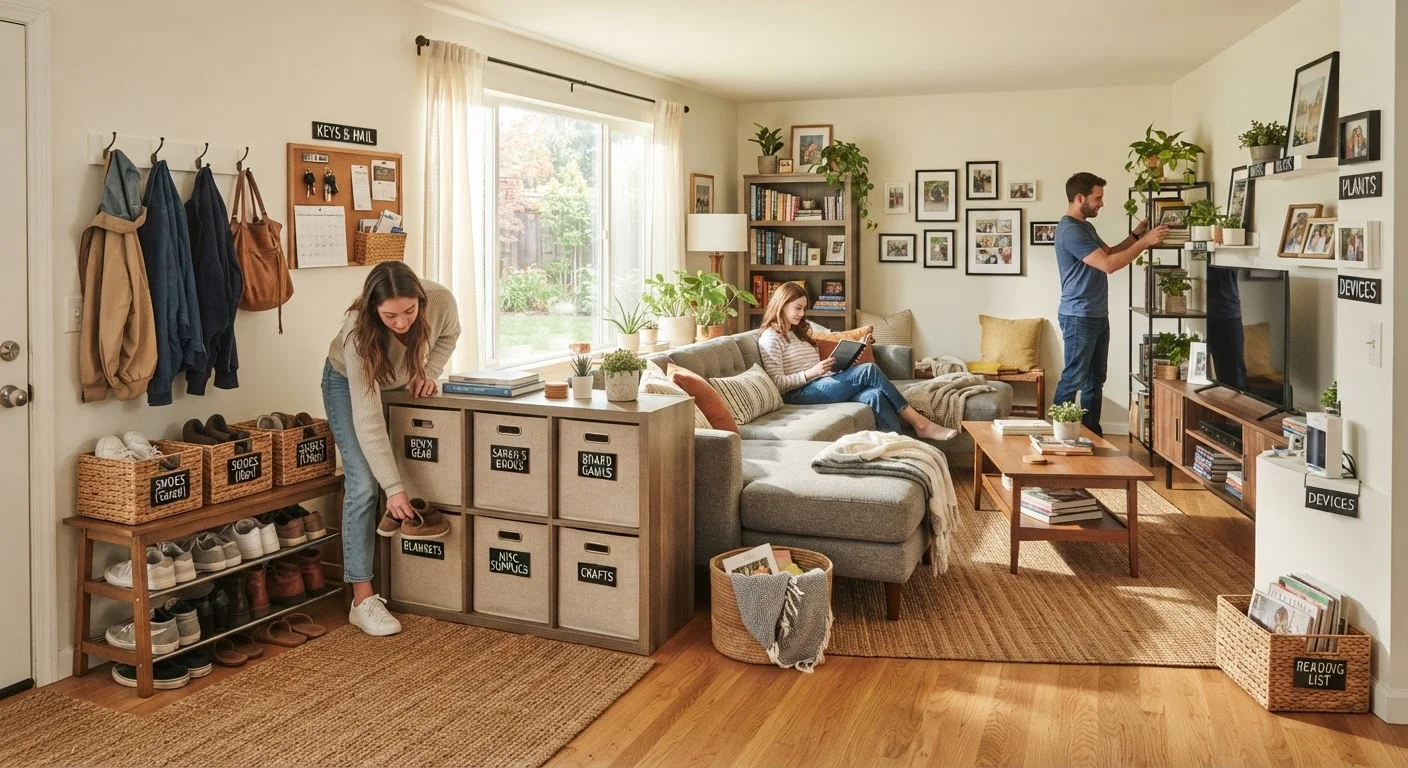
Before you start, gather your supplies and loop in anyone else who shares the space. Households with multiple people often need a quick conversation about shared areas first - our guide on organizing a home with multiple people offers practical strategies for that conversation.
Heavy-duty garbage bags
Collect items for discard in one pass without multiple trips.
Clearly labeled boxes or bins
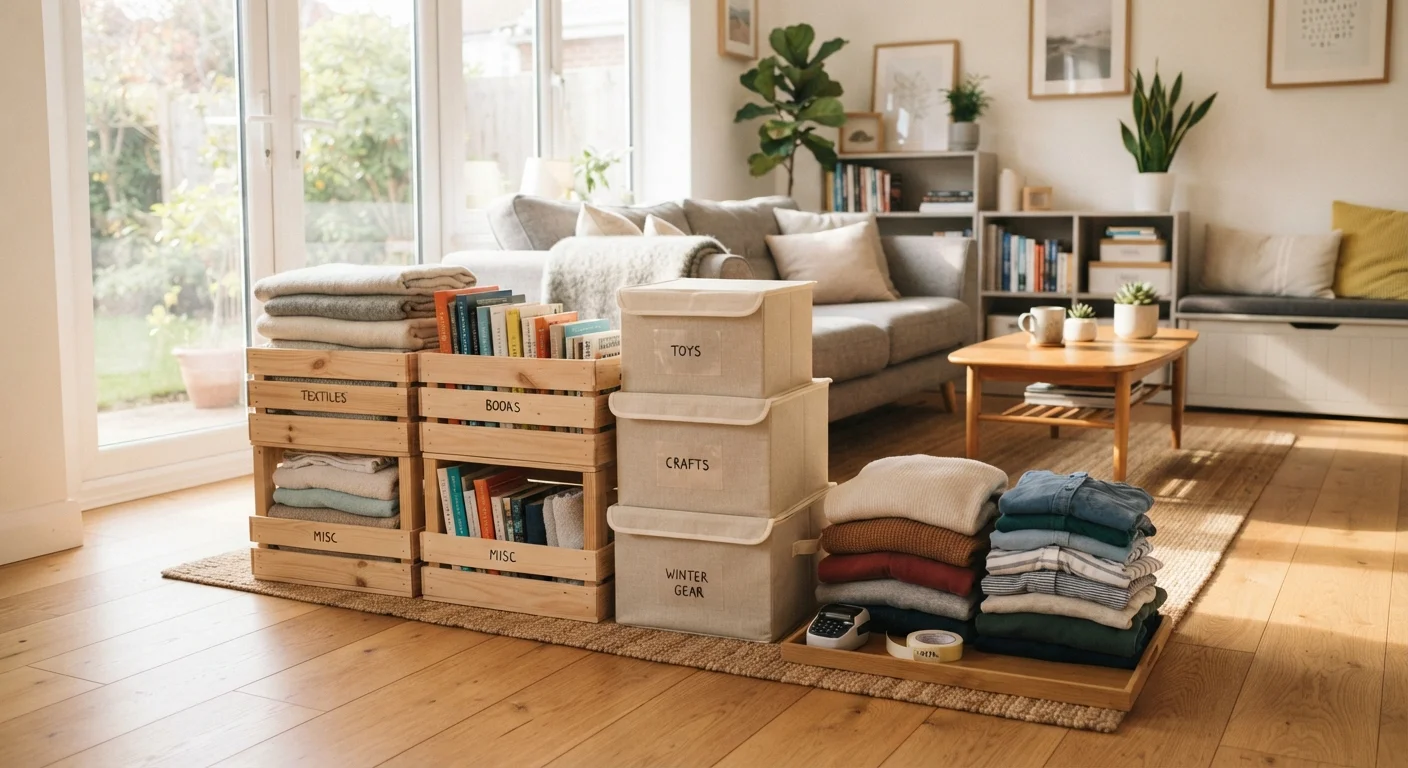
Separate items into keep, donate, and discard categories as you sort.
Permanent marker and labels
Mark storage boxes and bins so contents are easy to identify later.
Donation drop-off information
Know your nearest charity shop or donation center hours before you start, so bags don't linger at home.
Shredder
Safely destroy personal documents and old financial paperwork before discarding.
The Room-by-Room Seasonal Checklist
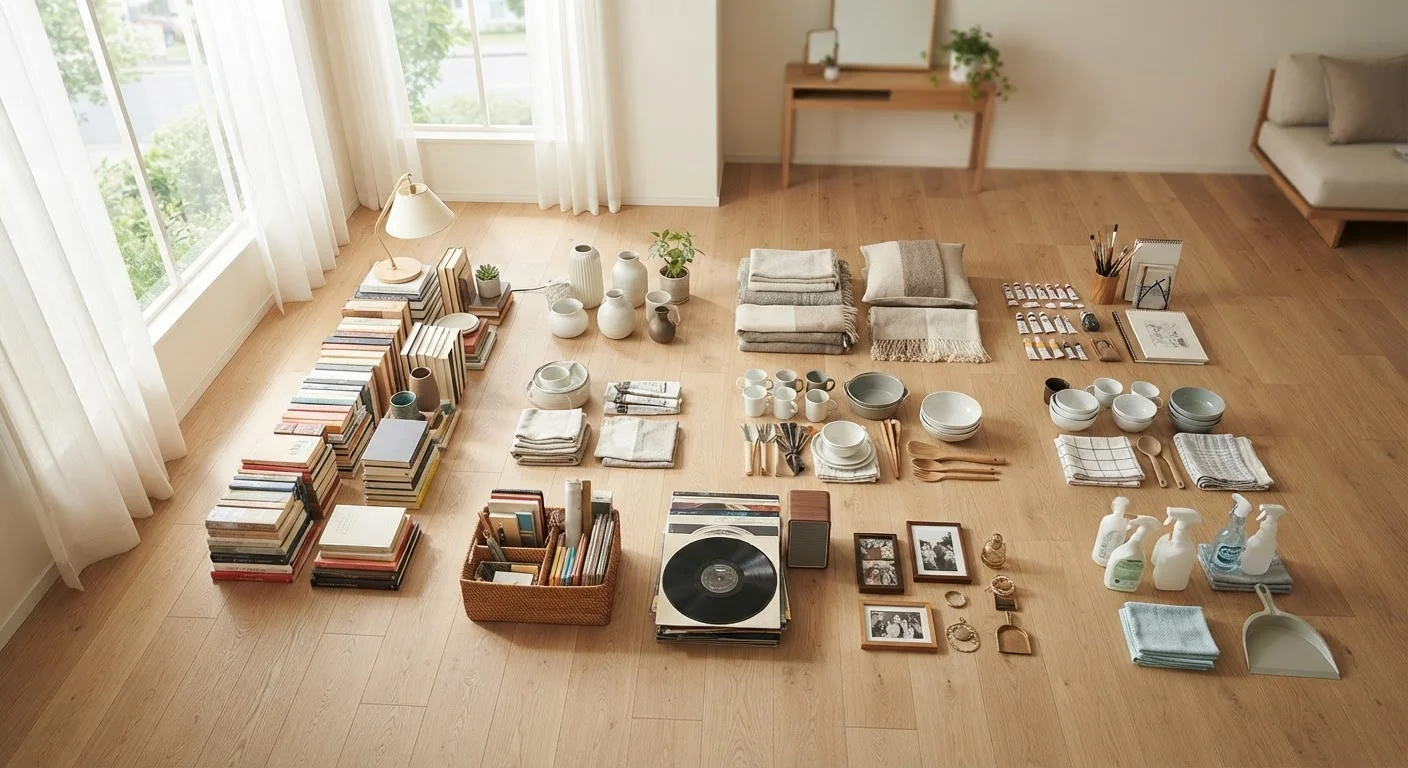
Work through each room using the checklist below. For each item you touch, sort it into one of three categories: keep, donate/sell, or discard. Don't leave items in a vague "maybe" pile - it defeats the purpose. If you're feeling overwhelmed before you've even started, try the low-pressure approach described in our article on starting a declutter one room at a time.
Kitchen
Bedrooms
Bathrooms
Living Areas
Storage Areas (Garage, Basement, Closets)
Paperwork and Digital Clutter
Dispose of Hazardous Items Responsibly
Old paint, batteries, cleaning chemicals, and medications should never go in regular household trash or down the drain. Check with your local municipality for hazardous waste drop-off events or approved disposal sites. Many pharmacies also accept unused medications. Improper disposal can harm the environment and may violate local regulations.
Once you've worked through each room, do a final sweep of high-traffic areas - entryways, countertops, and the tops of furniture - where items tend to land and linger. These flat surfaces are clutter magnets and deserve a quick reset at the end of every session.
Keeping the Momentum Going
The checklist is only useful if you return to it. Block a recurring reminder on your calendar at the start of each season - even 90 minutes per session spread over a weekend is enough for most homes. Pair decluttering with another seasonal habit, like swapping out wardrobes for colder or warmer weather, so it becomes automatic rather than a deliberate effort.
Decluttering can also have a quiet financial upside. Items in good condition can be sold or donated, and the habit of reviewing what you own naturally curbs impulse buying - you start to notice how much you already have. For a broader look at reviewing your household finances on a regular schedule, the monthly savings health check checklist pairs well with this kind of intentional home reset.
For ongoing home upkeep beyond organization, our room-by-room home maintenance schedule covers the structural and mechanical side of keeping your home in good shape season by season.
Don't Declutter Other People's Belongings Without Asking
It can be tempting to clear out items belonging to a partner, child, or housemate while you're on a roll - but removing someone else's possessions without consent can damage trust. Work through shared and private spaces together, or agree in advance on which areas each person is responsible for sorting themselves.