A Rule That's Elegant on Paper
The one-in, one-out rule has the satisfying logic of a simple equation: the total stays flat, clutter never compounds, and every new purchase carries a built-in accountability check. In principle, it's one of the cleanest organizational habits you can adopt.
In practice, most households quietly abandon it within a few weeks - not because the concept is flawed, but because it runs headlong into some deeply human tendencies that no tidy formula fully accounts for.
Understanding why the rule is hard is actually the most useful thing you can do before you try to implement it. It transforms the challenge from a personal failure into a predictable obstacle you can plan around.
The Psychology Working Against You
The biggest invisible force in play is loss aversion - a well-documented cognitive tendency where losses feel roughly twice as painful as equivalent gains feel good. Bringing something new home feels like a gain. Giving something away feels like a loss. Even when the exchange is objectively fair, the emotional math doesn't balance.
There's also the problem of future-self thinking: we hold on to items because we imagine a future version of ourselves who will definitely use that bread maker, finally finish that half-read book, or fit back into those jeans. That imagined future self feels real enough to justify keeping things indefinitely.
“We don't actually decide when we're tired, rushed, or emotionally attached. Most decluttering failures happen because we design systems that require perfect decision-making at the worst possible moments.”
— Fumio Sasaki, Author and minimalism advocate
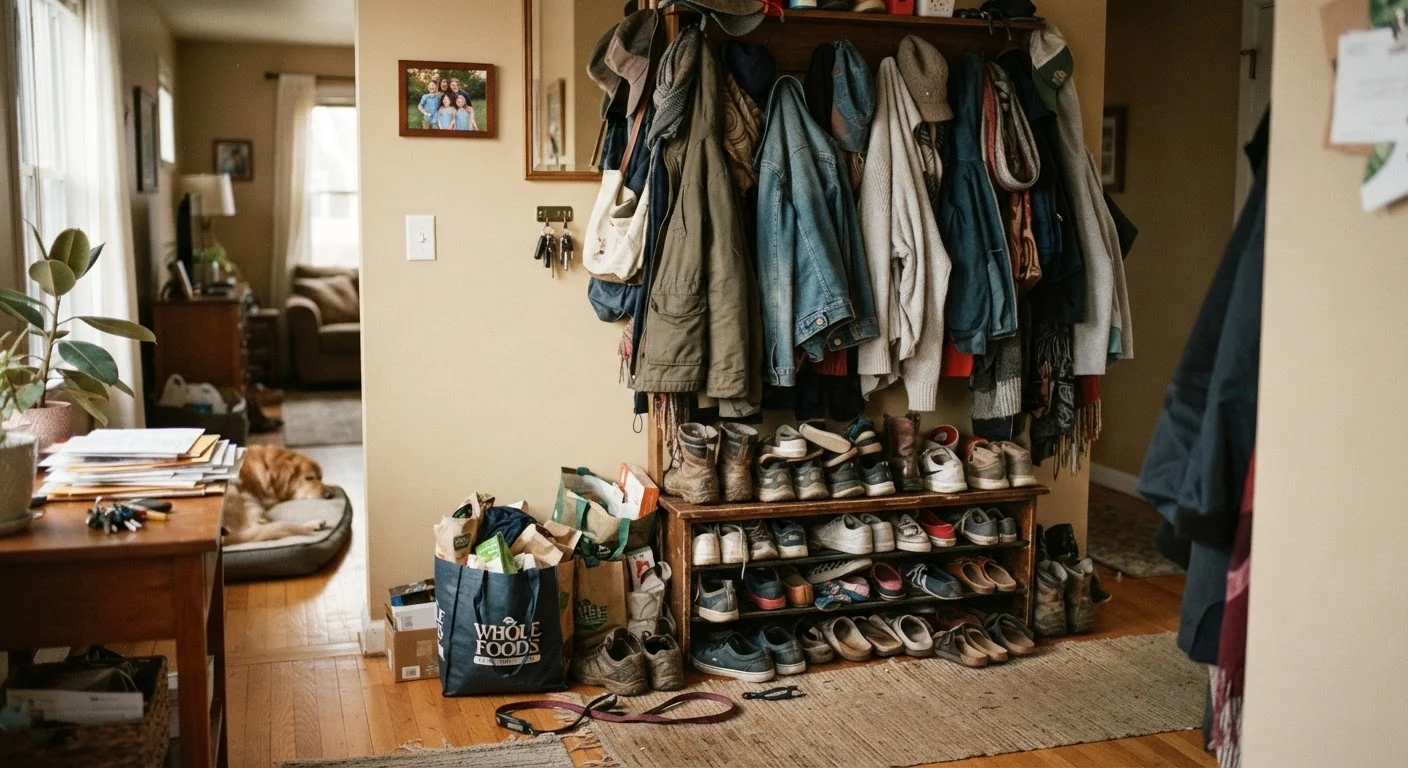
Add to this the friction of the act itself. Giving something away requires a decision about where it goes - donation center, a friend, recycling, trash - and that decision often gets deferred until it stops happening at all. The item sits in a mental holding pattern that gradually becomes physical clutter.
What Makes Shared Households Even Harder
In a single-person household, the one-in, one-out rule only needs one person's buy-in. In a household of two, three, or more, every object potentially belongs to someone with a different attachment, different threshold, and different idea of what 'too much' looks like.
A partner who doesn't feel crowded by clutter has little motivation to maintain the rule. Children accumulate toys, art supplies, and sports gear at a pace that can outstrip any system. And it's practically impossible to apply the rule to someone else's possessions without creating tension.
Organizing a home with multiple people requires treating the rule as a shared agreement rather than an imposed standard - which takes ongoing conversation, not just a one-time decision.
Try a Household 'Outbox' Habit
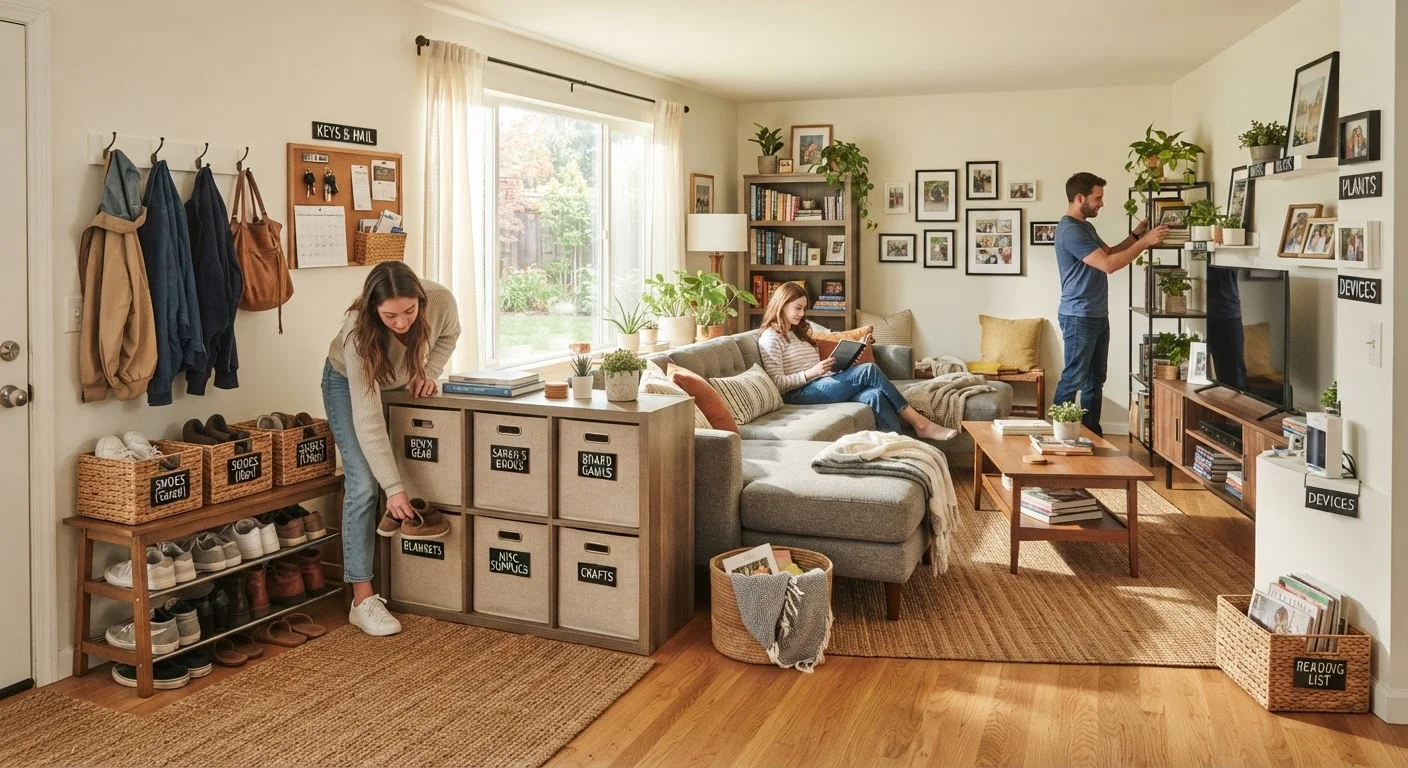
Place a small basket or bag near your front door or in a bedroom corner - somewhere visible and easy to reach. When something is earmarked to leave, it goes in the box immediately. Set a recurring reminder every two to four weeks to drop the box off at a donation center. The key is that items in the box are already decided: no revisiting, no second-guessing.
Making the Rule More Likely to Stick
The most practical modification is to reduce the friction at the outgoing end. Keep a dedicated outbox - a basket, bin, or bag in an accessible spot - where items earmarked for donation can land immediately, before second-guessing takes over. Once an item is in the box, the decision is essentially made.
It also helps to decouple the timing. You don't have to find the outgoing item the moment you bring something new in. Giving yourself 24-48 hours prevents the rule from feeling punishing in the moment of a purchase, while still holding you accountable.
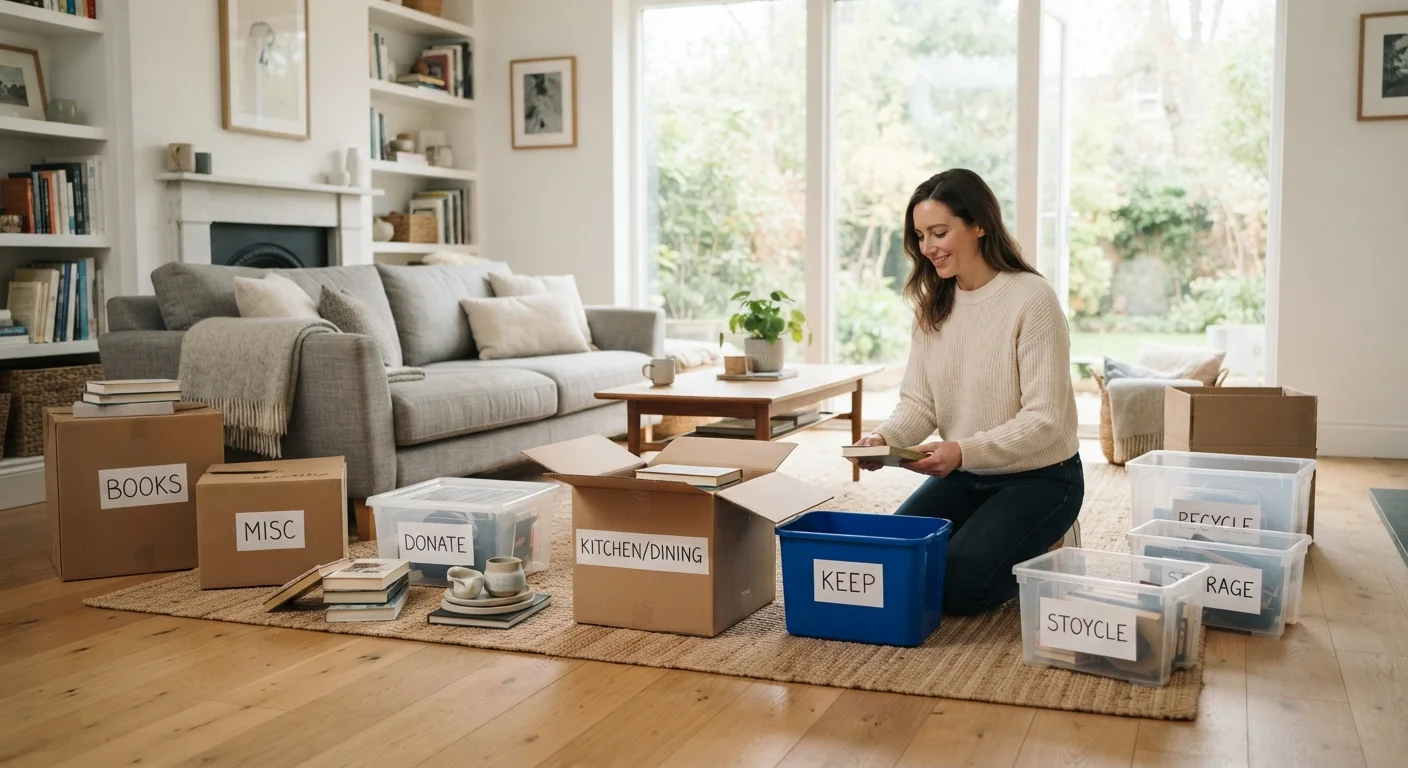
If your home is already carrying a backlog of clutter, starting a declutter room by room is a more realistic foundation than jumping straight into a maintenance rule. The one-in, one-out principle works best once you've reached a baseline you're willing to protect.
80%
Items in a typical home rarely or never used
According to research referenced by professional organizers, roughly 80% of household items are used less than once a month, making the 'I might need it' justification statistically unreliable.
1 in 10
U.S. households renting off-site storage
The Self Storage Association has reported that approximately one in ten U.S. households rents external storage space, suggesting that acquisition consistently outpaces disposal for many families.
It's also worth knowing that even imperfect adherence has value. Slipping up occasionally doesn't mean the rule failed - it means you're working against real psychological headwinds, and some resistance is normal. Understanding why organized spaces revert to clutter can help you anticipate the patterns rather than being surprised by them.