Why Shared Homes Are Harder to Keep Organized
Living with other people - whether a partner, roommates, children, or extended family - means your home has to serve multiple sets of habits, preferences, and priorities simultaneously. What feels obvious to one person (keys always go on the hook) may not register at all for another. This isn't a character flaw on either side; it reflects the reality that organization habits are deeply personal and often unconscious.
The result is friction: items that migrate to the wrong places, shared spaces that never quite feel manageable, and recurring arguments about the same clutter. As the psychology behind why clutter accumulates explains, much of this is rooted in cognitive patterns rather than laziness - which means it responds well to structural solutions, not just better intentions.
Disorganization in shared homes also has a real cost. From duplicate purchases to lost time searching for items, a chaotic shared space quietly drains resources. You can explore this dynamic further in our piece on the hidden cost of disorganization at home.
Organization Is a Negotiation, Not a Mandate
Imposing one person's tidiness standards on an entire household almost always backfires. Systems that work long-term are ones every member helped design and genuinely agreed to follow. If someone had no say in the setup, they have little incentive to maintain it.
The good news: shared-home organization doesn't require everyone to have the same tidiness standards. It requires everyone to follow the same agreed-upon systems - a meaningfully different and more achievable goal.
What you will need
How to Build Systems Everyone Will Actually Use
Start With One Shared Space
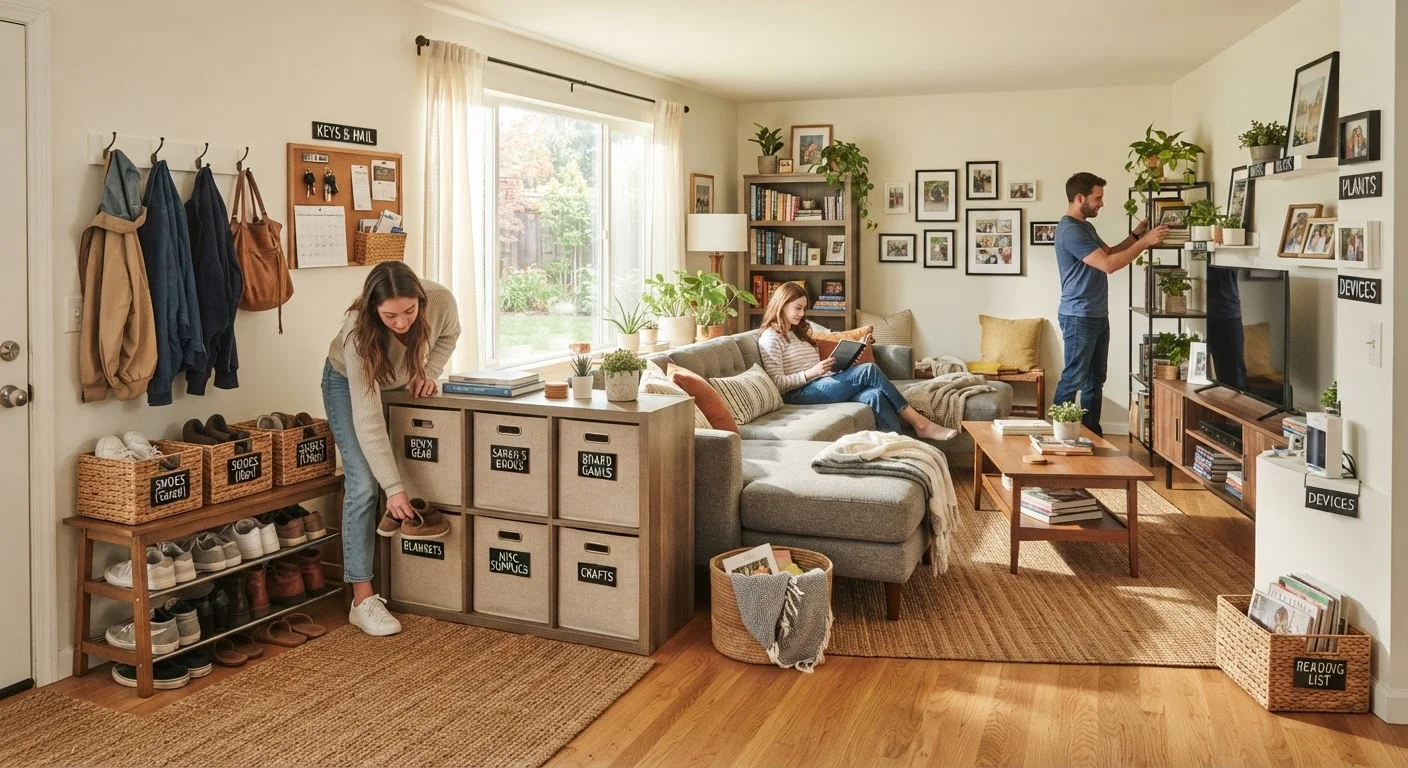
Trying to reorganize an entire home at once is overwhelming for any household. Pick a single high-traffic area - the kitchen counter, entryway, or living room - and build a system there first. Early wins build momentum and give everyone a working example to reference.
Have an Honest Household Conversation
Before rearranging a single drawer, gather everyone who lives in the home - even reluctant participants. The goal isn't to criticize habits but to identify friction points: Where does clutter most often accumulate? Which shared spaces cause the most tension? What does each person actually need convenient access to?
Keep the tone collaborative. Frame the conversation around shared comfort rather than blame. You're solving a shared problem, not assigning fault.
Map Out Shared Versus Personal Zones
Divide your home into two categories: spaces everyone uses (kitchen, bathroom, entryway, living room) and spaces that belong primarily to one person (bedrooms, personal desks, hobby corners). Shared zones need agreed-upon rules. Personal zones can operate by each individual's own standards.
This distinction alone resolves a lot of conflict. If a bedroom is messy but the door is closed, it affects only that person. If the kitchen counter is cluttered, it affects everyone.
Assign a Logical Home to Every Shared Item
For each shared space, identify the items that regularly land there and decide where they should permanently live. The location should make sense - near where the item is used, at a height everyone can reach, and easy to access without special effort.
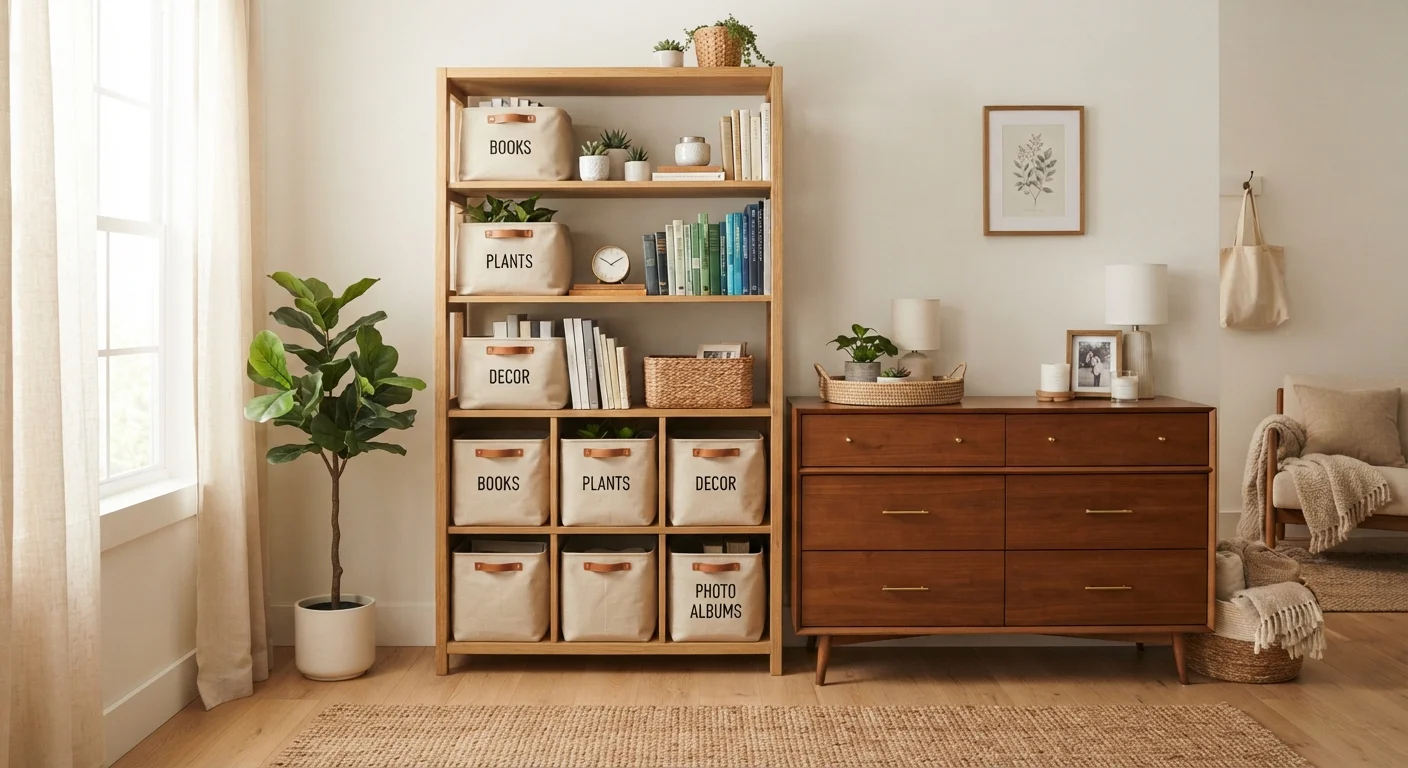
Use the right storage format for each room to match containers to actual habits. A basket by the door beats a hook no one uses.
Label Everything in Shared Spaces
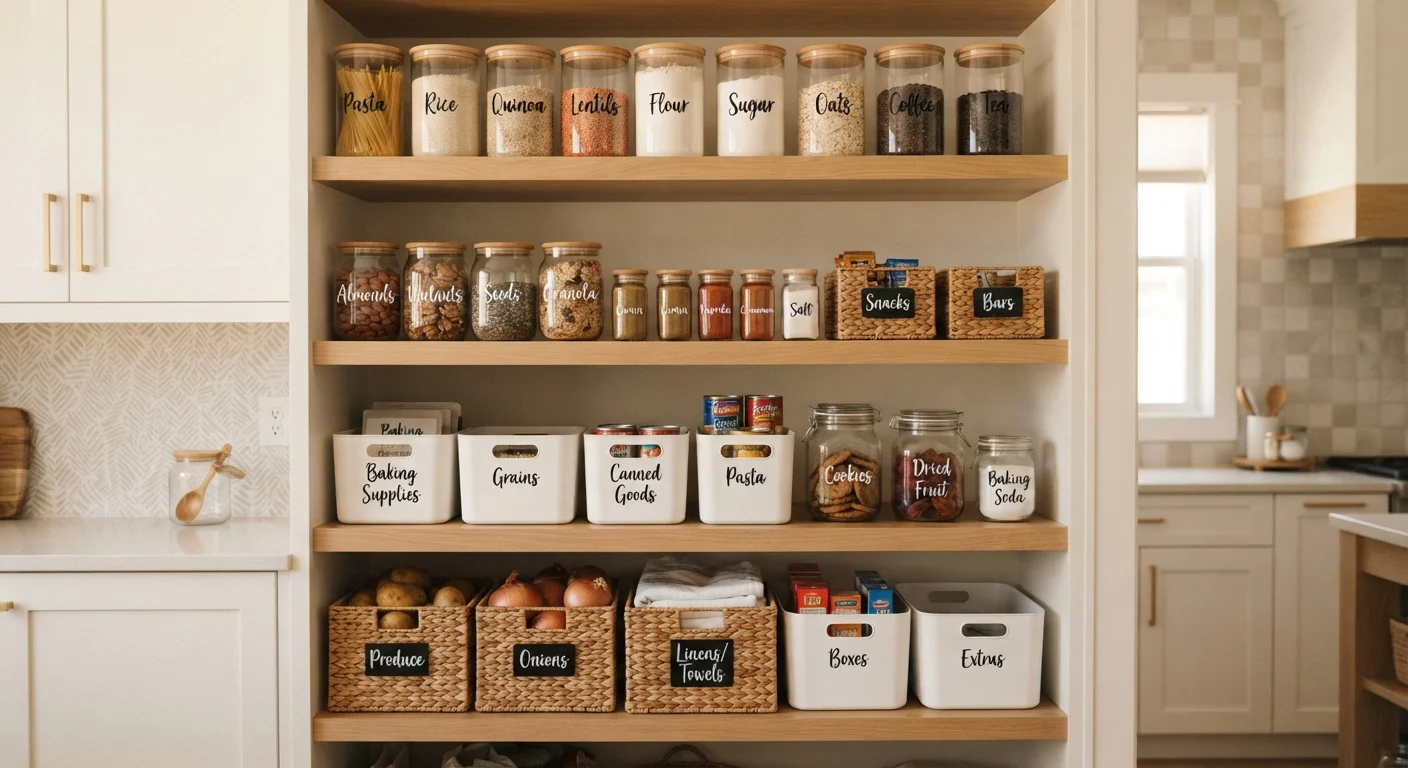
Labels eliminate the most common cause of clutter in multi-person homes: people not knowing where things go. When a bin is clearly marked, putting things away correctly requires no memory or guesswork. This is especially helpful for children or new household members still learning the system.
Labels don't have to be elaborate - masking tape and a marker work just as well as a label maker. For more ideas, see our article on labeling systems that actually help households stay organized.
Set Simple, Shared Maintenance Habits
Organization doesn't maintain itself. Agree on a few lightweight habits everyone commits to: a five-minute tidy before bed, a weekly reset of common areas, or a rule that dishes don't sit in the sink overnight. The simpler the habit, the more likely it sticks.
Rotating responsibilities rather than assigning permanent tasks can prevent resentment. Even small consistency is more valuable than occasional deep-cleaning bursts followed by weeks of neglect.
Schedule a Monthly Check-In
No organization system is permanently perfect. Households change - new items arrive, routines shift, people's needs evolve. Build in a short monthly review (15-20 minutes) to assess what's working and what isn't. Adjust systems rather than abandoning them.
This also prevents the slow slide described in why organized spaces stop working over time. Catching small breakdowns early is far easier than a full reset.
Avoid Overcomplicating Your Systems
A highly detailed organization system might look great initially but collapse within weeks if it demands too much effort. The more steps required to put something away, the less likely it will happen consistently. Favor simple, obvious homes for items over elaborate sorting schemes.
Once your systems are in place, consider whether your storage formats are genuinely suited to the spaces. Vertical versus floor-based storage can make a significant difference in high-traffic zones with limited square footage, and small-space organization strategies are worth exploring if your household is working with a compact layout.
Finally, keep an eye on accumulation. In shared homes, items multiply quickly. Understanding why the one-in, one-out rule is harder than it sounds can help your household build more sustainable habits around what comes into the home in the first place.
Bins or Baskets
Create visible, designated storage zones that are easy for all household members to use and return items to.
Labels or Masking Tape
Mark the contents and purpose of each storage area so no one has to guess where things belong.
Whiteboard or Shared Notes App
Track household organization agreements, rotating chores, or reminders in a visible, shared format.