
Why Most People Don't Know Where Their Money Goes
It's not a character flaw - it's a visibility problem. Most of us manage money across multiple accounts, pay some bills automatically, and make dozens of small purchases each week that never feel significant in the moment. By the end of the month, the math rarely adds up to what we expected.
Research in behavioral economics consistently shows that people underestimate their discretionary spending, especially on small, frequent purchases like coffee, takeout, or streaming services. Those amounts feel trivial individually but stack up fast. A clear monthly picture changes that dynamic.
This process isn't about guilt or restriction. It's about knowing the truth of your finances so you can make deliberate choices. The budgeting basics framework starts exactly here - with honest data. Once you know your actual numbers, you have real leverage.
This Is Education, Not Personalized Advice
The steps in this article are general financial education intended to help you understand your own spending patterns. They are not personalized financial advice. If you have complex financial circumstances, consider speaking with a licensed financial professional about your specific situation.
What You'll Need Before You Start
This exercise doesn't require any special tools or apps. You just need access to your financial records and a place to write things down.
What you will need
Bank and credit card statements
Provides a complete transaction record to identify every dollar spent during the month.
Spreadsheet or budgeting notebook
Used to list, sort, and total spending across categories.
Email inbox
Receipts and subscription confirmation emails fill gaps that statements might miss.
Budgeting app
Can automatically pull and categorize transactions to speed up the review process.
Use What You Already Have
You don't need a special app to get started. A free spreadsheet or even pen and paper works just as well. The goal at this stage is awareness, not perfection. You can always move to a digital tool once you've built the habit.
How to Track Your Spending Step by Step
Follow these steps in order. Each one builds on the last, so resist the temptation to jump ahead to the analysis before you've done the collection work.
Pull together every account statement
Start by gathering statements from every account you use: checking, savings, and all credit cards. If you pay for anything with cash, try to recall or estimate those amounts separately. Log in to each account's online portal or collect paper statements for the same calendar month.
The goal is one complete view - not just the account you use most. Many spending leaks hide in secondary cards or rarely checked accounts.
List every transaction without judgment
Go line by line through each statement and write down every transaction - the name of the payee and the amount. Do not skip anything, even if it feels embarrassing or minor. A $3 coffee and a $300 car payment both belong on the list.
Avoid the urge to justify or skip entries at this stage. The point is raw data, not self-criticism.
Sort spending into broad categories
Once you have the full list, group transactions into simple categories: housing, transportation, groceries, dining out, utilities, subscriptions, personal care, entertainment, debt payments, and miscellaneous. Keep the categories broad at first - too many splits make this exercise feel overwhelming.
For guidance on how to structure these groups sensibly, see how to organise your spending categories without overcomplicating your budget.
Separate fixed costs from variable spending
Go through your categories and mark each one as either fixed (the same amount each month, like rent or a loan payment) or variable (changes month to month, like groceries or gas). Fixed costs are largely out of your immediate control; variable costs are where most of your spending flexibility lives.
This distinction shows you exactly which numbers you can realistically move.
Total each category and look for surprises
Add up the totals for each category and then add those together for a monthly grand total. Now compare category totals to what you expected to spend. Most people are surprised - often uncomfortably - by the dining out, subscriptions, or entertainment lines.
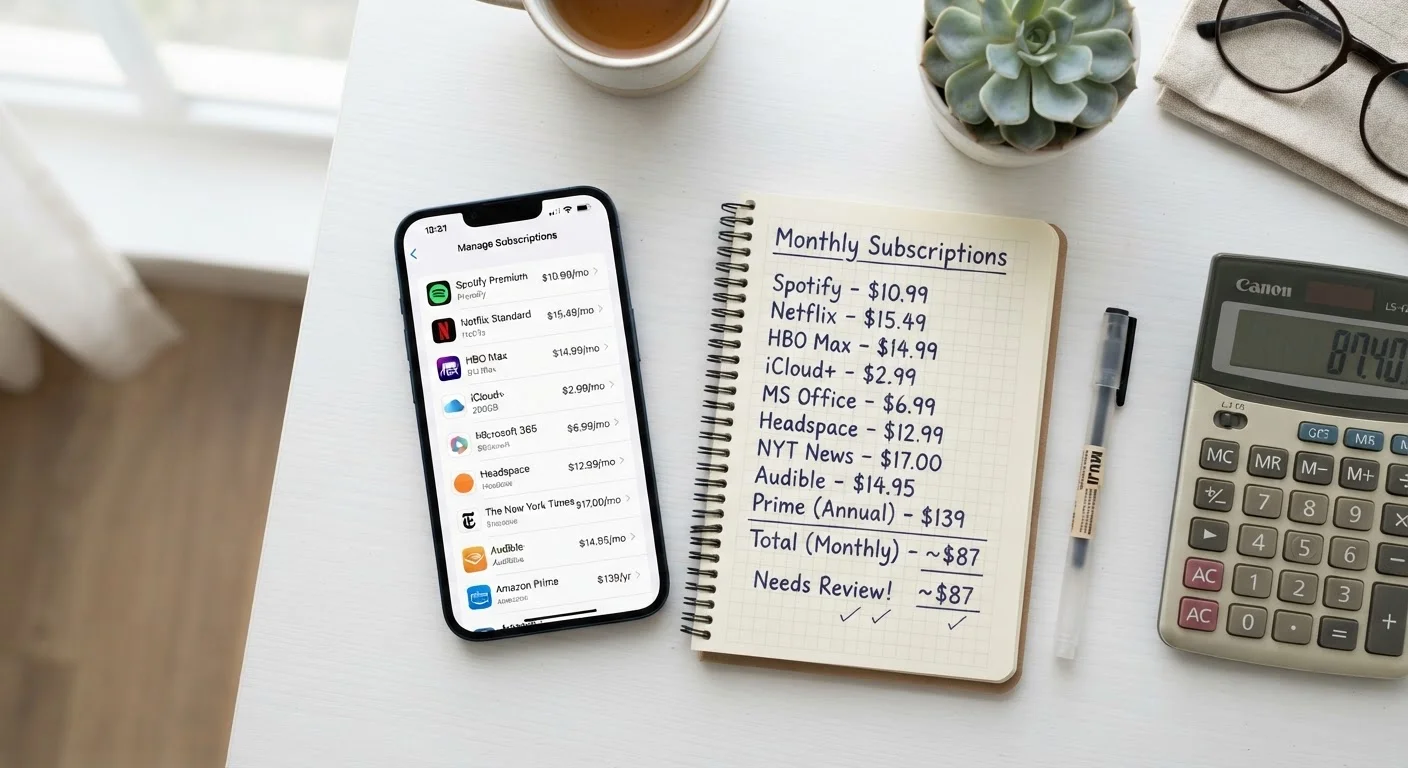
Recurring charges in particular have a way of accumulating quietly. For a closer look at how subscription costs add up over time, see how subscriptions drain your account.
Flag leaks and set one priority action
Circle the category where your spending most surprised you. That's your starting point. Don't try to fix everything at once - pick one area to address this month. It could be canceling unused subscriptions, setting a weekly cap on dining out, or meal-planning to reduce grocery drift.
Once you've done this review, use the monthly savings health check to keep your finances on track going forward.
Don't Skip Irregular Expenses
Annual fees, quarterly insurance premiums, and seasonal costs are easy to forget when reviewing a single month. If you ignore these, your monthly average will look smaller than it really is. Always divide annual or quarterly bills by the number of months they cover and factor that amount into your monthly picture.
What to Do With What You Find
Once you've completed your first monthly spending review, you'll have something most people never build: a ground-level view of your actual financial life. From here, the path forward depends on what you found.
If grocery spending stood out, find out what's quietly inflating your grocery bill - food is one of the most adjustable budget lines for most households. If you want to turn this one-time review into a monthly habit that actually sticks, the monthly budget reset checklist gives you a simple repeatable structure.
For a broader look at reducing everyday costs beyond just tracking, this end-to-end everyday saving guide covers the full landscape - from utility bills to discretionary spending.
The goal isn't a perfect budget on the first try. It's a clearer picture each month, and small adjustments that compound over time into real financial progress.
This article is for general informational and educational purposes only and does not constitute personalized financial advice. Consult a licensed financial professional for guidance specific to your situation.