Why Cats Are Particularly Vulnerable
Cats explore the world with their mouths and paws, and their grooming habits mean anything that gets on their fur often ends up ingested. What makes this especially risky is feline biology: cats lack certain liver enzymes - most notably glucuronyl transferase - that other mammals use to break down specific compounds. This means substances that are mildly irritating to a dog or harmless to a human can be severely toxic, even fatal, to a cat.
Many owners are surprised to discover that the danger often hides in completely ordinary items - a bouquet of lilies on the dining table, a bottle of essential oil diffused in the living room, or food scraps left on the counter. If you're setting up your home with a cat in mind, our guide on creating a cat-safe environment covers practical steps to reduce risk across every room.
The list below covers some of the most common and most dangerous household hazards for cats. It is not exhaustive - if you ever suspect your cat has been exposed to a toxin, contact your veterinarian or the ASPCA Animal Poison Control Center (888-426-4435) right away. This article is for general educational purposes only and is not a substitute for professional veterinary advice.
Lilies
True lilies - including Easter lilies, tiger lilies, and day lilies - are among the most dangerous plants a cat can encounter. Even a small amount of pollen, a leaf, or water from the vase can cause acute kidney failure in cats. Symptoms may include vomiting, lethargy, and loss of appetite, progressing rapidly to kidney shutdown if untreated.
If you receive flowers that include lilies, keep them completely inaccessible to your cat or opt for cat-safe alternatives like roses or orchids. The risk is serious enough that many veterinary toxicologists recommend that households with cats avoid lilies entirely.
Even a small amount of lily pollen can trigger acute kidney failure in cats.
Onions, Garlic, and Chives
All members of the Allium family - onions, garlic, leeks, shallots, and chives - are toxic to cats whether raw, cooked, or in powdered form. These foods damage red blood cells, leading to a condition called hemolytic anemia. Because garlic and onion powder are concentrated, even small amounts found in table scraps or flavored broths can be harmful.
Cats are generally less likely than dogs to eat these foods directly, but exposure through shared human food is a real risk. For a broader look at what cats should and shouldn't eat, our article on common cat nutrition myths helps clarify what belongs in their diet.
Garlic powder is especially concentrated - even a small amount in food scraps poses a real risk.
Essential Oils
Many popular essential oils - including tea tree, peppermint, eucalyptus, cinnamon, and citrus oils - are toxic to cats. Because cats cannot metabolize certain compounds found in these oils, exposure through skin contact, inhalation of diffuser mist, or ingestion can cause drooling, vomiting, tremors, and in serious cases, liver damage.
Passive diffusers that aerosolize oils into the air are a particular concern because cats can inhale the particles or absorb them through their coats during grooming. If you use essential oil products in your home, ensure rooms are well ventilated and that cats cannot access the diffuser directly.
Cats absorb diffused essential oils through their coats and cannot safely metabolize many of them.
Household Cleaning Products
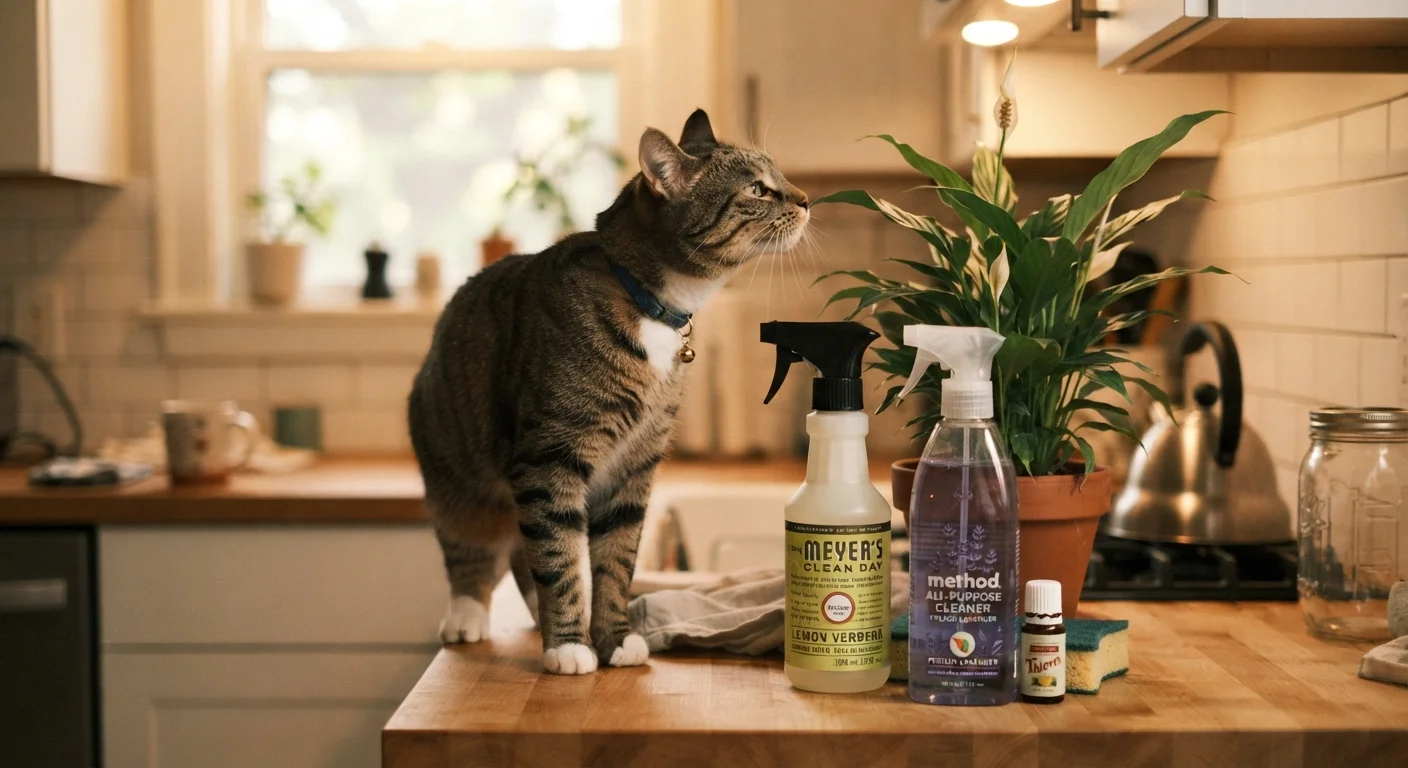
Many standard cleaning products - including bleach, disinfectant sprays, drain cleaners, and toilet bowl cleaners - contain chemicals that are hazardous to cats. Cats may walk across freshly cleaned surfaces and later ingest residue when they groom their paws. Phenol-based disinfectants (often found in products with a distinct medicinal smell) are particularly dangerous.
Allow surfaces to dry fully before letting your cat re-enter a cleaned area, and store all cleaning products securely. When possible, review product labels for phenols, benzalkonium chloride, or other compounds flagged as unsafe for pets.
Cats groom residue off their paws - a freshly cleaned floor can become a route of exposure.
Xylitol
Xylitol is an artificial sweetener found in sugar-free gum, some peanut butters, baked goods, vitamins, and oral care products. While xylitol is primarily known as a canine hazard, it can also be harmful to cats, potentially causing drops in blood sugar and liver damage. Because so many household products now contain xylitol, it's worth checking labels on items your cat might access.
Xylitol appears in many everyday products - checking ingredient labels is a simple precaution.
Human Medications
Common over-the-counter medications that are safe for humans can be lethal to cats. Acetaminophen (the active ingredient in Tylenol) is especially dangerous - cats cannot metabolize it and even a single tablet can be fatal. Aspirin, ibuprofen, and certain antihistamines also pose serious risks. Prescription medications left on counters or in accessible bags are another frequent hazard.
Keep all medications - human and veterinary - in sealed containers inside closed cabinets. Never give your cat any medication without direct veterinary guidance.
A single acetaminophen tablet can be fatal to a cat - secure all medications without exception.
Certain Houseplants
Beyond lilies, a range of popular houseplants carry toxicity risks for cats. Pothos, philodendron, dieffenbachia, and sago palm are among the most commonly encountered. Sago palm is particularly dangerous - ingestion of any part, including seeds, can cause liver failure. Aloe vera, while soothing for human skin, can cause vomiting and lethargy in cats if ingested.
Before bringing any new plant into your home, verify its safety using a reliable resource such as the ASPCA's online toxic plant database. When in doubt, opt for known cat-safe plants like spider plants, Boston ferns, or certain herbs such as basil or cilantro.
Sago palm is one of the most dangerous plants - any part of it can cause liver failure in cats.
What to Do If You Suspect Poisoning
Time is critical when a cat has been exposed to a toxic substance. Do not wait for symptoms to worsen before acting. Call your veterinarian or an animal poison control hotline immediately, and try to note the substance involved, the estimated amount, and when exposure occurred - this information helps the vet respond quickly.
Save Emergency Numbers Before You Need Them
Keep the ASPCA Animal Poison Control Center number (888-426-4435) and your veterinarian's emergency line saved in your phone. When a potential poisoning occurs, having these contacts ready can save precious minutes. Note that the ASPCA hotline may charge a consultation fee, so it's also worth identifying a local 24-hour emergency animal hospital in advance.
Never attempt to induce vomiting in your cat unless explicitly directed by a veterinarian. Some substances cause more damage on the way back up, and improper home treatment can worsen the situation. Treatment is always best guided by a professional.
Reducing risk at home is an ongoing process, not a one-time check. Regularly audit what you bring into your living space - new houseplants, cleaning products, or even foods. Our overview of the real costs of owning a cat is a good reminder that emergency vet visits are a real financial possibility worth planning for. Staying informed is one of the most meaningful things you can do for your cat's long-term wellbeing.
This article is for informational purposes only and does not constitute veterinary or medical advice. Always consult a licensed veterinarian for concerns about your pet's health.