
What to Expect in the First Few Days
Bringing a cat home for the first time is exciting - but for your new companion, it can feel overwhelming. A new environment means unfamiliar smells, sounds, and people. Most cats respond by hiding, moving cautiously, or vocalizing more than usual. This is completely normal.
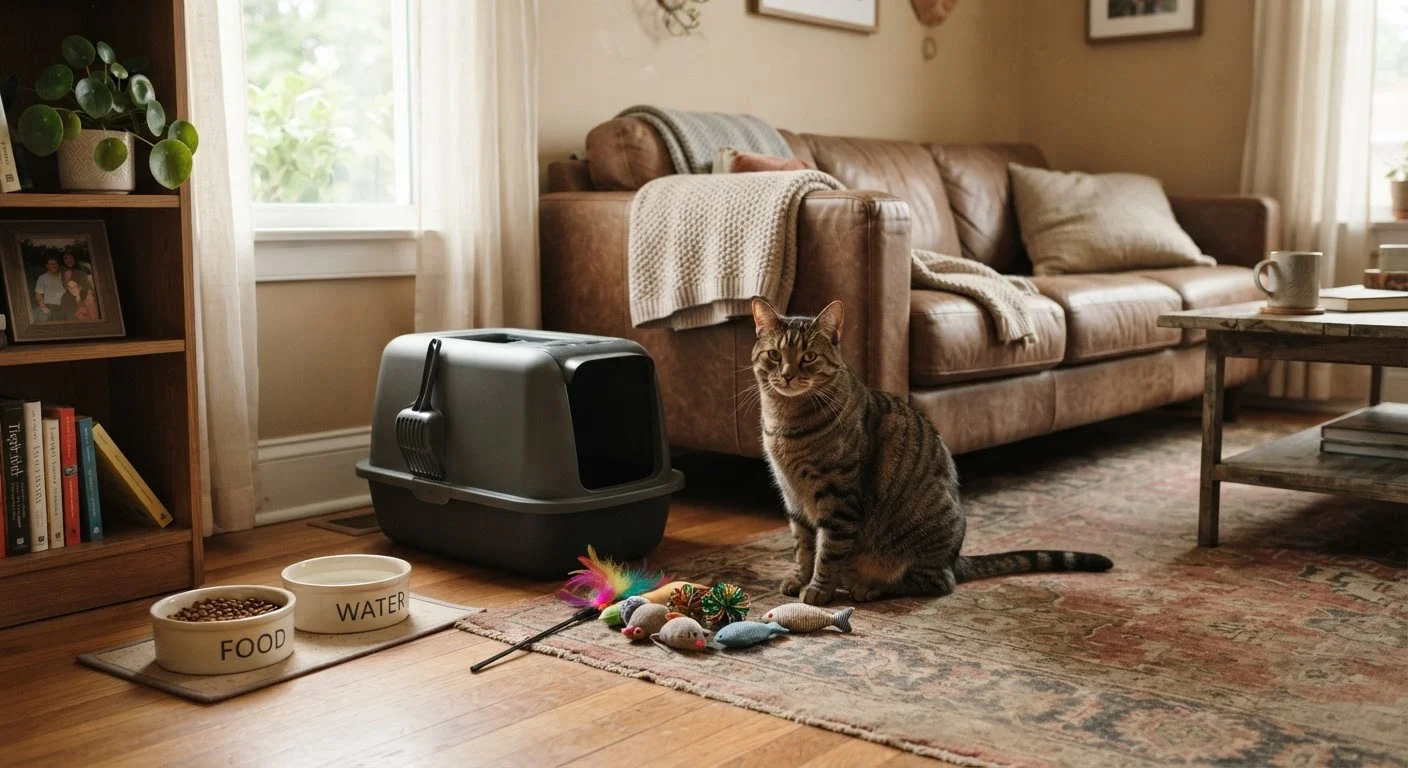
Start by confining your cat to a single quiet room stocked with food, water, a litter box, and a cozy resting spot. Let them explore at their own pace. Resist the urge to hold or handle the cat constantly in those first days. Slow, calm interactions build trust far more effectively than persistence.
If you have other pets at home, keep them separated initially. A gradual, managed introduction reduces the risk of conflict. For a detailed approach, see our guide on introducing a new cat to a multi-pet household.
Hiding Is Not a Bad Sign
A new cat that hides under the bed or behind furniture is not unhappy - it's using a normal coping strategy while it adjusts to the unfamiliar environment. Provide access to food, water, and a litter box near the hiding spot and give the cat space. Most cats become more exploratory and social within a week or two.
Essential Supplies Before Your Cat Arrives
Having the right supplies ready before your cat comes home makes the transition smoother for both of you. Here's what every new cat owner should have in place:
- Litter box and litter - unscented, clumping litter is preferred by most cats
- Food and water bowls - wide, shallow bowls reduce whisker discomfort
- A carrier - essential for vet visits and emergencies
- Scratching post or pad - a non-negotiable outlet for natural behavior
- Resting spots - a cat bed, blanket, or box in a quiet corner
- Basic toys - wand-style and puzzle feeders support mental stimulation
For a full room-by-room setup guide, our article on setting up a home your cat will thrive in covers environmental safety and enrichment in depth. To plan your budget realistically, the real costs of owning a cat offers a clear financial overview.
Obligate carnivore
An animal that must eat meat to survive because its body cannot produce certain essential nutrients on its own. Cats fall into this category, which is why a protein-rich, meat-based diet is non-negotiable.
AAFCO
The Association of American Feed Control Officials - the organization that sets nutritional standards for pet food in the US. A food labeled 'complete and balanced' by AAFCO meets minimum nutrient requirements for cats.
Core vaccines
Vaccinations recommended for all cats regardless of lifestyle or location, because the diseases they prevent are widespread, severe, or pose a risk to humans. Rabies and FVRCP are examples of core cat vaccines.
Enrichment
Activities, objects, and environmental features that stimulate a cat's natural instincts - such as climbing structures, puzzle feeders, and interactive play - helping prevent boredom and stress-related behaviors.
Taurine
An amino acid that cats cannot synthesize in sufficient quantities on their own. It must come from their diet and is critical for heart health, vision, and reproduction. Commercial cat foods are required to contain adequate taurine.
Feeding Your Cat Well
Cats are obligate carnivores - they require nutrients found only in animal-based proteins. A diet formulated specifically for cats is essential; never substitute dog food, which lacks the amino acids cats need (including taurine).
Choose a food labeled as complete and balanced by the Association of American Feed Control Officials (AAFCO). Feed according to your cat's age: kitten formulas support rapid growth, adult formulas maintain steady health, and senior formulas address older cats' changing needs.
Consistency matters. Establish regular feeding times rather than leaving food out all day, which can contribute to overeating. Fresh water should always be available - many cats prefer a wide bowl or a circulating water fountain, which can encourage better hydration.
Transition Food Slowly
If you're switching from the food your cat ate before coming home, do so gradually over seven to ten days by mixing increasing amounts of the new food with the old. Abrupt food changes can cause digestive upset, including vomiting and diarrhea.
Litter Box Basics That Actually Work
A clean, accessible litter box is one of the most important factors in your cat's wellbeing - and in preventing house-soiling problems. Veterinary behaviorists commonly recommend one box per cat plus one extra, placed in separate, low-traffic locations throughout the home.
Scoop at least once daily and do a full litter change regularly. Cats are fastidious; a dirty box may cause them to seek alternatives. Avoid placing the box near the food or water bowl, and never put it in a location where your cat might feel cornered or startled.
If your cat suddenly stops using the box, consult your vet. Changes in litter box habits can be an early sign of a urinary or health issue.
Veterinary Care and Preventive Health
Schedule a veterinary exam within the first week of bringing your cat home, even if the animal appears healthy. Your vet will assess overall condition, check for parasites, review or start a vaccination schedule, and discuss spaying or neutering if not already done.
Core vaccines for cats - including rabies and FVRCP (feline viral rhinotracheitis, calicivirus, and panleukopenia) - are recommended for virtually all cats regardless of lifestyle. Your vet may also recommend additional vaccines based on your cat's specific risk factors.
Parasite prevention (flea, tick, and heartworm control) should be discussed with your vet, as recommendations vary by region and whether your cat goes outdoors. After the initial visit, healthy adult cats typically need an annual wellness exam.
Don't Skip That First Vet Visit
Some health conditions - including respiratory infections, intestinal parasites, and early dental disease - show no obvious symptoms to a new owner. A vet exam in the first week catches these issues before they become serious, and sets a health baseline for your cat's future care.
Understanding Cat Behavior and Enrichment
Cats are often misunderstood as low-maintenance or indifferent. In reality, they are complex, curious animals with strong instincts to hunt, climb, scratch, and explore. A cat that doesn't have outlets for these behaviors may become bored, anxious, or destructive.
Daily interactive play - even 10 to 15 minutes with a wand toy - helps satisfy hunting instincts and strengthens your bond. Vertical space (cat trees, shelves) gives cats a sense of security and territory. Hiding spots, like a cardboard box or covered bed, allow your cat to decompress.
Learn to read your cat's body language. A slowly blinking cat is relaxed; flattened ears and a puffed tail signal stress or fear. Respecting those signals builds the kind of trust that makes cats affectionate, engaged companions over time.
Thinking about other small companions? Explore care basics for small pets like rabbits and hamsters, or compare the cat ownership experience with dog care essentials.
Setting Up a Home Your Cat Will Actually Thrive In
A practical, room-by-room guide to creating a safe and stimulating environment for your cat, covering vertical space, hazard-proofing, and hiding spots.
The Real Costs of Owning a Cat
A clear financial breakdown of food, vet care, supplies, and unexpected expenses to help you plan responsibly before and after bringing a cat home.
Introducing a New Cat to a Home That Already Has Pets
Step-by-step guidance for managing the first days and weeks when adding a new cat to a household that already includes other animals.