What the Research Tells Us About Lifespan and Health
Studies consistently show that indoor cats live longer than those with outdoor access. Veterinary and animal welfare research suggests the average outdoor or indoor-outdoor cat lives roughly 10-12 years, while indoor-only cats frequently reach 15 or more. The gap largely reflects the hazards cats encounter outside: vehicle strikes, attacks from dogs or wildlife, exposure to infectious diseases, and accidental poisoning from plants, pesticides, or rodenticides.
Outdoor cats are also more susceptible to parasites such as fleas, ticks, and intestinal worms, as well as serious viral diseases like feline leukemia virus (FeLV) and feline immunodeficiency virus (FIV), which spread through bites and close contact with infected cats. Indoor cats aren't entirely risk-free - household hazards exist - but the overall disease and injury burden is substantially lower.
| Criterion | Indoor Cat | Outdoor Cat |
|---|---|---|
| Average lifespan | 15+ years (typical) | 10-12 years (typical) |
| Injury risk | Low | High (traffic, predators) |
| Infectious disease exposure | Low | Higher (FeLV, FIV, parasites) |
| Obesity risk | Higher without enrichment | Lower due to activity |
| Behavioral enrichment | Requires deliberate effort | Naturally available outdoors |
| Veterinary costs (general trend) | Lower injury/disease bills | Higher trauma/parasite costs |
| Environmental impact | Minimal wildlife impact | Can affect local bird/wildlife |
That said, keeping a cat indoors introduces its own set of health considerations. Without deliberate effort, indoor cats are at higher risk of obesity, dental disease, and stress-related conditions linked to insufficient mental and physical stimulation. These are manageable with the right environment, but they require active attention from owners.
Behavioral Wellbeing: Enrichment vs. Freedom
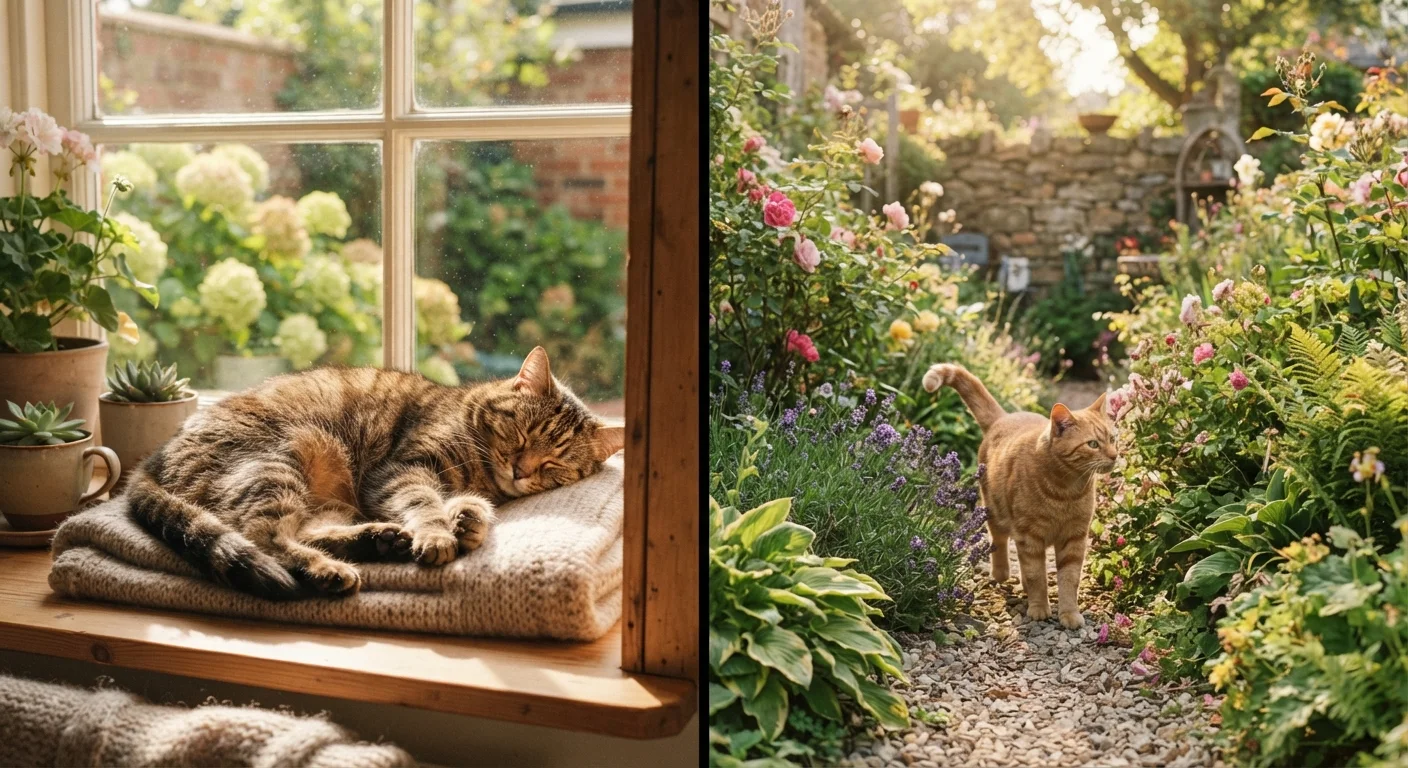
Cats are natural hunters and explorers. Outdoor access provides built-in behavioral enrichment - varied sensory input, opportunities to stalk and chase, and territory to roam. For many cats, this freedom supports psychological health in ways that are difficult to fully replicate indoors.
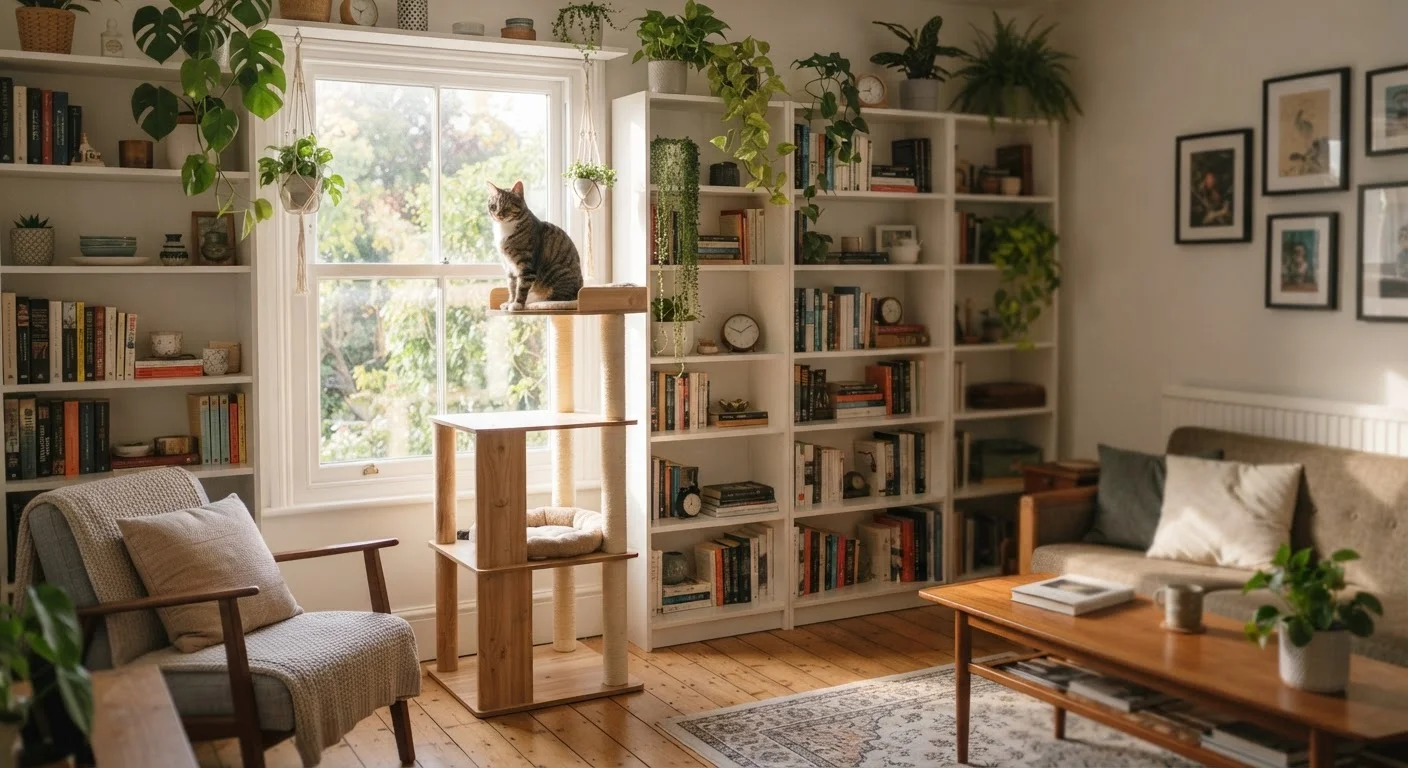
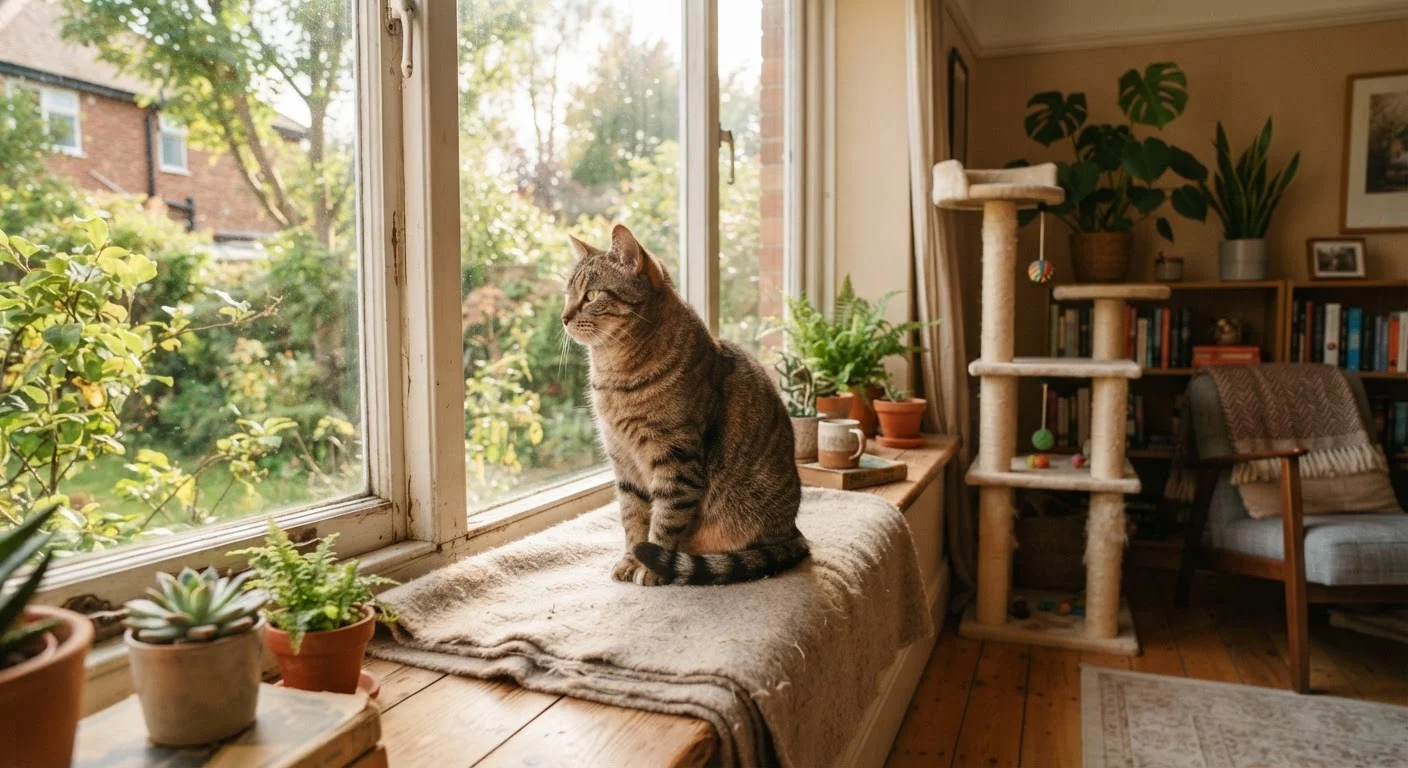
Indoor cats can thrive, but their environment has to work harder. Without sufficient stimulation, they may develop boredom-related behaviors such as excessive grooming, aggression, or inappropriate elimination. The good news is that thoughtful setup makes a significant difference. Vertical space, puzzle feeders, window perches, regular interactive play, and access to safe outdoor sights and sounds all contribute meaningfully to indoor wellbeing. For detailed guidance on building that kind of environment, see our home setup guide for cats.
For cats living alone, the enrichment challenge is even more important. Our article on keeping a solo cat mentally engaged covers strategies specifically tailored to single-cat households.
Consider Your Cat's Individual History
A cat adopted as a kitten and raised indoors will generally adapt to indoor life far more easily than one accustomed to roaming freely. If you're adopting an adult cat with an outdoor history, work with your vet or a feline behaviorist to assess what transition, if any, is appropriate. Forcing a previously outdoor cat into permanent confinement without adequate enrichment can cause genuine stress.
The Middle Ground: Supervised and Enclosed Outdoor Options
For many owners, the indoor/outdoor divide isn't binary. Enclosed outdoor spaces - often called "catios" - allow cats to experience fresh air, sunlight, and sensory variety without the risks of unsupervised roaming. Leash training is another option that some cats adapt to well, especially when started young.
Supervised garden time is a lower-cost alternative, though it requires consistent oversight. The key consideration is that these compromises work best when planned proactively, rather than as a reaction to a cat that has learned to bolt for the door. Cats with established indoor habits are generally easier to keep safely contained than those who have experienced free outdoor roaming.
Whatever lifestyle you choose, nutrition plays a supporting role in long-term health. Activity level should inform calorie intake - outdoor cats typically burn more energy, while indoor cats are at greater risk of weight gain. Our wet food vs. dry food comparison can help you think through dietary choices in the context of your cat's overall lifestyle.
This article is for general informational purposes only and is not a substitute for advice from a qualified veterinarian. Consult your vet for guidance specific to your cat's health, history, and circumstances.