What Sets Wet and Dry Cat Food Apart
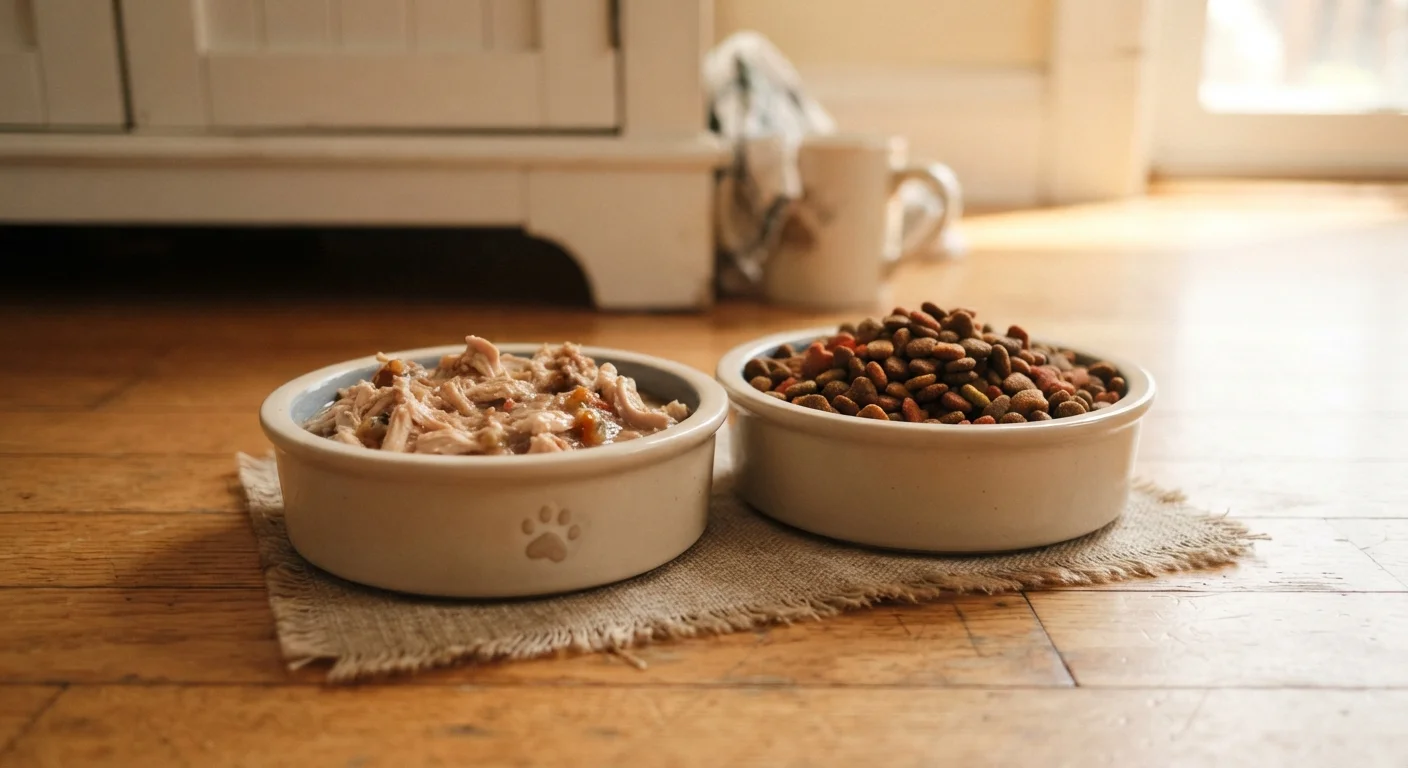
Wet cat food (also called canned food) typically contains 70-80% moisture, closely mimicking the water content of a cat's natural prey diet. Dry kibble, by contrast, contains only about 10% moisture and is far more calorie-dense per ounce. This single difference - water content - drives most of the practical trade-offs between the two formats.
Beyond hydration, the two formats differ in ingredients, processing, shelf life, and cost. Wet food is generally higher in animal protein and lower in carbohydrates, while kibble often relies on starches and binding agents to hold its shape during manufacturing. Neither format is inherently unhealthy; quality varies enormously within each category.
| Criterion | Wet Cat Food | Dry Cat Food (Kibble) |
|---|---|---|
| Moisture content | 70-80% | ~10% |
| Urinary/kidney support | Strong - aids hydration | Limited - low moisture |
| Calorie density | Lower per ounce | Higher per ounce |
| Cost per serving | Generally higher | Generally lower |
| Shelf life once opened | Refrigerate; use in 1-2 days | Stays fresh for hours in bowl |
| Palatability | High - strong aroma, soft texture | Moderate - varies by cat |
| Dental benefit | Minimal | Modest - light plaque reduction |
| Carbohydrate content | Generally lower | Often higher (binders used) |
For a broader look at what cat nutrition myths might be shaping your choices, see our guide to common cat nutrition misconceptions.
Hydration, Urinary Health, and Kidney Function
Cats evolved as desert animals and have a naturally low thirst drive - they are wired to get most of their fluid from food rather than a water bowl. This makes the moisture content of their diet particularly important. Cats who eat primarily dry food often consume less total water than those on wet food, which can contribute to concentrated urine and, over time, increase the risk of urinary crystals, blockages, or chronic kidney disease.
Wet food's high moisture content can meaningfully increase a cat's daily fluid intake without any change in drinking behavior. Veterinary guidelines consistently note that adequate hydration is one of the most important factors in long-term feline kidney health. If your cat has been diagnosed with a urinary or kidney condition, your vet may specifically recommend a wet food diet - always follow individualized guidance from your veterinarian.
70-80%
Moisture content in wet cat food
Compared to roughly 10% in dry kibble, wet food dramatically increases a cat's total daily fluid intake.
~3x
More water consumed on wet food diet
Research published in veterinary nutrition literature suggests cats on wet food diets consume significantly more total water than those eating dry food exclusively.
Dental Health, Palatability, and Practical Feeding
A common claim is that dry kibble cleans cats' teeth through chewing. There is some truth to this - the mechanical action of crunching kibble can reduce surface plaque - but the effect is modest. Most dental professionals in veterinary medicine consider tooth brushing and veterinary dental cleanings the gold standard for feline oral health, regardless of food type.
On palatability, wet food tends to win. Its aroma, texture, and taste more closely resemble fresh prey, which makes it especially useful for cats recovering from illness, seniors with declining senses, or notoriously picky eaters. Dry food, however, stores easily for hours in a bowl without spoiling, making it practical for owners who work long hours or have multiple cats.
Cost is another real consideration. Wet food generally costs more per calorie than dry kibble, which adds up over a cat's lifetime. Our breakdown of the real costs of cat ownership covers food expenses alongside vet bills and supplies to help you plan ahead.
A Note on Food Transitions
If you decide to switch your cat's diet - whether moving from dry to wet, or introducing a mixed approach - do so gradually over 7 to 10 days. Abrupt changes can cause digestive upset including vomiting or diarrhea. Start by mixing a small amount of the new food into the existing diet, then slowly increase the proportion over time.
Finding the Right Approach for Your Cat
Many veterinarians and feline nutrition experts suggest a mixed feeding strategy as a practical middle ground: offering wet food once or twice daily for hydration and palatability, supplemented by measured portions of dry kibble. This approach can capture the benefits of both formats while managing cost and convenience.
Your cat's life stage matters too. Kittens have high protein and calorie demands; seniors may benefit from softer textures and kidney-supportive moisture. If you're navigating the choice between a kitten and an adult cat, our comparison of kitten vs. adult cat adoption touches on how age shapes care needs, including diet.
If you're also weighing indoor versus outdoor lifestyle - which affects activity level and caloric needs - see what the evidence says about indoor and outdoor cats.
This article provides general educational information about cat nutrition and is not a substitute for veterinary advice. Always consult a licensed veterinarian before making significant changes to your cat's diet, especially if your cat has an existing health condition.