Why Dog-Proofing Matters Before Day One
Bringing a dog into your home is exciting - but homes designed for humans contain a surprising number of hazards for dogs. Unlike children who grow into an understanding of danger, dogs rely almost entirely on exploration through smell and taste, meaning they'll investigate most things at floor level without any instinct for what's harmful.
The good news is that most risks are straightforward to address once you know what to look for. Whether you're preparing for a puppy or an adult rescue, taking time to dog-proof your space before arrival reduces accidents, builds good habits early, and makes the settling-in period smoother for everyone. If you're still weighing what dog ownership involves, our full overview of dog ownership is a useful starting point.
Some Common Plants Are Toxic to Dogs
Many popular houseplants and garden plants - including sago palm, azalea, oleander, and certain varieties of lily - are toxic to dogs if ingested. Before your dog arrives, identify every plant in your home and yard and cross-reference it with a reliable source such as the ASPCA's Animal Poison Control Center database. Relocate or remove any that pose a risk.
Think at Dog Height
Get down to your dog's eye level and scan each room from there. You'll quickly spot dangling cords, accessible trash cans, low cabinet gaps, and items on coffee tables that aren't visible from standing height. This simple exercise often reveals hazards that are easy to miss during an upright walkthrough.
What You'll Need
Dog-proofing doesn't require a large budget, but it does require the right items in place before your dog arrives. Here's what to gather:
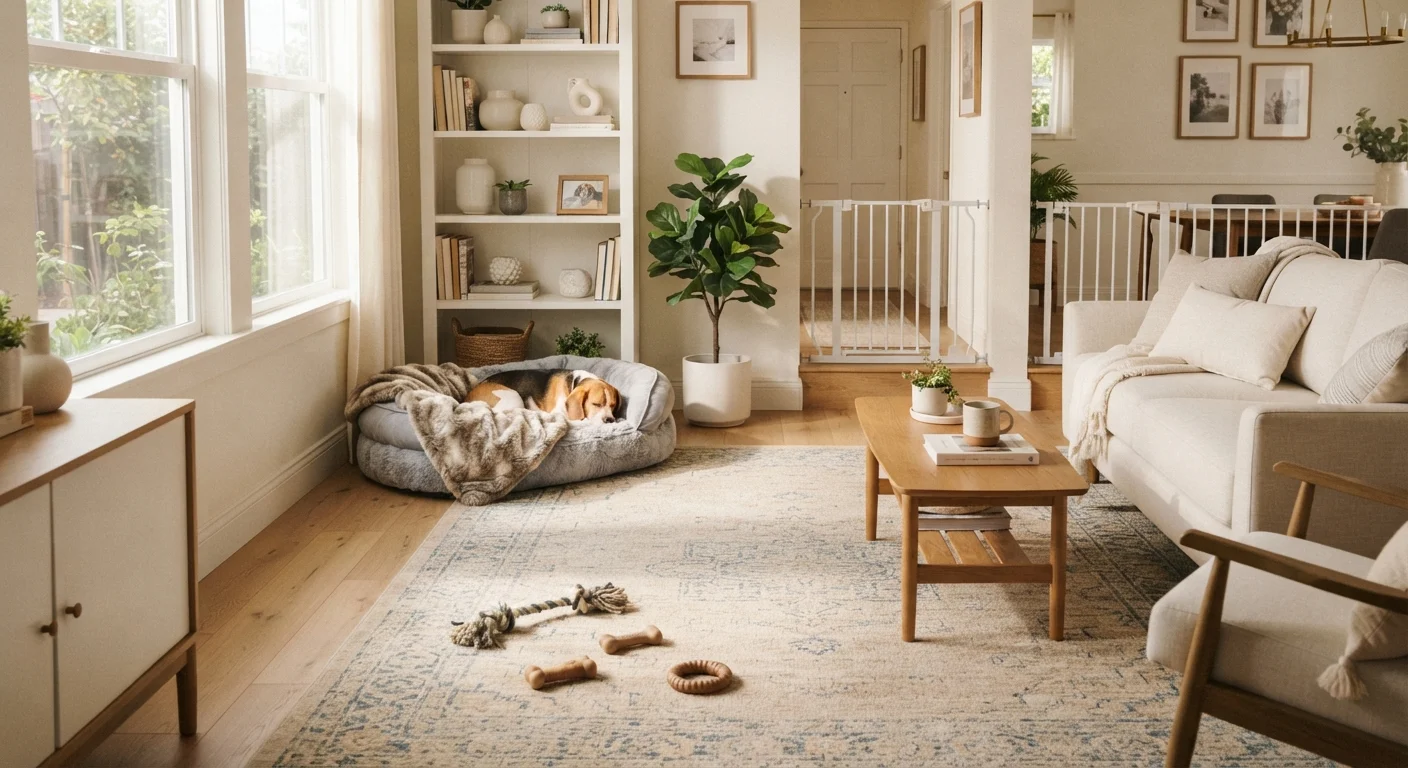
Baby gates or pet gates
Block off stairways, rooms, or areas of the home that are off-limits or unsafe for a dog.
Cabinet safety latches
Prevent dogs from nosing open low cabinets that contain cleaning products, trash, or food.
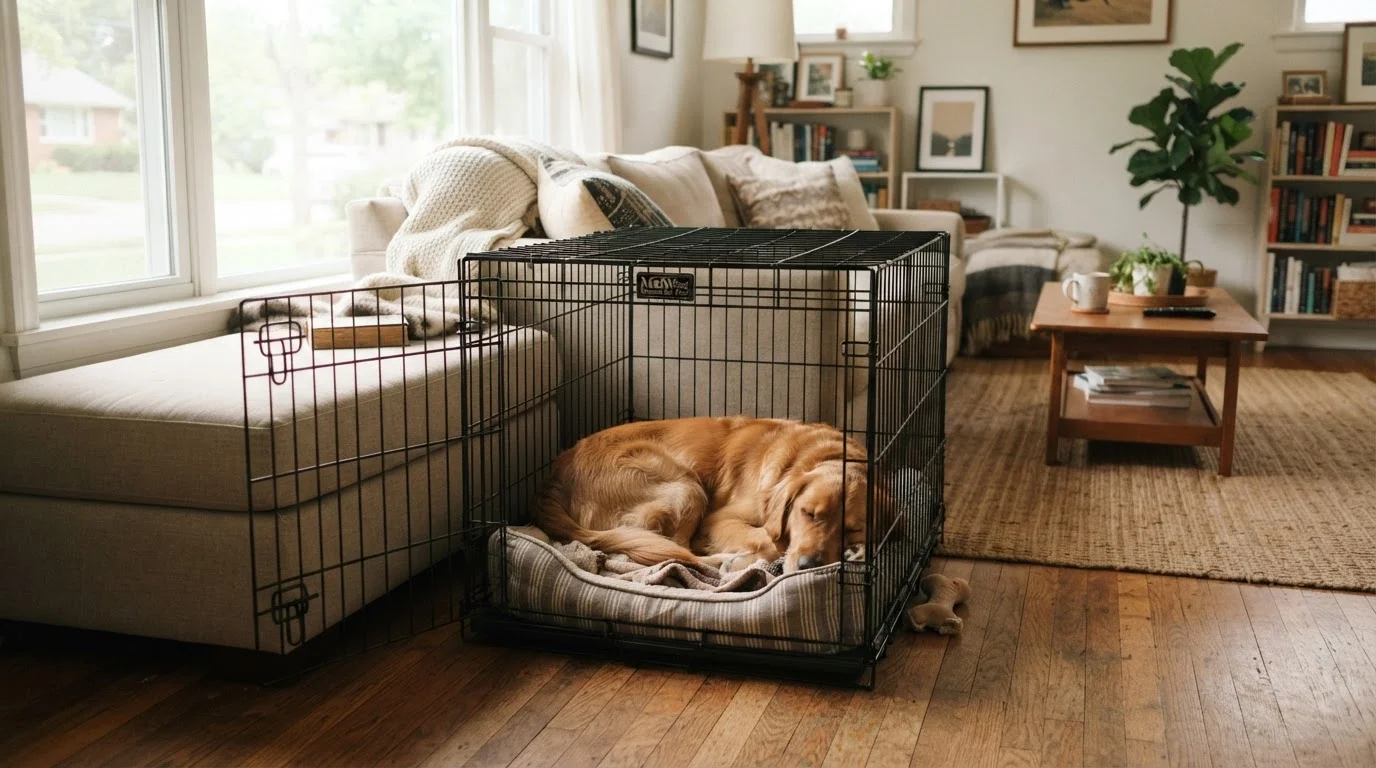
Dog crate or designated bed
Provides a safe, calm retreat space for the dog to rest and decompress.
Cord management clips or covers
Protect electrical cords from chewing, reducing both electrocution and fire risk.
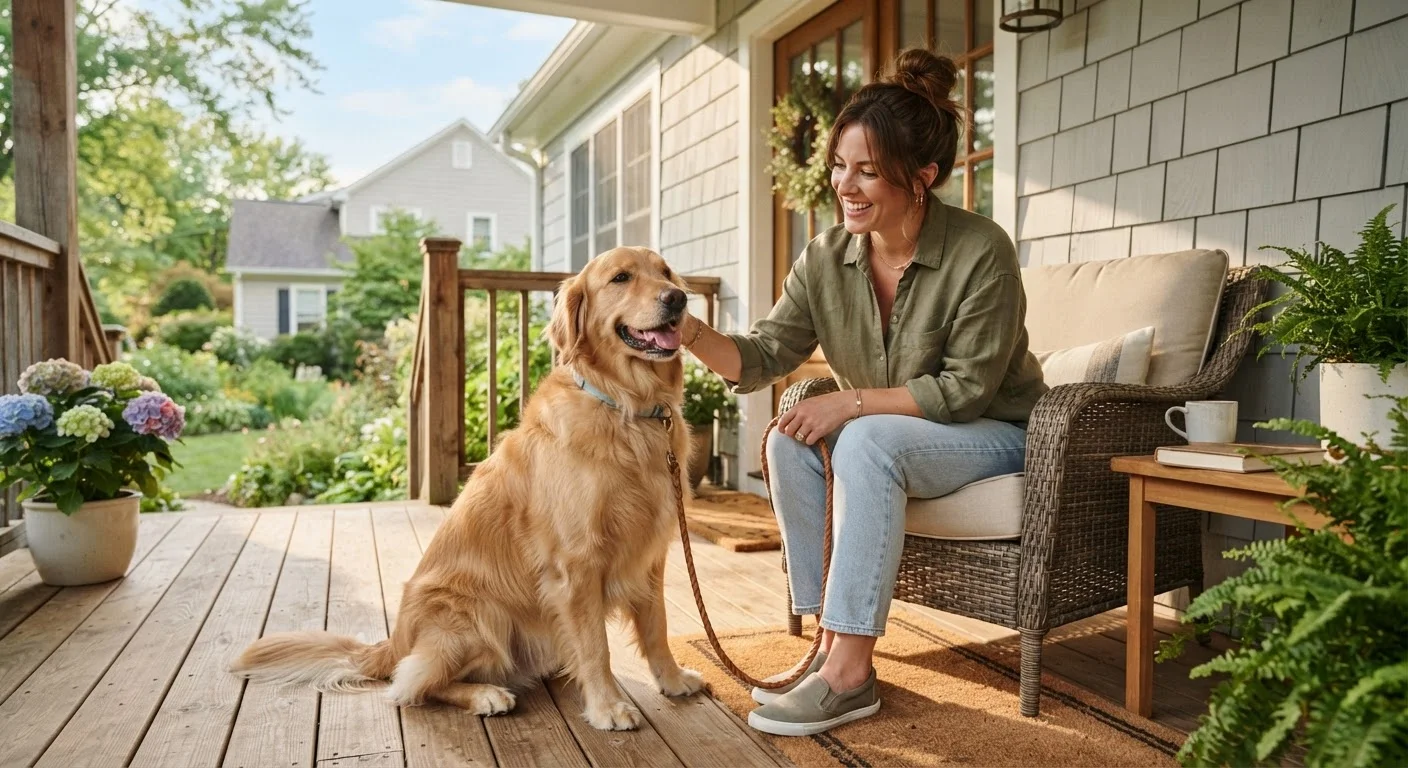
Outdoor leash tie-out or secure fencing
Keeps the dog safely contained in outdoor areas without escape risk.
Non-slip mat or rug
Reduces slipping on hard floors, particularly important for puppies and senior dogs.
What you will need
Step-by-Step: Making Your Home Safe for a Dog
Work through the following steps room by room. It helps to do this before your dog arrives so you can move at your own pace without a curious animal underfoot.
Walk through every room with fresh eyes
Before your dog arrives, do a slow, room-by-room audit of your entire home. Look for open trash cans, loose electrical cords, small objects a dog could swallow, and anything at floor level that could be chewed or knocked over. Pay special attention to bathrooms, kitchens, and laundry areas, where hazards tend to concentrate.
Remove or secure toxic plants and chemicals
Check every plant indoors and outdoors against a trusted toxicity database. Remove or rehome toxic plants entirely - placing them out of reach is often not sufficient, as dogs can be persistent. Move all cleaning products, medications, and chemicals into locked or high cabinets. Don't overlook items like sugar-free gum (which contains xylitol), certain foods, and over-the-counter medications that are toxic to dogs.
Install gates, latches, and physical barriers
Use baby or pet gates to limit your dog's access to stairways, rooms with hazards, or areas where you'd prefer they not roam unsupervised. Fit low kitchen and bathroom cabinets with child-safety latches. If you have a fireplace, install a secure hearth gate. Consider blocking gaps behind appliances where a small dog or puppy could become trapped.
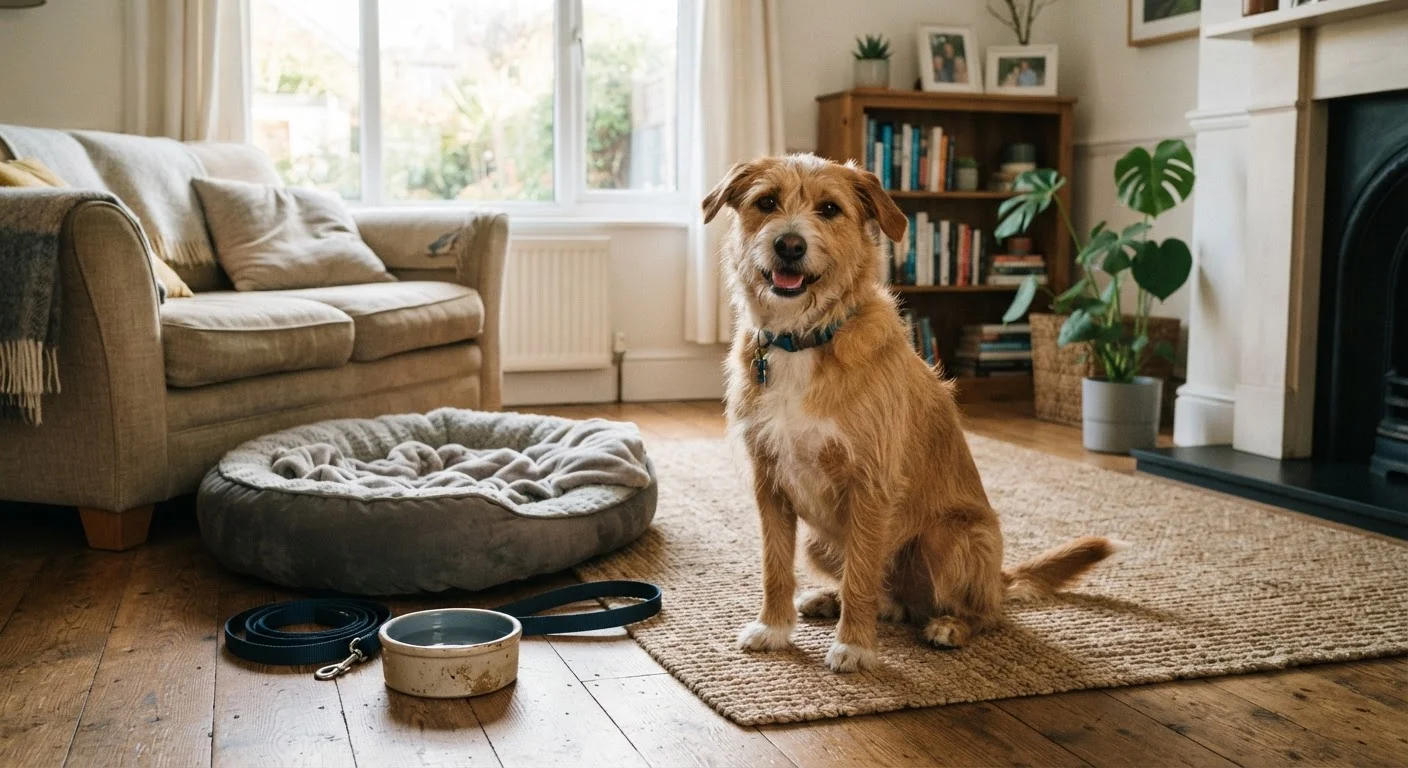
Designate a safe, consistent space for your dog
Every dog benefits from having a defined spot that is theirs - a crate, a dog bed, or a quiet corner with familiar bedding. This space gives the dog somewhere to decompress when the environment feels overwhelming, and it forms the foundation of good settling-in habits. Keep this area away from heavy foot traffic and drafts. For more on the pros and cons of crate use versus free-roaming, see our guide to crate training vs free-roaming.
Secure and dog-proof your outdoor areas
Inspect your yard's fencing for gaps, weak spots, or areas where a dog could dig under or jump over. Many dogs are surprisingly capable escape artists, especially when left alone outdoors. Ensure gates have secure latches that a dog cannot nudge open. Remove garden chemicals, compost bins, and any toxic plants from accessible areas. If you use lawn treatments, check with the product guidance on when it is safe for pets to re-enter treated areas.
Manage cords, small objects, and food access
Run electrical cords through cord-management sleeves or route them out of reach. Keep countertops and low tables clear of food items that are toxic to dogs - grapes, raisins, chocolate, onions, and macadamia nuts are among the most commonly encountered. Use a bin with a secure lid in the kitchen. Store children's toys, craft supplies, and batteries in closed containers or elevated storage.
Review and update as your dog grows and explores
A dog-friendly home is not a one-time project. As your dog grows, gains confidence, or accesses new areas, revisit your hazard checklist. A puppy and an adult dog present different challenges - puppies are more likely to chew indiscriminately, while adult dogs may find ways to reach higher surfaces. Schedule periodic walkthroughs to catch new hazards before they become problems. For broader preparation guidance, see our first-time dog owner guide.
Garage and Utility Areas Are High-Risk Zones
Antifreeze, pesticides, fertilizers, and automotive products are extremely dangerous to dogs - even small amounts of some substances can be life-threatening. Store all chemicals in locked cabinets or on high shelves, and never leave containers open or accessible. If you suspect your dog has ingested something toxic, contact your veterinarian or the ASPCA Animal Poison Control Center immediately.
Setting Up for Long-Term Comfort, Not Just Safety
Safety is the foundation, but a truly dog-friendly home also supports your dog's mental and physical wellbeing. Dogs thrive with predictable routines, defined spaces, and appropriate outlets for energy. Once hazards are addressed, think about enrichment: where will your dog play, rest, and interact with the family?
Hard flooring can be slippery and tiring on joints - adding rugs or non-slip mats in main living areas benefits dogs of all ages, and is especially worthwhile for older dogs or breeds prone to joint issues. If you have multiple pets, consider how spaces are shared and whether each animal has its own retreat. For a comparison with feline household needs, see setting up a home your cat will actually thrive in.
Building good habits alongside a safe environment pays dividends over time. Training habits that support lasting good behaviour work best when they start in a home that's already set up to reduce conflict and confusion.