Why Habits Matter More Than Tricks
A well-behaved dog is not the result of a single training breakthrough. It is the product of small, consistent interactions repeated day after day. Just as habit research shows for people, the brain - canine or human - learns through repetition and reliable feedback, not intensity. The dog who calmly waits at the door, walks without pulling, and comes when called has practiced those behaviours hundreds of times in ordinary moments.
If you are just starting out, see our guide to bringing a dog home for the first time for the foundational setup that makes training easier from day one.
The Core Practices That Build Lasting Behaviour
The following habits are grounded in reward-based training methods supported by veterinary and animal behaviour guidance. Applied consistently, they create a predictable, trusting relationship between you and your dog.
Train in short, focused sessions of 5-10 minutes at a time.
Dogs have limited attention spans, and long sessions often lead to frustration on both sides. Keeping sessions brief maintains your dog's engagement and ends on a positive note, which reinforces their willingness to participate next time.
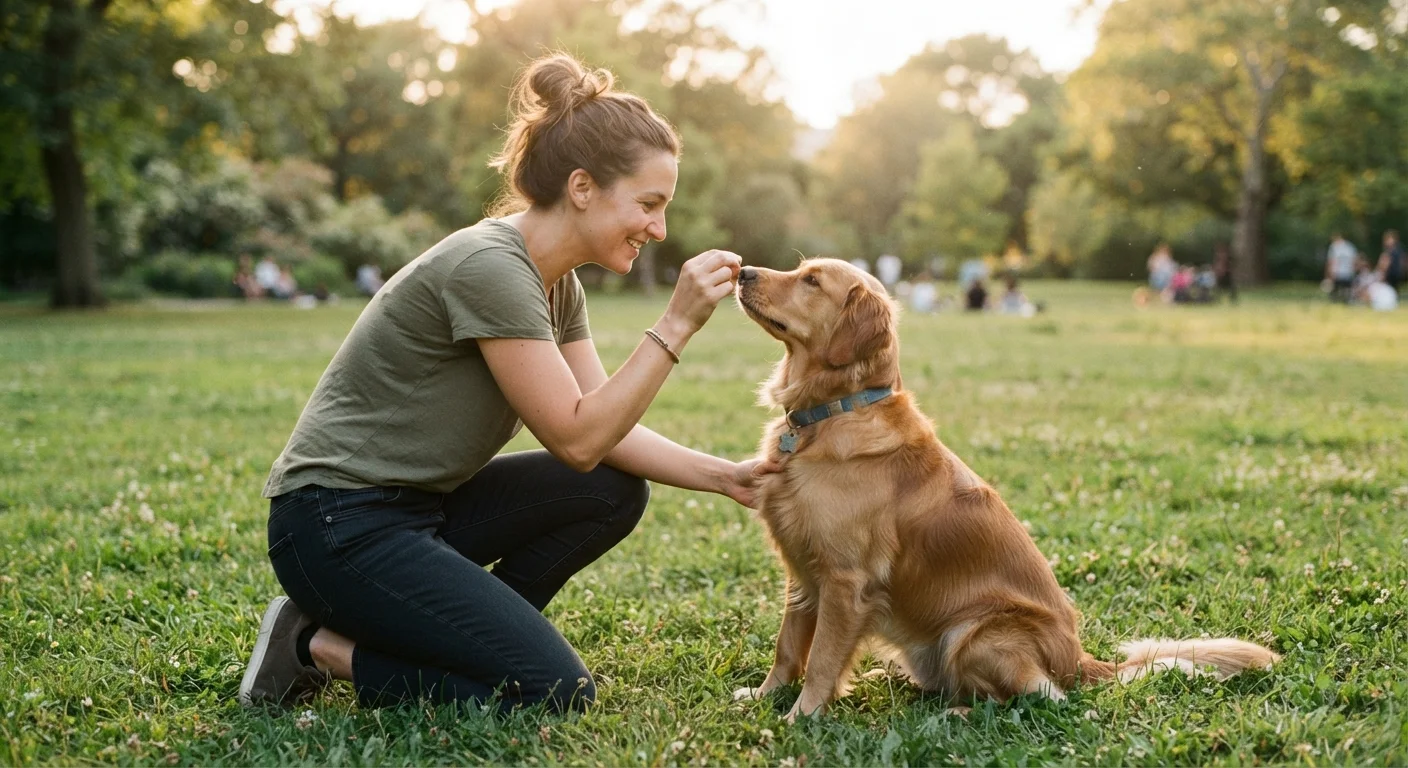
Reward the desired behaviour within one to two seconds of it happening.
Dogs associate rewards with whatever they were doing at the exact moment the reward arrives. Delayed praise or treats can accidentally reinforce the wrong behaviour - for example, rewarding a dog who has already stood up from a sit.
Ensure every household member uses the same cues and rules.
Mixed messages are one of the most common reasons training stalls. If one person allows jumping up while another discourages it, the dog receives contradictory feedback and struggles to learn the expected behaviour.
Practise commands in multiple locations and situations.
Dogs do not automatically transfer skills from one context to another - this is called lack of generalisation. A dog who sits reliably in the kitchen may not respond the same way at the park until they have practised there too.
End every session before your dog loses interest.
Finishing on a success keeps the experience positive and leaves your dog ready to engage next time. Pushing past the point of engagement can create negative associations with training.
Use Mealtimes as Built-In Training Opportunities
Your dog is naturally motivated just before meals, making feeding time one of the most effective training windows of the day. Ask for a sit or a down before placing the bowl - you get a daily repetition, and your dog gets both a food reward and their meal. This approach costs no extra time and builds a reliable routine.
Putting It Into Practice Every Day
Reading about good training habits is the easy part - integrating them into a busy day takes a little planning. Pairing training with activities you already do (meals, walks, arrivals home) removes the need to find extra time. For more on building a structured routine, the weekly routine that keeps a dog healthy offers a practical day-by-day framework.
Training Is a Lifelong Process
Even dogs that have mastered basic commands benefit from ongoing practice. Skills that aren't regularly reinforced tend to fade over time, especially in distracting environments. Think of training not as a course to complete, but as a daily communication habit between you and your dog.
Once your dog is responding reliably in low-distraction settings, raise the bar gradually. Understanding your dog's exercise needs also helps here - a physically satisfied dog is generally far easier to train. For step-by-step guidance on specific commands, see teaching basic commands that actually stick.
“The best training is the training that happens every single day in the small moments - at the door, before meals, on the walk. Those repetitions add up far faster than any weekend class.”
— Dr. Ian Dunbar, Veterinarian and pioneering animal behaviourist
5-10 min
Ideal daily training session length for dogs
Veterinary behaviour guidelines consistently recommend short, frequent sessions over infrequent long ones for optimal retention.
1-2 sec
Reward timing window for effective learning
Applied animal behaviour research indicates that rewards delivered within two seconds of a behaviour produce the strongest learning associations.
This article provides general educational information about dog training and is not a substitute for advice from a qualified veterinarian or certified animal behaviourist. If your dog displays anxiety, aggression, or other behavioural concerns, consult a professional.