Why Reward-Based Training Works
Modern dog training is grounded in the science of operant conditioning - specifically the principle that behaviors followed by something positive are more likely to be repeated. When your dog sits and immediately receives a treat, their brain registers the behavior as worth repeating. Over many repetitions, the behavior becomes reliable even without a treat every single time.
This is also why timing matters so much. The science behind habit formation shows that immediate feedback - whether for humans or animals - is far more effective at reinforcing a behavior than delayed consequences. The same principle applies directly to dog training: a reward delivered within 1-2 seconds of the desired behavior communicates clearly; a reward delivered 10 seconds later may reinforce whatever the dog was doing at that exact moment instead.
Reward-based methods also preserve your dog's confidence and your relationship with them - both of which are essential for any command to hold up under real-world conditions.
Timing Is Everything in Training
Dogs associate rewards with whatever they were doing in the moment the reward is delivered - not a second before or after. Aim to mark and reward within 1-2 seconds of the desired behavior. A clicker or a short marker word like "yes!" helps bridge the gap between the behavior and the treat.
What You'll Need Before You Start
You don't need elaborate equipment to train basic commands, but a few tools will make sessions more effective and consistent.
What you will need
High-value training treats
Small, soft, smelly treats (like small pieces of cooked chicken or commercial training treats) keep your dog motivated and allow rapid repetition.
Treat pouch or bait bag
Keeps rewards immediately accessible so you can mark and reward behavior within 1-2 seconds.
Clicker
A clicker provides a precise, consistent sound marker that tells your dog exactly which behavior earned the reward.
Standard 6-foot leash
Used to keep your dog safely near you during early training and to introduce the 'come' command with a recall line.
Long line (15-30 feet)
Allows your dog freedom of movement while practicing recall at a distance safely.
Plan to train in sessions of 5-10 minutes, ideally before meals when your dog's motivation for food is naturally higher. Avoid training when your dog is overtired, overstimulated, or immediately after vigorous exercise.
Step-by-Step: Teaching the Four Core Commands
Work through the commands below in the order presented - each one builds on the previous. Introduce only one new command per session until your dog shows consistent understanding before layering in the next.
Consistency Across All Household Members
Every person in your home must use the same cue words, hand signals, and rules. If one person allows the dog on the sofa while another doesn't, or if "down" means different things to different people, your dog receives conflicting information and learning slows significantly. Hold a brief family meeting before you begin training to align on the basics.
Teach "Sit" - the foundation command
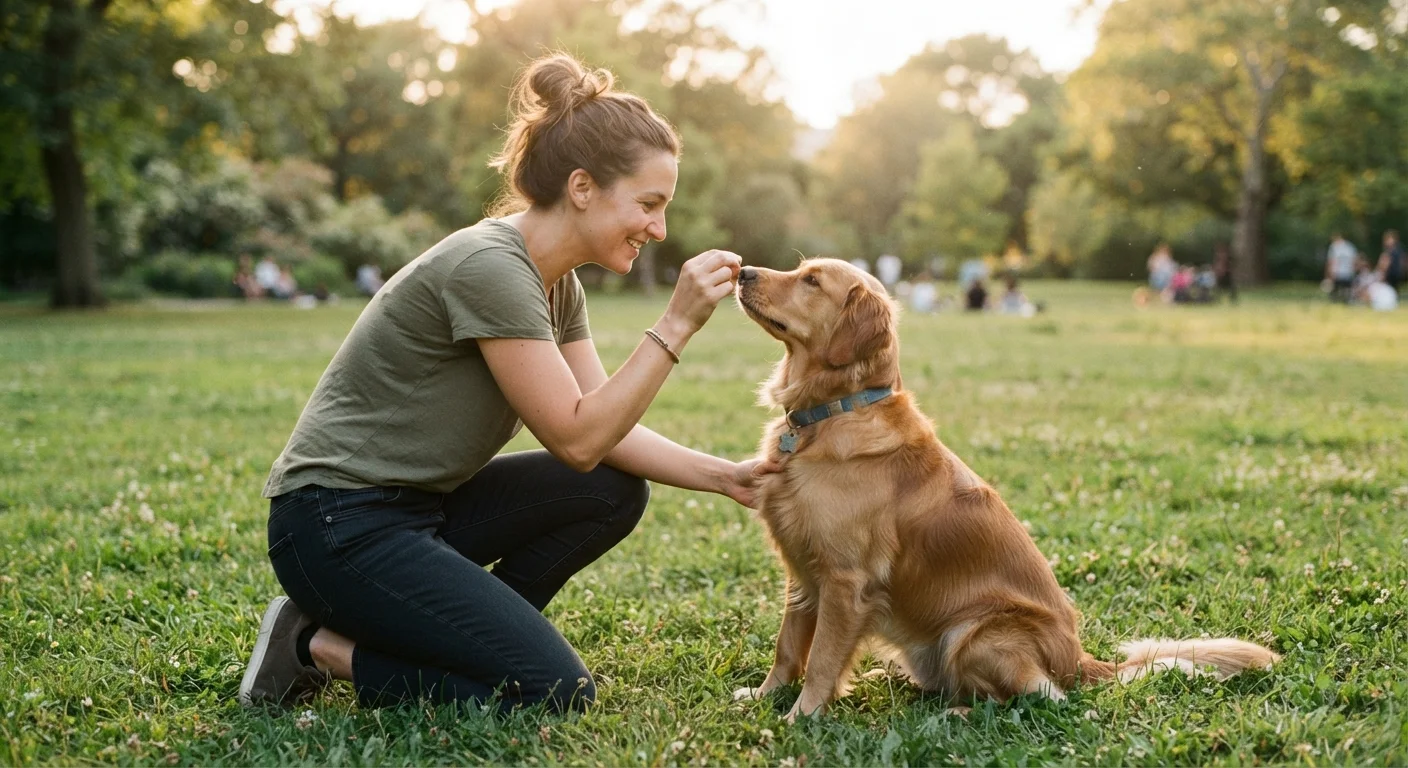
Hold a treat close to your dog's nose, then slowly move your hand upward. As your dog's head follows the treat, their rear will naturally lower. The moment their bottom touches the ground, say "sit" clearly, then immediately reward with the treat and calm praise. Repeat 5-8 times per session.
Once your dog sits reliably with the lure, begin fading the treat from your hand - use the same upward hand motion but deliver the reward from your other hand or pocket. This prevents your dog from only responding when they can see a treat.
Teach "Down" - building on Sit
Ask your dog to sit first. Then hold a treat at their nose and slowly move your hand straight down toward the floor between their front paws. Most dogs will follow the treat into a lying position. The instant elbows touch the ground, say "down" and reward immediately.
Some dogs resist lying down because it feels vulnerable. If your dog pops back up, stay patient - try luring under a bent knee or a low coffee table to encourage them to duck down. Never push their shoulders or force the position.
Teach "Stay" - adding duration
Ask your dog to sit or lie down. Open your palm toward them like a stop signal and say "stay." Wait just 2-3 seconds, then calmly reward while they hold position. Gradually increase the duration - count silently and add 2-3 seconds per session as your dog succeeds. Release with a consistent word like "free" or "okay" every time so your dog knows when the command is over.
Build the three D's in sequence: duration (how long), then distance (how far you move away), then distraction (practicing around mild distractions). Never increase all three at once.
Teach "Come" - the most important safety command
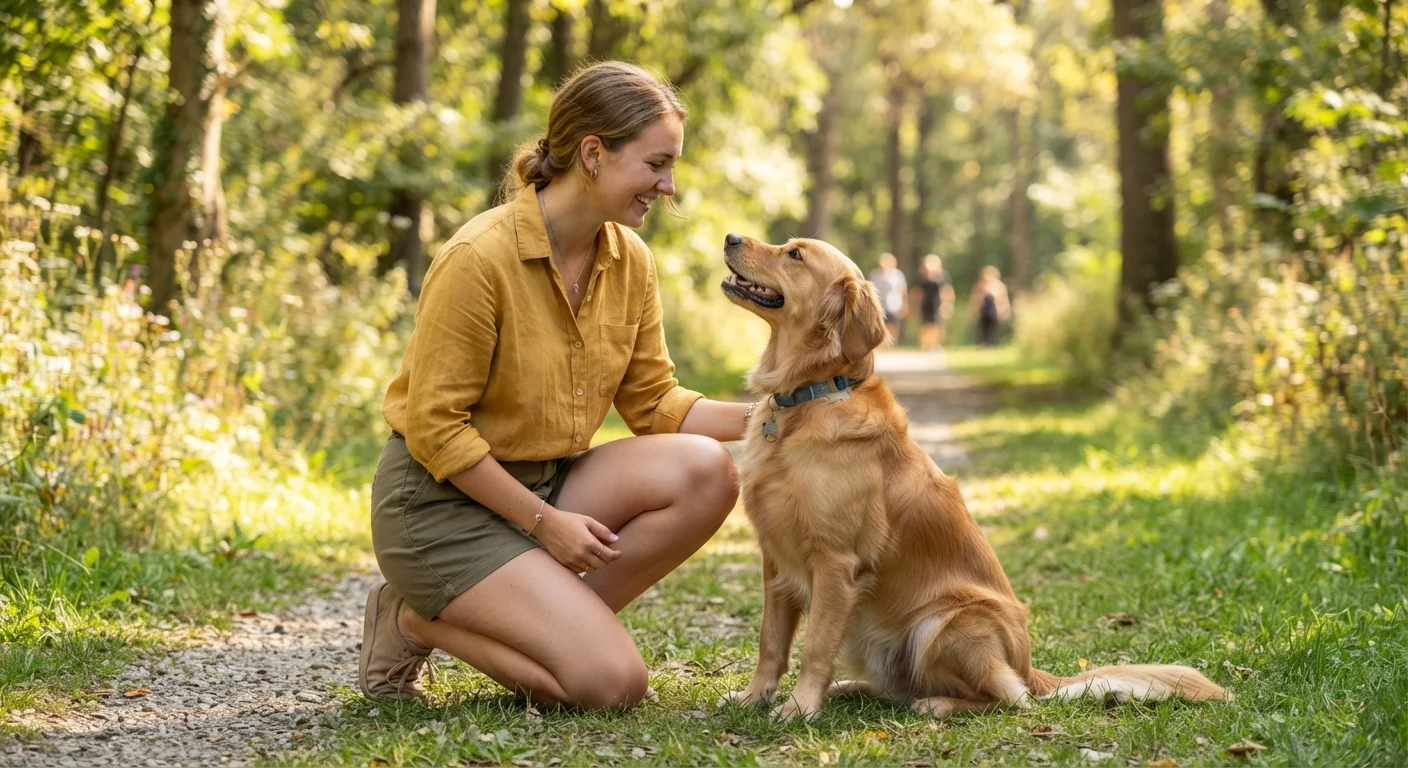
Clip a long line (15-30 feet) to your dog's harness for safety. Crouch down, open your arms invitingly, and say your dog's name followed by "come" in an upbeat, happy tone. When they reach you, reward generously - use your highest-value treats and enthusiastic praise. Make arriving at you feel like the best thing that happened all day.
Never call your dog to you for something they find unpleasant (a bath, nail trim, or crate if they dislike it). Doing so can poison the recall cue. Instead, go to your dog for those activities.
Generalize commands to new environments
Dogs don't automatically transfer skills learned at home to the park or a friend's yard. Once your dog responds reliably indoors, practice each command in progressively more distracting environments - the front yard, a quiet sidewalk, eventually a busier setting. Drop your expectations slightly when introducing each new location; reward frequently and keep sessions short.
This process, called proofing, is what most beginners skip - and it's why commands seem to "disappear" in public. Patience here pays off significantly. For more on building consistent training habits over time, see Training Habits That Build a Well-Behaved Dog Over Time.
Common Mistakes and How to Avoid Them
Even well-intentioned owners fall into a few predictable patterns that slow progress:
- Repeating cues: Saying "sit" five times before the dog responds teaches them the first four repetitions are meaningless. Say it once, help the dog into position if needed, then reward.
- Sessions that are too long: Mental effort tires dogs quickly. A dog who starts making errors midway through a session has likely hit their limit - end on a successful repetition of something easy.
- Skipping the generalization step: A dog who only practices at home will not perform reliably elsewhere. Build in variety early.
- Inconsistent rules: Mixed signals from different household members are one of the most common reasons training stalls.
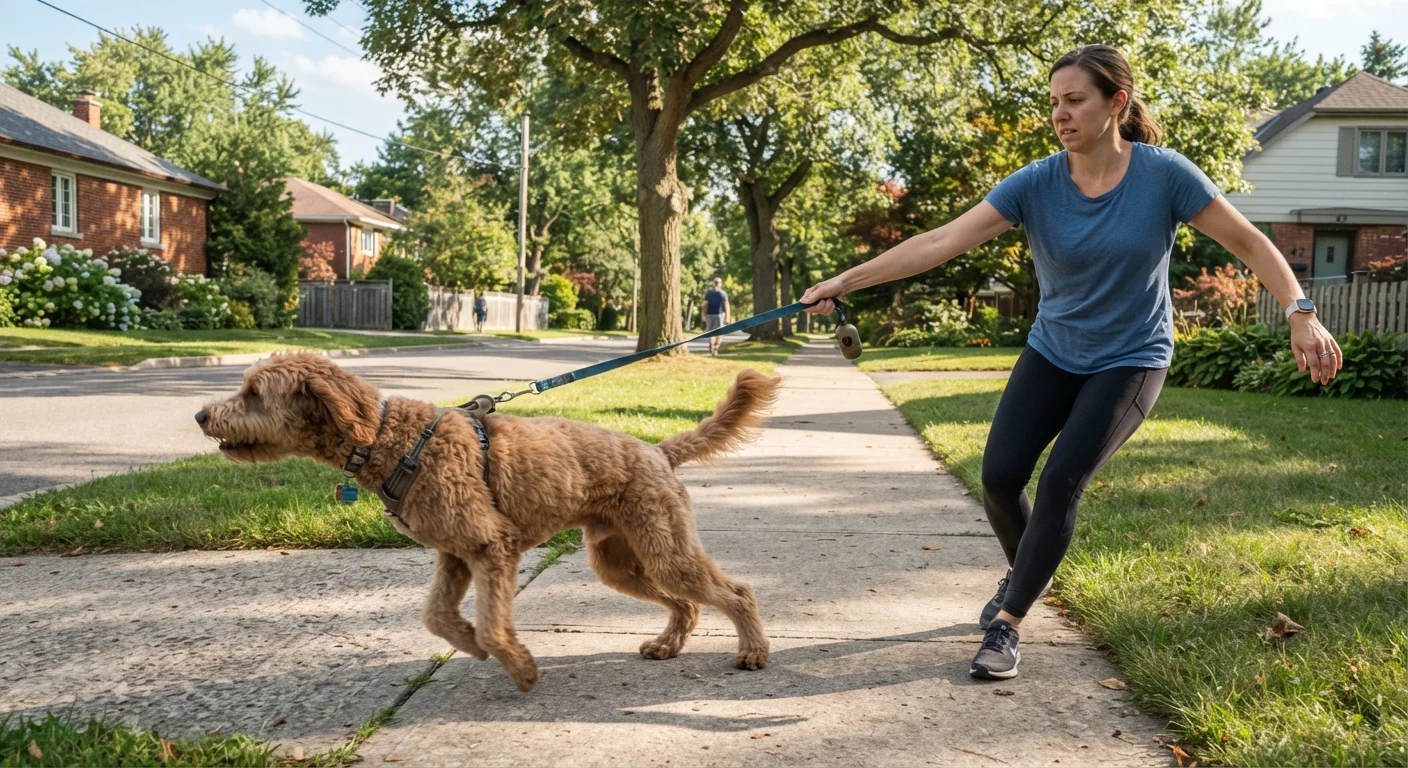
If you're also working on leash manners, our guide on why dogs pull on the lead explains the behavior and the techniques that address it effectively alongside command training.
Avoid Punishment-Based Methods
Techniques involving physical correction, yelling, or intimidation can damage your dog's trust and create anxiety or defensive aggression. Leading veterinary and animal behavior organizations consistently recommend reward-based training as both more effective and more humane. If a session becomes frustrating, end it on a simple success and take a break.