Why Dogs Pull - And Why It's Not Their Fault
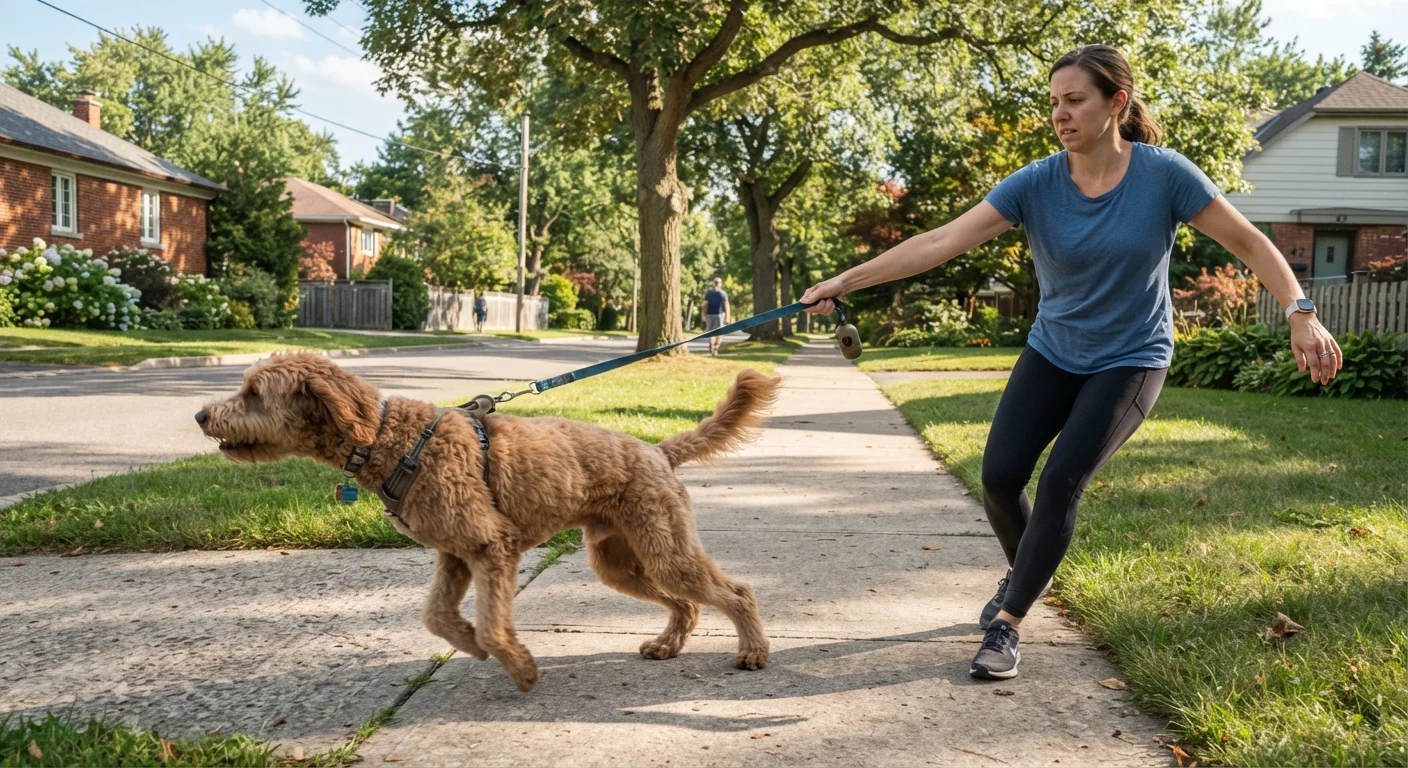
Dogs pull on the lead for a straightforward reason: it works. The moment a dog leans into the leash and you take a step forward, the dog has been rewarded. Over dozens or hundreds of walks, that pattern becomes deeply ingrained. Pulling is not stubbornness or dominance - it's a learned behaviour that the owner has, often unknowingly, reinforced.
Dogs also walk faster than humans by nature and are easily excited by smells, movement, and new environments. A dog that hasn't been specifically taught to walk at a human pace will simply do what feels natural. Understanding this takes the frustration out of it: your dog isn't trying to be difficult. They just haven't learned what you actually want yet.
Building good training habits over time is the foundation of any behaviour change, and loose-lead walking is no exception.
#1
Most reported dog behaviour problem
Lead pulling is consistently cited as the most common complaint among dog owners seeking training help, according to veterinary behaviour specialists.
4-6 weeks
Typical timeframe for loose-lead progress
With daily, consistent practice, most dogs show meaningful improvement in loose-lead walking within four to six weeks, according to professional trainers.
The Mistakes That Keep the Problem Going
Most lead-pulling problems persist not because the dog is untrainable, but because of consistent errors in how owners respond. The mistakes below are extremely common - and entirely fixable once you know what to look for.
Continuing to walk forward when the dog pulls.
Why it happens: It feels easier in the moment to just keep moving, especially when you're in a hurry or the dog seems determined.
Giving mixed signals by sometimes allowing pulling and sometimes correcting it.
Why it happens: Owners understandably relax the rules when tired, late, or in an unfamiliar environment - but dogs learn from patterns, not intentions.
Waiting until walks to practice - and practicing only once or twice a week.
Why it happens: Many owners treat walking as exercise rather than a training opportunity, which means the dog rarely gets enough repetitions to change the behaviour.
Using punishment-based corrections like leash jerks or raised voices.
Why it happens: It can seem logical to apply a quick correction when the dog does something wrong, particularly if you've seen it done elsewhere.
Skipping the reward when the dog does walk nicely.
Why it happens: When the dog is behaving well, owners often stop paying attention - the treat comes out only when there's a problem.
Pulling Can Cause Physical Harm
Repeated pulling against a standard flat collar puts pressure on a dog's trachea and neck. If your dog pulls severely, consult a veterinarian or certified trainer before continuing. A well-fitted harness may reduce physical strain while you work on training.
Building Better Walk Habits From the Ground Up
Once you understand the mistakes to avoid, the path forward becomes clearer. Start in a low-distraction environment - your living room, backyard, or a quiet street - before taking the training to busier areas. Dogs learn in layers: they need to succeed in easy settings before they can generalise a behaviour to harder ones.
Choose a consistent spot on your body (usually your left or right side) where you want the dog to walk, and reward them for being in that position. Over time, use a verbal cue - something like 'with me' or 'let's go' - to signal that position. Teaching basic commands that actually stick covers how to build these cues reliably using reward-based methods.
Understanding how your dog is feeling on a walk also helps. Dogs that are overstimulated or anxious often pull more. Our guide to reading dog body language can help you spot when your dog is too excited or stressed to focus, so you can adjust the walk accordingly.
Finally, make sure your dog's daily exercise needs are being met. A dog that doesn't get enough physical and mental stimulation is a dog that arrives at walk time wound up and desperate to move. See exercise needs across dog breeds and sizes to understand what your specific dog may need.
Don't Rely on Equipment Alone
No-pull harnesses and head collars can reduce the physical strain of pulling, but they don't teach your dog anything on their own. Use them as a management tool while you train - not as a permanent substitute for training itself. Always ensure any equipment is properly fitted to avoid discomfort or injury.