Why Handling Technique Matters for Small Pets
Small animals - including hamsters, gerbils, guinea pigs, chinchillas, and rats - are prey species by nature. Their nervous systems are wired to detect threats quickly and react with speed. Even in a domestic setting, a fast or unpredictable movement can trigger genuine fear, and repeated stressful handling can erode trust, suppress the immune system over time, and make routine care significantly harder.
Poor technique also carries physical risk. A small animal that panics mid-hold can fall, twist, or push off with enough force to injure itself or the handler. Understanding the basics before you begin - not after your first dropped hamster - is the responsible approach.
If you're still deciding which small animal to bring home, our guide to the real advantages and drawbacks of small pet ownership offers honest context. And if you're exploring less common species, the article on quieter small pets beyond hamsters and rabbits covers species-specific needs worth knowing before you handle.
What you will need
Step-by-Step: How to Handle a Small Animal Safely
Follow these steps consistently, especially in the first weeks of ownership. Patience and repetition are your most effective tools.
Let the animal become aware of you first
Before reaching in, place your hand flat near - not on - the animal inside the enclosure and hold it still for 15-30 seconds. Allow the animal to sniff your hand at its own pace. This signals that you are not a predator moving to strike.
Approach from the side, never from above
Reaching down from above mimics the movement of a bird of prey and will trigger an instinctive flight response. Instead, slide your hand in from the front or side at the animal's body level. Move slowly and steadily - hesitant darting movements are more alarming than one smooth, deliberate scoop.
Scoop from beneath, supporting the full body
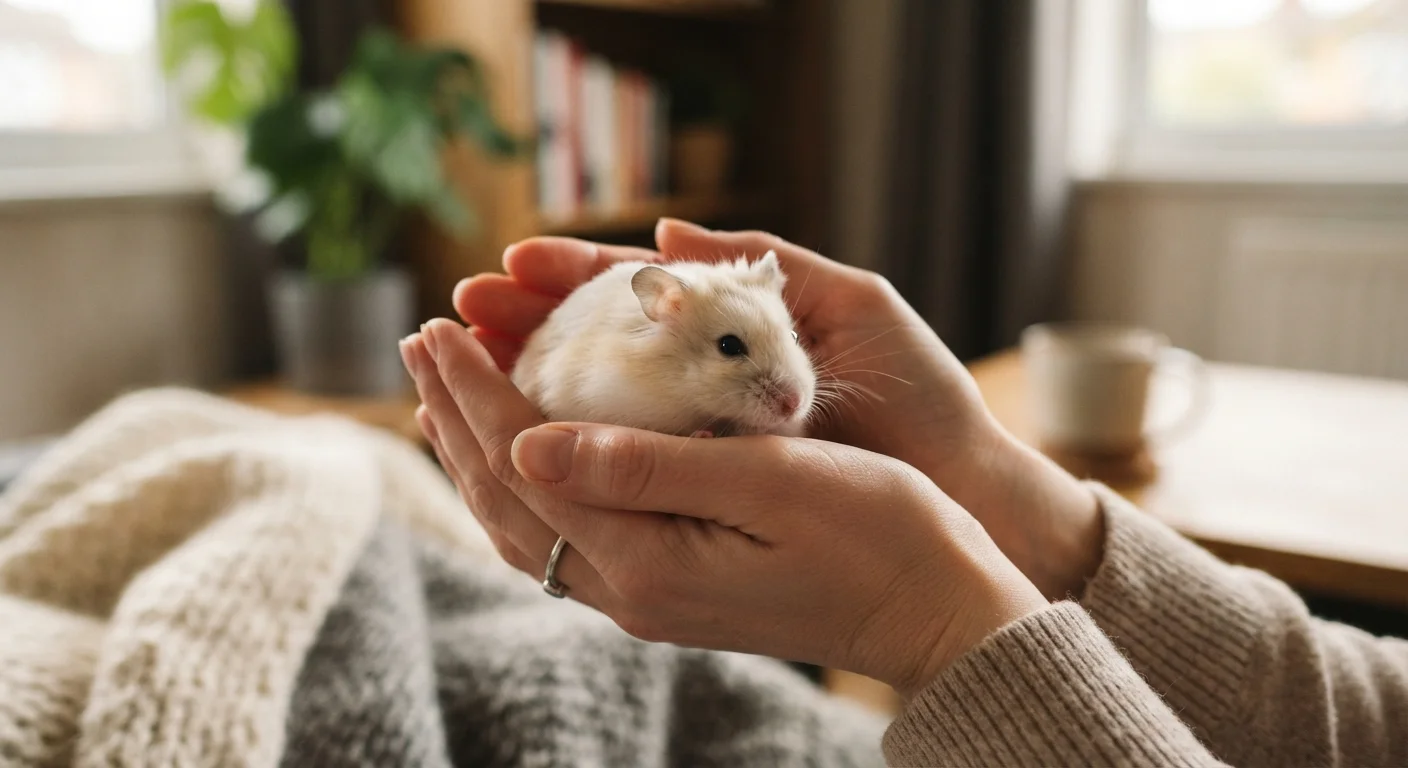
Slide one hand under the animal's belly and use your other hand or fingers to gently secure it from the sides - not from above. The animal's feet should rest on your palm. Full body support is essential: an animal that feels its feet dangling will struggle instinctively to find ground.
Hold close to your body at a low height
Once the animal is in your hands, bring it close to your chest or rest your hands in your lap. The warmth and stability reduce anxiety. Keep your position low - seated on the floor is ideal for beginners - so that a sudden jump poses minimal fall risk.
Keep sessions short, especially at first
For a newly acquired animal, aim for handling sessions of just two to five minutes, once or twice a day. Gradually extend duration as the animal becomes relaxed and stops showing stress signals. Forcing longer sessions in the hope of faster taming typically backfires and slows the trust-building process.
Return the animal calmly
Lower your hands into the enclosure and allow the animal to step off at its own pace rather than placing it down abruptly or dropping it onto bedding. This keeps the ending of each session as stress-free as the beginning, reinforcing a neutral or positive association with being handled.
Handling Builds Trust Over Time
Some small animals - particularly hamsters and chinchillas - may take several weeks before they tolerate handling without stress. This is normal. Rushing the process or forcing interaction beyond the animal's comfort level tends to reset progress. Track small improvements: a hamster that no longer freezes when your hand enters the enclosure is making real progress, even if it isn't yet comfortable being held.
Once your small pet is comfortable being handled, you can begin incorporating brief health checks - inspecting teeth, eyes, and coat condition - into your routine. Be aware that common small pet myths can lead owners to underestimate how much daily interaction and observation these animals actually need.
Recognizing Stress and Knowing When to Stop
Even with perfect technique, some animals will signal that they've had enough. Learning to read these cues is as important as the physical handling itself.
- Freezing or hunching: The animal stops moving entirely and tenses its body - a sign of fear, not calm.
- Rapid or shallow breathing: Visible flank movement faster than normal indicates elevated stress.
- Vocalizing: Squeaking, chattering teeth (chinchillas), or tooth-grinding are clear distress signals.
- Attempting to escape or biting: The animal is communicating that it wants to return to its enclosure. Do not hold tighter.
- Limpness: An animal that goes suddenly limp may be in shock - place it gently in its enclosure immediately and monitor it closely.
If you notice any of these signs, calmly and smoothly lower the animal back into its habitat. End the session on a neutral note rather than a distressing one. Over time, consistent gentle handling builds genuine confidence in the animal - but that trust is earned gradually, not assumed.
Some Species Have Special Handling Needs
Certain species require extra care that goes beyond general technique. Hamsters, for example, are prone to biting when startled from sleep. Gerbils should never be picked up by the tail, as this can cause a painful degloving injury. Rabbits have fragile spines and can injure themselves severely if they kick while being held incorrectly. Research the specific needs of your species before handling begins.
This article is for general informational and educational purposes only. For concerns about your pet's health or behavior, consult a veterinarian experienced with small exotic animals.