Why Look Beyond the Usual Suspects?
When people picture a small pet, hamsters, rabbits, and guinea pigs tend to come to mind first. But a handful of other species are worth serious consideration - especially for households that have already done time with the more common options and want something a little different. These animals can be quieter, longer-lived, or simply more suited to a particular lifestyle.
That said, "less common" doesn't mean "easier." In fact, some of the species below require quite specific care that's easy to get wrong without prior research. Before bringing any of them home, it's worth reading our practical checklist for new small pet owners and making sure an exotic-animal vet is accessible in your area. You may also want to read about common small pet myths that trip up well-meaning owners.
Below are five species that don't often make the shortlist - but probably should.
Gerbils
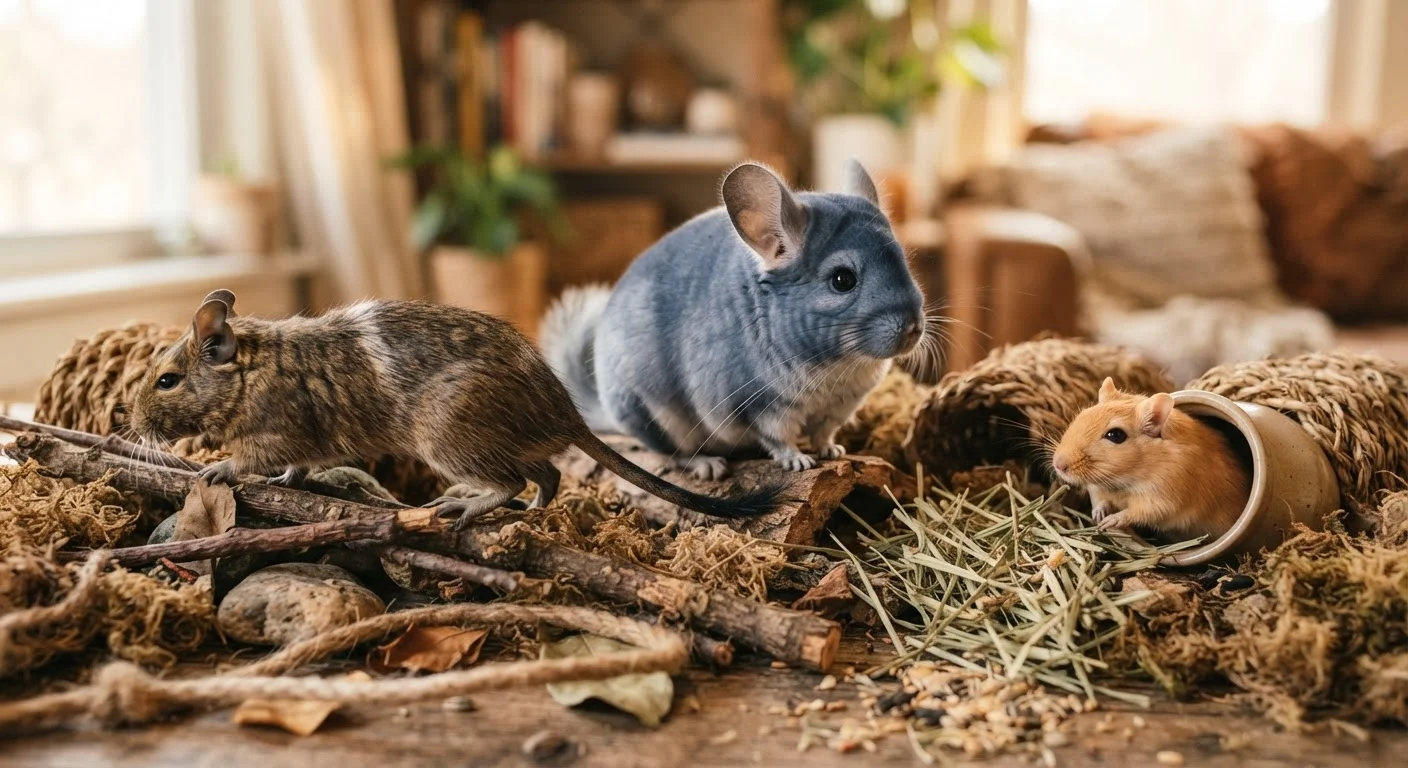
Gerbils are often overshadowed by hamsters, but they have some meaningful advantages. They're naturally diurnal and crepuscular - meaning they're more active during daylight hours and early evening, which suits most households better than the strictly nocturnal hamster. They're also highly social animals that do best in same-sex pairs or small groups, so plan to adopt at least two.
Gerbils need a deep substrate layer for burrowing - at least six inches is generally recommended - and benefit from regular environmental enrichment like tunnels and wooden chews. Their diet should be gerbil-specific seed and pellet mix supplemented with fresh vegetables in small amounts. Lifespan is typically three to five years.
Gerbils are more active during daylight hours, making them a better fit for most family schedules than hamsters.
Chinchillas
Chinchillas are remarkable animals with lifespans that can reach 15 years or more in captivity - a commitment that often catches new owners off guard. They require very specific environmental conditions: temperatures consistently below 75°F (24°C), because they're highly susceptible to heat stroke. They also need regular dust baths using chinchilla-specific volcanic dust to keep their exceptionally dense fur healthy.
Chinchillas are social and do better in bonded pairs. They're generally not ideal for young children, as they're fast-moving, can be skittish, and don't always enjoy frequent handling. A large, multi-level cage with plenty of space for movement is essential. Their diet is primarily high-quality hay, supplemented with small amounts of pellets.
Chinchillas can live 15 years or more - a commitment that requires careful, long-term planning from prospective owners.
Degus
Degus look somewhat like a cross between a rat and a squirrel, and they're quietly gaining attention among experienced small-pet owners in the US. They're highly social, intelligent, and active during daylight hours - making them more observable than many other small pets. Like chinchillas, they need same-sex companions and do poorly when isolated.
One critical care note: degus are extremely prone to diabetes and must never be given sugary foods or treats, including many commercially sold small-pet snacks. Their diet should consist primarily of high-fiber hay, degu-specific pellets, and limited fresh greens. They also benefit from dust baths. Lifespan is typically five to eight years.
Degus are highly prone to diabetes and should never receive sugary foods - even treats marketed for small pets.
Fancy Rats
Fancy rats (domesticated Rattus norvegicus) are among the most interactive and trainable of all small pets. They can learn their names, respond to recall, and even complete simple puzzle tasks. They're social animals that need to be kept in groups of at least two, preferably same-sex to avoid unintended breeding.
Rats require a large cage with horizontal bars for climbing, plenty of enrichment, and daily out-of-cage time for interaction and exercise. Their lifespan of two to three years is unfortunately short, and they're prone to respiratory illness and tumors - making access to a vet experienced with small mammals especially important. Despite the shorter lifespan, many owners describe rats as the most rewarding small pet they've kept.
Fancy rats are among the most trainable small pets available, capable of learning names and simple tasks.
African Pygmy Dormice
African pygmy dormice (Graphiurus murinus) are tiny, acrobatic, and undeniably captivating - but they're firmly in the experienced-owner category. They're extremely fast, rarely enjoy being handled, and need tall enclosures with branches, ropes, and hiding spots to satisfy their natural climbing and nesting instincts. They're best appreciated as display animals rather than pets you'll handle regularly.
They're omnivorous, eating a mix of seeds, insects, and fruits, and they're nocturnal - most active after dark. Because they're not widely kept, finding a vet familiar with the species can be challenging. They're not a good fit as a first small pet, but for a hobbyist who enjoys observational care, they're genuinely fascinating.
African pygmy dormice are best appreciated as observational pets - they rarely tolerate regular handling.
Choosing the Right Fit for Your Home
Each species above suits a different kind of owner. Gerbils are a reasonable starting point for someone transitioning from hamsters. Chinchillas and degus reward patient, committed owners willing to invest in proper housing and social pairing. Rats suit people who genuinely want an interactive pet. African pygmy dormice are best left to those with prior small-animal experience.
Find an Exotic Vet Before You Adopt
Standard small-animal vets may not have experience with chinchillas, degus, or dormice. Search for an exotic animal veterinarian in your area before you bring any of these species home. The American Association of Exotic Mammal Veterinarians (AAEMV) maintains a directory that can help you locate qualified practitioners. Establishing care early means you're not scrambling in an emergency.
Understanding social needs matters enormously with these animals. Our guide on single vs. paired small pets explains the broader biology behind why some species struggle alone. And if you want an honest picture of what small pet ownership really involves day-to-day, our balanced overview is a useful read before you commit.
Appetite Changes Are Always Worth Monitoring
Any small pet that stops eating should be assessed by a vet promptly - this is rarely a minor issue in small mammals. Our article on what it means when a small pet stops eating covers the common causes and warning signs to watch for. The shorter the animal, generally, the faster a problem can escalate.