Understanding What Rabbits Actually Need
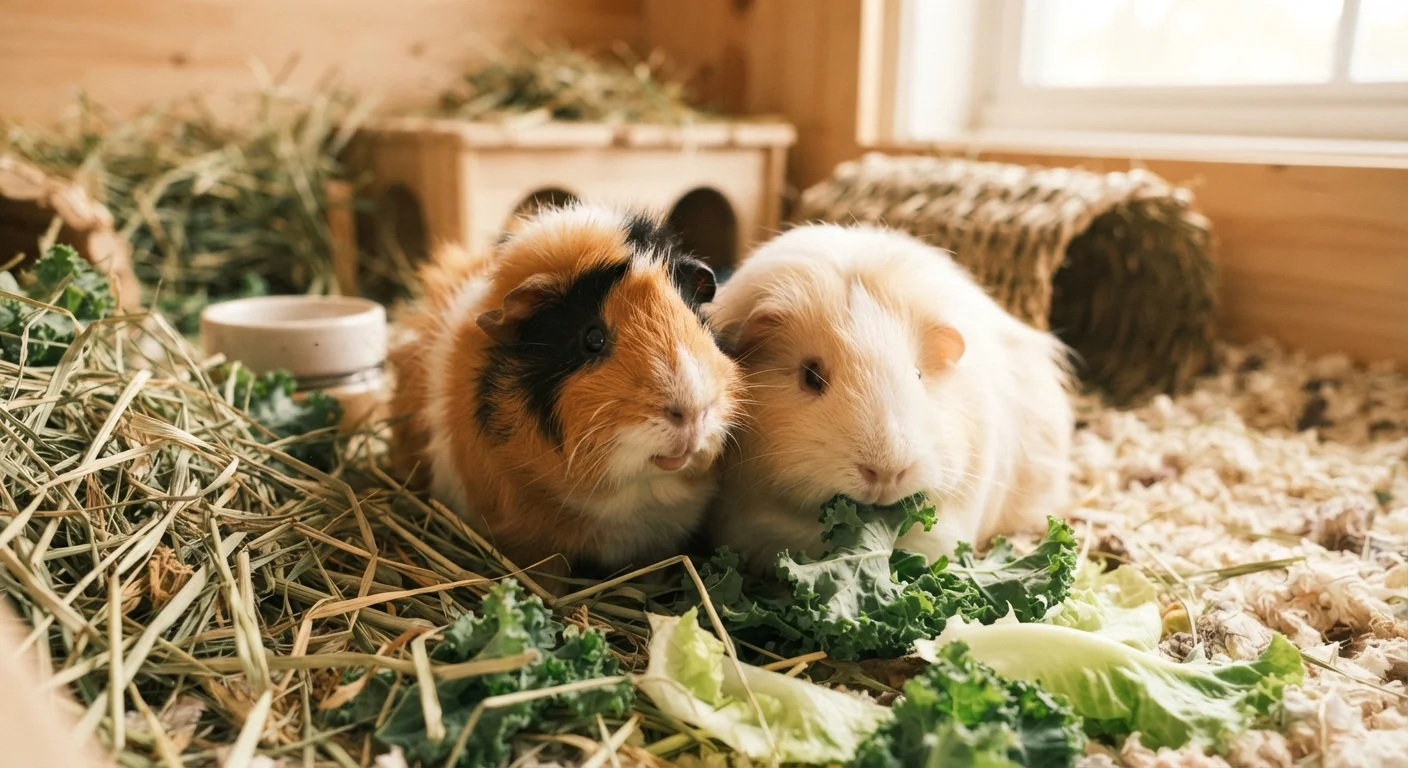
Rabbits are among the most misunderstood household pets. Many people bring one home expecting a low-maintenance companion, only to discover that rabbits have complex social, dietary, and environmental needs that differ significantly from dogs or cats - and even from other small pets like guinea pigs. See our guinea pig care overview for a side-by-side comparison of what each species demands.
Before acquiring a rabbit, it helps to understand a few core realities: rabbits are prey animals, meaning they are wired to conceal weakness and startle easily. They communicate through subtle body language rather than vocalizations. They have sensitive digestive systems that require a very specific diet. And they live, on average, 8 to 12 years - a commitment comparable to adopting a small dog.
GI stasis
A dangerous condition where a rabbit's digestive system slows down or stops entirely. It can become life-threatening within hours and requires immediate veterinary attention.
Prey animal
An animal that is hunted by others in the wild. Prey animals like rabbits instinctively hide signs of illness or weakness, which makes recognizing health problems harder for owners.
Binkying
A joyful behavior where a rabbit leaps into the air and twists its body mid-jump. It is a clear sign that the rabbit feels safe and happy in its environment.
Malocclusion
A dental condition where a rabbit's teeth do not align properly, causing overgrowth or sharp spurs. It can interfere with eating and requires veterinary dental care.
Exotic vet
A veterinarian who specializes in animals other than cats and dogs, including rabbits. Not all general vets have the training needed to treat rabbits effectively.
Going in with accurate expectations sets both you and your rabbit up for a genuinely rewarding relationship.
Setting Up a Safe Living Space
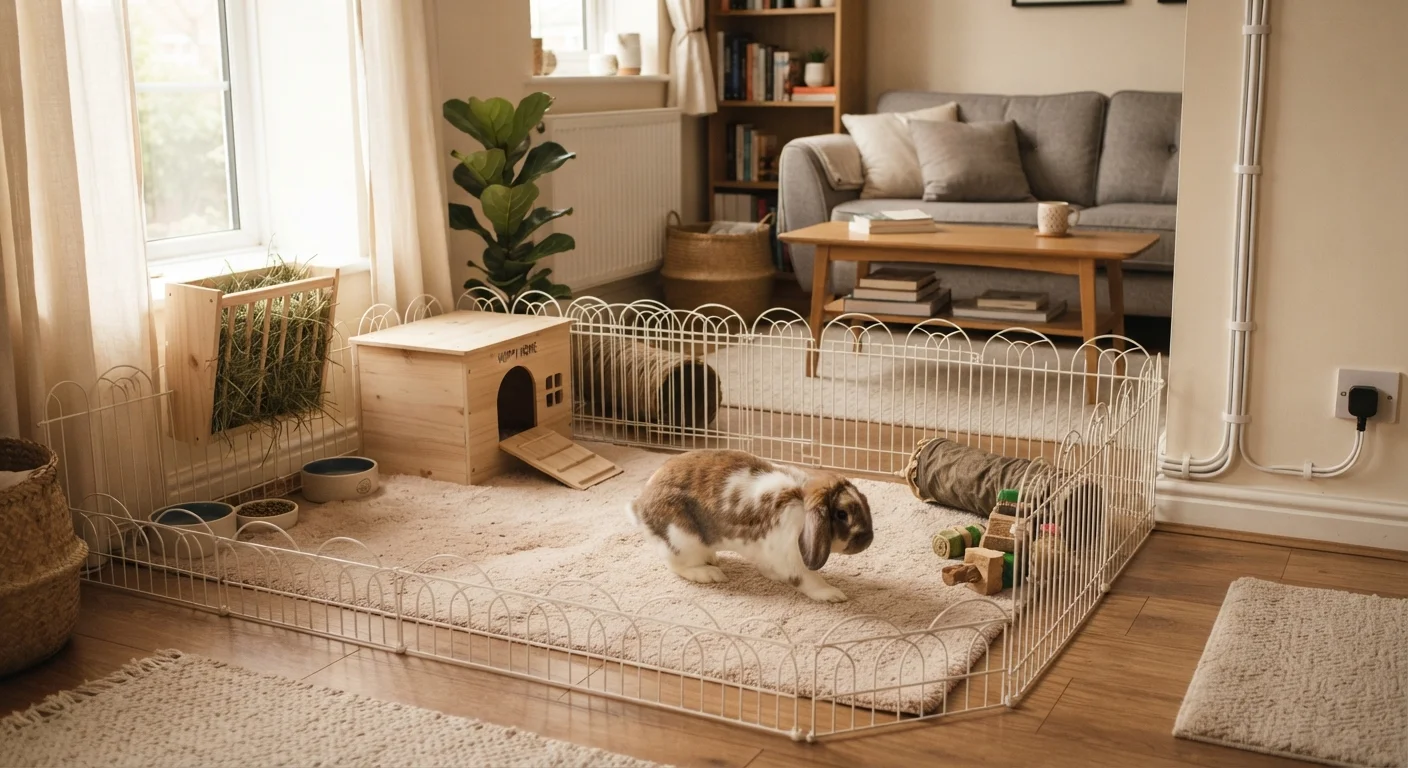
The single most common housing mistake new owners make is underestimating how much space a rabbit needs. Pet store hutches marketed for rabbits are almost universally too small for healthy, long-term living. Veterinary and animal welfare organizations generally recommend a minimum enclosure of around 12 square feet, plus several hours of free-roaming time in a larger, rabbit-proofed area each day.
For indoor setups, a large exercise pen or a dedicated room works well. The space should be free of electrical cables (rabbits will chew them), toxic houseplants, and unsecured small objects. Flooring matters too - rabbits' feet are not designed for slippery surfaces, so provide rugs or mats over tile or hardwood. Our detailed guide on housing a rabbit indoors walks through the most overlooked hazards room by room.
Set Up a Litter Box Before They Come Home
Having a clean litter box ready in the enclosure from day one helps establish good habits right away. Use paper-based litter and add a handful of hay on top - rabbits instinctively eat and eliminate at the same time, so this encourages them to use the box consistently. Clean it daily to maintain hygiene and make it easier to monitor your rabbit's health through droppings.
Litter training is straightforward for most rabbits. Place a litter box in the corner they naturally choose, fill it with paper-based litter and a layer of hay (they often eat while toileting), and clean it daily. Avoid clay or clumping cat litters, which can be harmful if ingested.
Feeding Your Rabbit the Right Way
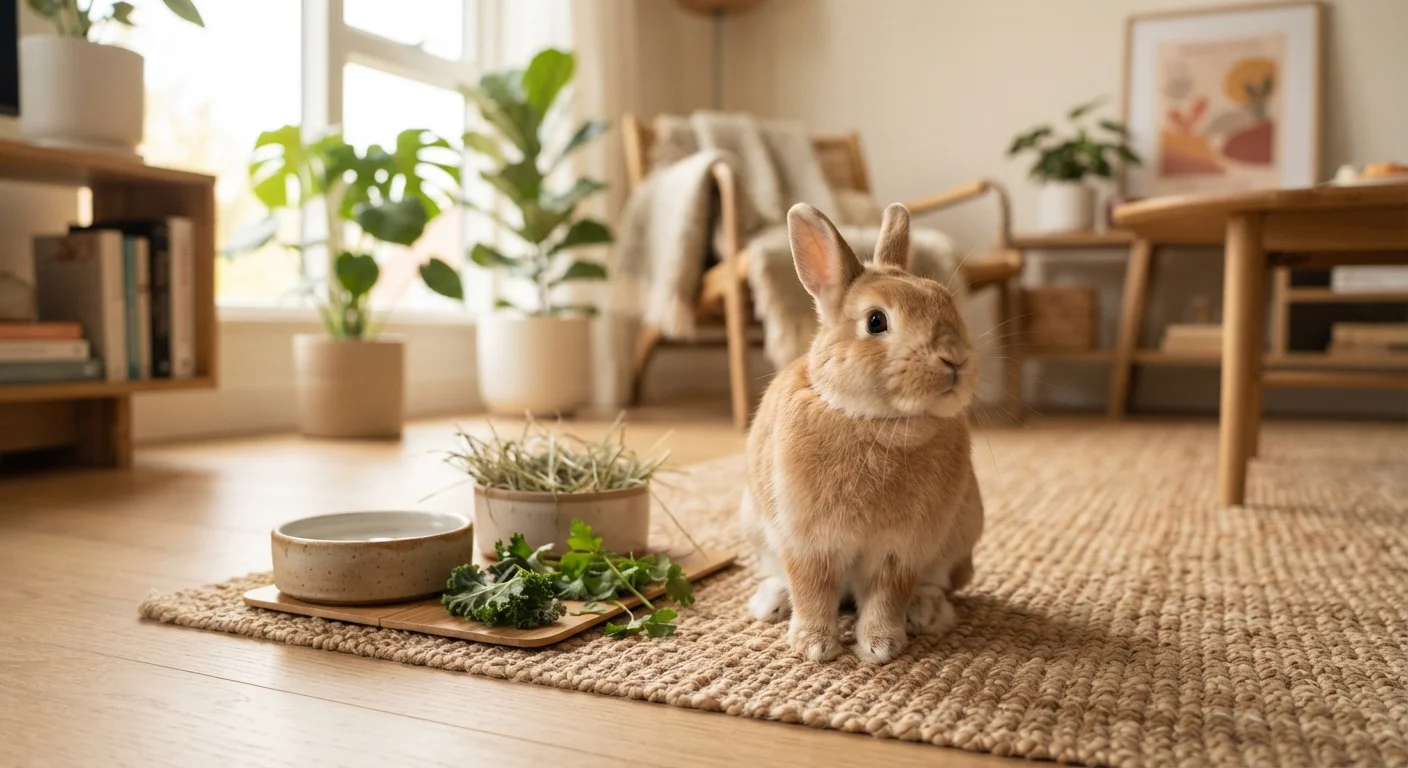
Hay is not optional - it is the cornerstone of rabbit health. Unlimited grass hay (timothy, orchard grass, or meadow hay) should make up roughly 80% of what your rabbit eats daily. The fiber content keeps the gut moving and wears down continuously growing teeth, preventing two of the most common and serious rabbit health problems: GI stasis and dental disease.
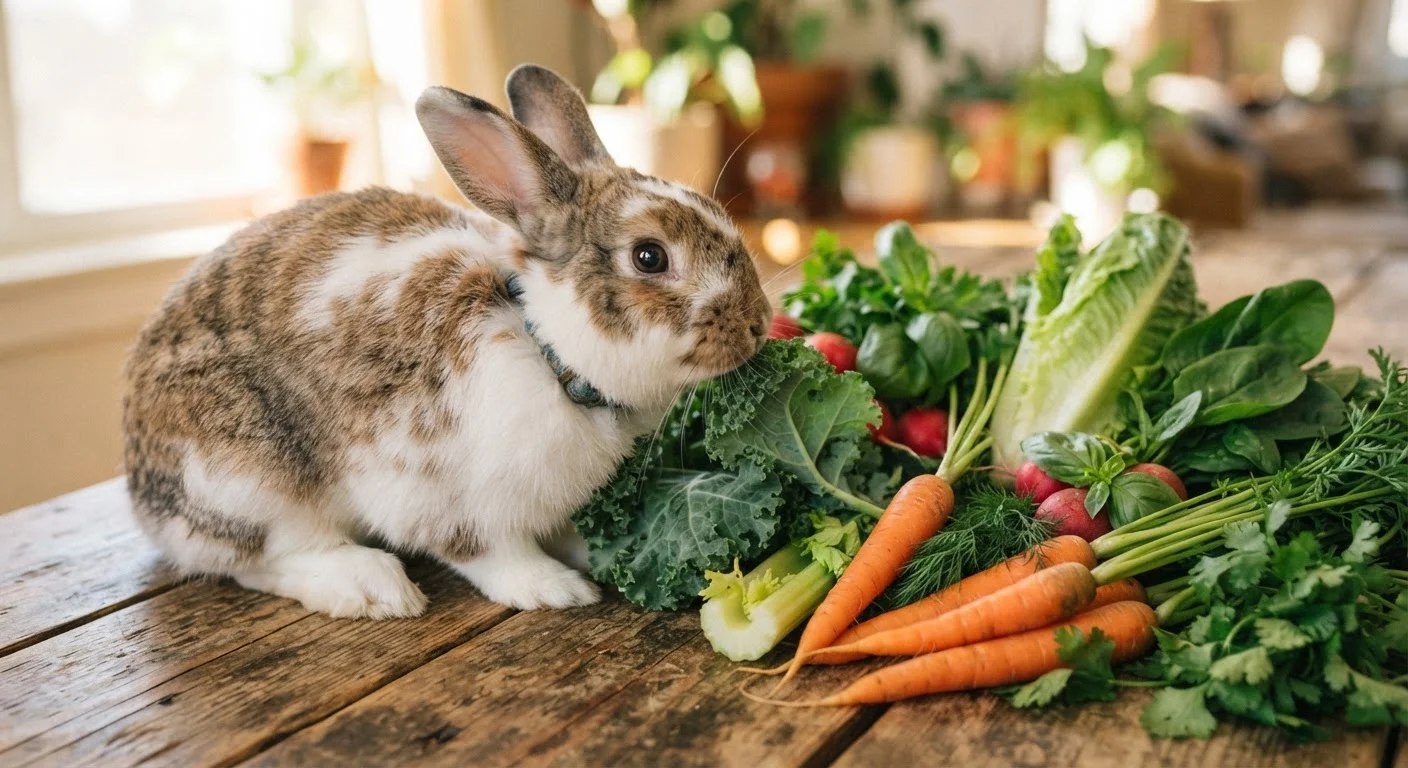
Fresh leafy greens - romaine lettuce, cilantro, parsley, and dark leafy herbs - can be offered daily in small portions. Pellets should be plain, hay-based, and measured; they are a supplement, not a staple. For a thorough breakdown of safe and unsafe foods, see what rabbits can and cannot eat.
Avoid These Common Food Mistakes
Never feed rabbits muesli-style mixed feeds, iceberg lettuce, corn, potatoes, or anything high in sugar - including most commercial 'rabbit treats.' These foods can cause dangerous digestive imbalances. Fruit should be an occasional treat in very small amounts, not a regular part of the diet. When in doubt, check a reliable dietary reference before introducing any new food.
Fresh water must always be available, either in a heavy ceramic bowl or a sipper bottle. Bowls are generally preferred as they allow more natural drinking posture.
Handling, Bonding, and Behavior
Rabbits rarely enjoy being picked up, and forcing contact is one of the fastest ways to damage trust. Instead, build your relationship at floor level. Sit quietly in their space, let them approach you, and offer food from your hand. Over days or weeks, most rabbits will seek out proximity and light petting on their own terms.
When you do need to pick up a rabbit - for vet visits or health checks - support their hindquarters fully at all times. A rabbit that feels unsupported will kick hard enough to fracture its own spine, a genuine danger that even experienced handlers must guard against.
Learning to interpret what your rabbit is telling you makes bonding much faster. Behaviors like binkying (joyful mid-air twists), flopping, and tooth-purring signal contentment; thumping and hunched posture signal stress or discomfort. Our companion piece on reading rabbit body language explains the full range of signals in plain language.
Health Basics Every New Owner Should Know
Find a rabbit-savvy exotic veterinarian before you need one urgently - not all general practice vets are trained in rabbit medicine, and rabbit health emergencies can escalate within hours. Annual wellness exams are recommended, and most vets will suggest spaying or neutering, which reduces the risk of reproductive cancers (extremely common in unspayed females) and can significantly calm territorial behaviors.
The most critical condition to know about is GI stasis - a potentially fatal slowdown of the digestive system. Signs include a sudden stop in eating, no droppings, or a bloated, painful abdomen. This is always a veterinary emergency. Do not wait to see if it resolves on its own.
Dental health is another ongoing concern. Rabbit teeth grow continuously and can become misaligned (a condition called malocclusion). Hay consumption is the best preventive measure, but annual dental checks allow vets to catch problems early.
This article provides general pet care information and is not a substitute for professional veterinary advice. Always consult a qualified exotic animal veterinarian for guidance specific to your rabbit's health and circumstances.