The Foundation: Hay Comes First
If there is one rule every rabbit owner should memorize, it is this: hay should make up roughly 80-90% of a rabbit's daily diet. Timothy hay, orchard grass, and meadow hay are all appropriate for adult rabbits. Hay keeps the digestive tract moving, prevents hairball impaction, and wears down continuously growing teeth.
A rabbit without unlimited access to fresh hay is at serious risk for gastrointestinal stasis - a dangerous slowdown of the gut that requires prompt veterinary attention. If you notice your rabbit has stopped eating or producing droppings, consult a vet without delay. Our guide on what it usually signals when a small pet stops eating explains the warning signs in more detail.
| Hay as % of daily diet | 80-90% (House Rabbit Society dietary guidelines) |
| Fresh greens (per 2 lbs body weight) | ~1 packed cup daily |
| Pellets (per 5 lbs body weight) | ~¼ cup daily (General guidance; confirm with your vet) |
| Fruit and carrots | Occasional treat only (High sugar content - limit to small pieces a few times per week) |
| Water | Fresh, unlimited daily (Both bowl and sipper bottle forms are acceptable) |
Safe Vegetables and Leafy Greens
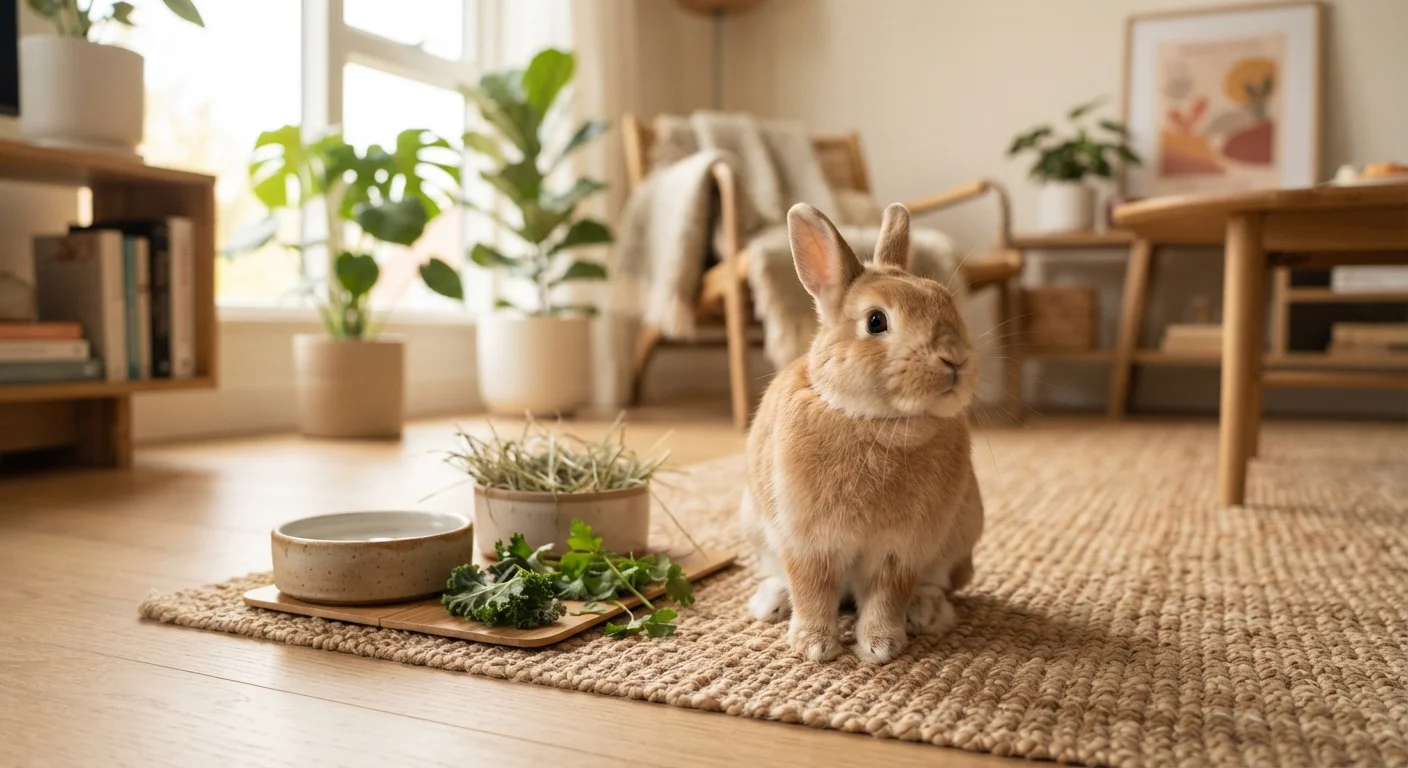
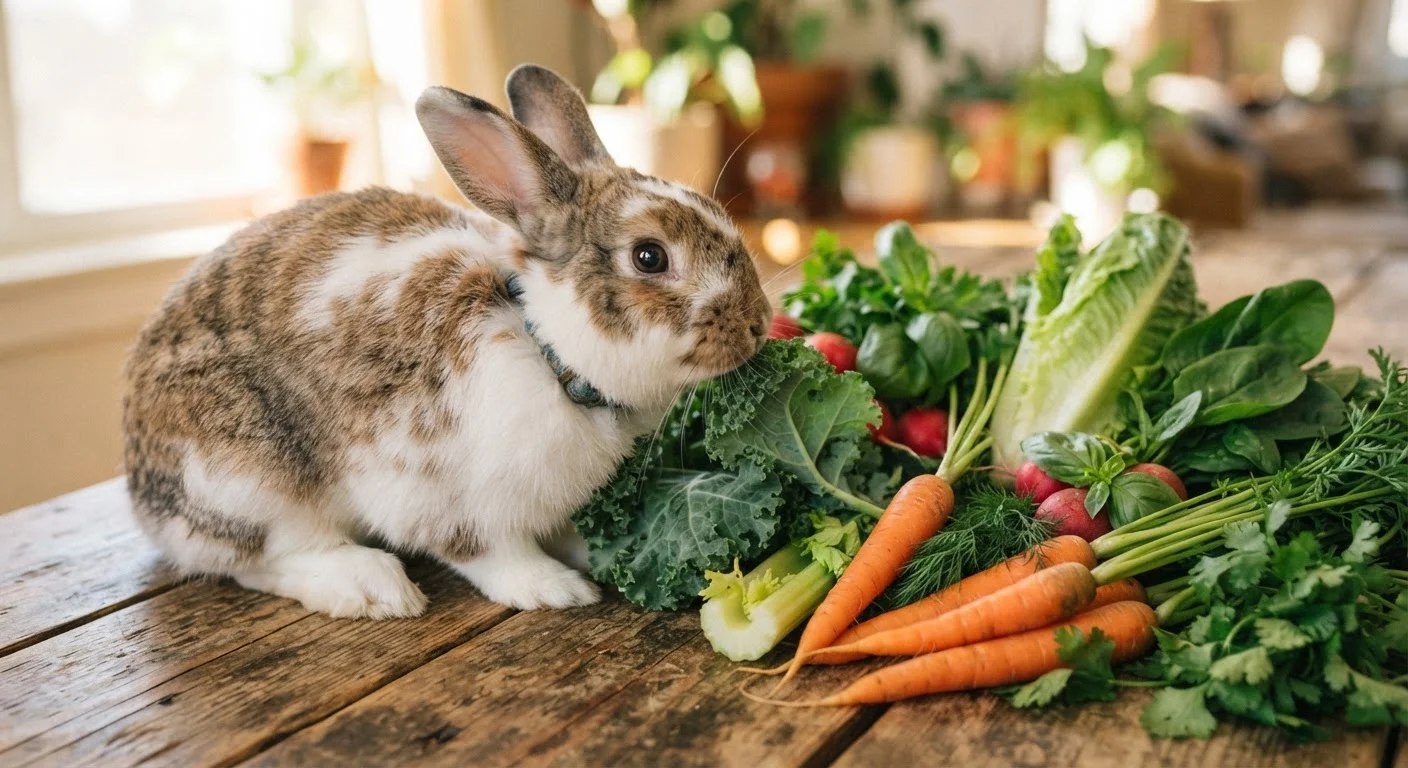
Fresh leafy greens are the most valuable addition to a hay-based diet. Offer a variety - roughly one packed cup per two pounds of body weight per day - to ensure a broad nutrient profile.
- Safe greens: romaine lettuce, green leaf lettuce, red leaf lettuce, arugula, cilantro, parsley, basil, dill, watercress, bok choy, and kale (in small amounts).
- Safe vegetables in small quantities: bell peppers (any color), zucchini, cucumber, and broccoli leaves.
- Carrots and fruit: These are high in natural sugar and should be treated as occasional treats only - a thin carrot slice or a small piece of apple (seeds removed) a few times per week at most.
Introduce any new food gradually over several days to avoid upsetting your rabbit's sensitive digestive system. New owners should also read our rabbit care basics guide for a broader overview of getting started.
Gastrointestinal stasis
A dangerous condition in which a rabbit's digestive system slows down or stops. It can be life-threatening within hours and requires immediate veterinary care.
Lactucarium
A milky substance found in large-leaf lettuces like iceberg that can have a mild sedative effect and cause loose stools in rabbits when consumed in quantity.
Alfalfa hay
A legume-based hay that is higher in calcium and protein than grass hays like timothy. Generally recommended for young or pregnant rabbits, but not for healthy adult rabbits.
Oxalic acid
A naturally occurring compound found in foods like rhubarb and spinach. In high amounts, it can bind to calcium and cause kidney damage or other health issues in rabbits.
Foods Rabbits Should Never Eat
Several common household foods are toxic or seriously harmful to rabbits. Keep all of the following away from your pet:
- Alliums: onions, garlic, leeks, chives, and shallots - these damage red blood cells and can cause life-threatening anemia.
- Iceberg lettuce: high in lactucarium, a compound that can cause loose stools and sedation in large amounts.
- Rhubarb: oxalic acid content makes both the leaves and stalks dangerous.
- Avocado: contains persin, which is toxic to many animals including rabbits.
- Chocolate, caffeine, and alcohol: all acutely toxic.
- Processed foods: crackers, bread, pasta, cereals, nuts, and seeds are too high in starch and fat for rabbit digestion.
- Dairy products and meat: rabbits are strict herbivores and cannot digest animal-derived foods.
When in Doubt, Contact Your Vet
Rabbits are prey animals and often hide signs of illness until they are quite unwell. If you are ever unsure whether a food is safe, or if your rabbit has ingested something concerning, err on the side of caution and call your veterinarian. This article provides general educational information and is not a substitute for professional veterinary advice.
If your rabbit has eaten something from the unsafe list, contact your veterinarian or an animal poison control service promptly. Do not wait for symptoms to appear.
Pellets: Supplement, Not Substitute
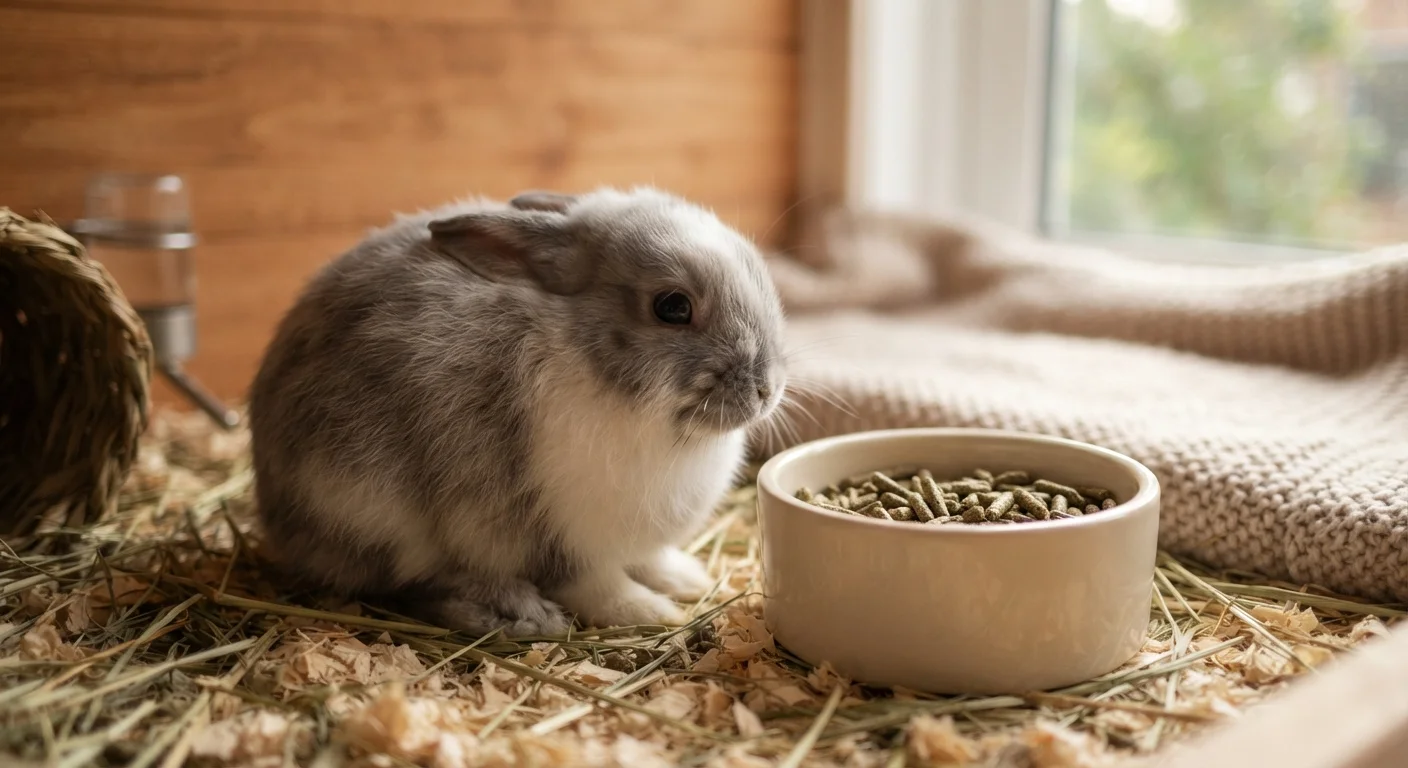
Commercial pellets can provide useful nutrients, but they should complement hay - not replace it. Choose plain, timothy-hay-based pellets without added seeds, dried fruit, or colored pieces. The general guidance from rabbit welfare organizations is roughly one quarter cup of pellets per five pounds of body weight per day for healthy adult rabbits, though your vet can help you calibrate the right amount for your individual animal.
Young rabbits (under seven months) can be offered alfalfa-based pellets and alfalfa hay, which are higher in calcium and protein to support growth. Adult rabbits, however, do not need the extra calcium that alfalfa provides, so timothy-based pellets are preferred once they mature.
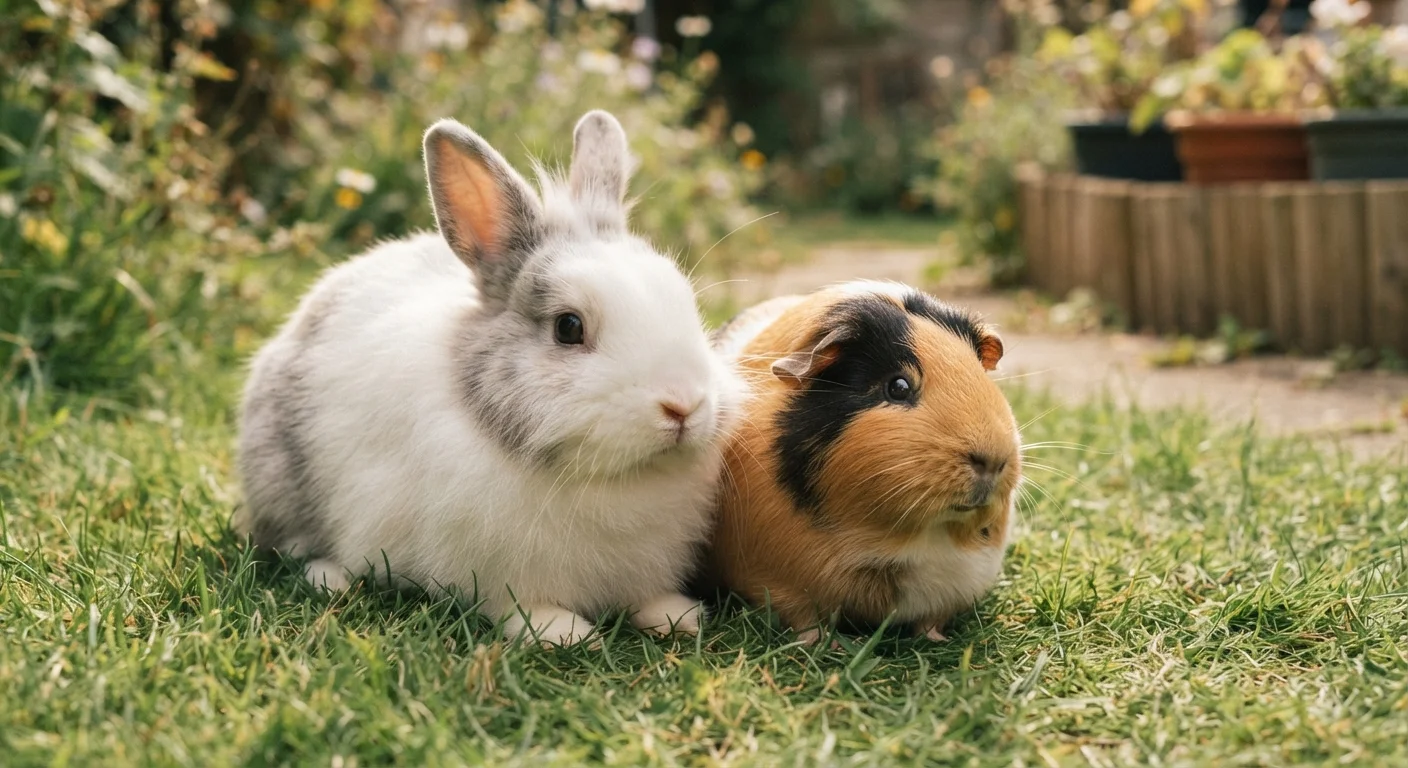
For context on choosing between rabbits and similar small pets, see our comparison of guinea pigs and rabbits to understand how dietary needs differ across species.
80-90%
Of diet that should be hay
Hay is non-negotiable for healthy rabbit digestion and dental wear, per rabbit welfare organizations.
2+
Cups of hay recommended daily (minimum)
Most adult rabbits should have hay available at all times, not rationed.