Why Indoor Rabbit Housing Gets Overlooked So Easily
Rabbits are often grouped with hamsters and guinea pigs as low-effort starter pets, but their housing needs are considerably more complex. If you're researching before getting a rabbit, our pre-arrival checklist covers housing, diet, and vet access in one place. For a broader look at how rabbits compare to other small pets, see common small pet myths that can lead owners astray.
The mistakes below are among the most frequently seen in first-time rabbit households. Most are easy to correct once you know what to look for - and catching them early makes a significant difference to your rabbit's long-term health.
The Most Common Housing Mistakes - and How to Fix Them
Each of the errors below stems from a genuinely understandable assumption. The goal here is not to criticize but to give you the clearest possible picture of what indoor rabbit housing actually requires.
Providing a hutch or cage that is too small for the rabbit's size and activity level.
Why it happens: Pet store enclosures are often marketed as suitable for rabbits but are far below the space guidelines recommended by rabbit welfare organizations such as the House Rabbit Society.
Not providing daily out-of-enclosure exercise time.
Why it happens: New owners sometimes assume the enclosure itself is sufficient, underestimating how active rabbits naturally are during dawn and dusk hours.
Using wire-bottom flooring inside the enclosure.
Why it happens: Wire floors are common in older-style hutch designs and are mistakenly seen as hygienic because waste falls through.
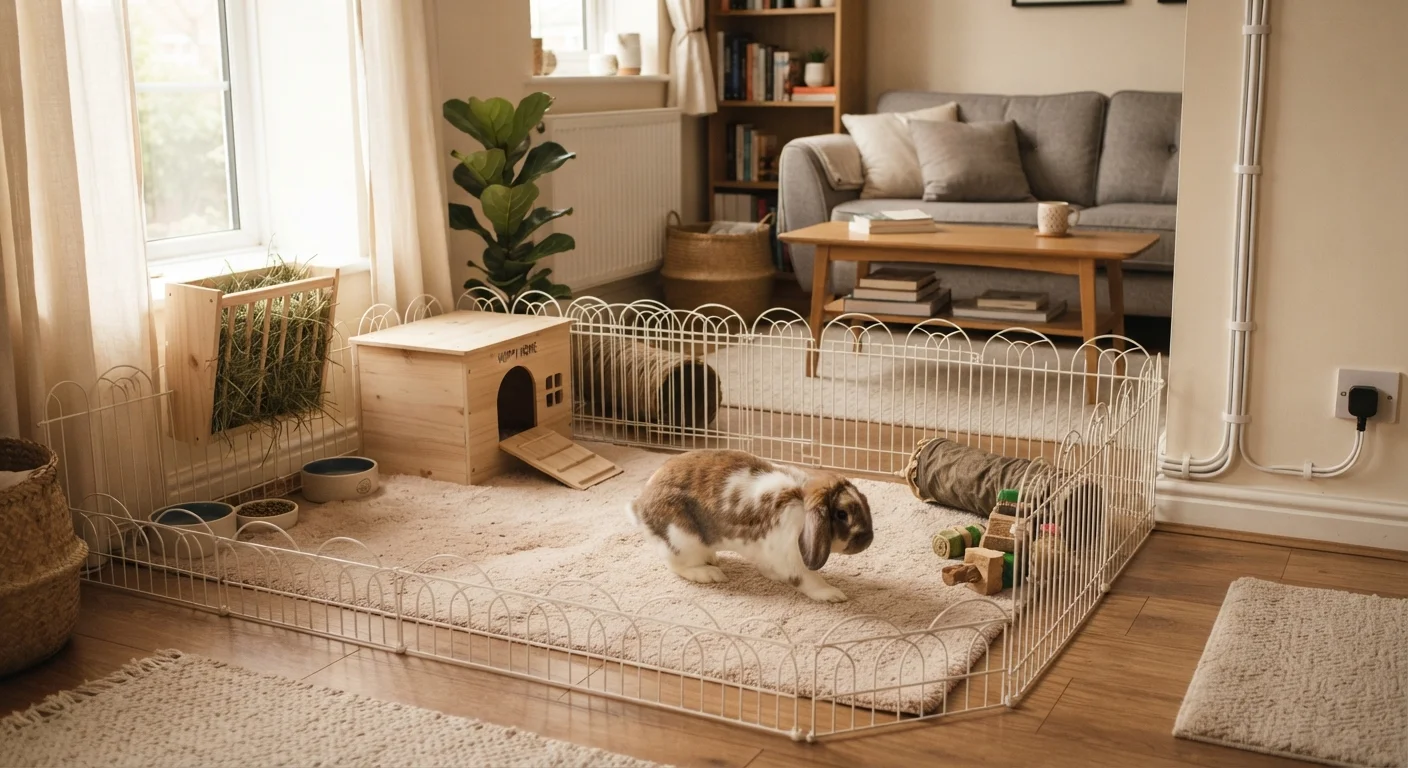
Failing to rabbit-proof the room before free-roaming sessions.
Why it happens: Owners often underestimate how quickly a rabbit can reach hazards or how determined they are to chew anything accessible.
Placing the enclosure in a drafty area, near a heating vent, or in direct sunlight.
Why it happens: Owners may choose a location based on convenience or aesthetics rather than the rabbit's comfort and safety needs.
Not including a hide or shelter within the enclosure.
Why it happens: Hides are often seen as optional accessories, but rabbits are prey animals that need a private retreat to feel secure.
Cable Chewing Is a Life-Threatening Risk
Rabbits have a strong instinct to chew, and electrical cables are among the most dangerous household hazards they face. A rabbit that bites through a live cable can suffer electrocution. Before allowing any free-roaming time, secure or fully conceal every cable in accessible areas using cable management trunking or run cables behind furniture out of reach.
For a full introduction to rabbit care beyond housing - including diet and handling - see Rabbit Care from Day One. And if you're still deciding between species, Guinea Pig or Rabbit walks through how their needs differ.
Room Safety: What to Check Before Every Free-Roam Session
Many Common Houseplants Are Toxic to Rabbits
Plants such as pothos, peace lily, and philodendron are toxic to rabbits and can cause serious harm if chewed. Before giving your rabbit access to any room, remove or relocate all houseplants to areas the rabbit cannot reach. The ASPCA maintains a searchable database of plants toxic to small animals that is worth consulting.
4×
Minimum enclosure size relative to rabbit's body length
The House Rabbit Society and many rabbit welfare groups recommend enclosures at least four times the rabbit's full stretched length as a starting minimum.
3-4 hrs
Daily free-roaming exercise time recommended
Rabbit welfare organizations consistently recommend a minimum of three to four hours of out-of-enclosure exercise per day for indoor pet rabbits.
A rabbit-proofed room is one you've assessed from your rabbit's eye level - literally crouching down to spot what they can reach. Check behind sofas, under shelving units, and along baseboards for cables or gaps. Rabbits can squeeze into surprisingly tight spaces and may chew materials that look harmless, including wood trim, carpet edges, and soft furnishings.
Understanding your rabbit's behavior helps here too. Knowing what your rabbit's body language signals - including signs of stress or over-stimulation - helps you manage free-roam time more confidently. A rabbit that thumps repeatedly or retreats and crouches is telling you something about its environment.
Finally, diet and housing work together: a rabbit with good living conditions still needs the right food to stay healthy. Our reference on what rabbits can and cannot eat is a useful companion to this guide.
This article is intended for general informational purposes only. For advice specific to your rabbit's health or behavior, consult a veterinarian with experience in exotic or small animal care.