Why Travel Gear Marketing Gets in Your Head
Walk through any airport store or scroll a travel subreddit and you'll find hundreds of products promising to transform your trip. The problem isn't that travel accessories are bad - it's that anxiety about forgetting something makes it easy to overpack in self-defense. Before long, your bag is stuffed with gadgets you'll never touch.
The smarter move is to evaluate gear the same way a seasoned traveler does: not by what could go wrong, but by what has actually gone wrong on past trips. If you've never once needed a portable clothesline, it probably doesn't belong in your carry-on. For a deeper look at this mindset shift, see the carry-on only mindset - it's a useful framework before you start making any packing decisions.
The One-Week Rule for New Gear
If you buy a new travel accessory, use it at home for a week before your trip. If you don't find yourself reaching for it in daily life, it probably won't be useful on the road either. This one habit eliminates most impulse packing purchases before they ever make it into your bag.
Gear That Genuinely Earns Its Place
These are the items that consistently pull their weight across trip types and traveler styles:
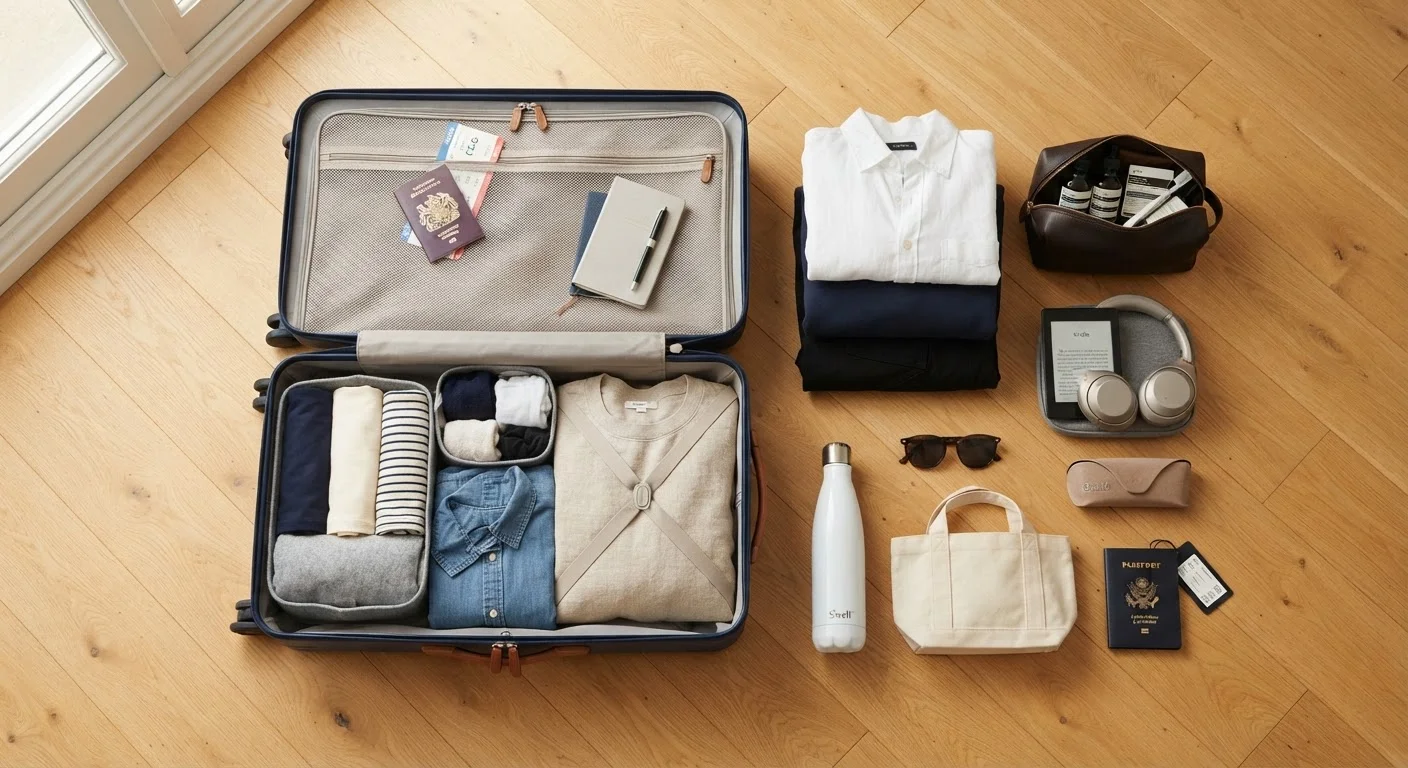
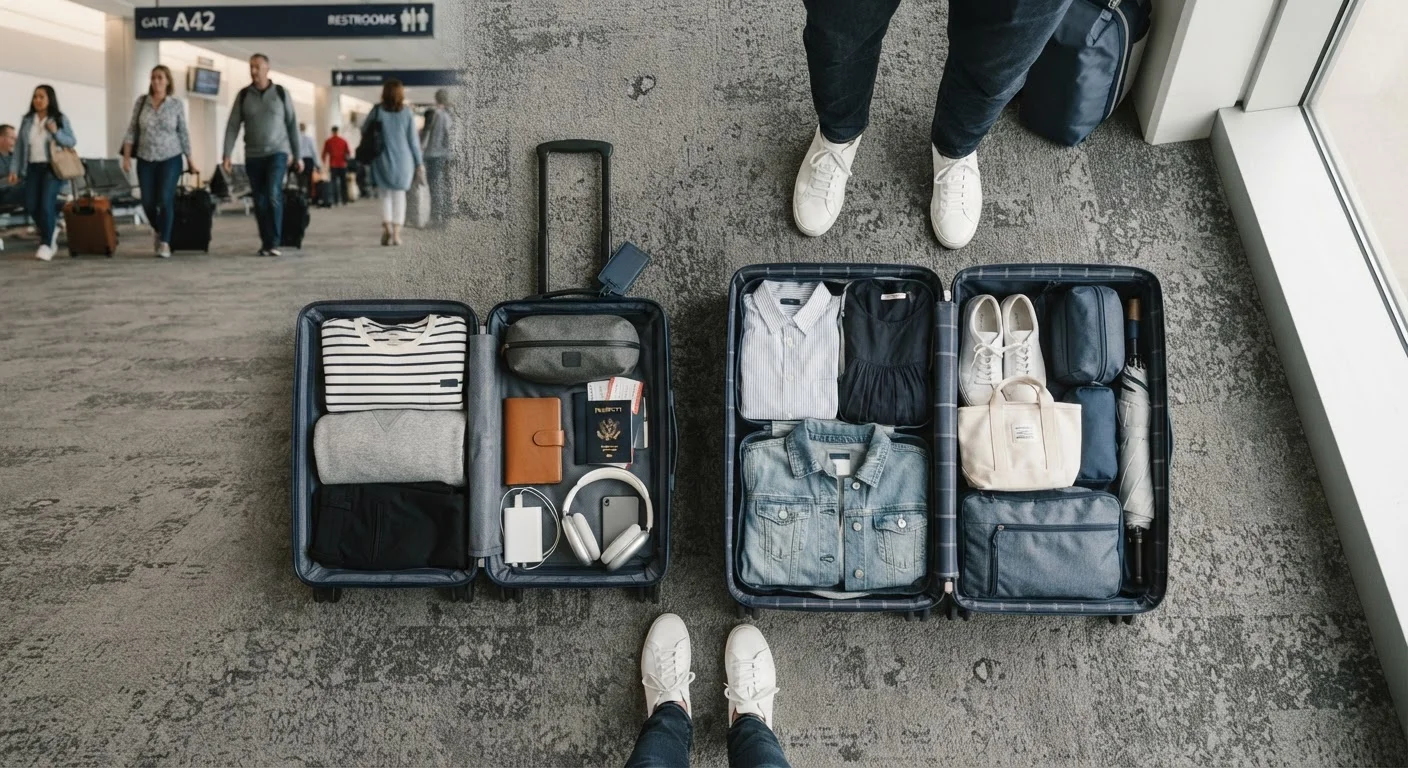
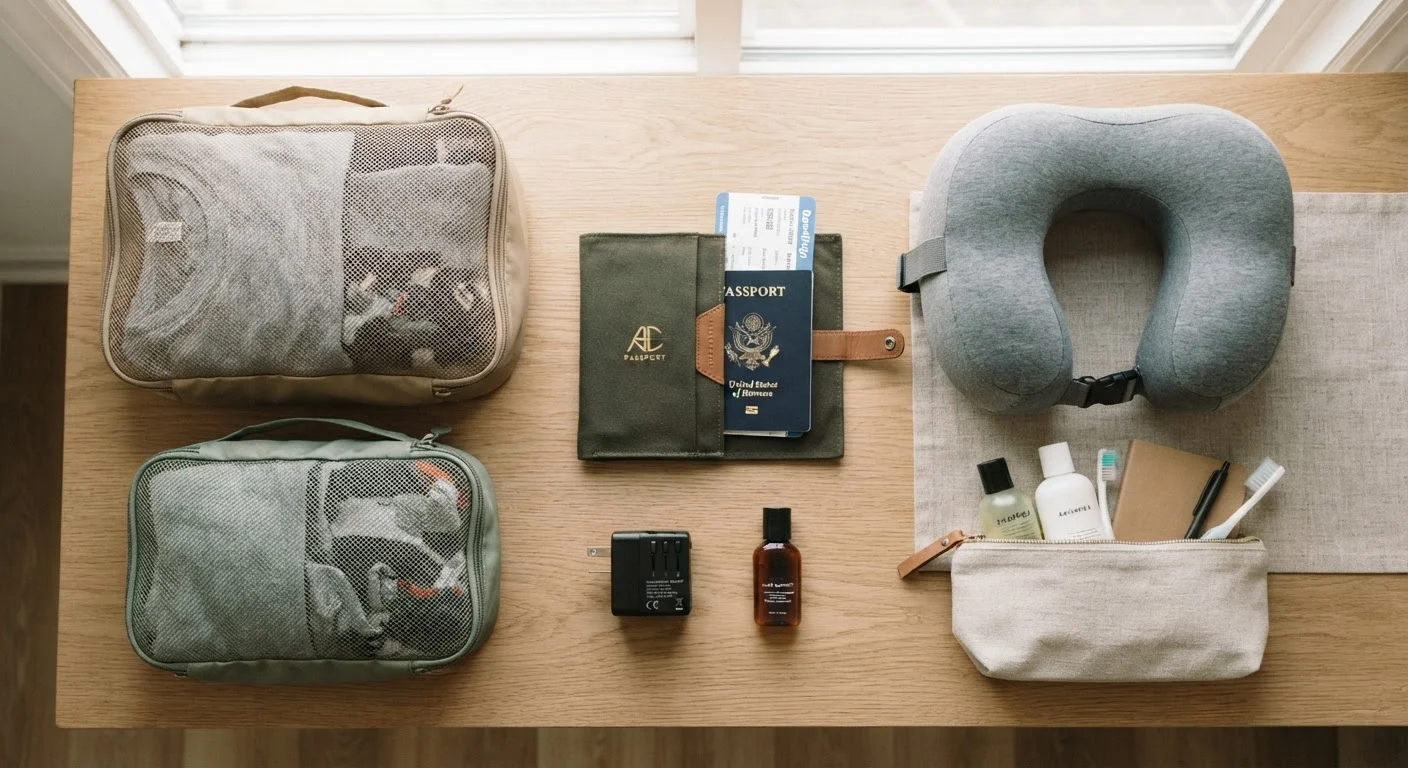
- Packing cubes: They don't save space, but they save sanity. Separating clothes by category means you can find anything instantly without unpacking your whole bag. Highly worth it.
- Universal power adapter: One compact adapter covers outlets in most countries. Without one, you're hunting for a solution in a foreign airport at midnight. Non-negotiable for international trips.
- Reusable water bottle with a filter: Reduces plastic waste, saves money on bottled water, and keeps you hydrated in destinations where tap water isn't safe to drink.
- A small crossbody or day bag: A packable, lightweight bag for daily exploring avoids lugging your primary luggage everywhere. Choose one that folds flat when empty.
- Noise-canceling earbuds or headphones: Long flights and bus rides become dramatically more bearable. Also useful for working in noisy hotel lobbies.
- Compression socks: Particularly valuable on flights over four hours. They reduce swelling and lower the risk of discomfort - worth packing even if they feel like overkill.
| Item | Worth Bringing? | Why | |
|---|---|---|---|
| Packing cubes | Packing cubes | Yes | Keeps bag organized, saves search time |
| Universal power adapter | Universal power adapter | Yes - for international travel | Covers most outlet types worldwide |
| Noise-canceling earbuds | Noise-canceling earbuds | Yes | Transforms long-haul flights and transit |
| Neck travel pillow | Neck travel pillow | Situational | Bulky; a jacket works just as well |
| RFID-blocking wallet | RFID-blocking wallet | Probably not | Threat is largely overstated in practice |
| Portable luggage scale | Portable luggage scale | Rarely | A home scale before departure works fine |
| Compression socks | Compression socks | Yes - for long flights | Reduces swelling on flights over 4 hours |
| Travel-sized toiletries (full set) | Travel-sized toiletries | No - bring minimal only | Hotels provide basics; buy locally if needed |
Stuff That Mostly Just Takes Up Space
These items show up on countless packing lists but rarely justify their spot in the bag:
- Dedicated travel pillows (most types): Bulky, awkward to carry, and most people don't actually sleep well on planes regardless. A soft jacket does the same job.
- Travel-sized everything: Mini shampoo, conditioner, lotion, and face wash sound smart but add up fast. Most hotels provide basics; for longer stays, buying locally is cheaper and lighter.
- Portable luggage scales: Useful maybe once a year. Your airline's app or a bathroom scale at home tells you the same thing before you leave.
- RFID-blocking wallets: Security experts note that RFID skimming is largely theoretical in practice - the threat is far rarer than marketing suggests.
- Elaborate first-aid kits: A small pouch with bandages, pain relievers, and any prescription medication you need covers 95% of travel health situations. A full kit is overkill for most destinations.
For more on the habits that lead to an overstuffed bag, packing myths worth questioning breaks down the most common ones.
Don't Pack for Every Possible Scenario
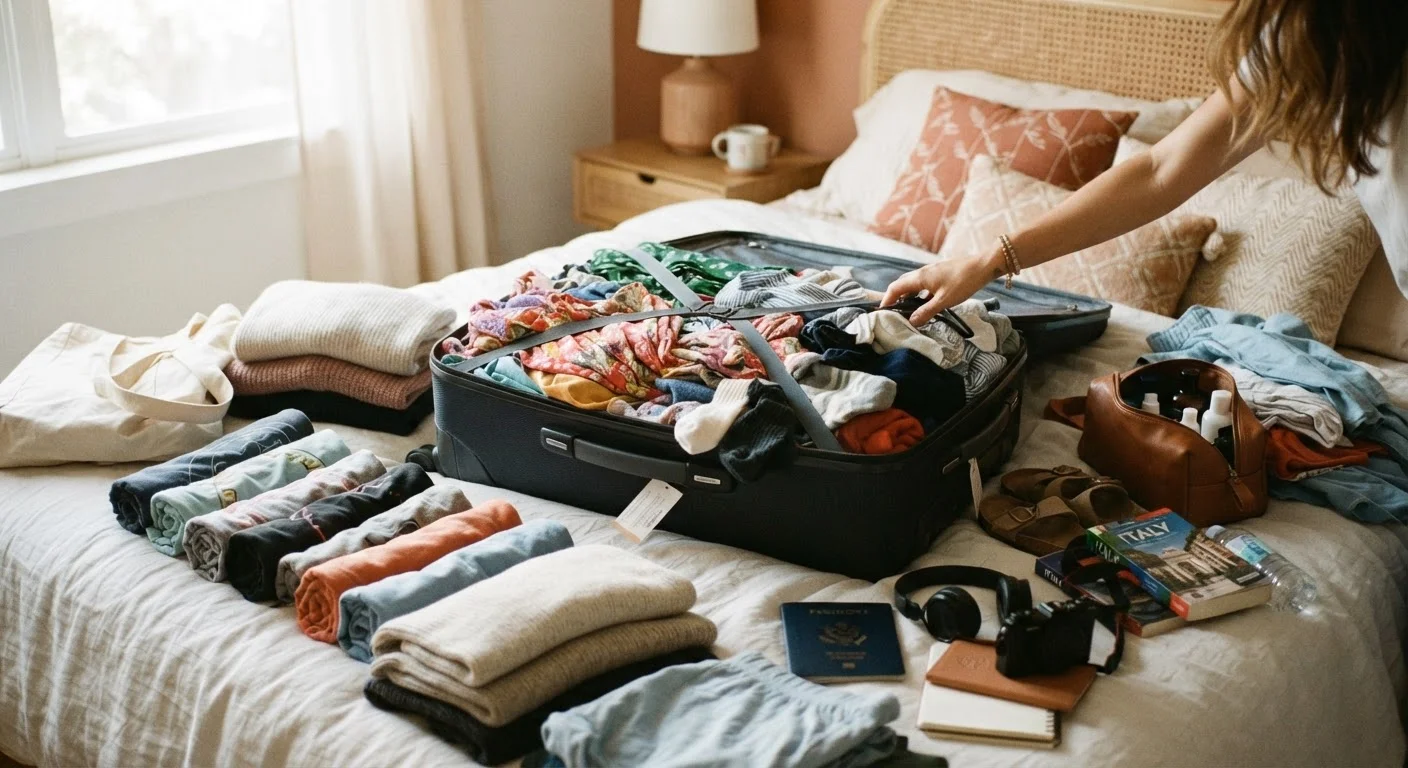
'Just in case' thinking is the number one cause of overpacking. Packing for every possible weather event, medical situation, or outfit option means carrying a bag that weighs you down from day one. Focus on the trip you're actually taking, not every trip you could theoretically take.
How to Decide What Makes the Cut
When you're evaluating any piece of travel gear, run it through this quick filter before it goes in the bag:
- Have I needed this before? If not, don't pack it for the first time on a trip. Test it at home.
- Can something I'm already bringing do the same job? A scarf doubles as a blanket. Your phone replaces a camera, alarm clock, and travel guide.
- How much does it weigh and how much space does it take? Even small items compound. Every extra pound adds up after a long travel day.
- Is it available at my destination? Most things - sunscreen, toiletries, umbrellas - can be bought on arrival if you actually need them.
If you're wrestling with the checked bag versus carry-on question alongside your packing choices, carry-on only vs. checked luggage lays out the real trade-offs clearly. And if your bag always seems to end up heavier than intended, why your bag always feels too heavy is worth a read before your next trip.