What the Licence Distinction Actually Means
In the United States, your driver's licence doesn't carry a formal "manual" or "automatic" restriction the way some countries do - you're licensed to drive passenger vehicles regardless of transmission type. However, some states do record an automatic-only restriction on the licence of anyone who took their road test exclusively in an automatic vehicle. The practical effect is the same: if you've only ever trained and tested on one type, you may not be legally or safely equipped to drive the other.
This distinction matters most when renting a vehicle, borrowing a friend's car, or considering which vehicle to purchase. It's worth understanding what each transmission type actually demands of you behind the wheel - not just mechanically, but in terms of attention, timing, and habit. For a broader look at safe driving from the start, see our topic overview on safe driving.
What Manual Driving Demands
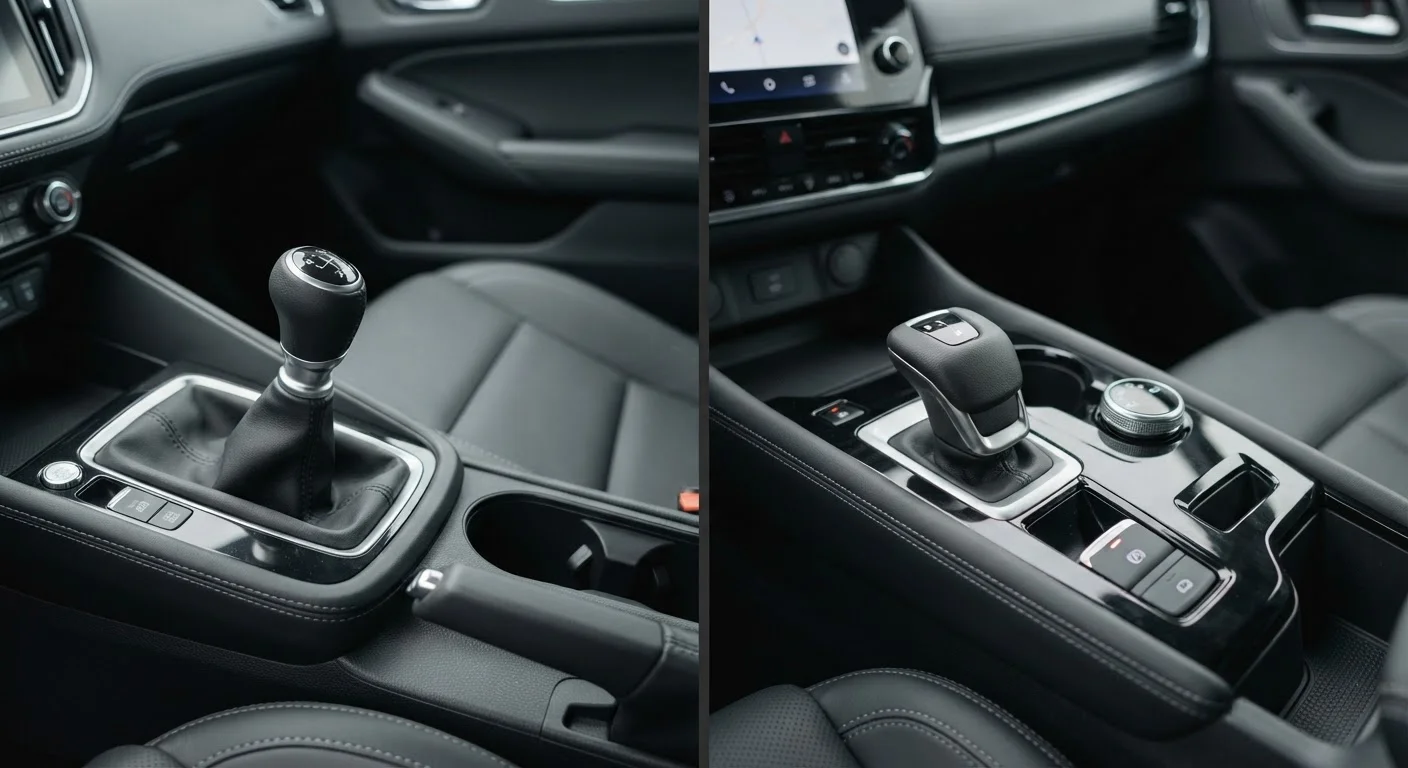
Driving a manual (stick-shift) vehicle requires you to manage three inputs simultaneously: the throttle, the clutch pedal, and the gear lever. Getting these in sync - especially on hills, in traffic, or when merging at speed - takes deliberate practice before it becomes automatic (no pun intended).
The cognitive load is real. When you're learning, a significant portion of your attention goes to the mechanical process of shifting, leaving less bandwidth for scanning the road, checking mirrors, and anticipating hazards. With experience, gear changes become instinctive, but the early phase carries genuine safety implications that new drivers should take seriously.
Build Muscle Memory Before Busy Roads
New manual drivers should log significant practice time on quiet roads before tackling high-traffic situations. Hill starts, smooth gear changes, and clutch control all need to become second nature before you can free up enough attention for full road awareness. Consider a few refresher lessons with a qualified instructor even if you hold a full licence.
One advantage manual drivers often cite is a stronger sense of vehicle speed and engine behaviour. Because you're actively selecting gears, you develop a feel for how the engine responds under different loads - which can make you a more engaged driver overall. That said, engagement alone doesn't equal safety. See how driving habits evolve over time in our article on habits that quietly make drivers less safe.
What Automatic Driving Demands
An automatic transmission handles gear selection for you, which removes a significant cognitive task. For many drivers - particularly in dense city traffic - this translates to a more comfortable, less exhausting experience. Learners often find the basics easier to master, since they can focus entirely on steering, braking, and road awareness from the outset.
But removing one task doesn't mean automatic driving is passive. A common pitfall is unintentional coasting - resting your foot lightly on the brake or accelerator without clear intent. Another is the creep tendency of automatic transmissions in Drive mode, which can cause slow rollback confusion in parking situations if drivers aren't alert. Overconfidence is also a documented concern: because the car "handles" more, some drivers reduce their active scanning and anticipation.
| Manual | Automatic | |
|---|---|---|
| Licence restriction (US) | Generally unrestricted | May carry automatic-only notation |
| Learning curve | Steeper - clutch coordination required | Gentler - focus stays on road |
| Driver cognitive load | Higher (especially early on) | Lower gear-related load |
| Vehicle flexibility | Can drive both types | Limited to automatics if untrained on manual |
| Common risk pitfalls | Stalling, hill rollback, distraction while shifting | Coasting, complacency, creep confusion |
| Engagement with vehicle | High - active gear management | Lower - transmission self-manages |
If you're moving from a manual to an automatic, the adjustment period is generally short. Going the other direction - from automatic to manual - takes longer and warrants structured practice before driving in demanding conditions like motorways or night driving. For context on how road conditions change demands on any driver, our night vs. daytime driving comparison is worth reading.
Switching Transmission Types Safely
If you've driven one transmission type for years and switch to the other, expect a brief but real adjustment period. Manual drivers moving to automatics sometimes instinctively reach for a gear lever that isn't there, or press a non-existent clutch under heavy braking. Automatic drivers moving to manuals face the more demanding learning curve - stalling, rolling on hills, and misjudging merge speed are all common early errors.
The safest approach is to practise in a low-risk environment - quiet roads, empty car parks, or a structured lesson with a qualified instructor - before taking the unfamiliar transmission onto busy roads or motorways. For first-time motorway experiences specifically, our motorway driving guide covers what to expect.
Regardless of which transmission you drive, routine vehicle upkeep supports safe operation. Our car maintenance overview for new drivers is a practical starting point for understanding what your vehicle needs to stay reliable.