
What Makes Motorways Different
Motorways are designed for high-speed, long-distance travel. Unlike A-roads or city streets, they have no roundabouts, traffic lights, or pedestrians - but they introduce their own challenges: higher speeds, multiple lanes, and less time to react. Understanding the environment before you drive on one removes a lot of the anxiety.
Key features that set motorways apart:
- Slip roads - short acceleration or deceleration lanes for joining and leaving
- Hard shoulder (or emergency refuge areas) - a strip on the left for breakdowns and emergencies only
- Overhead gantry signs - display speed limits, lane closures, and hazard warnings
- No speed cameras at every junction - but average-speed cameras are used on many stretches
If you want a broader picture of the skills motorway driving builds on, the Safe Driving from Learner to Long-Haul overview is a useful starting point.
Slip road
A short entry or exit lane that connects local roads to a motorway, giving drivers space to build up or reduce speed before merging or leaving.
Hard shoulder
A paved strip running along the left edge of a motorway, reserved for breakdowns and emergencies. On some smart motorways it becomes a running lane during busy periods.
Smart motorway
A stretch of motorway that uses technology - variable speed limit signs and overhead gantries - to manage traffic flow, sometimes using the hard shoulder as an extra lane.
Gantry sign
A large overhead structure spanning all lanes that displays speed limits, lane closures (red X), or hazard warnings in real time.
Two-second rule
A simple way to check your following distance: the gap between you and the car ahead should take at least two seconds to cross a fixed point. Double it in wet conditions.
Lane hogging
Staying in the middle or right lane when the left lane is clear, even when not overtaking. This is a driving offence under the Highway Code.
Joining the Motorway: Merging Safely
The slip road is your runway. Its entire purpose is to let you match the speed of motorway traffic before you pull into the left lane. Many first-time motorway drivers make the mistake of entering too slowly, forcing vehicles already on the motorway to brake sharply.
- Build speed early. Accelerate on the slip road to roughly match the flow of traffic in the left lane - aim for 60-65 mph if traffic is moving at the limit.
- Check your mirrors and blind spot. Look for a gap in the left lane before the slip road ends.
- Merge smoothly. Signal, move into the gap, and cancel your indicator once you are settled in lane.
- Do not stop at the end of the slip road unless traffic is at a standstill. Stopping makes merging far more dangerous.
Pick a Quiet Time for Your First Trip
If you have a choice, make your first motorway drive during off-peak hours - mid-morning on a weekday is ideal. Light traffic gives you more room to focus on merging, lane positioning, and speed management without the pressure of heavy vehicles close behind you. A short, purposeful journey of 10-15 miles is plenty to start with.
Merging follows the same give-and-take principle as other junctions - understanding right of way helps here. See our guide to roundabouts and junctions for how priority works in different situations.
Lane Discipline: Staying in Your Lane
UK motorways have two or three lanes (occasionally four near major cities). The rule is simple: keep left unless overtaking. The left lane is the default; the middle and right lanes are for passing slower vehicles only.
Common lane discipline mistakes to avoid:
- Middle-lane hogging - sitting in lane two when lane one is clear. This is a driving offence.
- Weaving between lanes - changing lanes repeatedly without good reason, which unsettles other drivers.
- Undertaking - passing a vehicle on the left. Avoid this; it is dangerous and generally not permitted.
When overtaking, signal, check mirrors and blind spot, complete the pass, signal left, and return to the left lane when it is safe. Do not sit alongside another vehicle for long periods.
Do Not Ignore a Red X Sign
A red X displayed on an overhead gantry means the lane below it is closed - often due to a broken-down vehicle or hazard ahead. Driving in a closed lane is a serious offence and can result in a fine and penalty points. Move to an open lane as soon as it is safe to do so, without sudden braking or swerving.
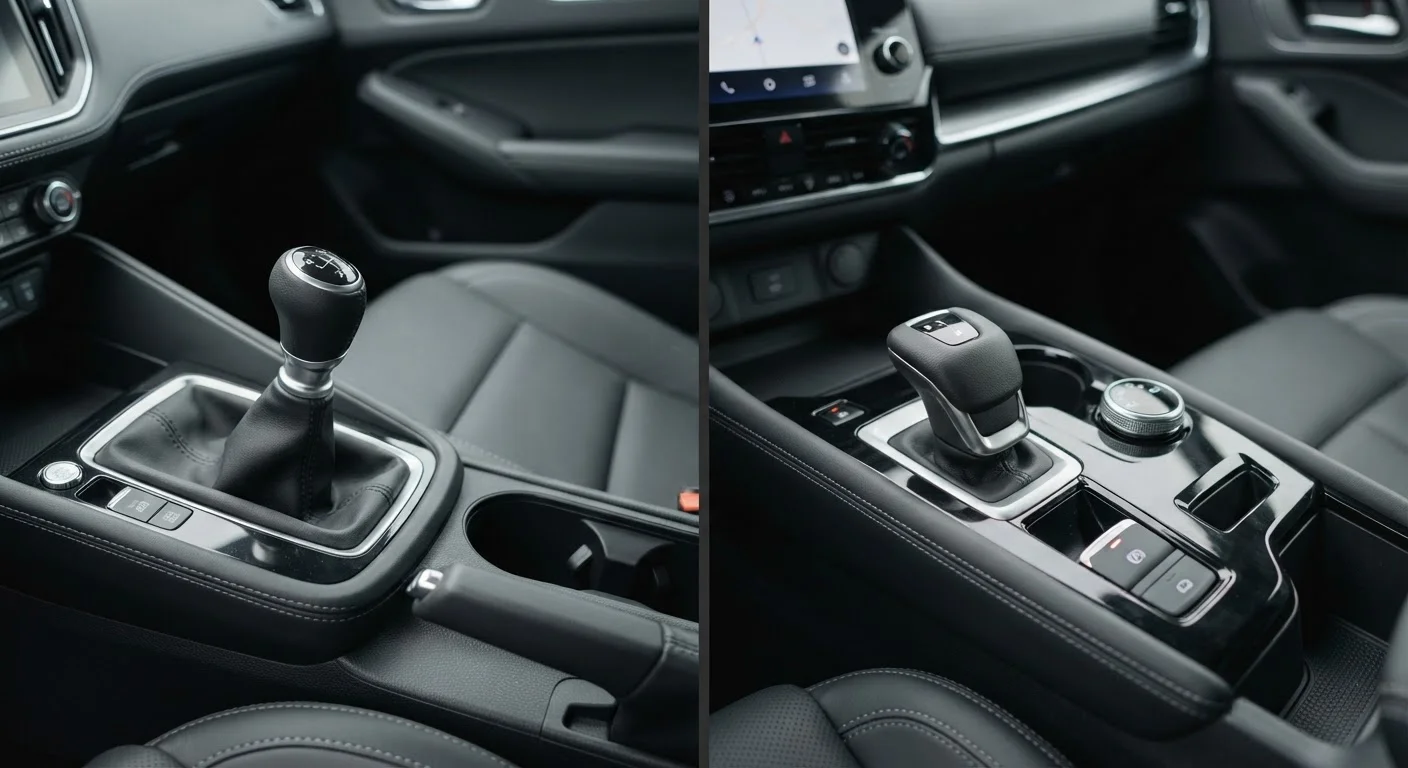
If you are unsure how your transmission affects your motorway experience - for instance, how an automatic handles sustained high-speed driving - our manual vs. automatic licence article covers the practical differences.
Speed Awareness and Safe Following Distance
At 70 mph you are covering about 31 metres every second. That number matters when something goes wrong ahead of you. The Highway Code's two-second rule is the minimum gap in dry conditions: pick a fixed point and make sure two full seconds pass between the car in front passing it and you reaching it. In rain, double that gap.
Speed on motorways can creep up without you noticing, especially after spending time in slower traffic. Check your speedometer regularly rather than relying on the feel of speed.
Variable speed limits: On smart motorways, overhead signs may display limits of 60, 50, or 40 mph. These are legally enforceable - not advisory. A blank sign means the national 70 mph limit applies. A red X means the lane is closed; do not drive in it.
Our guide to commonly misunderstood road signs explains gantry signs and other motorway markings in plain language.
Leaving the Motorway and Common Mistakes
Leaving the motorway requires planning ahead. Junction signs appear at one mile, then half a mile, then at the junction itself. When you see the half-mile board, move to the left lane if you are not already there. Signal left as you reach the start of the slip road - not before - and then reduce your speed on the slip road itself, not on the motorway.
After sustained motorway driving, your perception of speed can be distorted. Thirty mph on a roundabout at the end of a slip road may feel much slower than it actually is. Check your speedometer as you decelerate.
If you miss your junction: carry on to the next one. Do not brake suddenly, reverse, or cut across chevrons. Missing an exit costs you a few minutes; reversing on a motorway puts lives at risk.
Before any long motorway trip, it is worth checking your vehicle is roadworthy. The Car Maintenance from the Ground Up guide covers tyres, fluid levels, and other basics that matter most at higher speeds.
This article provides general driving guidance for informational purposes only. Always refer to the current Highway Code and your vehicle's owner manual, and seek professional instruction if you are uncertain about any aspect of motorway driving.