Why the Plate Method Works for Most People
Calorie counting can be a useful tool for some, but for many people it creates stress, fatigue, and an unhealthy relationship with food. The good news: research consistently shows that food quality and eating patterns matter more than tracking every gram. If you're new to nutrition, our starter guide to nutrition basics is a great place to build your foundation before diving in here.
The plate method is a visual, flexible approach endorsed by many registered dietitians and public health organizations. Instead of counting, you use the physical space on your plate as a guide - making it easy to build balanced meals consistently, whether you're cooking at home, eating out, or grabbing something on the go.
Progress Over Perfection Every Time
No single meal needs to be nutritionally flawless. The plate method is a guide, not a rigid rule. If a meal skews heavy on grains or light on vegetables, your next meal is an opportunity to rebalance. Consistent patterns across days and weeks matter far more than any individual plate.
What You'll Need Before You Start
You don't need special equipment or an app. A standard 9-inch dinner plate is all that's required to get started visually. It also helps to have a general sense of which foods fall into each category - vegetables, proteins, and grains - before you build your first balanced plate.
What you will need
9-inch dinner plate
Acts as your visual guide for portioning different food groups without measuring tools.
Your hand
A built-in portion reference - a palm for protein, a cupped hand for grains, a fist for vegetables.
Meal-prep containers
Useful for pre-building balanced portions ahead of time, reducing decision fatigue during busy days.
Step-by-Step: Building Your Balanced Plate
Follow these steps each time you assemble a meal. With a little practice, this process takes under two minutes and becomes second nature. For more on how eating patterns fit into the bigger picture, see our guide on eating patterns that make nutritional sense.
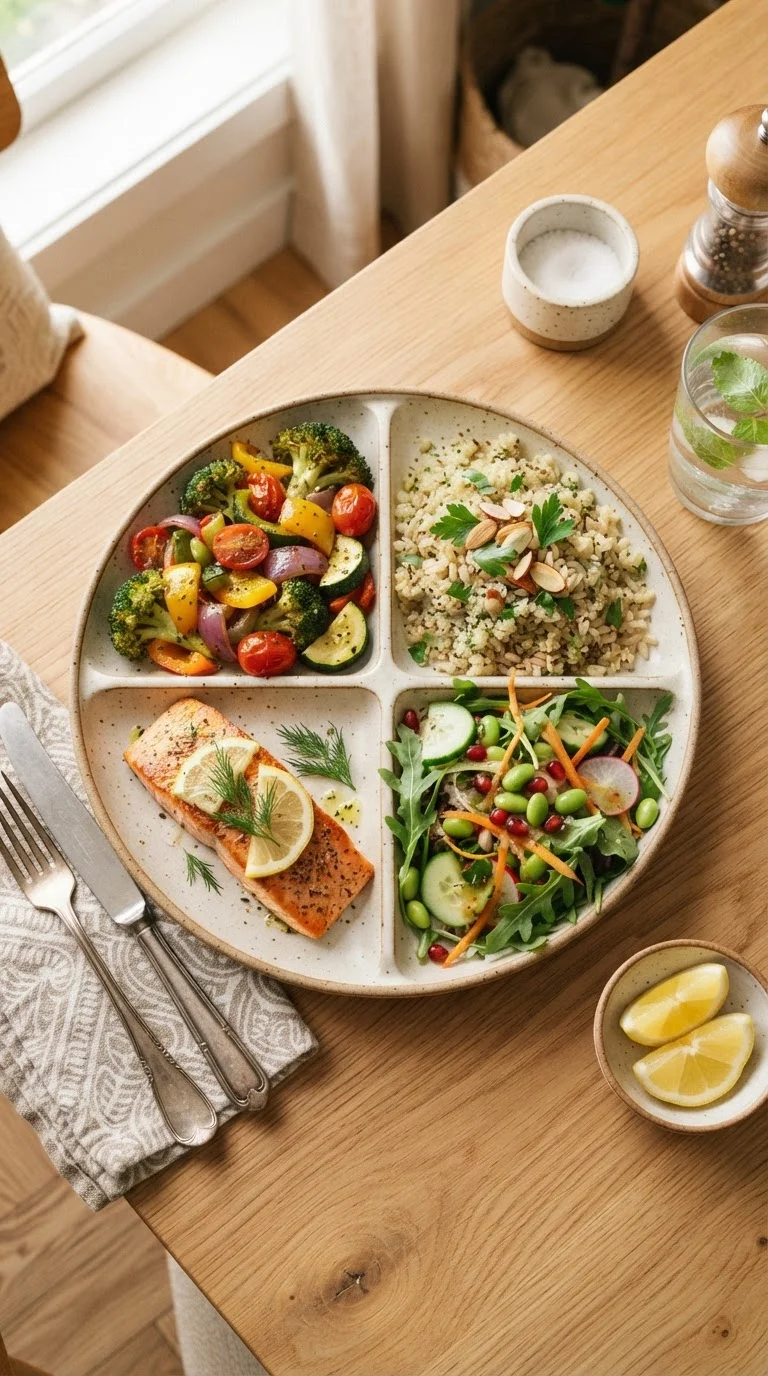
Fill half your plate with non-starchy vegetables
Non-starchy vegetables - think leafy greens, broccoli, peppers, cucumbers, tomatoes, carrots, zucchini - should take up the largest section of your plate. They're high in fiber, vitamins, and minerals, and they create a sense of fullness without contributing excessive calories. Aim for color variety across the week; different colors generally signal different nutrients.
Reserve one quarter for a quality protein source
Protein supports muscle maintenance, keeps you feeling full, and helps stabilize blood sugar after meals. Fill roughly one quarter of your plate with a protein source such as chicken, fish, eggs, tofu, legumes (beans, lentils), or low-fat dairy. Aim for sources that aren't heavily processed - whole or minimally processed options tend to carry fewer additives.
Use the remaining quarter for whole grains or starchy vegetables
The final quarter of your plate is for energy-providing carbohydrates. Choose whole grain options when you can - brown rice, quinoa, whole wheat bread, oats, or barley - as they contain more fiber than refined versions. Starchy vegetables like sweet potato, corn, or peas also fit well here and offer additional nutrients.
Add a small amount of healthy fat
Healthy fats help your body absorb fat-soluble vitamins (A, D, E, K) and contribute to satiety. A drizzle of olive oil on vegetables, a few slices of avocado, a small handful of nuts or seeds, or a dressing made with olive oil are all easy ways to incorporate fat without overdoing it. You don't need a separate section of the plate - fat typically blends into your other components naturally.
Choose a satisfying, low-sugar drink
What you drink alongside a meal affects how balanced it feels and how full you stay. Water is the ideal default. Unsweetened herbal tea, sparkling water, or low-fat milk are solid alternatives. Try to avoid sugary drinks with meals, as they add calories without contributing meaningful nutrition and can undercut the balance you've built on your plate.
Over time, you can use our weekly eating habits self-check to reflect on how your meals are looking across the whole week - not to judge yourself, but to spot easy improvements.
Common Stumbling Blocks and How to Navigate Them
Even a simple framework can feel tricky at first. Here are the situations people run into most often:
- Mixed dishes (pasta, stir-fry, soups): Estimate proportions mentally. A pasta dish can still be balanced if it's heavy on vegetables and light on noodles, with a protein source mixed in.
- Eating out: Scan the menu for dishes that already include a protein and a vegetable, then ask for a whole grain side when possible. You won't always get it perfect - that's okay.
- Snacks between meals: Apply a mini version of the plate method: pair a carbohydrate (fruit, crackers) with a protein or fat (nut butter, cheese, yogurt) to stay satisfied longer.
- Hunger after meals: If you're still hungry after eating, increase the non-starchy vegetable portion first - they're filling, nutrient-dense, and low in calories.
Don't Restrict to the Point of Deprivation
The plate method is a framework for abundance and variety - not a tool for cutting out food groups or eating less than your body needs. If you feel excessively hungry, dizzy, or fatigued after changing your eating patterns, that's a signal to eat more or seek guidance from a healthcare professional. Extreme restriction can backfire and harm your relationship with food.
Understanding what's actually in your food can also help you make smarter choices at a glance. Our guide to reading a nutrition label without getting lost walks you through packaged food labels in plain language. And if you'd like to build sustainable habits around all of this, nutrition habits for beginners focuses on patterns over perfection - a mindset that makes healthy eating feel achievable long-term.
This article is for general informational and educational purposes only and is not a substitute for professional medical or nutritional advice. Consult a qualified healthcare provider or registered dietitian before making significant changes to your diet, especially if you have an existing health condition.