Why Gardening Myths Spread So Easily
Gardening advice gets passed down through generations, shared at garden centers, and repeated across social media - and much of it is genuinely helpful. But some of the most confidently repeated tips are either outdated, misunderstood, or flat-out wrong. For beginners, acting on bad information can mean dead plants, wasted effort, and the discouraging feeling that you simply don't have a green thumb.
The good news: most gardening mistakes are fixable once you understand what's actually happening below the soil surface. Before you plant your next seedling, check out our foundational guide to soil, sun, and water - then use this myth-busting overview to clear up the misinformation that trips up nearly every new gardener.
Myth
Watering plants every day shows you care and keeps them healthy.
Fact
Most plants need soil to partially dry out between waterings. Daily watering typically leads to root rot, not robust growth.
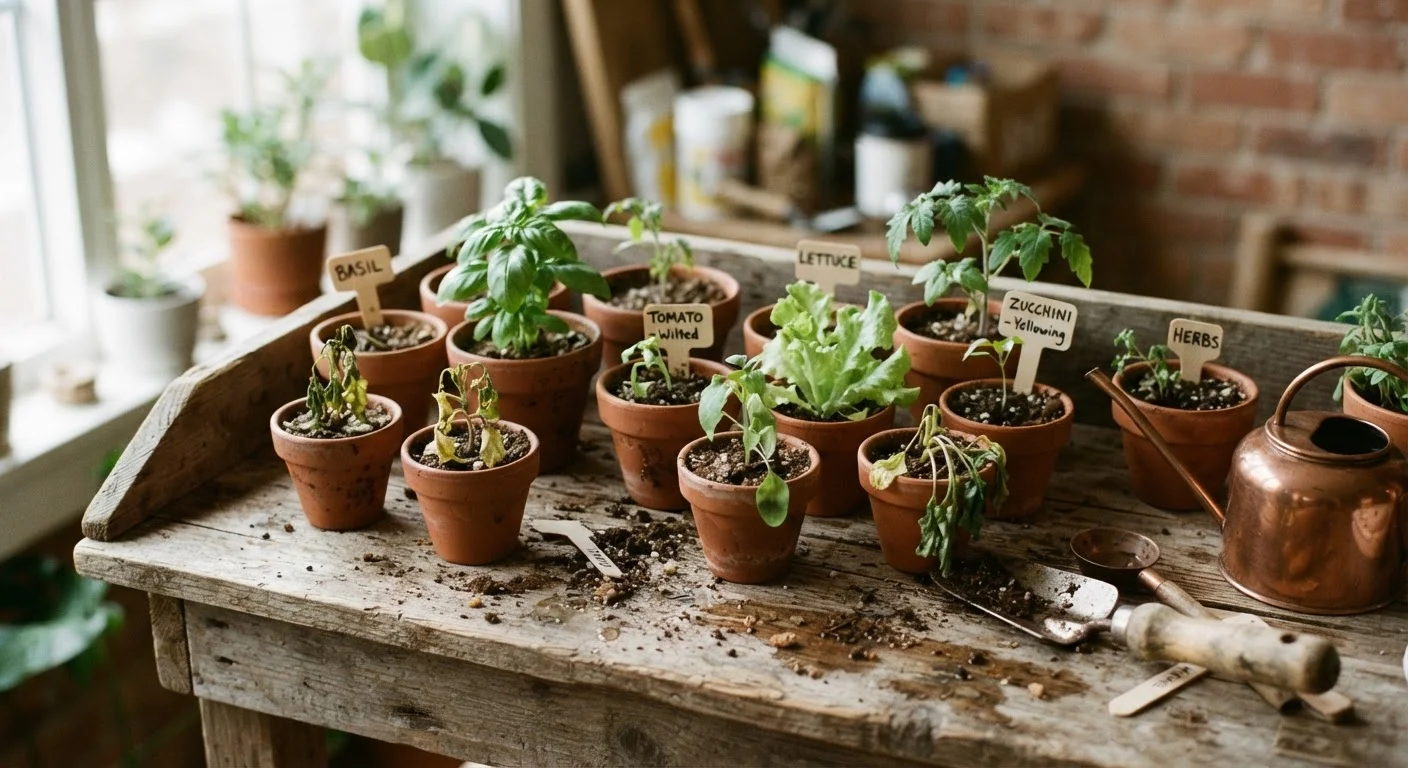
Roots need both water and oxygen. When soil stays constantly saturated, oxygen is pushed out and roots begin to suffocate and decay. The symptoms of overwatering - yellowing leaves, wilting, mushy stems - look almost identical to underwatering, which is why gardeners often respond by adding more water and accelerating the damage. Water when the top inch of soil is dry, and always water deeply rather than a little each day.
Myth
Placing gravel or rocks at the bottom of a pot improves drainage.
Fact
Research in soil science shows that a gravel layer at the bottom of a pot actually raises the water table inside the container, keeping roots wetter for longer.
This counterintuitive result comes from how water moves between layers of different particle sizes - a concept called a perched water table. Water doesn't flow freely from fine soil into coarse gravel; instead, it builds up at the boundary until the upper layer is fully saturated. The fix is simple: use a pot with adequate drainage holes and fill it entirely with well-draining potting mix appropriate for your plant type.
Myth
Coffee grounds are a great all-purpose fertilizer and soil improver for any garden.
Fact
Coffee grounds are mildly acidic and suit acid-loving plants like blueberries or azaleas, but they can harm plants that prefer neutral or alkaline soil.
Used in moderation and mixed into compost, coffee grounds add organic matter and a modest nitrogen boost. The problem arises when beginners apply thick layers directly around plants or assume all plants benefit equally. Heavy applications can compact on the soil surface, repel water, and shift pH in ways that stress plants adapted to neutral conditions. If you use coffee grounds, mix them into compost at no more than 20% of total volume, and know your plant's pH preference first.
Myth
If a plant is wilting, it needs water immediately.
Fact
Wilting can signal both underwatering and overwatering - along with heat stress, root disease, and transplant shock.
Before reaching for the watering can, check the soil. Bone-dry soil paired with wilting usually does indicate thirst. But if the soil feels wet or has been consistently moist, the roots may already be damaged from overwatering and unable to take up water even when it's available. Other causes include afternoon heat wilt - a temporary midday droop that recovers by evening without any intervention - and physical root disturbance from recent transplanting. Diagnose first; water second.
Myth
Adding more fertilizer will make plants grow faster and stronger.
Fact
Excess fertilizer - especially synthetic nitrogen - can burn roots, cause excessive leafy growth at the expense of flowers or fruit, and damage soil biology.
Fertilizer is concentrated chemistry, and plants have a limited capacity to absorb nutrients at any given time. Overfertilizing leaves excess salts in the soil that draw moisture out of roots through osmosis, causing the same scorched, browning leaf tips associated with drought stress. This is called fertilizer burn. Always follow package directions, and consider getting a basic soil test before fertilizing - many garden soils already have adequate nutrients, meaning additional fertilizer adds no benefit at all.
Watering, Feeding, and Container Mistakes
The three areas where beginners go most wrong are watering frequency, fertilizer use, and container preparation. Each of these involves a common shortcut that feels logical on the surface but backfires in practice.
Wilting Doesn't Always Mean Thirst
One of the most costly watering mistakes is responding to wilting with more water. If the soil already feels moist, additional watering can push roots past the point of recovery. Always check soil moisture before watering, and give recently transplanted plants extra time to adjust before assuming they need water.
When it comes to watering, your finger is a better tool than a schedule. Push it about an inch into the soil - if it feels dry, water deeply; if it's still moist, wait. For a deeper look at getting this right, our guide on how much water is too much or too little walks through the signals plants actually give you.
Fertilizer labels exist for a reason. Following the recommended rate prevents nutrient burn, which can look deceptively similar to nutrient deficiency - a frustrating cycle that tempts gardeners to add even more fertilizer and worsen the problem.
#1
Most common cause of houseplant death
Overwatering is consistently cited by horticulture educators as the leading preventable cause of houseplant and container plant death among beginners.
~20%
Safe ratio of coffee grounds in compost
Composting guides generally recommend keeping coffee grounds at no more than 20% of total compost volume to avoid pH and moisture-retention issues.
If your seedlings are struggling despite doing everything right, the issue is often environmental rather than skill-based. See why seedlings die after germination for a closer look at the most common early-stage failures.
Building Better Habits From the Start
Replacing myths with accurate habits early saves you time, money, and frustration over the entire growing season. Simple adjustments - like checking soil moisture before watering, choosing the right pot size, or researching your soil's pH before adding amendments - compound into noticeably healthier plants.
If you're weighing whether to grow in containers, raised beds, or directly in the ground, each setup has real trade-offs worth understanding. Our comparison of raised beds vs. in-ground planting breaks down which approach suits different spaces and goals.
Test Your Soil Before Amending It
Many beginner mistakes - adding coffee grounds, over-liming, excess fertilizer - happen because the soil's actual condition is unknown. Inexpensive soil test kits are widely available and measure pH as well as key nutrient levels. Knowing your baseline prevents you from solving a problem your soil doesn't have, and saves you from accidentally creating one.
Gardening rewards curiosity and patience more than any special talent. Once you know which rules are real and which are folklore, the guesswork drops away - and growing things becomes genuinely enjoyable.