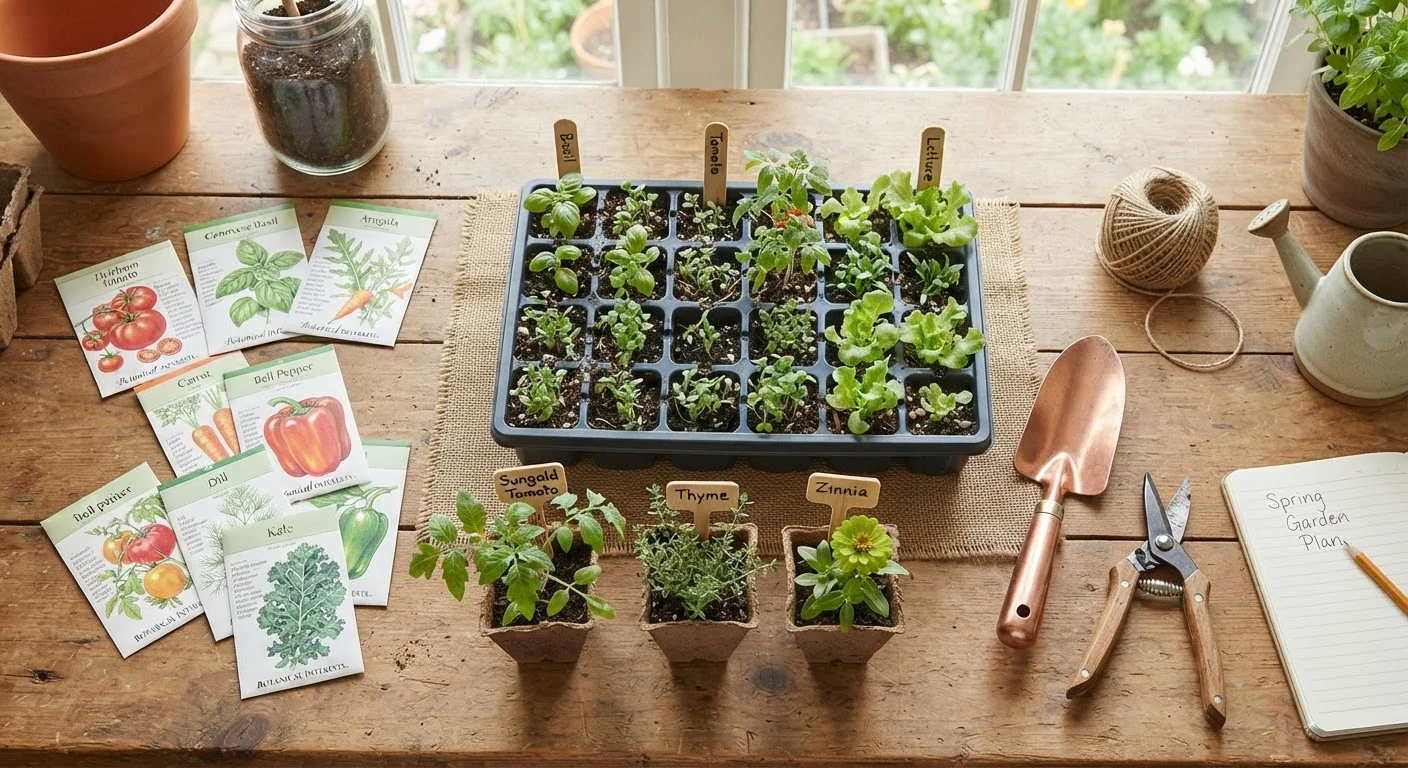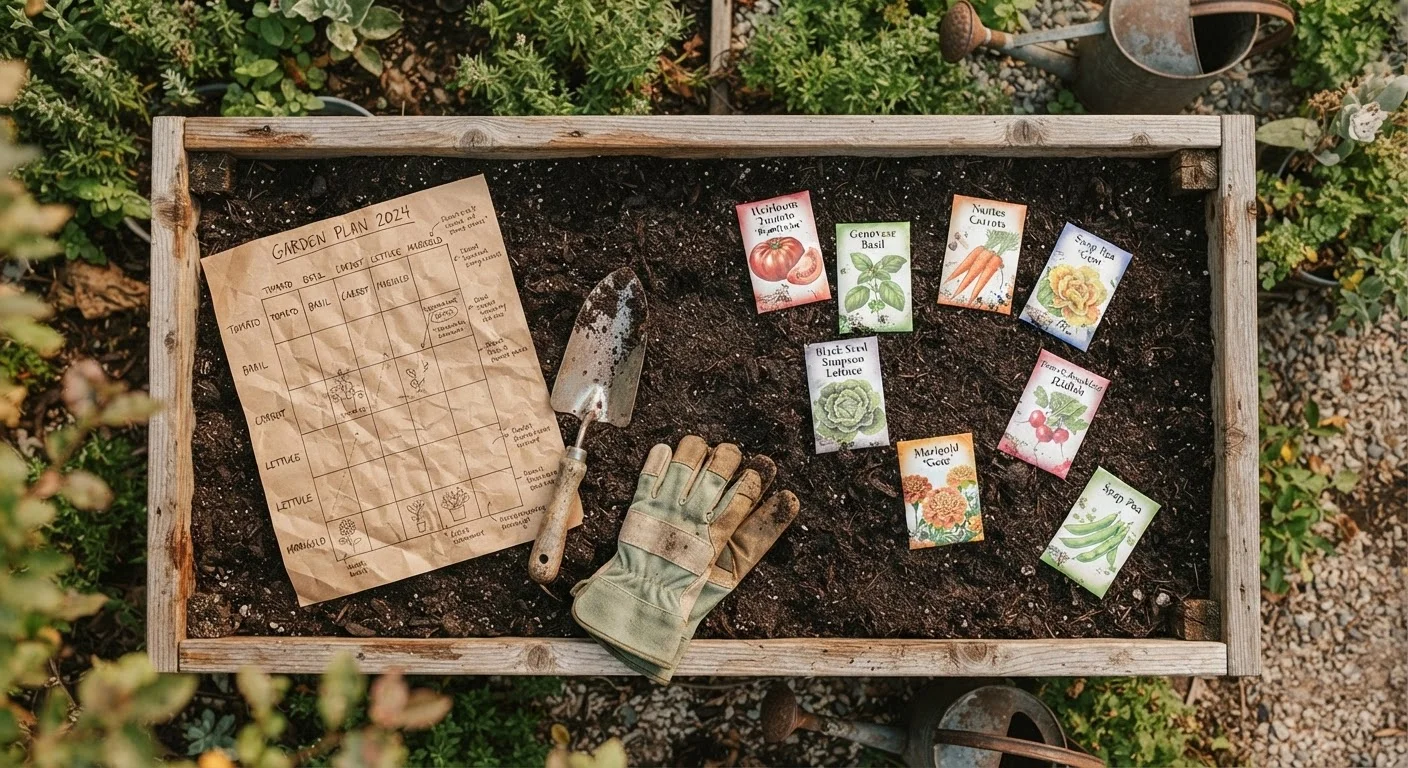
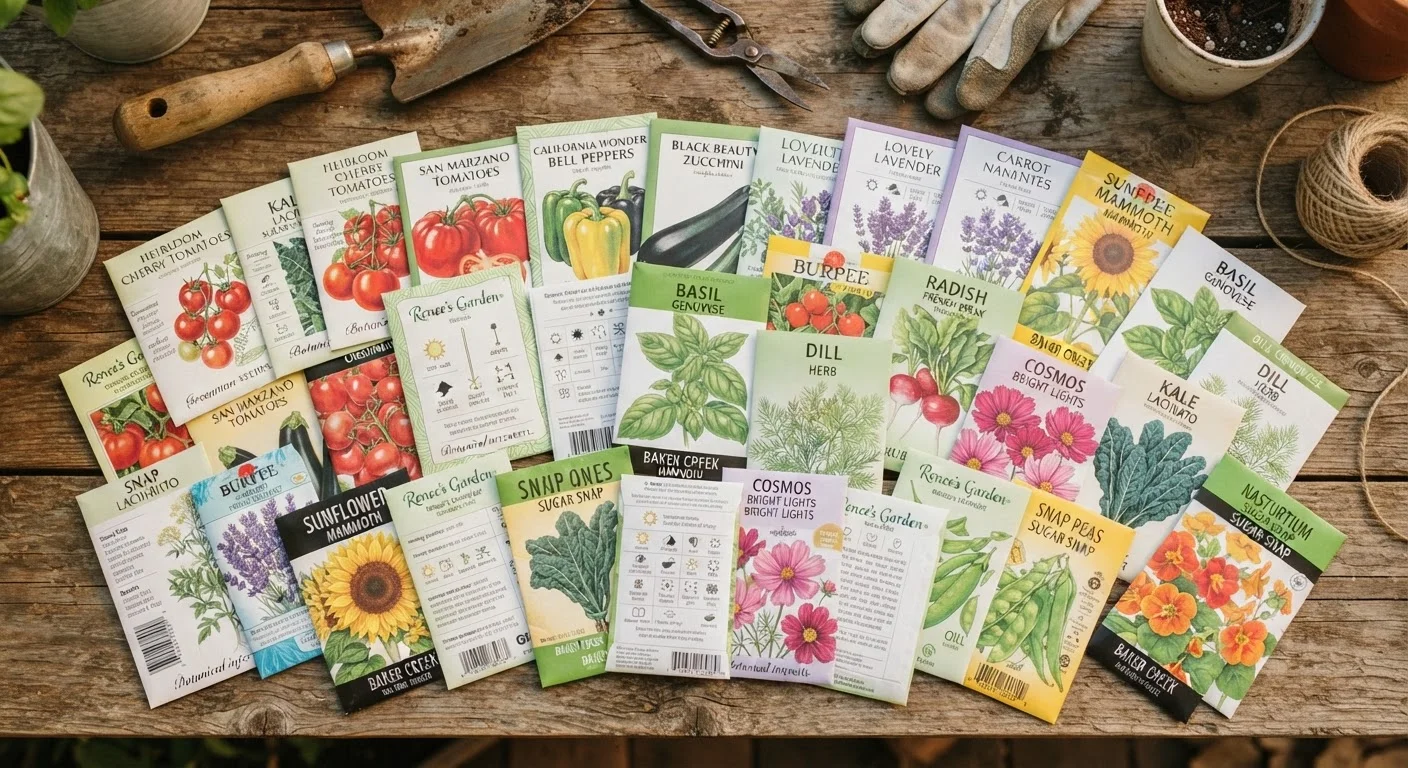
The Front of the Packet: More Than Pretty Pictures
The front of a seed packet usually shows the plant name in both common and Latin form - for example, Basil (Ocimum basilicum). The Latin name matters when you want to look up more detailed growing information or distinguish between closely related varieties like sweet basil versus Thai basil.
You'll also notice a variety name, such as 'Roma' tomato or 'Scarlet Nantes' carrot. Varieties within the same species can behave very differently - one may be bred for compact containers while another suits large garden beds. The front may also display an open-pollinated, heirloom, or hybrid (F1) label. Open-pollinated and heirloom seeds can be saved and replanted season after season. Hybrid seeds are bred for specific traits like disease resistance, but seeds saved from hybrid plants won't reliably reproduce the parent plant. See our guide on starting from seed vs. transplants for more context on how variety choice affects your approach.
The Back of the Packet: Your Real Instruction Manual
This is where beginners slow down and read carefully. Here's what each term typically means:
- Planting depth: How far below the soil surface to place the seed. Small seeds like lettuce are often pressed just at the surface; large seeds like squash go an inch or more down.
- Spacing: How far apart to place seeds in a row, and how far apart rows should be. Crowded plants compete for nutrients and airflow, increasing disease risk.
- Days to germination: The number of days until a sprout breaks the soil under favorable conditions - not the same as days to maturity.
- Days to maturity: How long until you can harvest. For tomatoes started indoors, this clock typically starts at transplant, not at direct sowing.
- Sun requirements: Full sun (6+ hours of direct light), partial sun (3-6 hours), or shade. Mismatching a sun-loving plant with a shady spot is one of the most common beginner mistakes.
- Watering needs: Often described as consistent moisture, drought-tolerant, or water frequently - a useful shorthand for how attentive you'll need to be.
Match the Label to Your Actual Conditions
Before buying any seed packet, check that the sun, spacing, and zone requirements match your specific garden space. A beautiful photo on the front means nothing if your growing conditions can't support that plant. Taking five minutes to compare packet requirements to your garden's conditions saves weeks of frustration.
For a deeper look at how sun exposure affects your planting decisions, our article on soil, sun, and water basics walks through these fundamentals before your first seed goes in the ground.
Timing Terms That Trip People Up
Seed packets frequently reference your last frost date - the average date in spring when nighttime temperatures consistently stay above freezing in your area. You can find this date through your local cooperative extension service or by searching your zip code on gardening reference sites.
When a packet says "start indoors 6-8 weeks before last frost," that's your cue to count backward on the calendar. If your last frost date is April 15, starting indoors around late February to early March is the window. "Direct sow after last frost" means wait until that date has passed to plant outside.
Last Frost Dates Are Averages, Not Guarantees
Frost dates are based on historical climate data, not predictions. A late-season frost can still surprise you even after the average last frost date has passed. If you're in a region prone to variable spring weather, consider waiting an extra week or two beyond the listed date before moving tender seedlings outdoors.
Once you've decoded your timing, use our garden-ready checklist to make sure everything else - soil, space, and tools - is lined up before the first seed goes in.
Seed Freshness and Germination Rates
Near the bottom of many packets, you'll find a packed-for date and sometimes a germination rate percentage - for example, "Germ: 85%." This tells you that under test conditions, 85 out of 100 seeds sprouted. A rate below 70% suggests the batch is aging or was stored in poor conditions.
85%
Typical minimum acceptable germination rate
Most reputable seed producers aim for germination rates at or above 85% when seeds are packed and fresh.
4-6 years
Viable lifespan of tomato seeds
Tomato seeds stored in cool, dry, dark conditions can remain viable for up to six years according to general horticultural guidance.
Seed viability varies widely by species. Onion and parsnip seeds tend to lose viability quickly - often within one to two years - while tomato and cucumber seeds can remain viable for four to six years when stored properly. A cool, dry, dark location (like a sealed container in a refrigerator) extends seed life considerably. Understanding your soil and growing medium is equally important once seeds are ready to plant - the right medium supports strong germination from the start.