Why This Decision Matters More Than You Think
One of the first real choices a new vegetable gardener faces is whether to grow plants from seed or skip ahead by purchasing young seedlings - called transplants - from a nursery or garden center. It may seem like a minor detail, but this decision shapes your timeline, your spending, and how much hands-on management your garden demands from day one.
Before you decide, it helps to understand what each path actually involves. Starting from seed means you're responsible for germination (getting seeds to sprout), providing adequate light and warmth indoors, and gradually preparing young plants for outdoor conditions - a process called hardening off. Buying transplants means you're skipping all of that and placing an already-established young plant directly into your garden bed.
Both are legitimate, productive approaches. The question is which fits your situation. Check out our guide to soil, sun, and water before you plant anything - those fundamentals apply no matter which path you choose.
Starting from Seed: The Full Picture
Growing vegetables from seed gives you control from the very beginning of the plant's life. You can choose from a far wider range of varieties than any nursery stocks, including heirloom tomatoes, specialty peppers, and unusual greens you'd never find as transplants.
Much lower cost per plant at scale
A single seed packet costing a few dollars can contain 30-100+ seeds, making the per-plant cost a fraction of what transplants run. This adds up significantly for larger gardens.
Far greater variety selection available
Seed catalogs and retailers offer hundreds of varieties per vegetable, including heirlooms and specialty types rarely stocked as transplants in local stores.
Full control over growing conditions from day one
You decide the soil mix, moisture levels, and light exposure from the moment of germination, which can produce hardier plants when done correctly.
Satisfying learning experience for new gardeners
Watching a seed germinate and grow into a productive plant builds practical knowledge about each crop's needs and development stages.
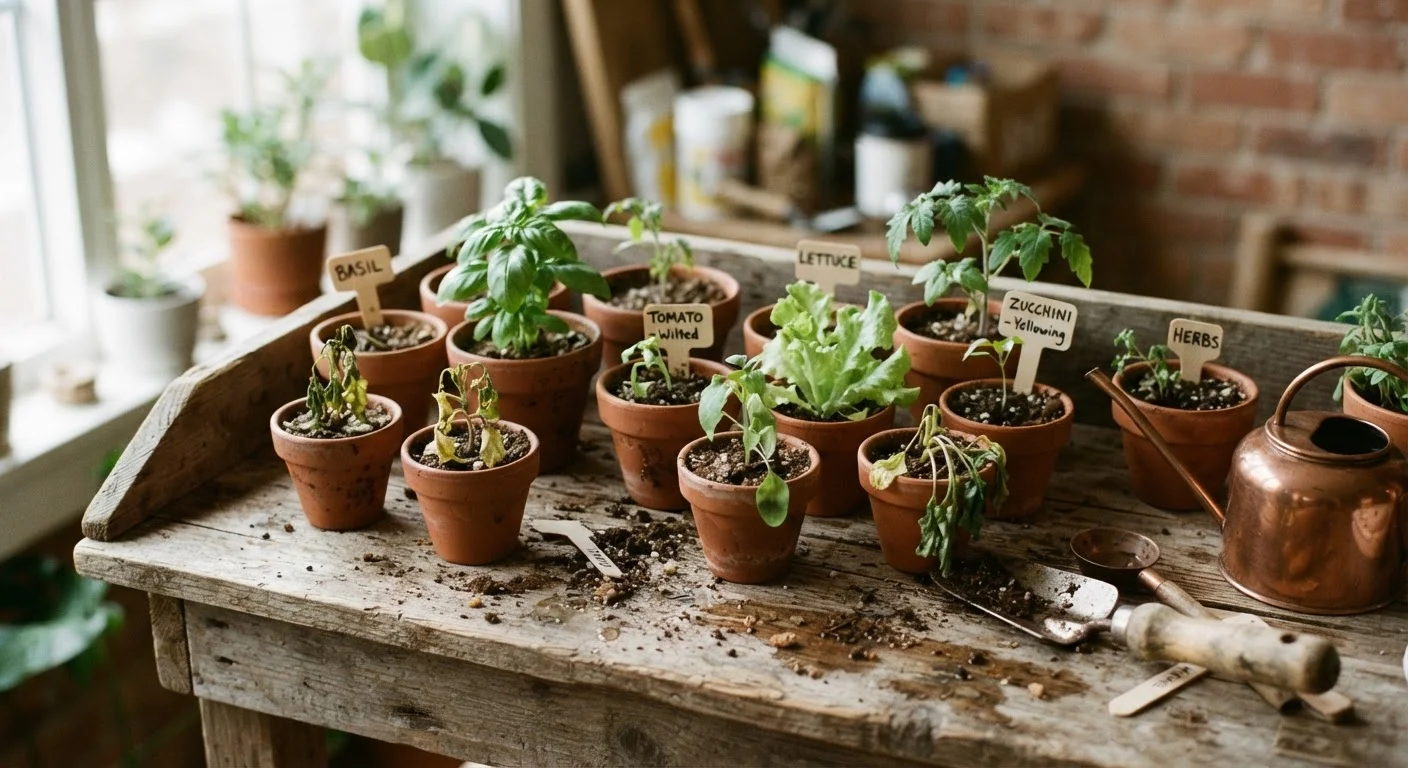
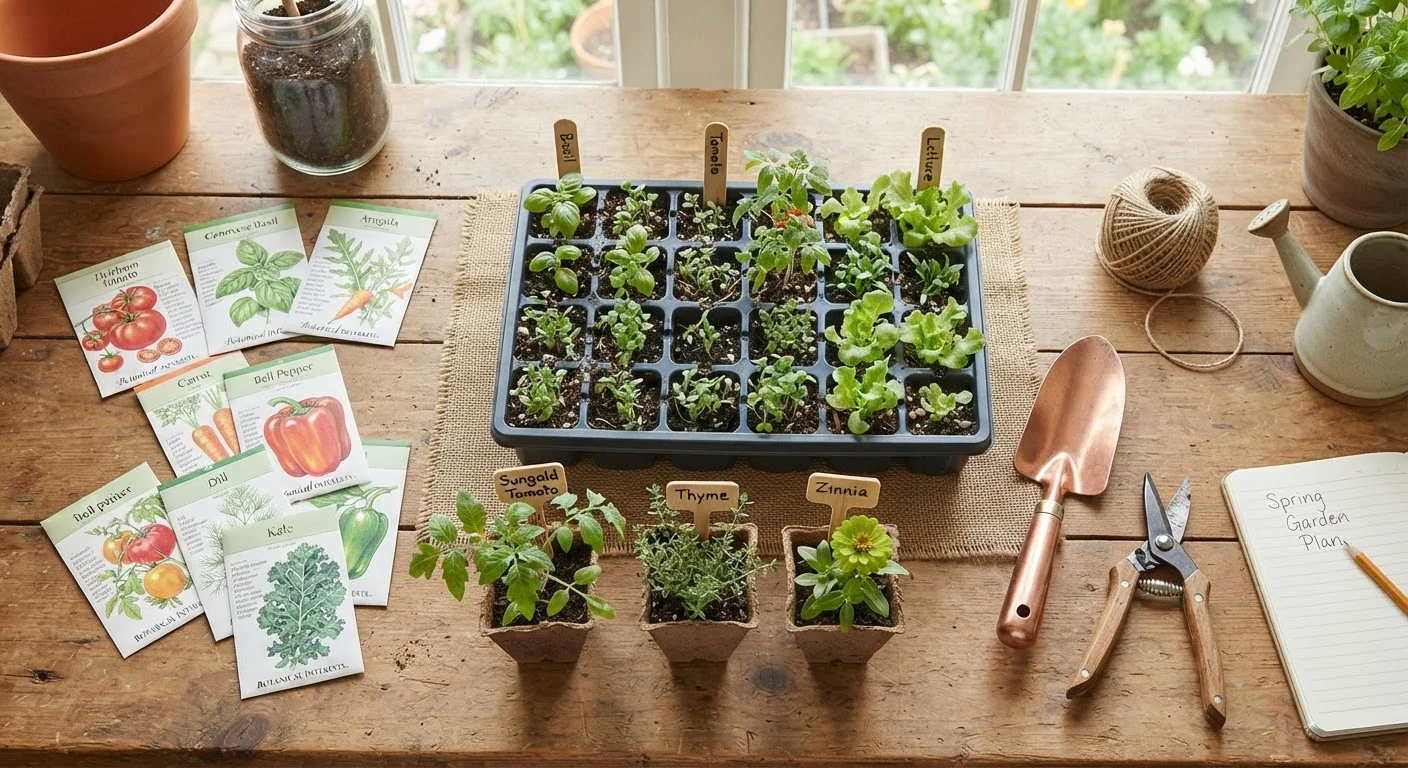
That said, starting seeds indoors requires a few essentials: seed-starting mix, containers or trays, consistent warmth (usually 65-75°F for most vegetables), and reliable light. A sunny south-facing windowsill can work for some crops, but many gardeners find a simple grow light produces stronger, less leggy seedlings. If you've ever wondered why seedlings collapse or yellow after sprouting, the culprit is often insufficient light or inconsistent watering during those early weeks.
Requires indoor space, equipment, and planning
Seed starting demands containers, a suitable growing medium, consistent warmth, and adequate light - a grow light setup is often necessary for strong seedlings.
Time-intensive with a longer path to harvest
Starting seeds adds weeks to the process compared to transplants, and mistakes during germination or hardening off can set your season back significantly.
Higher rate of failure for beginners
Common issues like damping off (a fungal condition that kills young seedlings at the soil line), overwatering, and insufficient light can wipe out an entire tray of starts.
Timing mistakes are difficult to recover from
Seeds started too early produce overgrown transplants; seeds started too late may not mature before first frost, leaving you with little to show for the effort.
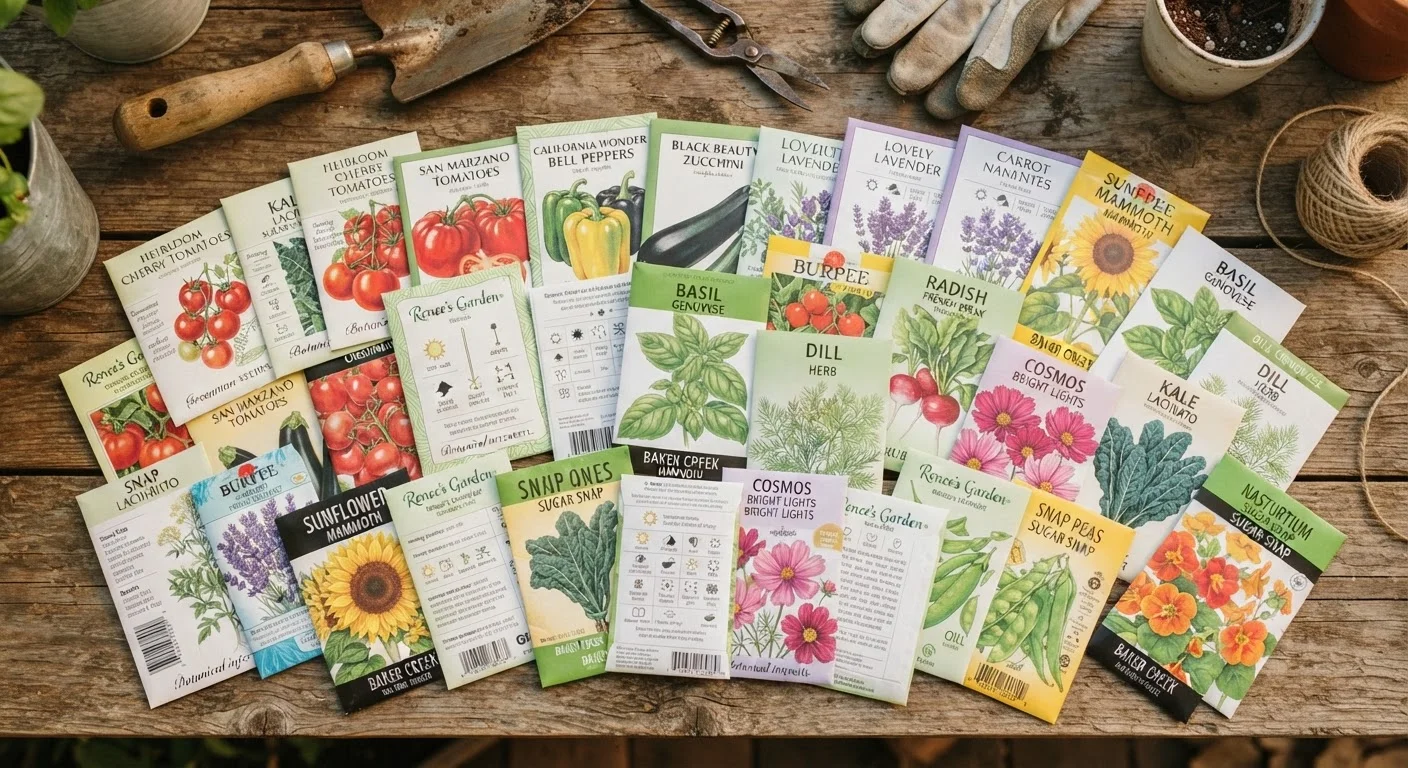
Timing is also critical. Most warm-season vegetables like tomatoes and peppers need to be started indoors 6-10 weeks before your last expected frost date. Misjudge that window and you'll have overgrown seedlings with nowhere to go, or plants that go in too late to produce before fall. Learning to read a seed packet carefully helps - our article on decoding seed packet information walks through exactly what those numbers and symbols mean.
Buying Transplants: A Faster, Simpler Start
Purchasing transplants from a nursery or garden center removes a significant chunk of complexity from the growing process. You skip the indoor seed-starting phase entirely and move straight to planting a vegetable that already has established roots and several true leaves.
6-10 weeks
Typical indoor head start needed for warm-season crops
Most vegetable gardening guides recommend starting tomatoes, peppers, and similar crops indoors 6-10 weeks before the last expected frost date in your area.
3-5×
Rough cost difference per plant: transplants vs. seeds
While prices vary by region and crop, nursery transplants typically cost several times more per plant than growing the same variety from seed at home.
This is particularly valuable for beginners who haven't yet set up an indoor growing space, or for gardeners in regions with short growing seasons where every week counts. If you're working with a small outdoor area, getting a head start with transplants can make a real difference - our small-space vegetable garden guide covers strategies for compact setups where timing is especially important.
The main trade-off is cost. A six-pack of tomato seedlings typically costs several times more per plant than a seed packet containing dozens of seeds. For large gardens or high-volume crops, that cost adds up quickly. Variety selection is also narrower - you're limited to what's available locally at the time you shop.
Which Vegetables Work Best for Each Approach
Not every vegetable suits both methods equally. Some are direct-sow crops - they grow best when seeded straight into garden soil and don't transplant well at all.
- Seed directly: Carrots, radishes, beets, beans, peas, corn, and squash all do better sown in place. Their roots are sensitive to disturbance, and they germinate quickly once soil temperatures are right.
- Transplant-friendly: Tomatoes, peppers, eggplant, broccoli, cabbage, and cauliflower are routinely started indoors or purchased as transplants. These crops need a long growing season that often exceeds what outdoor conditions allow from a direct-sow start.
- Either works well: Herbs like basil and lettuce varieties can be started either way, depending on your preference and how quickly you want results.
Some Crops Must Be Direct-Sown
Root vegetables like carrots and beets have taproots that don't survive transplanting - disturbing them during this stage stunts or kills the plant. Always check your seed packet or a reliable growing guide before assuming a crop can be started indoors and moved later. When in doubt, direct sowing is the safer choice for these types.
Thinking about how your chosen vegetables will share space? Our guide to companion planting explains which crops support each other - useful information whether you're starting from seed or buying transplants.
Use our garden-ready checklist to make sure your timing, soil, and spacing are sorted before anything goes in the ground.