Why Storage Format Matters as Much as Storage Amount
Most organization frustrations aren't caused by too little storage - they're caused by the wrong kind of storage for the stuff being stored. Folded sweaters stack fine on a shelf but slide into chaos in a deep bin. Loose craft supplies disappear into a drawer but make sense in a labeled basket you can see into. The format shapes the habit.
Before buying another storage solution, it helps to understand what each format does well and where it tends to fail. Then you can match it to the specific demands of each room in your home. This guide gives you that reference in one place.
| Best format for daily-use small items | Drawers with dividers |
| Best format for visual access and display | Open shelves |
| Best format for irregular or bulky items | Bins or baskets |
| Highest-maintenance open format | Open shelves (dust and grease accumulation) |
| Format best for shared/multi-user spaces | Labeled bins and baskets |
| Format best for concealing clutter quickly | Drawers or lidded bins |
If you're still sorting through what to keep before deciding where to put it, the category-based vs. room-by-room decluttering comparison can help you choose an approach first.
Storage Format Strengths at a Glance
Each storage format suits certain item types and usage patterns better than others. Here's a room-by-room breakdown:
Kitchen
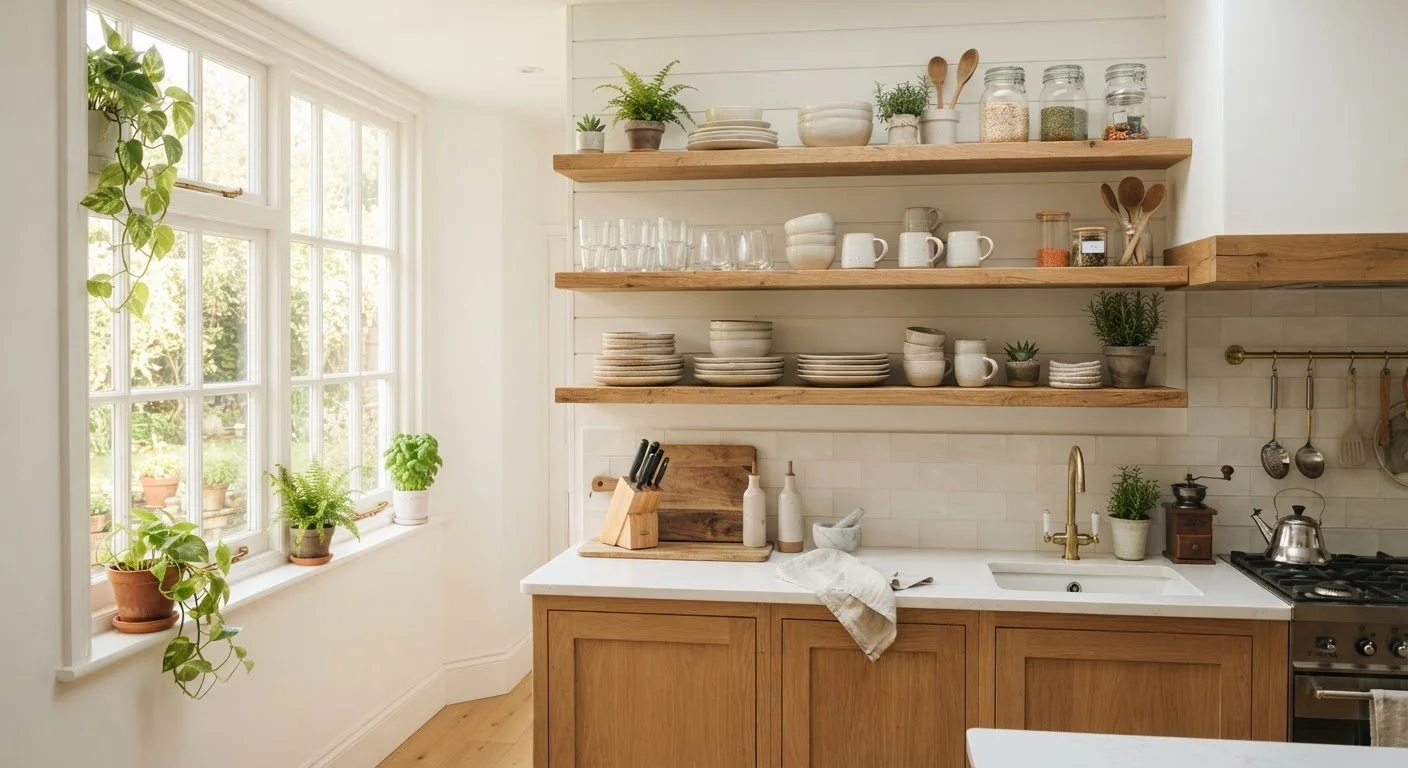
Drawers excel for utensils, dish towels, and flatware - items you reach for daily. Deep drawers with dividers work especially well for pots and pans, replacing hard-to-navigate lower cabinets. Open shelves suit everyday dishes and glasses you want visible and reachable, but they accumulate grease and dust faster in kitchens, so consider that maintenance trade-off. For a fuller picture of open shelving's real-world pros and cons, see what nobody tells you before committing to open shelves. Bins are ideal for produce, onions, or pantry overflow where airflow matters.
Bedroom
Drawers are the go-to for folded clothing, socks, and underwear - items that benefit from concealment and don't need to be grabbed at speed. Shelves work for folded sweaters, books, and displayed items, but open shelves in bedrooms can feel visually noisy. Bins and baskets shine for accessories, spare linens, and under-bed storage for seasonal items.
Bathroom
Drawers are best for daily grooming tools and toiletries - small items that get lost on open surfaces. Deep bathroom drawers with inserts keep products organized without hunting. Shelves suit towels, rolled washcloths, and decorative items. Bins work for cleaning supplies under the sink, where spray bottles and irregular shapes resist neat stacking.
Living Room
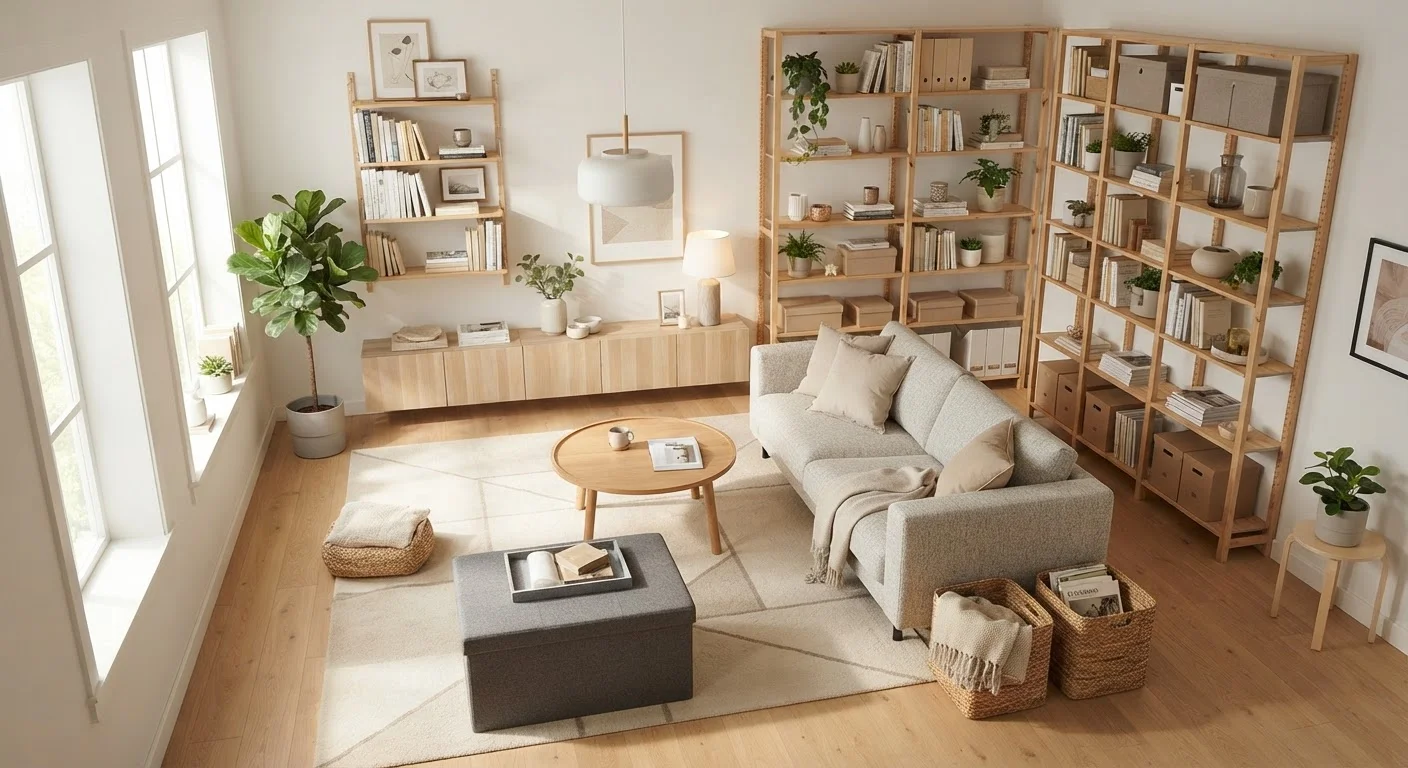
Shelves dominate here for books, media, and displayed objects. Bins and baskets handle throw blankets, remote controls, and kids' toys that need to be corralled quickly. Drawers - often inside media consoles or coffee tables - manage cords, remotes, and small items you want hidden but accessible.
Home Office
Drawers are essential for papers, pens, and supplies used at a desk. Open shelves work for reference books and binders you consult regularly. Bins and boxes manage archive files, tech accessories, and supplies purchased in bulk.
Garage & Utility Spaces
Open shelves on metal or heavy-duty systems handle tools, paint cans, and equipment where easy visual access matters. Bins are ideal for sports gear, seasonal décor, and hardware - especially when labeled clearly. For ideas on making the most of wall and vertical space in these areas, see vertical vs. floor space storage strategies.
Open shelving
Storage shelves without doors or covers, making contents visible at a glance. They offer easy access but require more frequent cleaning and tidying to look their best.
Drawer insert / divider
A tray or grid placed inside a drawer to create smaller compartments, preventing items from mixing together. Especially useful for small objects like utensils or socks.
Lidded bin
A container with a removable or hinged cover that conceals contents, reduces dust accumulation, and creates a neater appearance in open storage areas.
Zone-based organization
A method of assigning dedicated areas within a room or storage unit to specific categories of items or to specific people, making it easier to maintain order over time.
Choosing for Households with Multiple Users
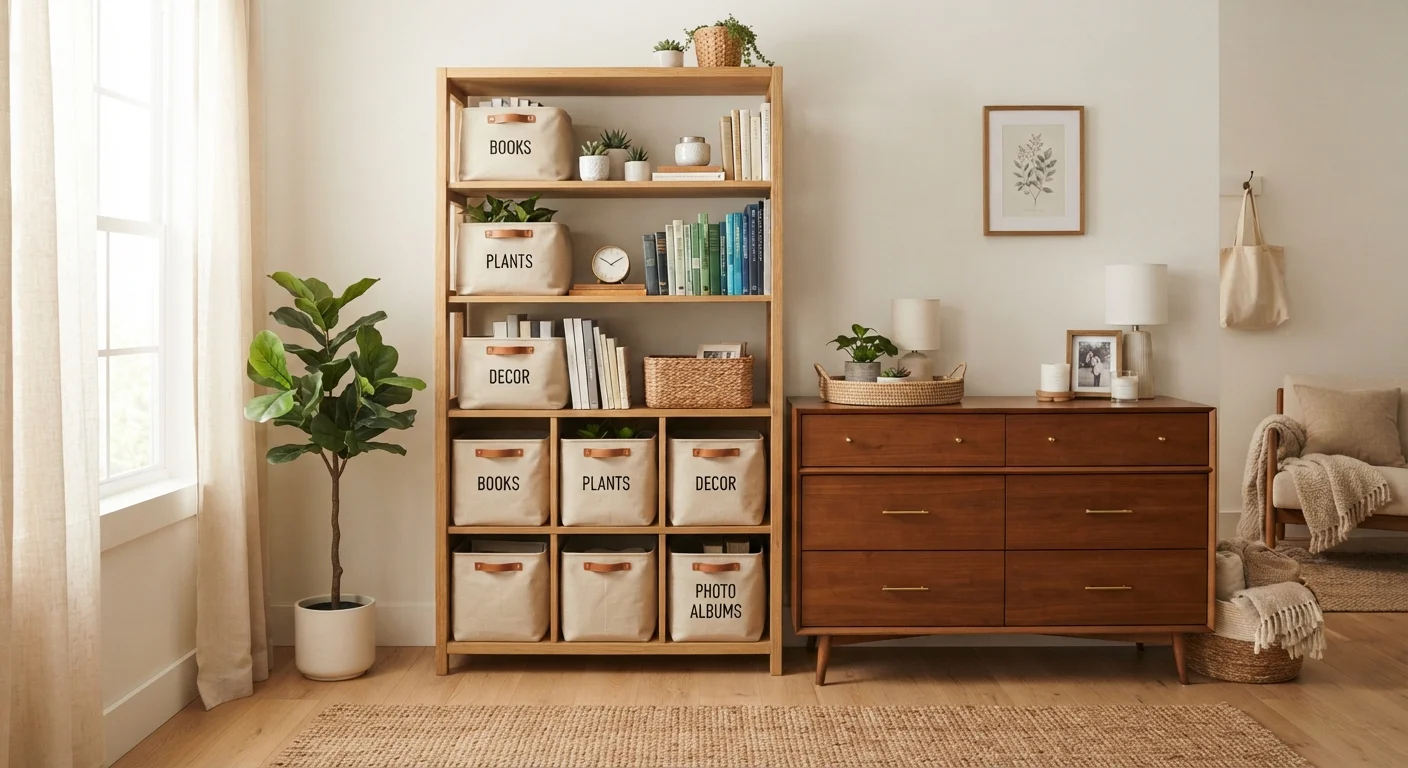
Storage format decisions get more complex when several people share a space - especially when tidiness habits differ. In shared rooms, bins and baskets with clear labels often outperform drawers because they lower the barrier to putting things away correctly. Anyone can drop an item into a labeled basket without needing to know an exact drawer layout.
Open shelves in shared spaces work best when each person has a clearly defined zone. Drawers shared between users can become disorganized quickly unless dividers create personal sections within them. If your household is navigating different organization styles, organizing a home with multiple people offers practical strategies for building systems everyone can actually follow.
When In Doubt, Start With One Room
Overhauling storage throughout an entire home at once is overwhelming and often leads to inconsistent results. Pick one room - ideally one that causes the most daily friction - and test a new format there before expanding. Small, successful changes build momentum. Adjustments are also much easier when you're working at a smaller scale.
The goal isn't perfect aesthetics - it's a system that gets used consistently. Choosing the right format reduces friction, and reduced friction means tidier spaces with less daily effort.