What Each Storage Approach Actually Means
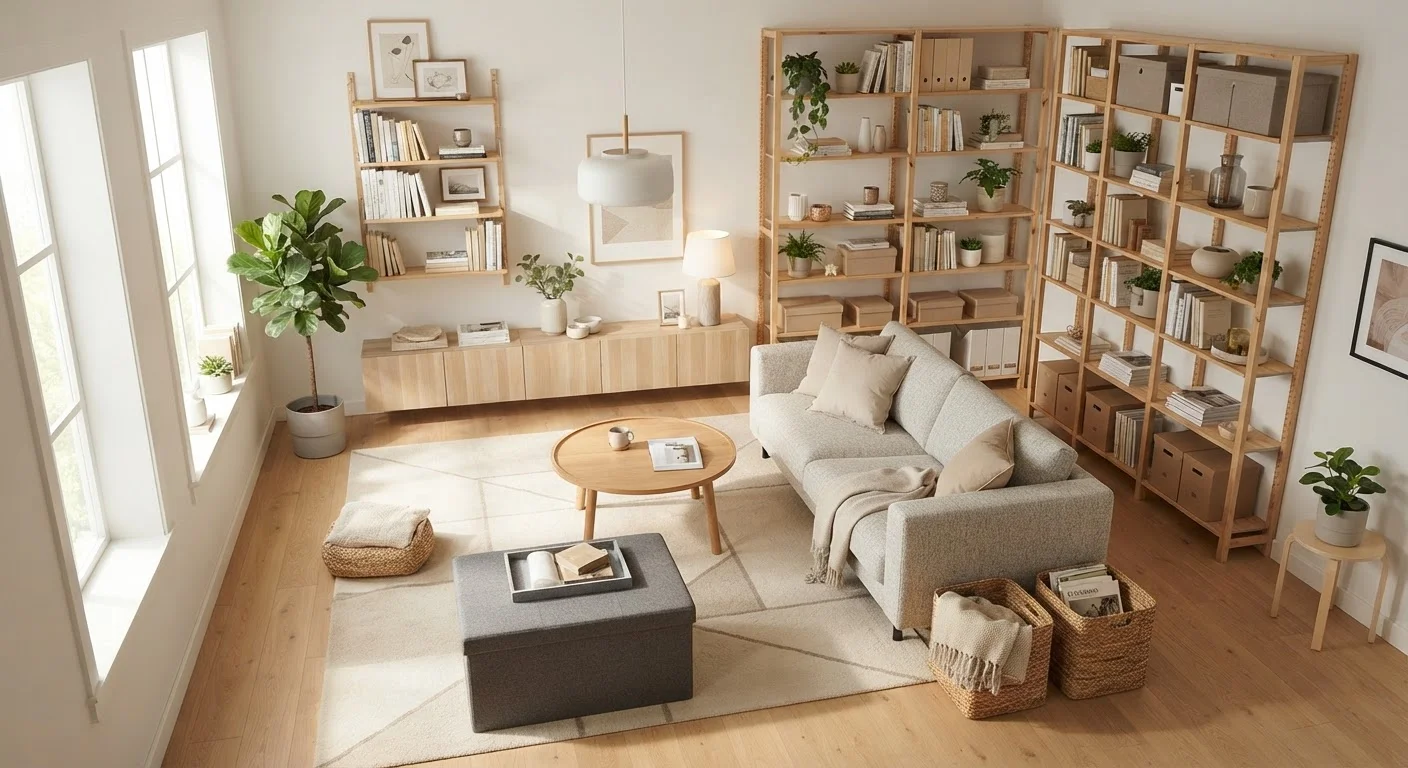
Vertical storage means organizing upward - using wall-mounted shelves, tall bookcases, pegboards, over-door organizers, and stacked cabinets that reach toward the ceiling. The goal is to keep your floor open by placing items on walls or in tall units that occupy minimal footprint.
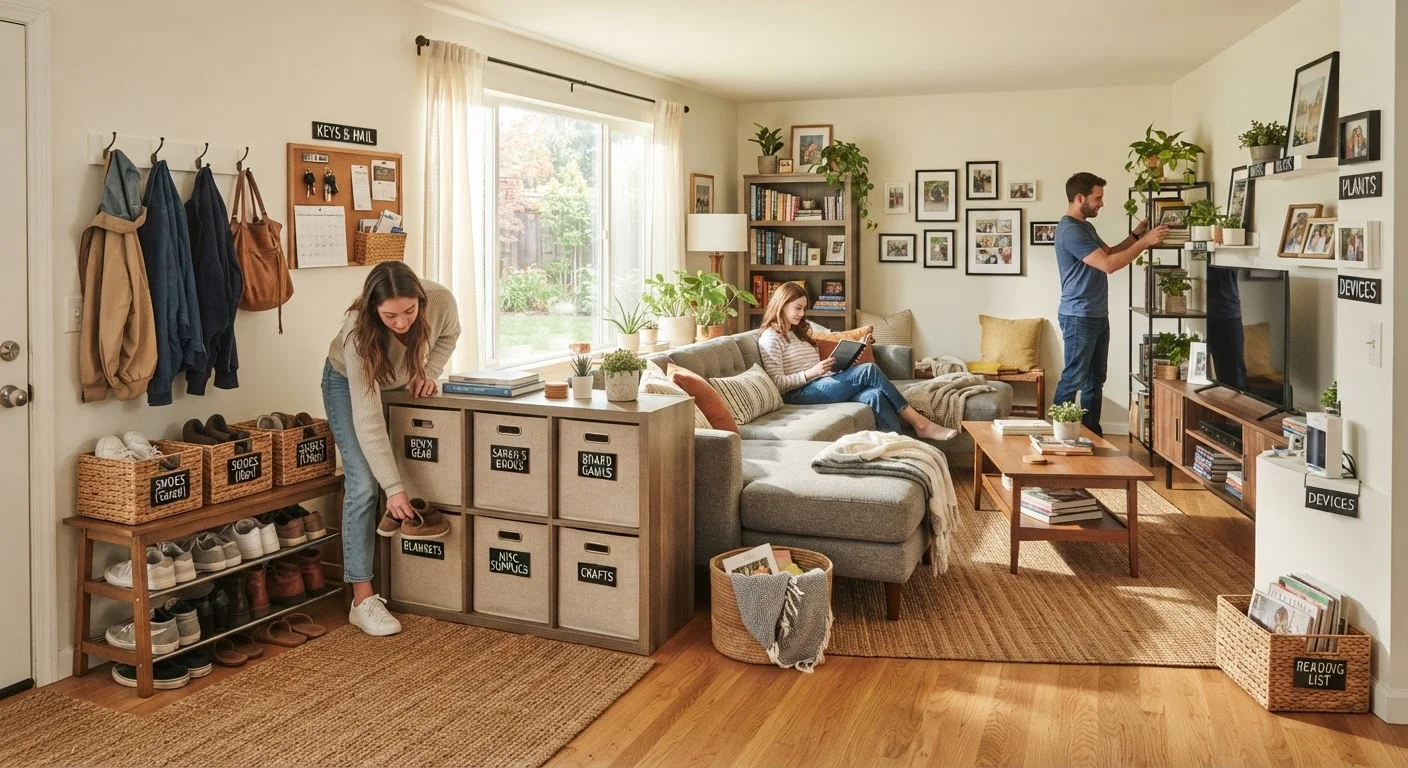
Floor space storage means organizing outward - using low cabinets, storage ottomans, under-bed drawers, benches with compartments, and freestanding units that sit on the ground and spread horizontally. The emphasis is on accessibility and stability at or below eye level.
Neither is inherently superior. The right choice depends on your room dimensions, what you're storing, who lives in your home, and how your walls are built. If you're also thinking through how to sort your belongings before deciding where to put them, see our comparison of decluttering methods for a useful starting point.
Head-to-Head: How the Two Approaches Compare
Looking at both strategies side by side across common organizing criteria makes the trade-offs clearer.
| Criterion | Vertical Storage | Floor Space Storage |
|---|---|---|
| Floor footprint | Minimal - uses wall area | Larger - spreads horizontally |
| Accessibility | Varies; upper zones need a step stool | Easy - items within reach for most |
| Weight capacity | Limited by wall anchoring | Higher - floor supports heavy loads |
| Installation effort | Requires mounting, studs, hardware | Low - most units are freestanding |
| Flexibility to rearrange | Low - wall holes left behind | High - move units as needed |
| Best for small spaces | Yes - maximizes limited floor area | Less so - consumes floor space |
| Child and senior friendly | Partially - lower sections only | Yes - items remain at safe heights |
| Rental-friendly | Often restricted by lease terms | Generally yes - no wall damage |
One factor the table doesn't capture: wall construction. Before mounting anything heavy vertically, you'll need to locate wall studs or use appropriate anchors - drywall alone cannot support significant weight. If you're renting, vertical options may also be restricted by your lease. Always check before drilling.
When Vertical Storage Has the Edge
Vertical storage shines in rooms where floor area is at a premium. A narrow kitchen can gain enormous capacity through wall-mounted rails, magnetic knife strips, and cabinet stacks that reach near the ceiling. A small home office benefits from floating shelves that hold books and supplies without eating into workspace.
Rooms with high ceilings - often found in older homes or loft apartments - are especially well suited to vertical solutions. That unused upper zone between a standard shelf and the ceiling is often wasted. Tall units or built-in cabinetry can capture it effectively.
~50%
Of vertical wall space typically left unused in average rooms
Interior organization experts commonly note that most households use less than half of their available wall height for storage, leaving significant capacity untapped.
18-54 in
Ideal storage height range for daily-use items
Ergonomics guidelines generally suggest that items used most often should be stored between knee and shoulder height to reduce strain and injury risk.
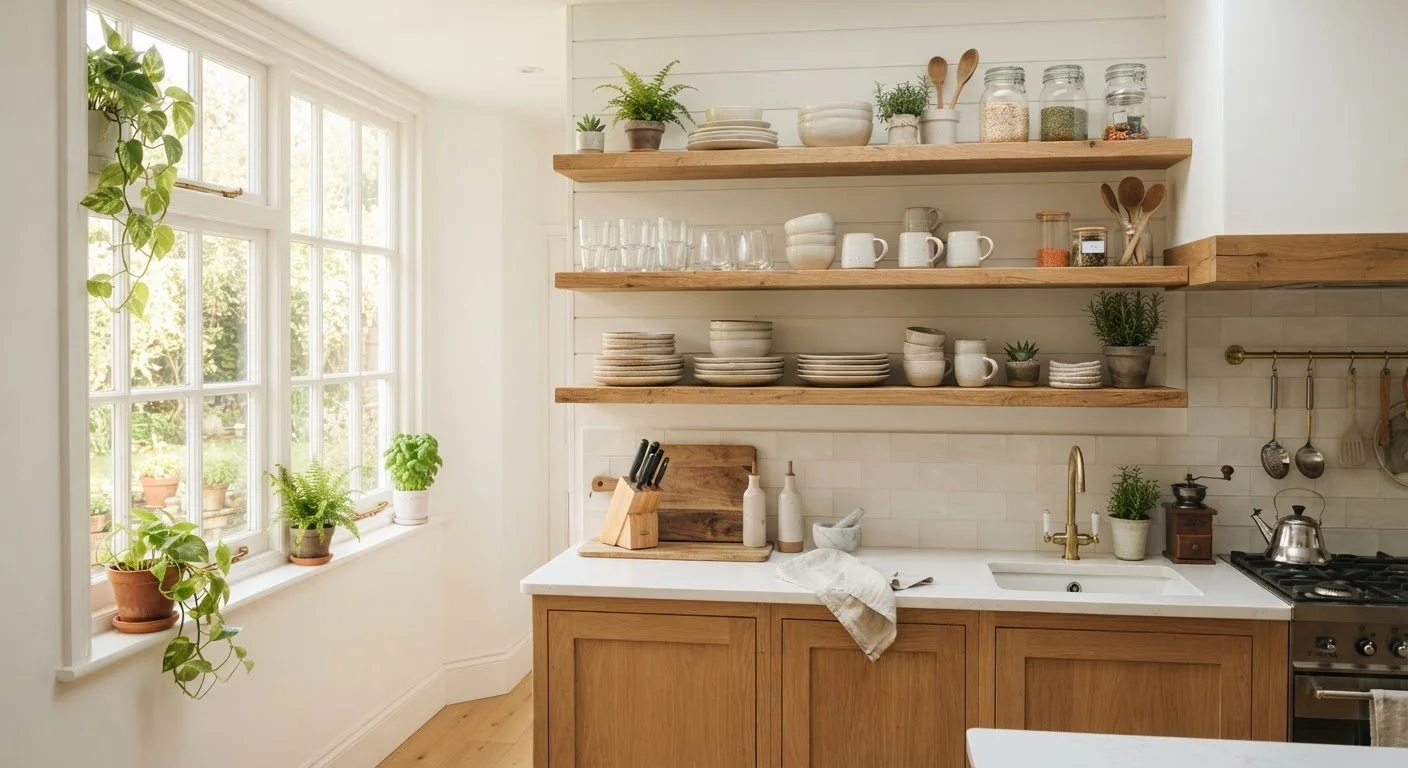
Vertical storage also works well for items you don't access daily. Seasonal décor, rarely used appliances, or archival documents stored in labeled boxes on upper shelves stay out of the way but remain organized. For a deeper look at open shelving specifically - a popular vertical choice - our guide on open shelving trade-offs covers what photos don't always show.
When Floor Space Storage Works Better
Floor-level storage is the practical choice for anything heavy, fragile in transit, or used every day. A low cabinet in the living room keeps remotes, chargers, and game controllers within arm's reach. Under-bed storage drawers make the most of an otherwise dead zone without requiring any wall modifications.
Accessibility is a genuine safety consideration. Reaching overhead for heavy or awkward items - like a cast-iron pan or a large serving dish - carries real risk of dropping or straining. Items you grab frequently belong at a comfortable height, typically between knee and shoulder level.
Floor storage is also the more flexible choice. Freestanding units move when your needs change. This matters especially in shared homes where different people have different routines. Our article on organizing with multiple people explores how to build systems that accommodate everyone.
A Note on Wall-Mounting Safety
If you're planning wall-mounted shelves or tall freestanding units, anchoring them properly is essential. Freestanding tall units should be secured to a wall stud to prevent tipping - a real hazard in homes with children. For anything load-bearing, locate studs with a stud finder and use hardware rated for the intended weight. If you're unsure, consult a handyperson or contractor before installation.
Combining Both: A Practical Framework
Most well-organized homes use both approaches intentionally rather than choosing one exclusively. A useful rule of thumb: store frequently used items at floor-to-shoulder height, and reserve vertical upper zones for infrequent items. This keeps daily life easy while still maximizing total capacity.
Room by room, consider:
- Kitchen: Lower cabinets and pull-out drawers for pots and daily cookware; upper cabinets and wall rails for less-used items and tools.
- Bedroom: Under-bed drawers for seasonal clothing; wall-mounted hooks or shelves for everyday accessories.
- Living room: Floor-level media consoles and ottomans for daily-use items; wall shelves for books and display objects.
- Garage or utility room: Heavy bins and equipment on the floor; tools, hardware, and lighter supplies on wall-mounted pegboards or shelving.
For guidance on matching specific container types to each room, see our drawer, shelf, or bin guide. And if you're working with a particularly compact layout, our small-space organization guide offers strategies scaled to apartments and studios.