The Appeal Is Real - and So Are the Trade-Offs
Open shelving dominates home design inspiration for good reason: it makes spaces feel larger, displays personality, and puts everyday items within easy reach. But the gap between a styled photo and lived-in reality is wider than it looks. Before you remove cabinet doors or invest in floating shelves, it helps to understand both sides honestly.
If you're still building your overall approach to organizing your home, start with the foundational concepts before committing to a specific storage format. Open shelving is one tool among many - and context matters enormously.
Items are immediately visible and accessible
You can see everything at a glance without opening drawers or cabinets, which speeds up meal prep, morning routines, and daily tasks. This is particularly useful in kitchens and home offices.
Makes small rooms feel more open
Removing bulky upper cabinet fronts creates a visual lightness that can make a compact kitchen or bathroom feel noticeably less cramped. The wall behind the shelves becomes part of the room's visual depth.
Lower upfront cost than full cabinetry
Floating shelves are generally less expensive to purchase and install than closed cabinets with doors and hardware. This can matter when furnishing a first home or refreshing a space on a limited budget.
Encourages deliberate, edited collections
Because everything is on display, most people naturally avoid overcrowding open shelves - which can be a genuine nudge toward owning fewer, better-chosen items.
Easy to reconfigure as needs change
Adjustable-bracket shelving systems can be repositioned without major construction, making open shelving more flexible than fixed built-ins when your storage needs shift.
The Real Costs of Open Display
Every advantage of open shelving comes with a corresponding maintenance reality. The visibility that makes things easy to find is the same visibility that exposes clutter, grime, and inconsistency. Knowing these trade-offs upfront prevents a frustrating and potentially expensive reversal down the road.
Dust accumulates quickly and visibly
Every surface on an open shelf - including the tops and faces of stored items - collects dust. In most homes, a visible dust layer builds within one to two weeks without regular wiping.
Kitchen grease makes maintenance intensive
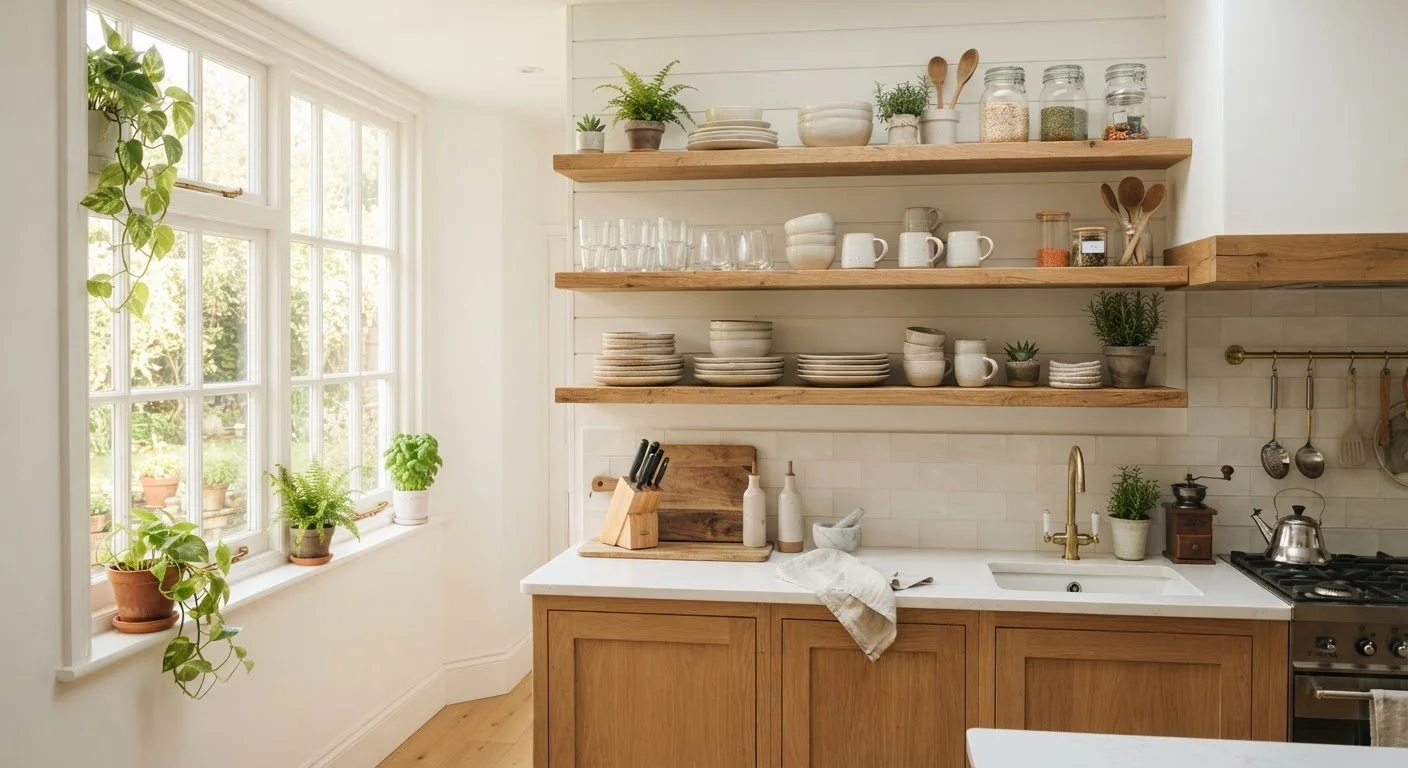
Cooking releases airborne grease particles that settle on open shelves and the items stored there. Dishes and glassware stored near the stove may need washing before each use, not just after.
Visual clutter amplifies stress
Research in environmental psychology has suggested that disordered visual environments can increase background stress levels. Open shelving makes any organizational lapse immediately visible to everyone in the room.
Requires consistent curation to look intentional
The curated look in design photos reflects hours of editing and styling. In everyday use, mismatched items, hand-me-down pieces, and everyday clutter can make open shelves look chaotic rather than charming.
Items exposed to light may fade or degrade
Books, fabric items, and some food products stored on open shelves in sun-lit rooms are exposed to UV light, which can cause fading or reduce shelf life over time.
Not ideal for households with young children
Open shelving puts breakable items, cleaning supplies, and sharp objects within easier reach of small hands, requiring more careful placement and ongoing supervision.
Households with young children, multiple adults with different tidiness habits, or pets that shed will feel these drawbacks more acutely. See our guide to organizing shared spaces for realistic strategies when not everyone in the home has the same approach to putting things back.
Where Open Shelving Actually Works Well
Context determines whether open shelving becomes an asset or a source of frustration. Here are the situations where it genuinely earns its place:
- Frequently used items: Coffee mugs, everyday dishes, cooking oils, and spices are natural candidates. If you reach for something daily, the accessibility payoff is real.
- Rooms with low grease and humidity: Living rooms, home offices, and hallways are far more forgiving than kitchens, where airborne grease coats surfaces quickly.
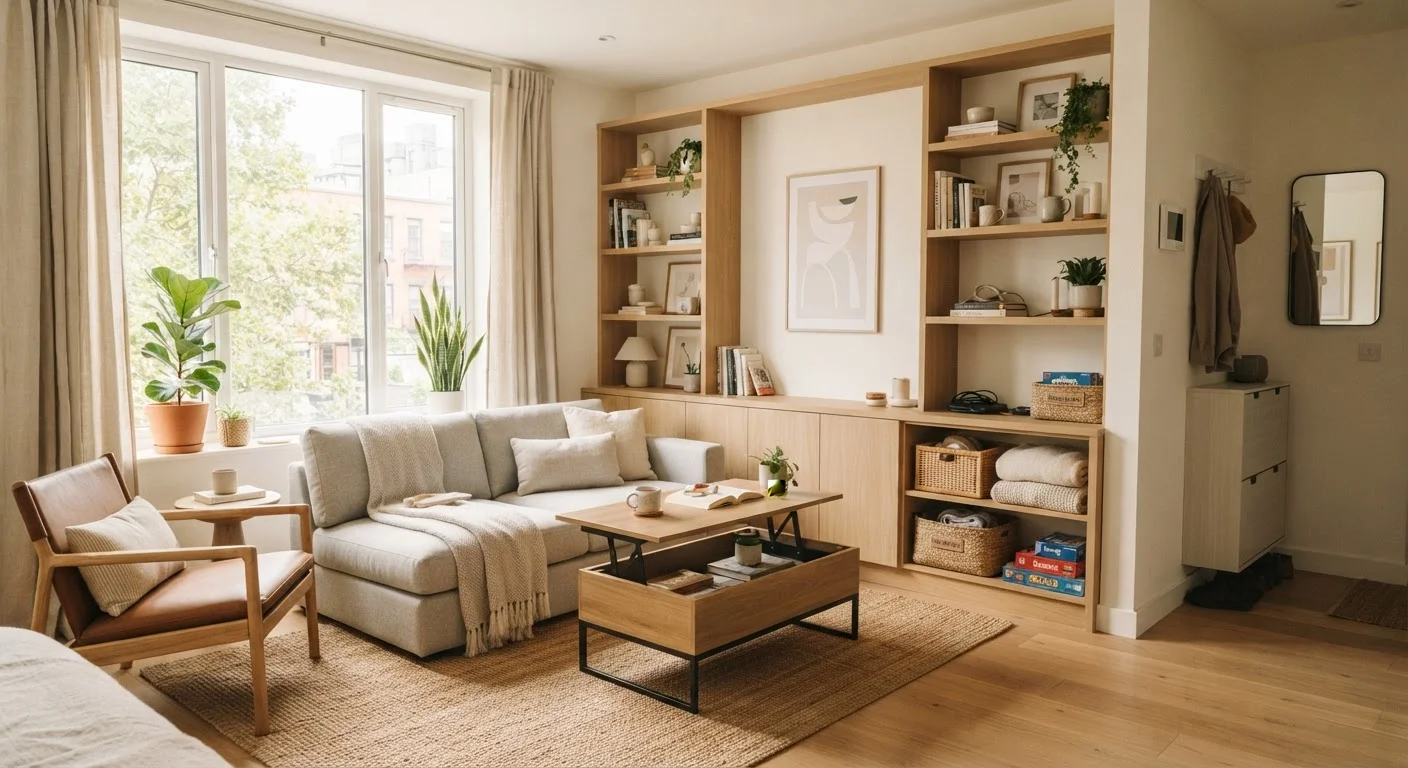
- Small spaces where visual depth matters: In compact rooms, open shelving can prevent the closed-in feeling of floor-to-ceiling cabinetry. Our small-space organization guide explores this in more depth.
- Items worth displaying: Books, plants, ceramics, and collected objects look intentional on open shelves - as long as they're edited down rather than crammed in.
A Note on Installation Safety
Floating shelves loaded with dishes, books, or cookware can be surprisingly heavy. Most shelving systems require anchoring into wall studs or using appropriate hollow-wall anchors rated for the expected load. Improperly anchored shelves are a real fall hazard. If you're unsure about your wall construction or load calculations, it's worth consulting a handyperson or contractor before installation.
For a broader comparison of how open shelves stack up against drawers, bins, and cabinets by room, this room-by-room storage guide is a useful next step.
Making a Smart Decision for Your Home
The most practical approach for most households isn't all open or all closed - it's a deliberate hybrid. Reserve open shelves for items you use and see every day, and keep lower-traffic, mismatched, or visually noisy items behind closed doors.
~30 min/week
Typical open shelf maintenance time
Home organization professionals commonly estimate that open shelving in a kitchen requires roughly 20-30 minutes of weekly wiping and tidying to maintain a clean appearance.
2-3x
Dust buildup vs. closed cabinets
Interior designers and cleaning experts note that open surfaces in active rooms tend to gather dust and particulates significantly faster than sealed cabinet interiors.
Think carefully about your wall space before committing. Open shelving uses vertical room efficiently, but placement matters. Our guide to vertical versus floor storage walks through how to assess your layout before you start drilling into walls.
If installation involves any structural wall anchoring - particularly in older homes with plaster walls or unknown stud placement - take time to understand what's behind the wall surface. For complex installations, consulting a professional is worth the cost.