What Each Method Actually Involves
Before comparing the two approaches, it helps to understand exactly what each one asks you to do.
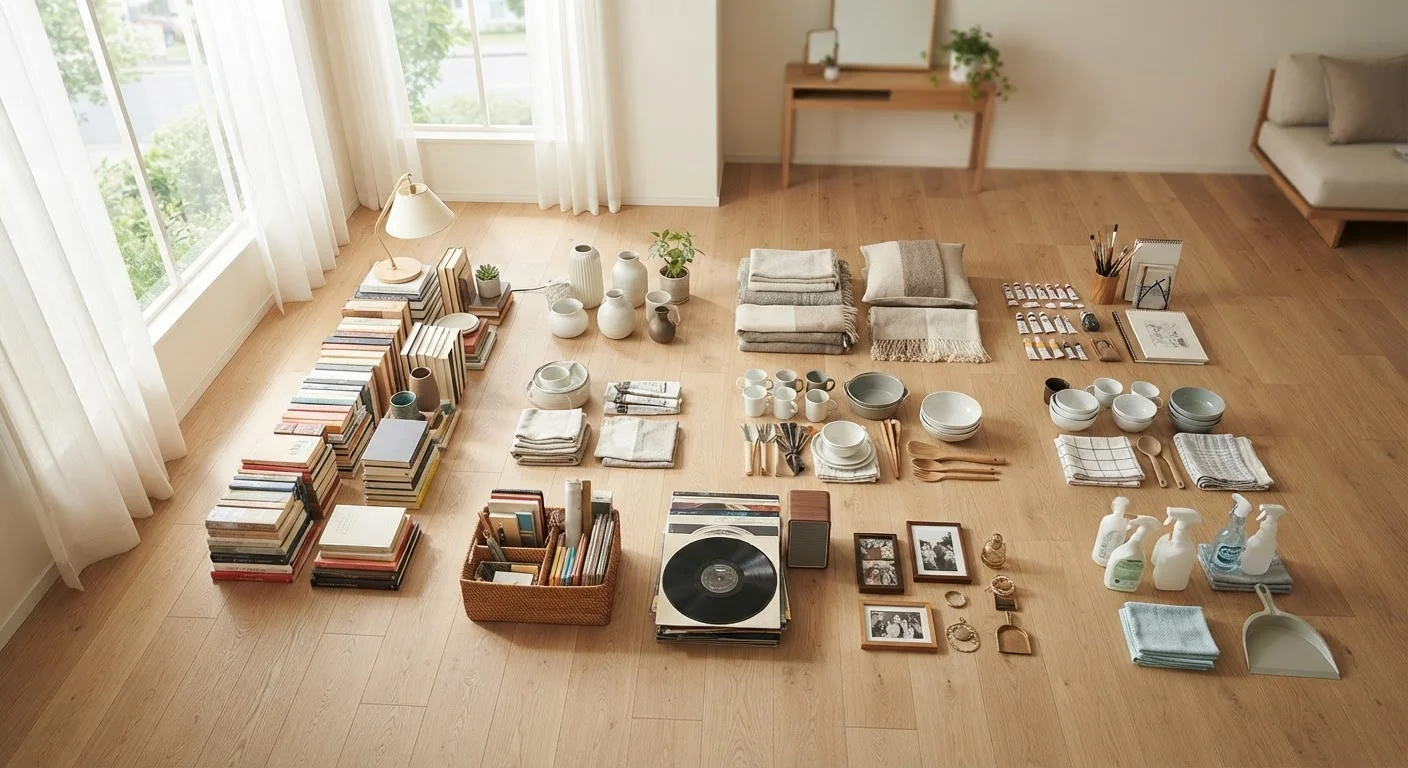
Category-based decluttering means gathering every item of the same type from across your entire home - all clothing, all books, all kitchen tools - into one place before sorting. By seeing the full scope of what you own in a single category, you make more consistent keep-or-discard decisions. This approach is associated with the idea that duplicates and forgotten items hide because they're spread across multiple rooms.
Room-by-room decluttering means choosing one room - a bedroom, bathroom, or kitchen - and completing it fully before moving on. You sort, discard, and reorganize everything within that space before stepping into the next. It's a more contained process, and the finished room serves as immediate, visible motivation.
Both methods aim for the same outcome: a home with less unnecessary stuff and a clearer system for what remains. The difference is in the sequence and scope of the work.
Side-by-Side Comparison
The table below breaks down how each method performs across practical considerations most homeowners face.
| Category-Based | Room-by-Room | |
|---|---|---|
| Session disruption level | High - items pulled from all rooms | Low - one contained space at a time |
| Time commitment per session | Usually longer, full-category focus | Flexible, can be done in short blocks |
| Effectiveness against duplicates | Very high - full inventory visible | Moderate - misses cross-room duplicates |
| Beginner-friendliness | Moderate - can feel overwhelming | High - clear start and finish point |
| Visible progress per session | Delayed until category is complete | Immediate - one finished room |
| Works well for shared homes | Requires household coordination | Easier to manage independently |
As the comparison shows, no single method wins on every dimension. Your living situation, household size, and available time all shift the balance.
When Category-Based Works Best
Category-based decluttering tends to work well when you own a lot of the same type of item scattered across your home. If you have books on three different shelves in four rooms, or if your holiday decorations live in the garage, two closets, and the attic, pulling everything together reveals the true total - which is often a powerful motivator to let things go.
This method is also effective if you've already tried room-by-room approaches and found that clutter keeps returning. That pattern often happens because you're reorganizing within a room without addressing redundancy across the whole home.
Start With a Manageable Category
If you're trying category-based decluttering for the first time, begin with something low-stakes - like linens or books - rather than clothing or sentimental items. This lets you practice the decision-making process without the emotional weight. Once you've completed one category successfully, larger categories feel less daunting.
The main trade-off: category-based sessions can be disruptive. You may pull items from every corner of the house before completing a single pile. If you live with others or have only an hour to spare, that disruption can be hard to manage. For shared living situations, see our guide on organizing a home with multiple people before committing to a full category purge.
When Room-by-Room Works Best
Room-by-room decluttering is generally more accessible for people who are new to the process or who feel overwhelmed by the idea of a whole-home overhaul. Completing one room provides a clear endpoint for a single session and a tangible result you can see every day.
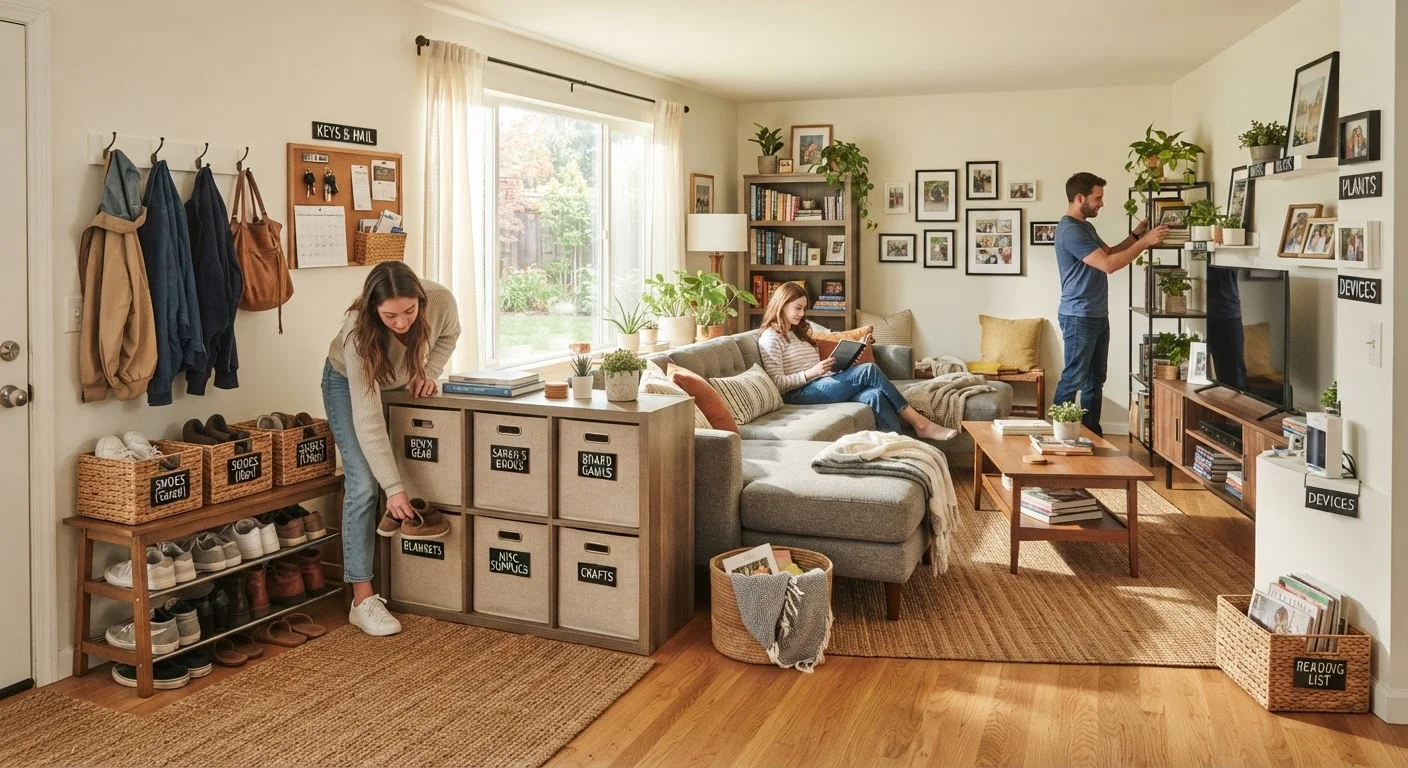
It also works well for households where disruption needs to be minimized - families with young children, renters with limited floor space, or anyone who can only dedicate short blocks of time to the process. If the bedroom is finished and tidy, it stays that way while you work through the rest of the home over coming weeks.
If the room-by-room approach appeals to you but you're not sure where to begin, starting a declutter one room at a time offers a practical, low-pressure framework. Once a room is cleared, our guide to choosing the right storage format can help you decide what goes where.
Combining Both Methods
In practice, many homeowners use a hybrid approach - and that's a perfectly reasonable strategy. For example, you might tackle clothing category-wide (pulling everything from every closet and drawer at once) but handle kitchen items room-by-room since the kitchen has its own self-contained logic.
The key is to decide your approach before you start, not mid-session. Switching methods partway through a sort often leads to partially finished piles and decision fatigue.
Avoid Mid-Session Method Switching
Starting a category-based session and then shifting to room-by-room logic partway through often creates more chaos than you started with. Partially sorted piles left across multiple rooms can be discouraging and hard to return to. Commit to your chosen method for the full session, even if progress feels slow.
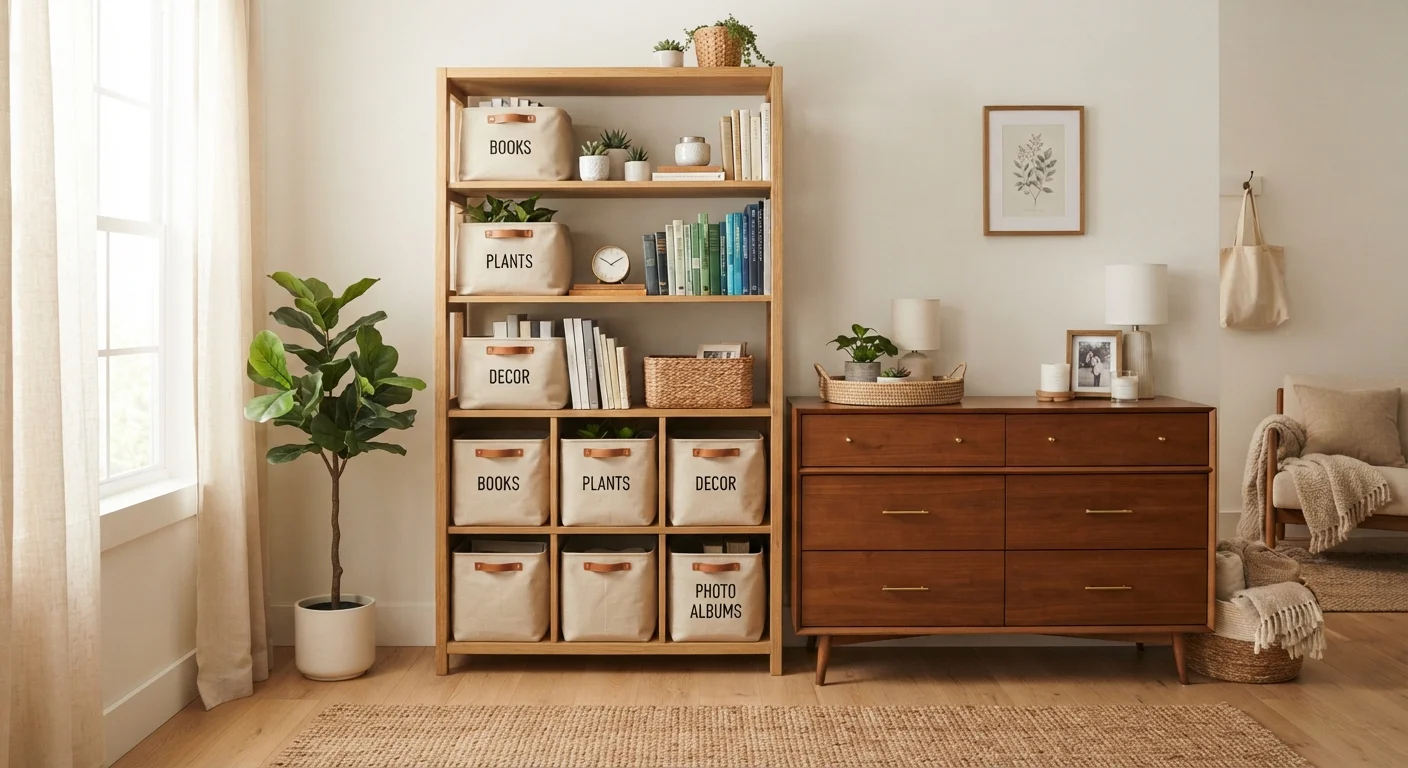
Once you've settled on a method, a seasonal declutter checklist can help you maintain momentum across the year rather than treating decluttering as a one-time event. Pairing your cleared spaces with a thoughtful labelling system also helps keep things organized once the initial purge is done.