
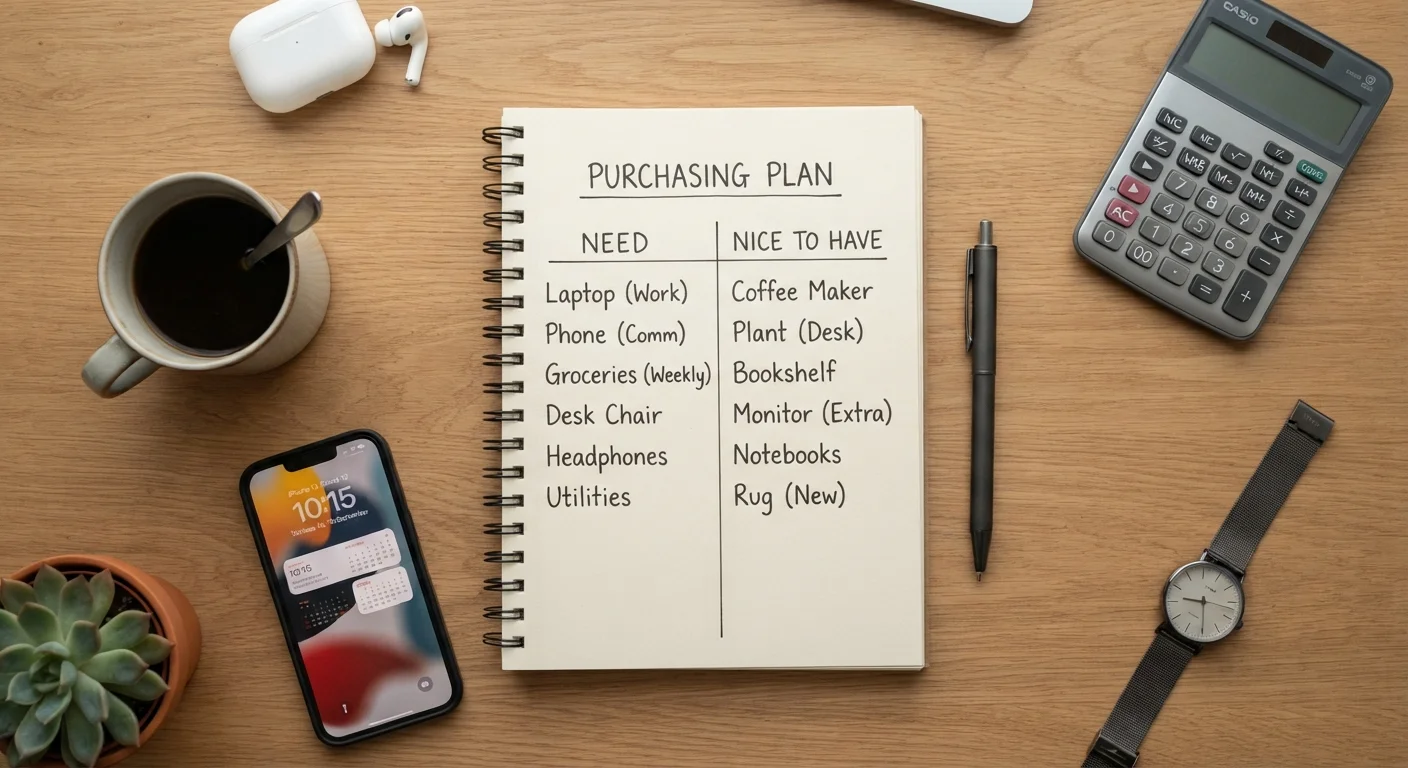
What Makes a Feature 'Essential'
An essential feature is one that, if absent, means the product or service cannot do the job you need it to do. That sounds obvious, but it's easy to lose sight of in a marketplace full of competing claims. The practical test is simple: would the purchase fail to solve your problem without this feature? If yes, it's a need. If you'd adapt just fine without it, it probably isn't.
Needs are also personal. A built-in GPS is essential for a delivery driver and optional for someone who uses their phone for navigation. A dishwasher's sanitize cycle is essential for households with infants and largely irrelevant for most single adults. Before you open a comparison page, write down the two or three things the purchase absolutely must do for your specific situation - not for a hypothetical average user.
This is also where building a personal comparison scorecard becomes valuable. Putting your requirements on paper before you browse keeps you anchored to what you decided matters, rather than what a product page tells you should matter.
| Criterion | Essential Features (Needs) | Marketing Extras (Nice-to-Haves) |
|---|---|---|
| Definition | Solves a specific, confirmed problem | Adds appeal without addressing a known gap |
| Usage frequency | Used regularly or constantly | Used rarely or never |
| Impact if absent | Purchase fails to meet your goal | Purchase still meets your goal |
| How to identify | You can name a specific use case | Use case is vague or hypothetical |
| Effect on satisfaction | Strongly linked to long-term satisfaction | Weakly linked; may add friction instead |
| Budget priority | Always worth spending on | Only worth spending on after needs are met |
How Marketing Extras Get Mistaken for Requirements
Feature lists are marketing documents as much as they are technical descriptions. Manufacturers and service providers know that longer lists can create a perception of greater value - even when many line items address problems most buyers never encounter. Common tactics include giving ordinary capabilities impressive-sounding names, bundling rarely-used extras with core functions, and leading with headline specs (like megapixels or thread count) that are easy to measure but weakly linked to real-world satisfaction.
The result is what researchers sometimes call feature fatigue: buyers who choose the option with the most features often report lower satisfaction after the purchase because complex, unused options create friction rather than value. You pay for capabilities you never touch, and the interface becomes harder to navigate.
63%
Buyers who report unused features post-purchase
Consumer research has consistently found that a majority of buyers report that a significant portion of the features they paid for go unused within six months of purchase.
1 in 3
Major purchases driven primarily by feature lists
Surveys on consumer decision-making suggest roughly one in three buyers cite feature quantity - rather than fit to their needs - as the primary driver of their final choice.
A useful filter: ask whether you have an existing habit, workflow, or problem that a specific feature would directly improve. If you can't name one, that feature is almost certainly a nice-to-have for you - regardless of how it's positioned. This connects to a broader point covered in why comparing on price alone tends to backfire: the feature that justifies a higher price needs to justify it for you, not for the average reviewer.
A Practical Framework for Drawing the Line
Sorting features into needs and nice-to-haves takes about ten minutes and can prevent a decision you'll regret for years. Here's a straightforward approach:
- Start with the job. Write one sentence describing exactly what you need this purchase to accomplish. Be specific - "take clear photos indoors" is more useful than "take good photos."
- List your dealbreakers. What would make an option immediately unusable? These are your non-negotiables. Keep this list short; if everything feels essential, nothing is.
- Separate frequency from novelty. Features you'll use weekly belong on the needs list. Features that sound exciting but reflect a use case that might occur once a year are extras.
- Check the real cost of each extra. Some nice-to-haves add a modest premium. Others add 30-40% to the total price. Knowing the marginal cost helps you decide if the upgrade is worth it.
For purchases involving ongoing support or service relationships, also consider what happens after the sale. Warranty terms and after-sale support can shift a feature from nice-to-have to genuinely essential if you're buying something you'll depend on daily.
When you're ready to compare specific options side by side, a decision-ready checklist can help ensure you've covered every angle before committing.
Nice-to-Haves Can Become Needs Over Time
Your requirements aren't fixed. A feature that's genuinely optional today - like expanded storage or a particular connectivity standard - may become essential as your habits or circumstances change. If you're buying something you expect to use for five or more years, it can be worth thinking one step ahead. That said, don't let speculative future needs crowd out your present, clearly defined ones.