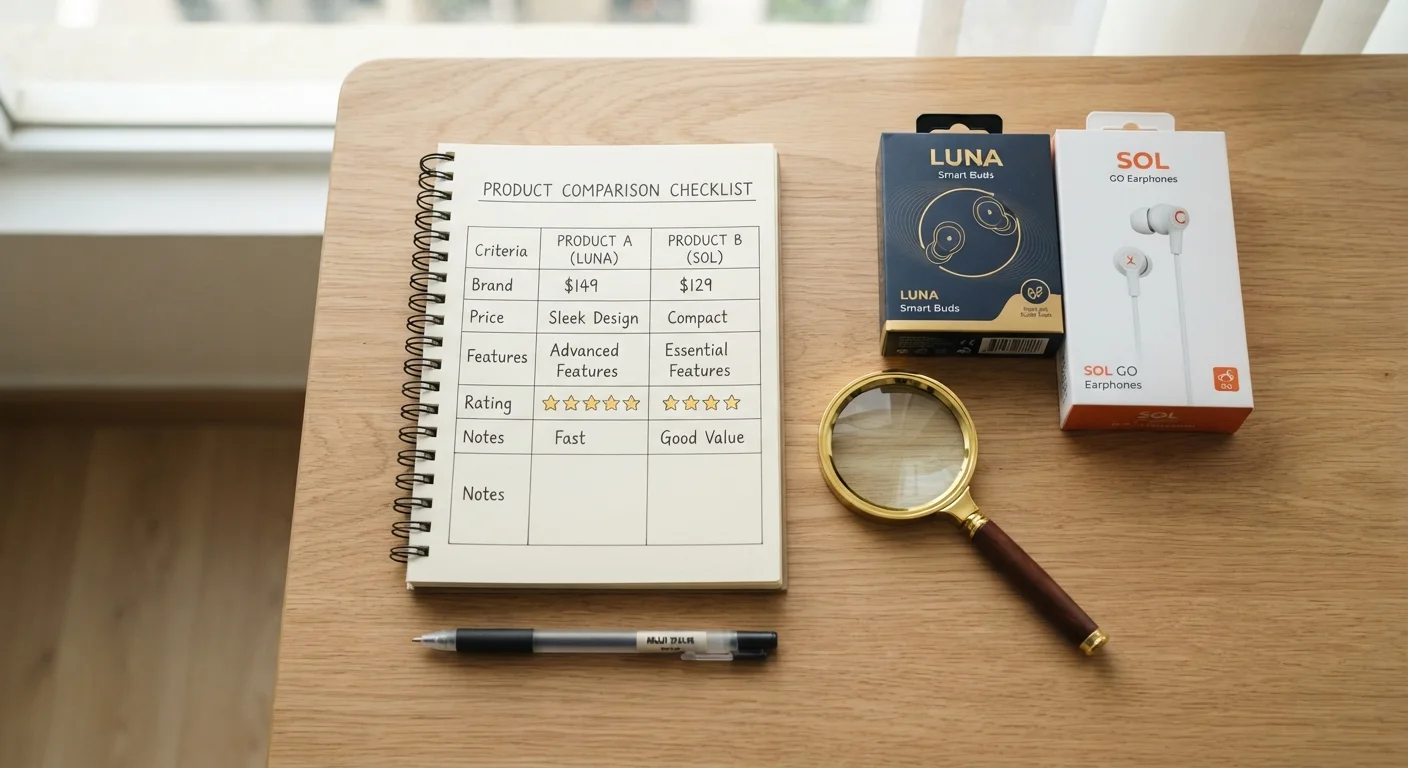
Run through this structured checklist to ensure you've covered cost, quality, support, and fit before committing to any significant purchase.
Key Takeaways
Comparing options on paper before buying helps you avoid decisions driven by marketing or impulse.
Total cost of ownership - not sticker price alone - is the most reliable comparison metric.
Warranty terms, return policies, and after-sale support significantly affect long-term satisfaction.
Matching a product's features to your actual needs, not a reviewer's, is the goal of any comparison.
A structured checklist reduces decision fatigue and makes your reasoning easier to revisit.
Why a Structured Comparison Beats Gut Instinct
Most regrettable purchases share a common thread: the decision was made too fast, with too few factors in play. A flashy listing, a single glowing review, or the pressure of a ticking countdown - and suddenly you own something that doesn't quite fit your life.
This checklist is designed to slow that process down in a useful way. It doesn't tell you what to buy. It tells you what to look at before you decide - so that whatever you choose, you've chosen it deliberately.
Work through the groups below for each option you're considering. You don't need to score every item numerically (though our comparison scorecard guide shows you how if you'd like to). Simply using this list as a thinking framework is enough to surface the gaps that gut instinct tends to skip.
Write down the primary job this purchase needs to do - be specific about the outcome, not the product type.Must
List any non-negotiable constraints: size, compatibility, power source, or regulatory requirements.Must
Identify how frequently you'll use this item so you can calibrate how much quality you actually need.Should
Note any secondary use cases that would be a bonus but aren't dealbreakers.Nice to have
True Cost Assessment
Record the purchase price of each option and confirm whether taxes, shipping, or installation fees are included.Must
Estimate ongoing costs - consumables, subscriptions, maintenance, or energy use - over a 12-month period.Must
Factor in any accessories or add-ons required to make the item functional out of the box.Must
Consider the likely resale or trade-in value if this is a category where that's realistic.Nice to have
Quality and Reliability Signals
Check independent consumer testing sources or published reliability surveys for the product category.Must
Read a sample of critical (low-star) reviews to understand what tends to go wrong, not just what goes right.Must
Look for verified purchase indicators and review recency - older reviews may not reflect current production quality.Should
Check materials, construction details, or ingredient lists where those are relevant to durability or safety.Should
Warranty, Returns, and Support
Confirm the warranty length and what it covers - parts only, labour, or full replacement.Must
Review the return window and whether restocking fees or return shipping costs apply.Must
Check how customer support is accessed - phone, chat, or email - and read reviews specifically about support experiences.Should
Verify that local service or authorised repair is available if the product requires in-person support.Should
Fit and Practicality
Confirm physical dimensions and verify the item will fit in its intended space or pair with what you already own.Must
Assess whether the learning curve, setup requirements, or maintenance demands match your realistic availability.Should
Identify any features you're paying for that you're genuinely unlikely to use.Should
Consider whether a simpler or less-featured option would serve your actual use case just as well.Nice to have
Final Decision Check
Confirm you're not choosing based primarily on brand familiarity, packaging appeal, or urgency framing.Must
Verify there are no unresolved questions about the item - if something is unclear, seek clarification before buying.Must
Tools That Make Comparison Easier
You don't need specialised software to run a solid side-by-side comparison, but having the right resources at hand makes the process faster and less frustrating.
Required
Spreadsheet or comparison table
Create a simple side-by-side grid to log each option's scores across cost, quality, and support factors.
Required
Independent consumer testing publications
Access reliability ratings and category testing data that are independent of retailer or manufacturer claims.
Required
Retailer return policy documentation
Review the exact terms of returns and warranty claims before committing, not after.
Optional
Review aggregator or forum
Surface real-world user experiences, particularly long-term reliability feedback that short-term reviews miss.
Optional
Price history tracker
Verify whether the current price reflects genuine value or a temporary positioning against a manipulated reference price.
Once you've assembled your tools and run through the checklist, resist the urge to make a final call immediately. Give yourself a brief cooling-off period - even 24 hours - particularly for purchases over $100. This is especially relevant if the item is a one-time buy with few return options.
If brand identity versus generic alternatives is a factor in your comparison, the generic vs. named brands guide breaks down which product categories actually warrant the premium and which generally don't.
Don't Let Review Volume Substitute for Review Quality
A product with thousands of reviews isn't automatically reliable - volume can reflect marketing spend as much as genuine customer reach. Focus on the substance of critical reviews and look for patterns across multiple sources. A single independent testing report often carries more weight than hundreds of unverified five-star ratings.
When you're confident the comparison is complete, run a final pre-purchase pass using the Pre-Purchase Sanity Check to catch any red flags you may have missed along the way.
Smart Shopping Editorial Team is the collective byline for our editorial team and contributor network. Articles published under this byline or an editorial pen name are researched, written, and reviewed according to our editorial standards for clarity, consistency, and independence before publication.
The content provided on our blog site traverses numerous categories, offering readers valuable and practical information. Readers can use the editorial team’s research and data to gain more insights into their topics of interest. However, they are requested not to treat the articles as conclusive. The website team cannot be held responsible for differences in data or inaccuracies found across other platforms. Please also note that the site might also miss out on various schemes and offers available that the readers may find more beneficial than the ones we cover.