Why Calories Alone Don't Tell the Full Story
A calorie is simply a unit of energy. When a food label says 200 calories, it's telling you how much fuel that food provides - nothing more. It says nothing about whether that food carries fiber, protein, essential vitamins, or whether it will leave you hungry again in 45 minutes.
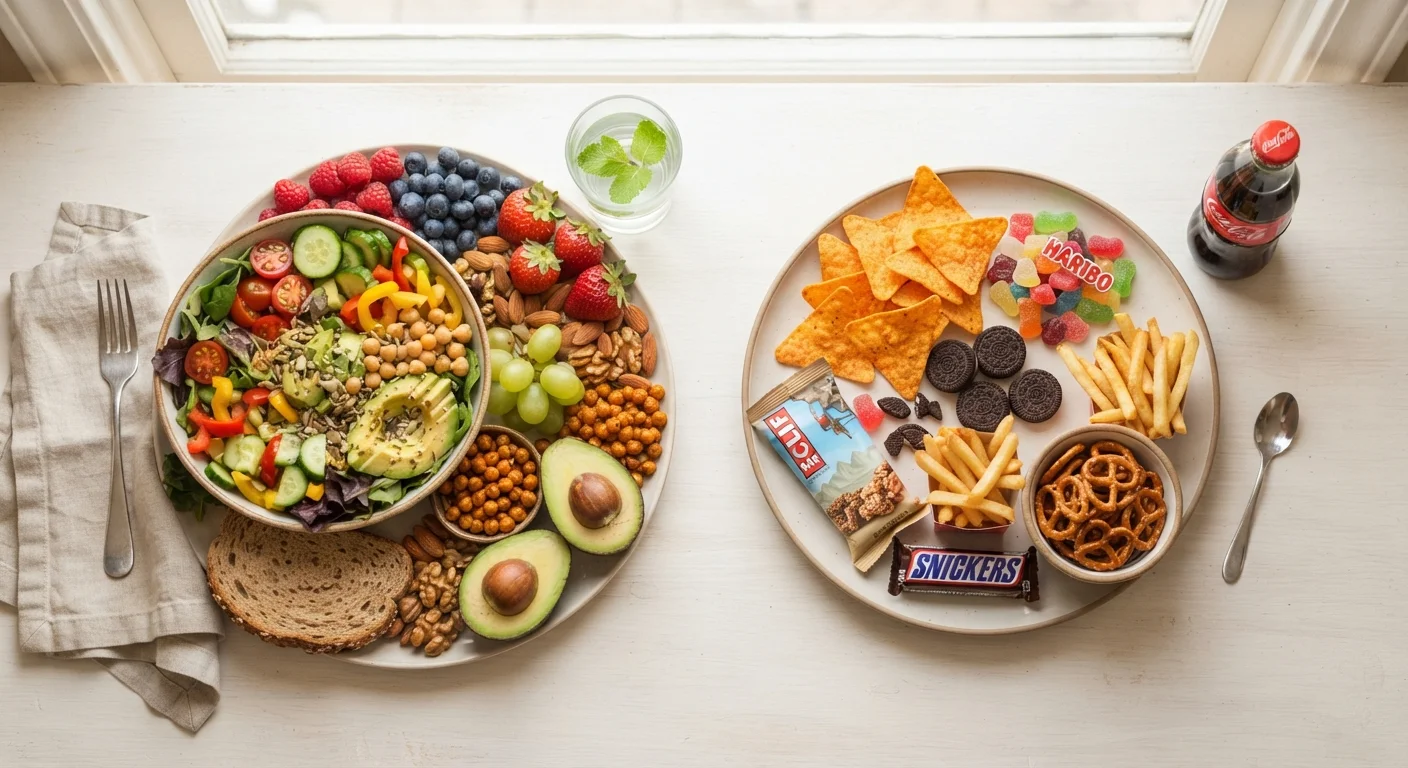
Consider two 200-calorie snacks: a handful of almonds and a small bag of cheese-flavored crackers. On paper, they're equal. In practice, the almonds deliver healthy fats, magnesium, vitamin E, and protein that slow digestion and sustain energy. The crackers, stripped of fiber and built around refined starch and sodium, may spike blood sugar briefly and leave you reaching for more food soon after.
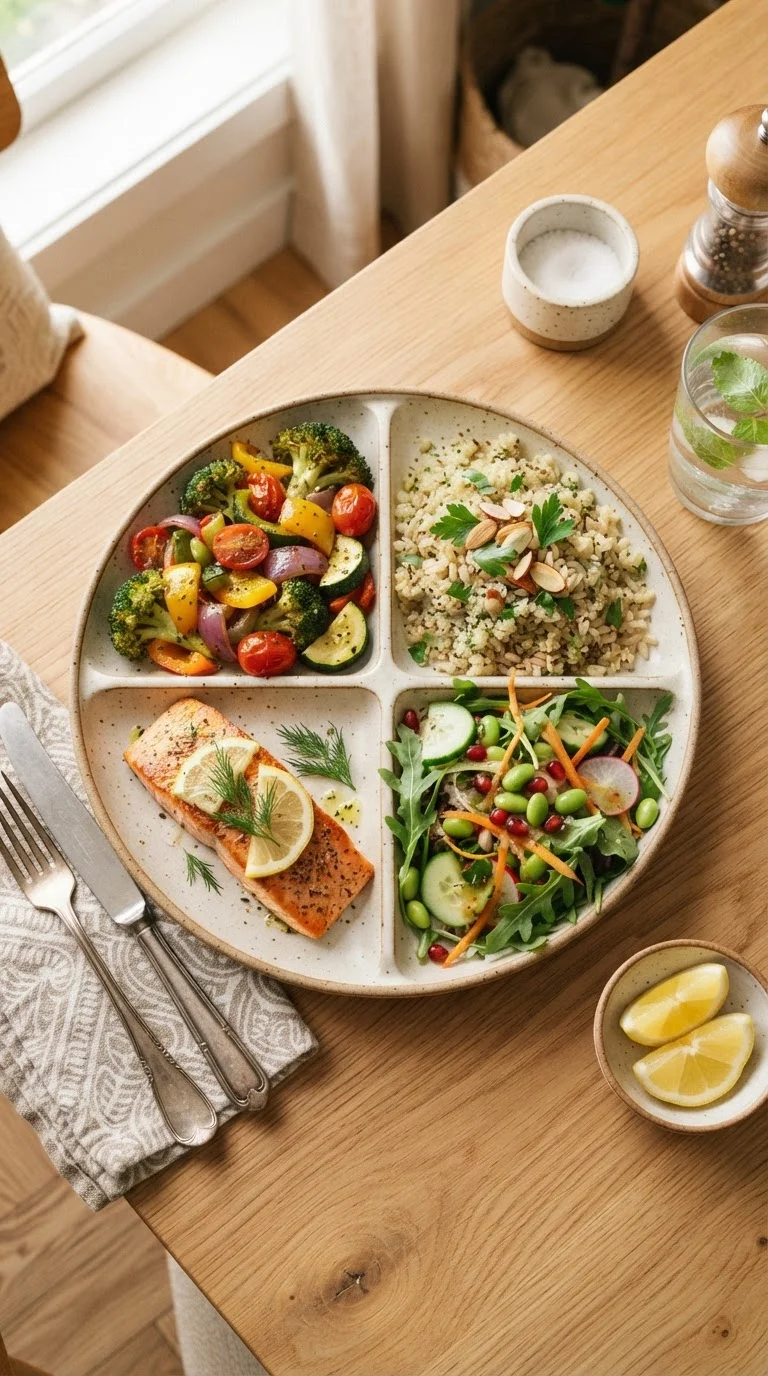
This gap between caloric equivalence and nutritional reality is what food quality is all about. Understanding it can genuinely change how you approach eating - without obsessing over numbers. If you want to put this into practice, our guide to building a balanced plate without counting every calorie offers practical frameworks to get started.
~57%
Share of US adult calories from ultra-processed foods
Research published in BMJ Open estimated that ultra-processed foods account for roughly 57% of daily caloric intake among U.S. adults, based on national dietary survey data.
2x
Greater satiety from high-protein vs. high-sugar meals
Studies in nutrition journals consistently show protein-rich foods produce roughly twice the satiety response of equal-calorie high-sugar alternatives, supporting longer fullness periods.
Nutrient Density: Getting More From Every Bite
Nutrient density is one of the most useful concepts in everyday nutrition. It describes how many beneficial nutrients a food provides for each calorie it contains. A bowl of spinach, for example, is loaded with iron, folate, calcium, and vitamin K for very few calories. A handful of gummy candies delivers the same calories with almost no nutritional benefit.
Choosing more nutrient-dense foods doesn't mean eating less - it means eating smarter. Your body needs a steady supply of vitamins and minerals to run everything from immune function to muscle repair to mood regulation. When meals are built around nutrient-dense options, those needs get met more easily.
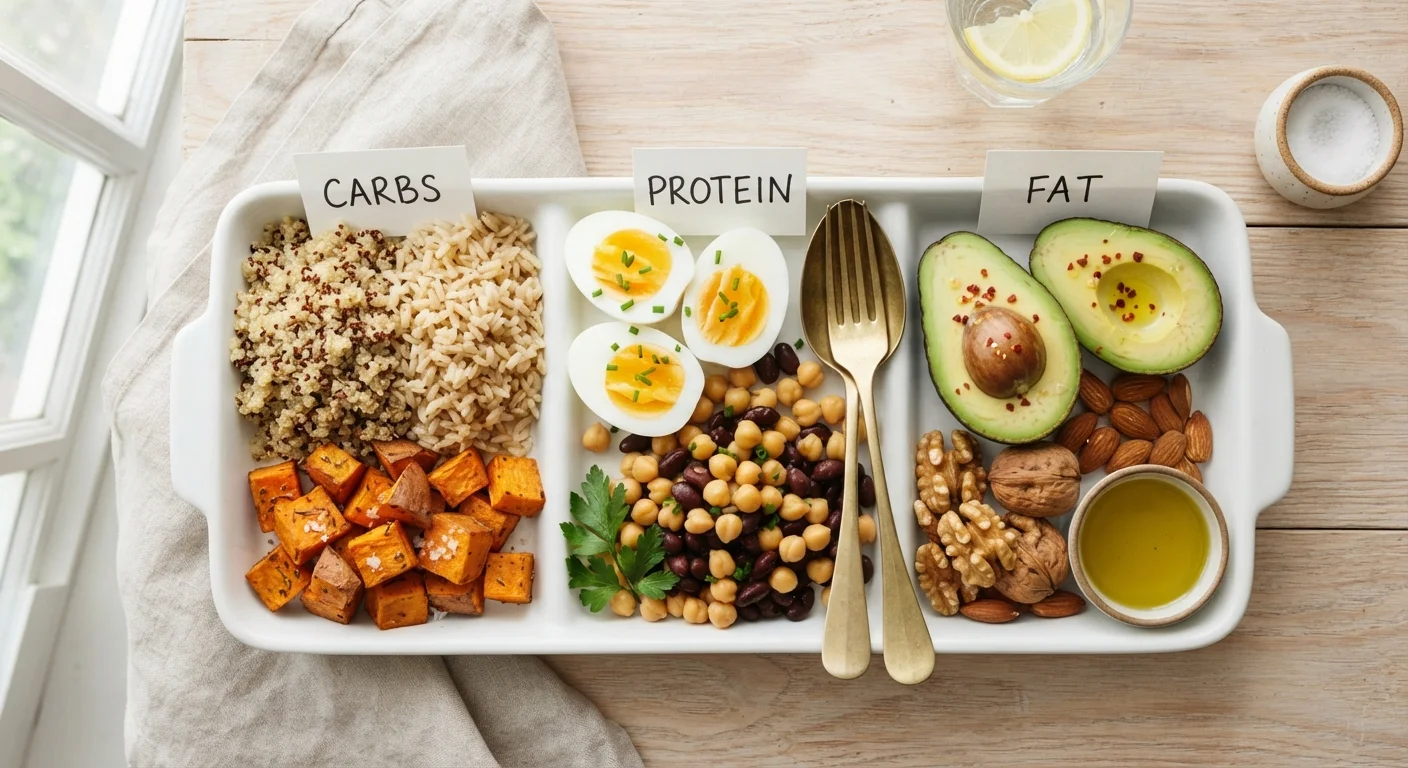
Understanding what carbs, protein, and fat actually do is a natural next step here - because food quality also means thinking about the type of nutrients, not just the quantity.
A Simple Nutrient Density Check
Before choosing a packaged food, ask yourself: does this give me protein, fiber, or meaningful vitamins and minerals for the calories it contains? If the answer is mostly no, it's worth considering a more nutrient-dense alternative - not as a rule, but as a habit that builds over time.
How Processing Changes a Food's Quality
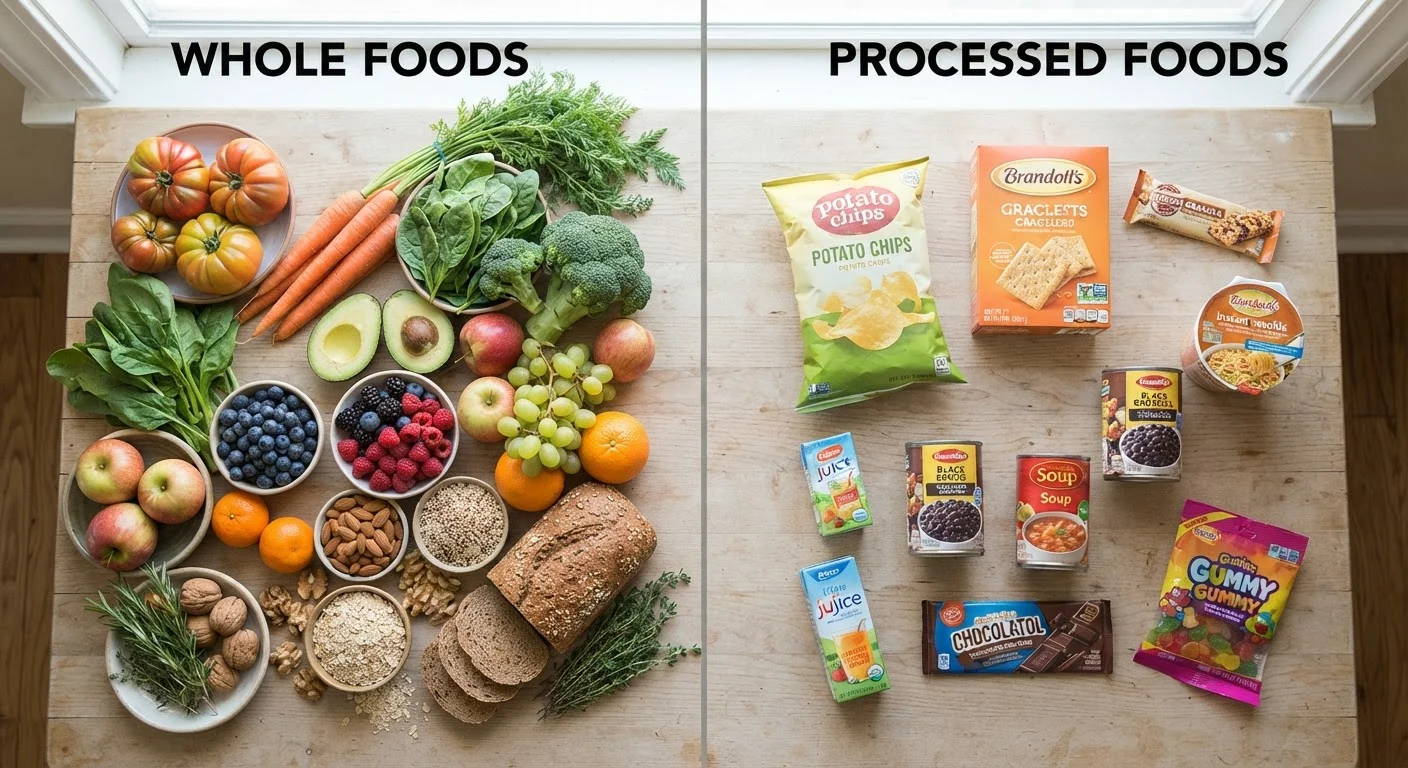
Not all processed food is harmful - frozen peas and canned tomatoes are processed and nutritionally excellent. The concern centers on ultra-processed foods: products industrially engineered with refined grains, added sugars, artificial flavors, and preservatives that have little resemblance to their original ingredients.
Research published in journals including The BMJ and Cell Metabolism suggests that diets high in ultra-processed foods are associated with higher calorie intake, poorer satiety signaling, and a range of long-term health risks - independent of total calorie counts. In other words, the matrix of a food matters, not just its energy content.
One accessible way to gauge processing is to glance at the ingredient list. A shorter list with recognizable ingredients generally signals less processing. For a deeper look at this distinction, see our breakdown of whole foods vs. processed foods. You can also learn how to read those labels more confidently with our nutrition label walkthrough.
Processing Isn't Always the Enemy
Foods like canned beans, frozen spinach, and plain yogurt are all technically processed - but they retain excellent nutritional value and are among the most practical, affordable options available. The key distinction researchers draw is between minimally processed foods and ultra-processed products engineered primarily for palatability and shelf life. Context and degree matter more than the label 'processed' alone.
Putting Food Quality Into Practice
Improving food quality doesn't require perfection or a complete kitchen overhaul. Small, consistent shifts tend to build naturally over time. Some approachable starting points:
- Anchor meals with protein and fiber. Both slow digestion, support fullness, and help stabilize blood sugar. Think beans, eggs, whole grains, vegetables, and fish.
- Choose minimally processed versions of familiar foods. Plain oats instead of flavored packets. Water or unsweetened sparkling water instead of soda. Whole fruit instead of fruit-flavored snacks.
- Notice how different foods make you feel. Energy levels, hunger timing, and mood after meals are real signals worth paying attention to - no app required.
Different eating approaches prioritize food quality in different ways. If you're curious about broader dietary patterns, our overview of eating patterns that make nutritional sense explores several well-studied options side by side.
This article is for general informational purposes only and is not a substitute for personalized medical or dietary advice. Please consult a qualified healthcare professional or registered dietitian for guidance specific to your health needs.