What 'Whole' and 'Processed' Actually Mean
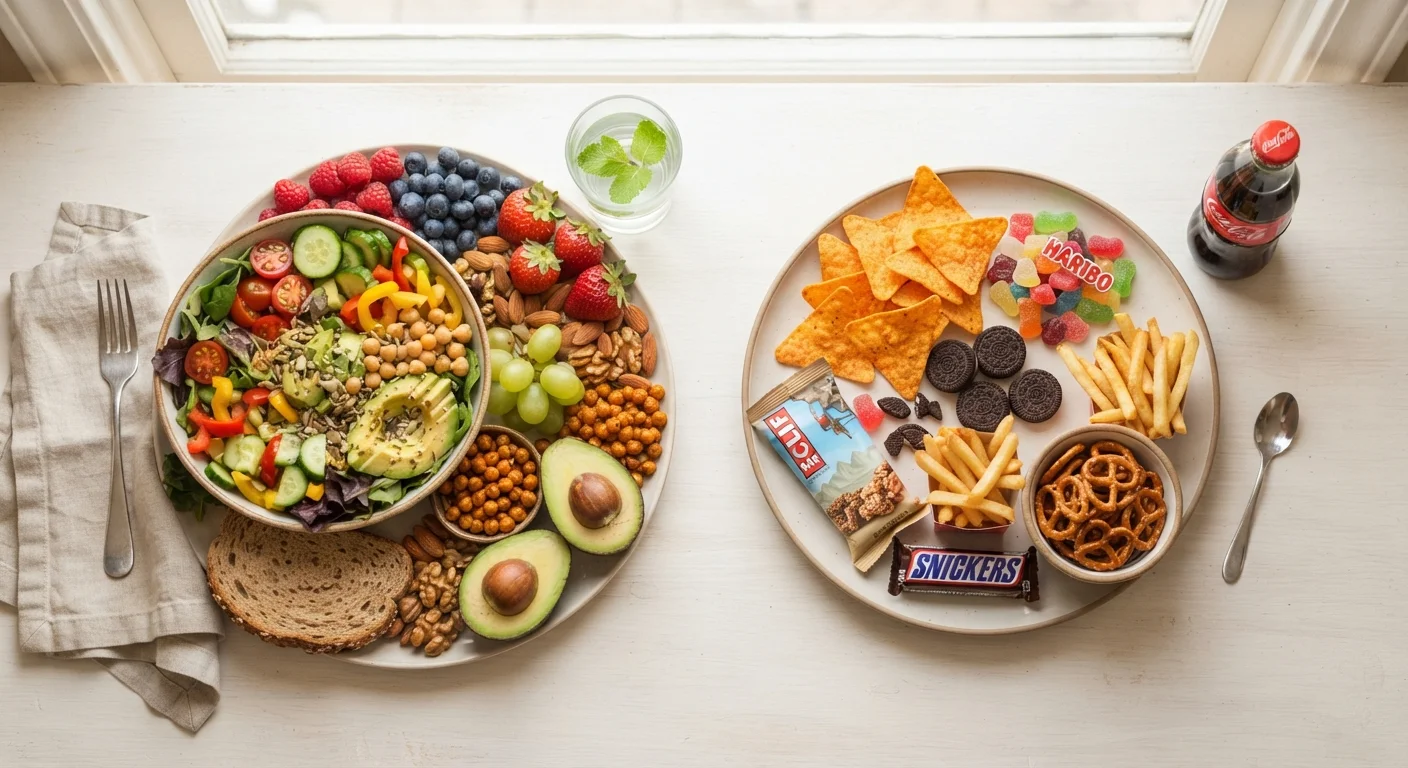
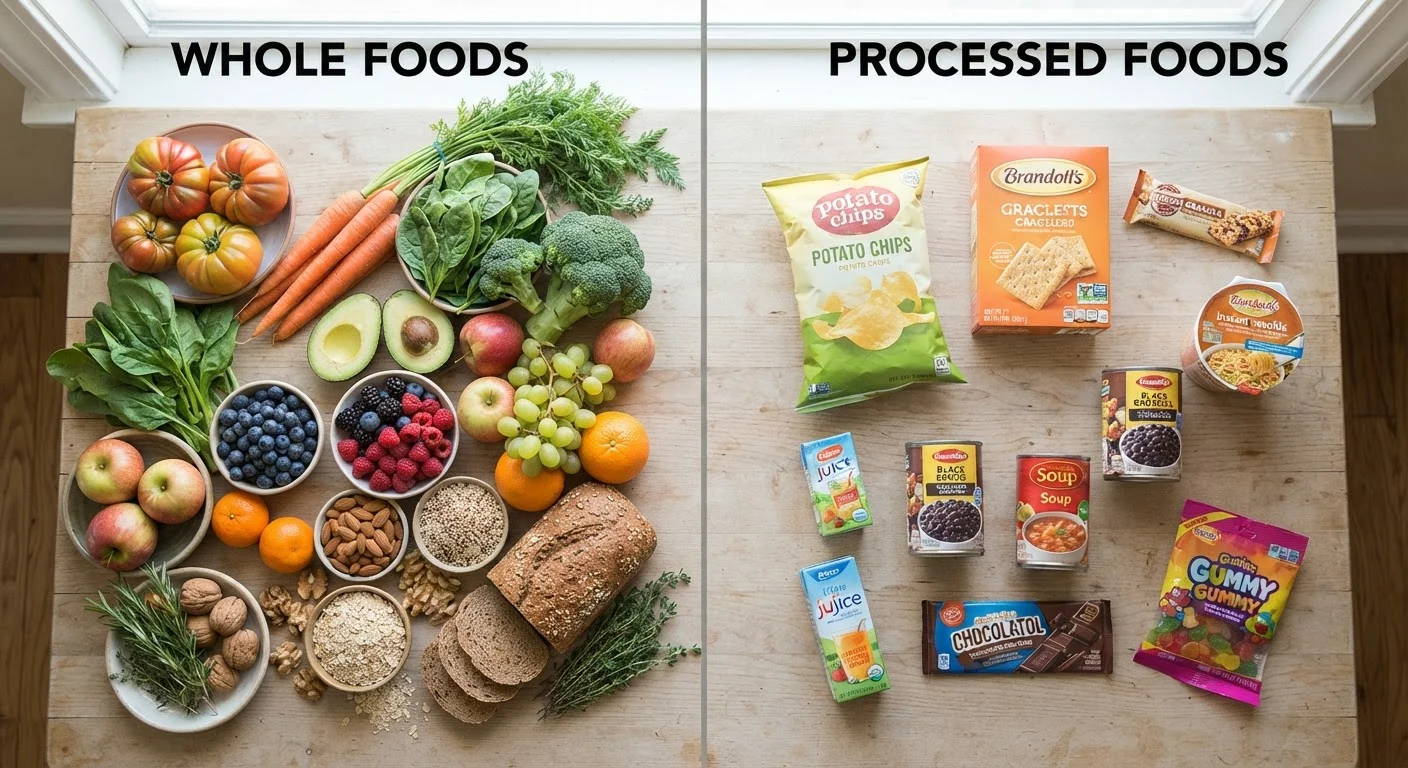
These two terms get thrown around constantly in nutrition conversations, but they're rarely defined clearly. A whole food is generally one that is eaten close to the form in which it exists in nature - an apple, a handful of lentils, a piece of salmon, a boiled egg. It has not been significantly altered, combined with other ingredients, or stripped of its natural nutritional profile.
A processed food is any food that has been changed from its raw state in some way before you eat it. By that broad definition, even pasteurized milk, washed and bagged spinach, or rolled oats counts as processed. This is why the term alone tells you almost nothing useful.
Nutrition researchers often use a classification system called NOVA, which groups foods into four categories based on how much industrial processing they've undergone - from unprocessed or minimally processed foods (fresh vegetables, plain meat) all the way to ultra-processed foods, which are industrially formulated products containing ingredients rarely found in a home kitchen: emulsifiers, flavor enhancers, artificial colorings, and stabilizers. Think packaged pastries, flavored chips, and many fast-food items.
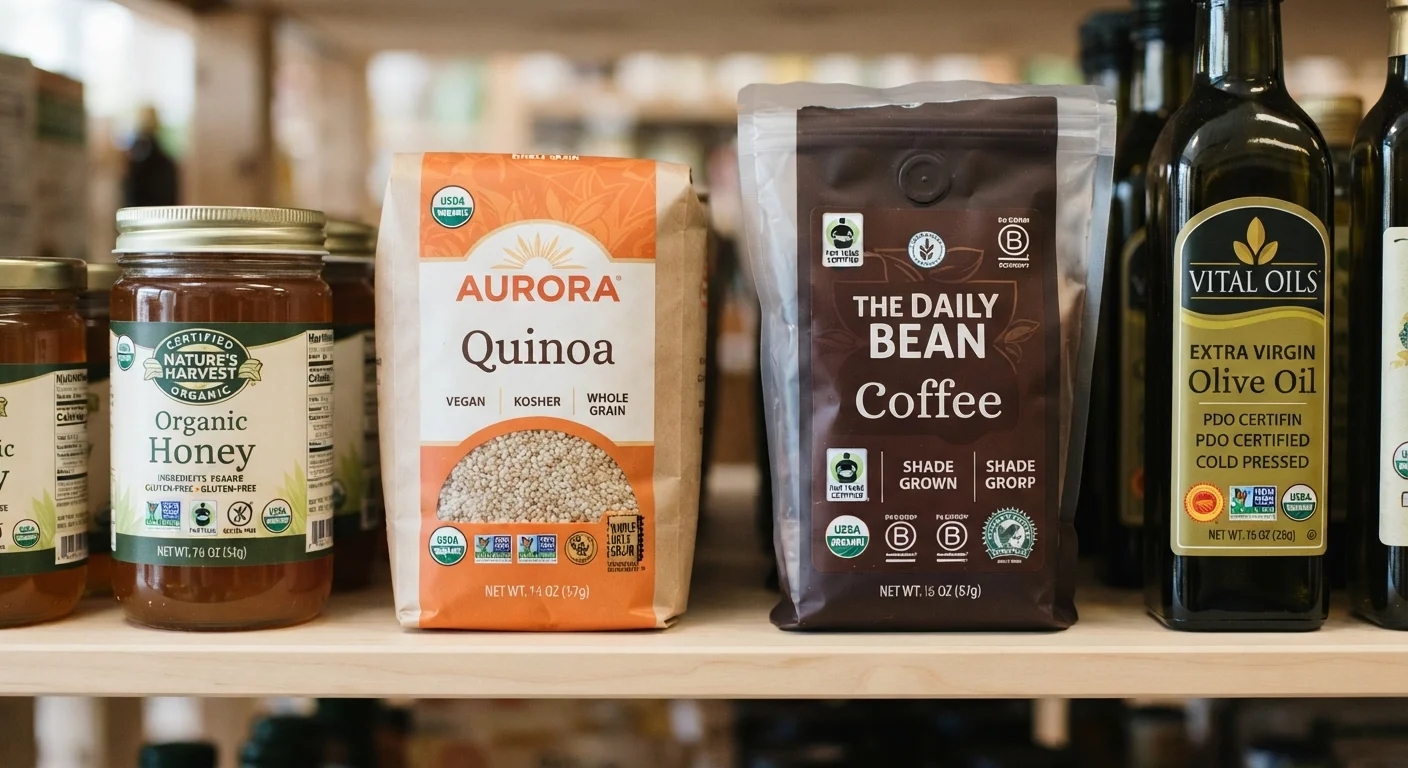
Understanding this spectrum - rather than treating 'processed' as a single category - is where most food literacy begins. To go deeper on what label claims actually signal, see what certification terms mean on packaging.
| Criterion | Whole Foods | Processed Foods |
|---|---|---|
| Definition | Eaten close to natural state | Altered before consumption (broad spectrum) |
| Nutrient density | Generally high; fiber-rich | Varies widely by processing level |
| Added sugars & sodium | Minimal to none | Often high in ultra-processed versions |
| Ingredient list length | One to a few ingredients | Can be lengthy with unfamiliar terms |
| Shelf life & convenience | Often perishable; requires prep | Typically longer shelf life; ready to eat |
| Cost accessibility | Varies; fresh produce can be pricier | Often lower cost per serving |
| Health research association | Linked to better dietary outcomes | Ultra-processed linked to poorer outcomes |
Where the Health Evidence Points
Research consistently draws a distinction not between 'whole' and 'processed' in the broadest sense, but specifically between minimally processed and ultra-processed foods. A large body of observational evidence - including long-running dietary studies - associates high ultra-processed food consumption with greater risk of obesity, cardiovascular disease, type 2 diabetes, and some cancers. These associations don't prove direct causation, but the consistency across many populations is notable.
Whole and minimally processed foods tend to be richer in dietary fiber, which supports digestive health and satiety. They typically contain more micronutrients - vitamins and minerals - that can be lost or diluted during heavy industrial processing. And they generally lack the high levels of added sugar, sodium, and saturated fat that characterize many ultra-processed products.
~58%
Share of US calories from ultra-processed foods
Research published in the BMJ found that ultra-processed foods accounted for roughly 58% of energy intake in a nationally representative US sample.
4x
NOVA processing categories
The NOVA classification system, developed by researchers at the University of São Paulo, divides all foods into four groups based on the extent and purpose of industrial processing.
70%+
Of packaged foods contain added sugar
An analysis of US packaged food products found that more than 70% contained added sweeteners, according to research published in the journal Lancet Diabetes & Endocrinology.
That said, not all processing is harmful. Freezing vegetables preserves most of their nutrients. Fermenting dairy creates yogurt with beneficial probiotics. Canning tomatoes increases the bioavailability of lycopene, an antioxidant. The story is genuinely nuanced. For a closer look at why two seemingly similar foods can affect your body differently, see understanding food quality beyond calories.
How to Tell the Difference in Practice
Marketing language like 'natural,' 'clean,' or 'wholesome' has no regulated meaning in the US and can appear on heavily processed products. The most reliable tool you have is the ingredient list, not the front of the package.
A useful mental shortcut: the shorter and more recognizable the ingredient list, the closer the product sits to the minimally processed end of the spectrum. 'Oats' is one ingredient. 'Oat-based breakfast bar' might have fifteen, including glucose syrup and artificial flavor.
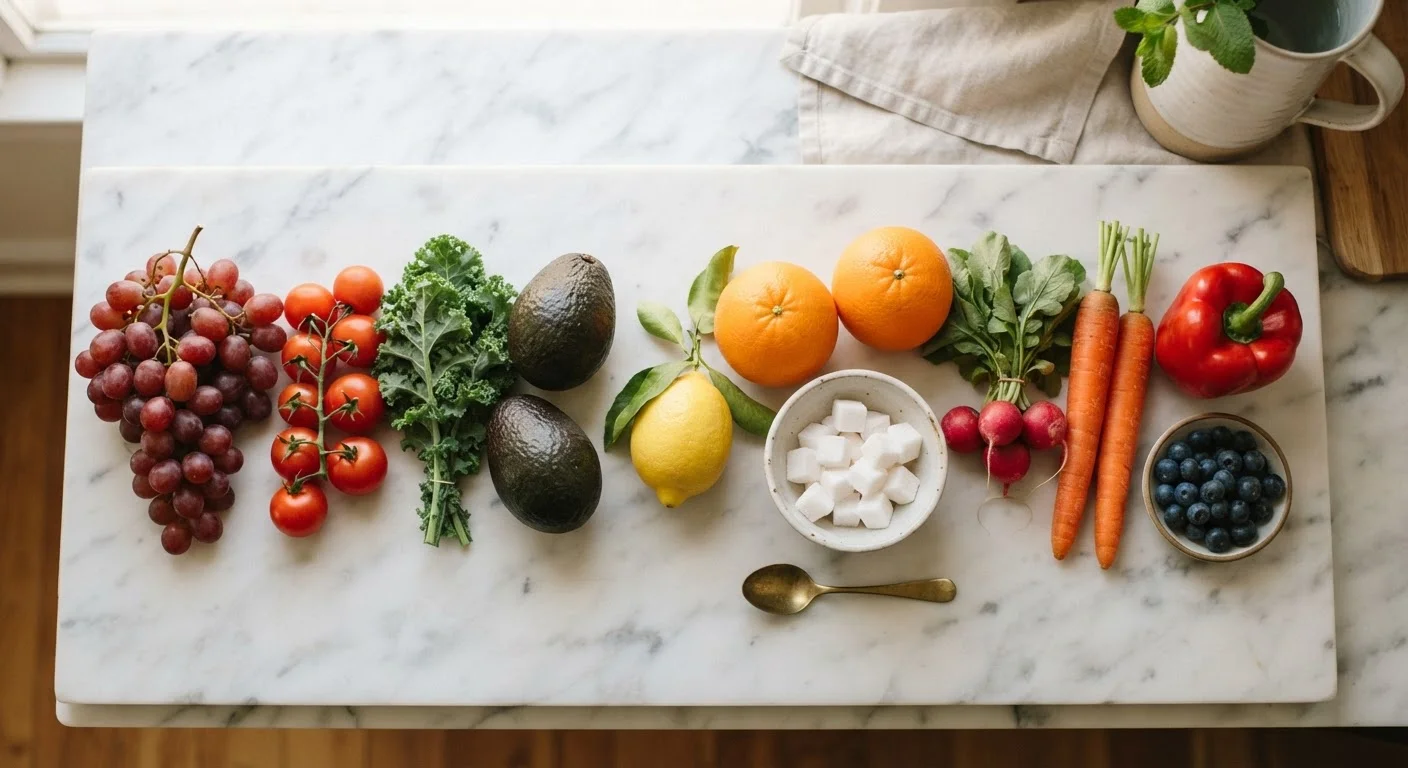
- Added sugars: Look for terms like corn syrup, dextrose, maltose, or cane juice near the top of the ingredient list. Our guide to natural vs. added sugar breaks down exactly where these tend to hide.
- Sodium: Processed foods are a primary source of dietary sodium. A single serving of some canned soups can carry more than half of a day's commonly referenced reference intake.
- Protein sources: Whole food protein sources like legumes, eggs, and plain meat generally come without the additives found in processed protein products. For a detailed breakdown, see comparing animal and plant protein sources.
Learning to navigate the Nutrition Facts label is the practical skill that ties all of this together. Reading a nutrition label without getting lost walks you through the numbers step by step.
Minimally Processed Can Still Be Nutritious
Frozen vegetables, canned fish, plain Greek yogurt, and dried legumes are all technically processed - but they rank among the most nutritionally valuable foods available. Processing method matters more than the label itself. When choosing packaged foods, look for those with minimal added ingredients rather than avoiding all processed options entirely.
This article is for general informational and educational purposes only and is not a substitute for personalized nutrition or medical advice. Consult a registered dietitian or qualified healthcare professional for guidance specific to your health needs.