Why Storage Vocabulary Matters
If you have ever felt lost reading an organization article or confused by advice from a professional organizer, the problem often comes down to unfamiliar terminology. Words like dead space, zoning, and flow get used constantly in home-organization conversations - but they are rarely defined for newcomers.
This reference guide is built for everyday homeowners who want a plain-language glossary they can return to whenever they encounter an unfamiliar term. Whether you are starting your first organization project or redesigning a room you have used for years, knowing the language gives you a stronger foundation.
These Terms Apply to Every Room
Whether you are tackling a closet, garage, kitchen, or bathroom, this vocabulary applies universally. The same concepts of zoning, flow, and dead space appear in professional organizer consultations, interior design plans, and DIY projects alike. Familiarity with the terms helps you read instructions, watch tutorials, and communicate with contractors more confidently.
Core Storage Terms from A to Z
Below are the key terms you are most likely to encounter when planning or executing a home storage project. Each one is defined in plain English with a brief note on why it matters in practice.
Beyond these definitions, two concepts deserve extra attention because they shape nearly every storage decision you will make: zoning and dead space.
Zoning in Practice
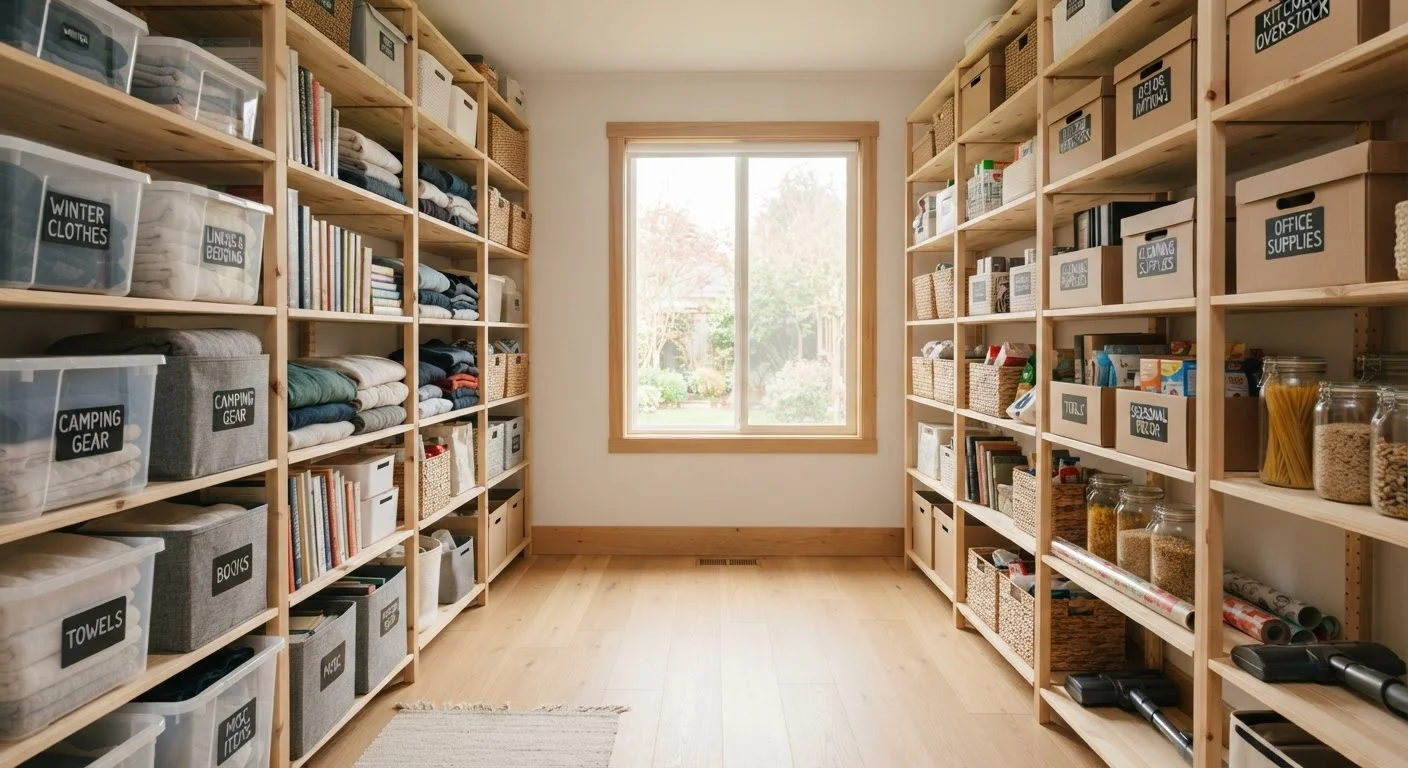
Zoning works best when it mirrors how you actually use a room - not how you think you should use it. If you always pay bills at the kitchen table, a small bill-paying zone there makes more sense than a dedicated home office you never visit. Good zones reduce searching time and make it easier for everyone in a household to maintain systems. See our guide on organizing shared spaces for tips on building zones multiple people will respect.
Turning Dead Space into Useful Space
Dead space is not wasted space - it is waiting space. Common examples include the area under a staircase, deep cabinet corners, the wall above a toilet, and the space between the top of cabinets and the ceiling. Shallow pull-out drawers, lazy Susans, tension rods, and ceiling-mounted hooks are all tools that activate dead space without major renovation. Explore the vertical vs. floor space guide for a detailed look at making height work for you.
Additional Terms Worth Knowing
A few more terms round out the vocabulary set you will encounter most often:
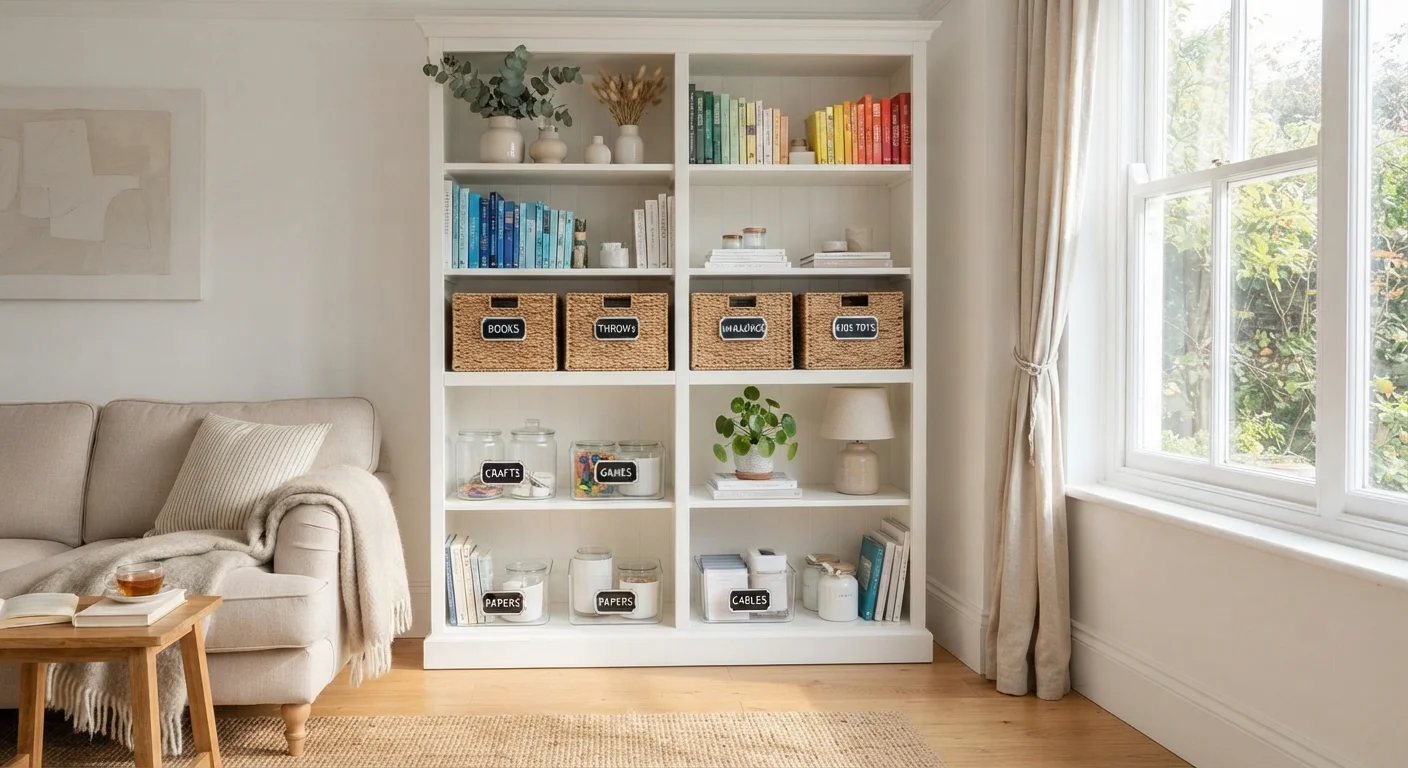
- Open Storage: Shelving or surfaces where items are visible without opening a door. Useful for frequently accessed items but requires ongoing tidiness.
- Closed Storage: Cabinets, drawers, and bins that conceal contents. Better for items used less frequently or for spaces where visual calm matters most.
- Containerizing: Placing loose items inside a bin, basket, or box so they behave as a single unit. This makes categories easier to find, move, and return.
- First-In, First-Out (FIFO): A rotation method - borrowed from food service - where older items are placed at the front so they get used before newer ones. Especially helpful in pantries and medicine cabinets.
- Friction: Anything that makes putting an item away harder than leaving it out. Reducing friction - for example, using open bins instead of lidded boxes for everyday items - makes systems easier to maintain.
| Most overlooked dead space | Under-stair area and cabinet corners |
| Common decanting containers | Glass jars, stackable bins, uniform canisters |
| Recommended drawer clearance | At least 18-24 inches in front of drawer face |
| Zoning benefit | Reduces daily decision-making and searching time |
| Editing frequency (general guidance) | Once or twice per year per major storage area |
For practical guidance on which physical storage formats work best room by room, see our article on choosing between drawers, shelves, and bins. If you are working with limited square footage, the small-space organization guide applies these concepts at a compact scale.