Why Organization Feels So Hard to Start
Most people don't struggle with organization because they're lazy or careless - they struggle because they don't know where to begin. A home full of accumulated belongings can feel like an overwhelming, unsolvable problem, especially when every room seems equally chaotic.
The good news: organization is a skill, not a personality trait. It can be learned and improved in stages. Before diving into any system, it helps to understand a few foundational ideas that experienced organizers rely on - ideas that aren't always obvious to beginners.
You'll also want to separate fact from fiction early. Some widely repeated advice about tidying up can actually backfire. Our article on organizing myths that keep your home messier walks through the most common misconceptions worth dropping before you start.
Decluttering
The process of deciding which items in your home to keep, donate, or discard - before any organizing system is put in place.
Designated home
A specific, consistent location where a particular item always lives. Items without a designated home tend to drift and create clutter.
Zoning
Grouping items by activity or purpose in a defined area of a room, so everything needed for a task is stored in the same zone.
One-in, one-out rule
A habit where every new item brought into the home is paired with removing a comparable item, keeping overall volume from growing.
Dead space
Areas in a home that are difficult to access or rarely used - such as the top shelf of a deep closet - that can often be repurposed for storage.
Reset routine
A short daily or weekly habit of returning items to their designated homes to prevent clutter from accumulating between deeper tidying sessions.
The Core Principle: Sort Before You Store
The single most important rule in home organization: never buy storage containers before you've sorted through your belongings. It sounds counterintuitive when your instinct is to contain the mess, but buying bins for items you haven't yet evaluated means you'll end up storing things you don't actually want or need.
The process always follows this sequence:
- Sort: Go through every item in the space and decide whether to keep, donate, recycle, or discard it.
- Group: Cluster the items you're keeping by how and when you use them - not just by category.
- Assign locations: Give each group a consistent home based on frequency of use and logical proximity.
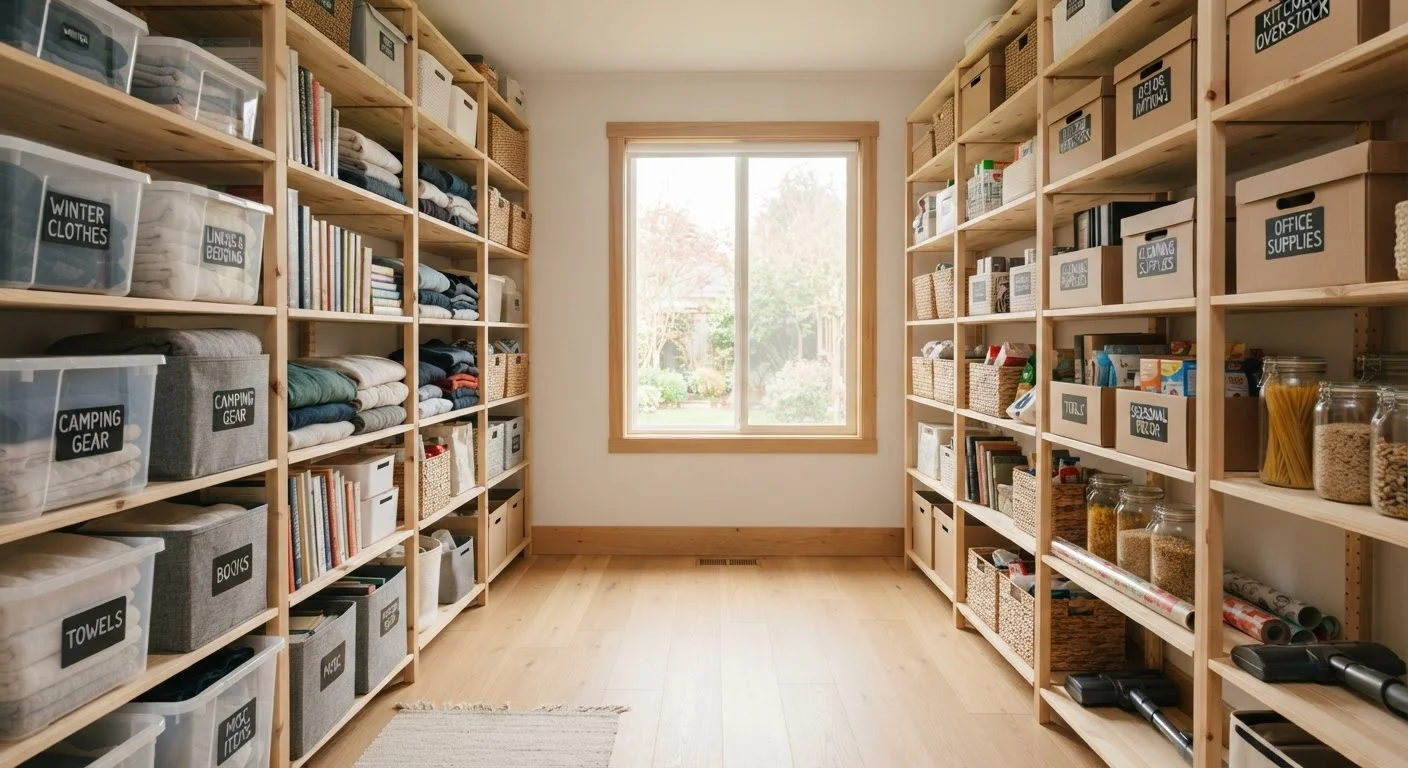
- Contain: Only now, measure the space and select appropriate storage solutions.
If you're unfamiliar with storage terminology - zones, dead space, vertical storage - our plain-language storage glossary is a useful companion reference.
Measure Before You Shop
Once you've sorted and grouped your items, measure the shelves, drawers, and cabinets you plan to use before purchasing any containers. A bin that's one inch too tall or too wide is a common, avoidable frustration. Bring your measurements - and ideally a rough item count - when you go shopping.
Choosing a Starting Point That Works for You
Trying to organize an entire home at once is a reliable path to burnout. Instead, choose a starting point that is genuinely manageable - ideally a single drawer, one shelf, or a small closet. Success in a contained area gives you both a working system to reference and the motivation to continue.
A few practical ways to choose where to start:
- High friction first: Target the spot that causes the most daily frustration - the cluttered entryway, the junk drawer, the bathroom cabinet where things tumble out.
- Easiest win: If motivation is low, start with the smallest, least emotionally charged space you can find. A linen closet is often easier than a bedroom with sentimental items.
- Room by room: Some people find it helpful to fully complete one room before moving to the next. Our guide on starting a declutter one room at a time offers a low-pressure framework for exactly this approach.
If you're working with a smaller home or apartment, the strategies may look a little different. Small-space organization requires prioritizing vertical storage and multi-use furniture in ways that larger homes don't demand.
Building Habits That Last
Organization is not a one-time project - it's an ongoing practice. Even the most thoughtfully designed system will unravel if it isn't maintained with consistent daily habits. The most durable organizing principle is simple: return items to their designated home immediately after use.
A few habit-building strategies that help beginners maintain progress:
- One-in, one-out: When a new item enters the home, a comparable item leaves. This prevents the slow accumulation that leads to clutter over time.
- Reset routines: A brief 10-minute tidy at the end of each day - returning items, clearing surfaces - prevents small messes from compounding.
- Regular reassessment: Seasons change, households change, and your needs change. Schedule a short review of each area two to four times a year to keep systems relevant.
Avoid Over-Organizing at the Start
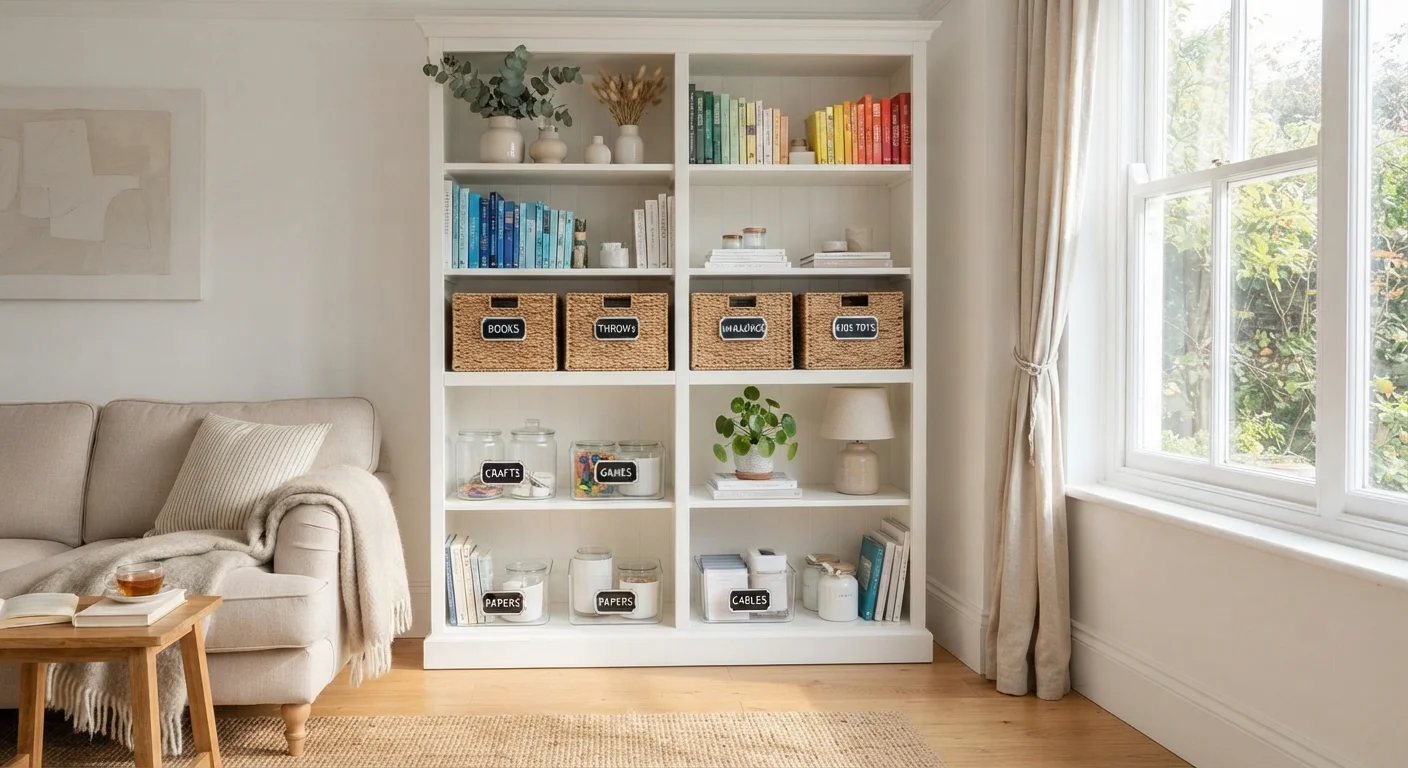
Elaborate labeling systems and color-coded categories can feel productive but often become burdens to maintain. Start with the simplest system that works - you can always refine it later. Over-engineered systems are a common reason people abandon organizing efforts within a few weeks.
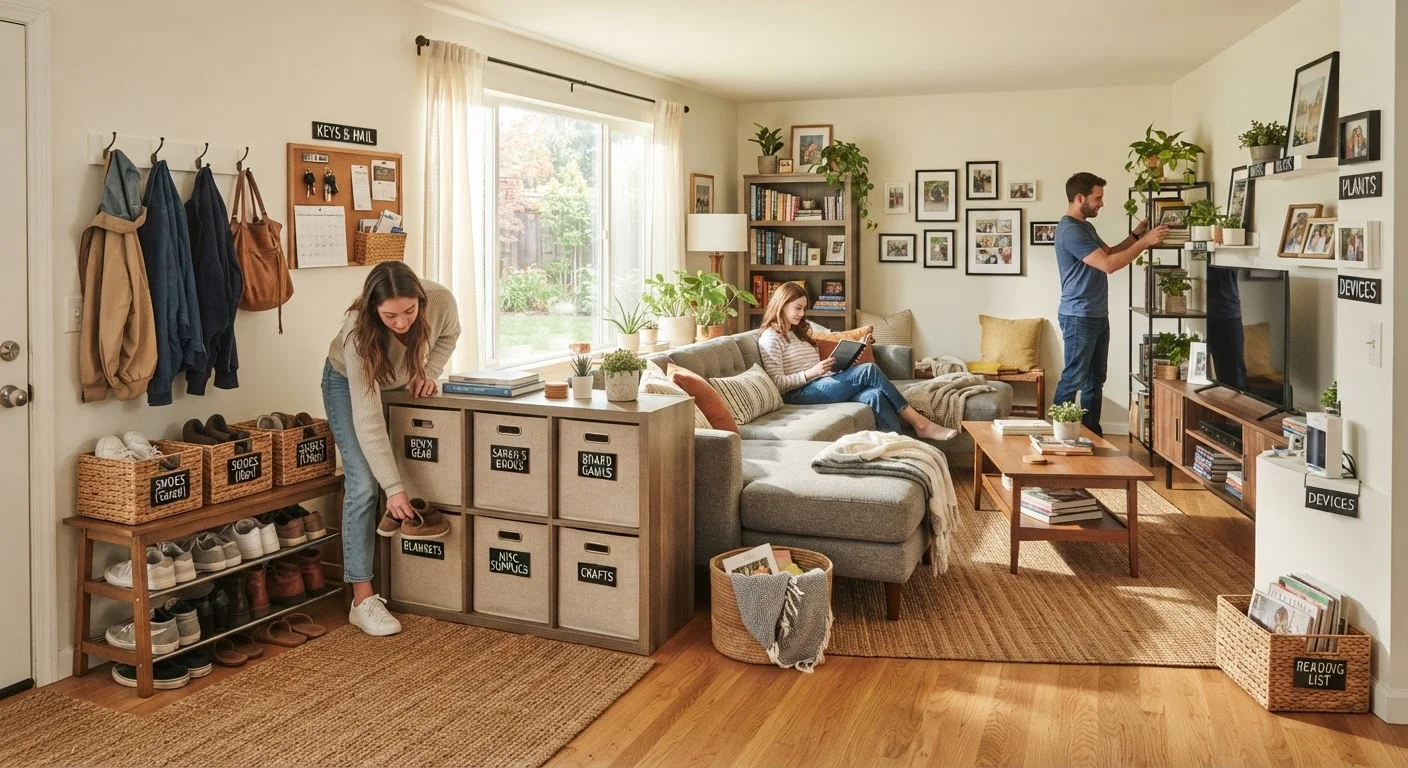
If you live with others, building shared habits requires coordination. Organization works best when every household member agrees on where things belong and why. For guidance on navigating different tidiness standards, see organizing a home with multiple people.
Common Mistakes to Avoid Early On
Even well-intentioned beginners run into the same stumbling blocks. Recognizing these pitfalls early saves time, money, and frustration.
- Buying before sorting
- As covered earlier, purchasing containers before decluttering almost always results in wasted money and overstuffed bins.
- Aiming for perfection
- An organized home doesn't need to look like a catalog. Systems that are 80% tidy and 100% functional beat systems that collapse under the pressure of unrealistic standards.
- Ignoring your actual habits
- If you always drop your keys on the kitchen counter, place a small dish there instead of insisting on a hook by the door. Work with your habits, not against them.
- Tackling sentimental items first
- Items with emotional weight - photos, inherited objects, keepsakes - require more mental energy to sort. Save these for after you've built confidence with lower-stakes categories.
Home organization connects naturally to other areas of home life. If you're also thinking through home improvement projects alongside your organizing work, our overview of essential hand tools for beginners is a helpful complement as you get more comfortable in your space.