The Organizing Mindset for Small Spaces
Organizing a small home is less about finding the perfect storage product and more about deciding what genuinely belongs in your space. Every item you own competes for limited square footage, so the first question to ask before organizing anything is: does this still serve me?
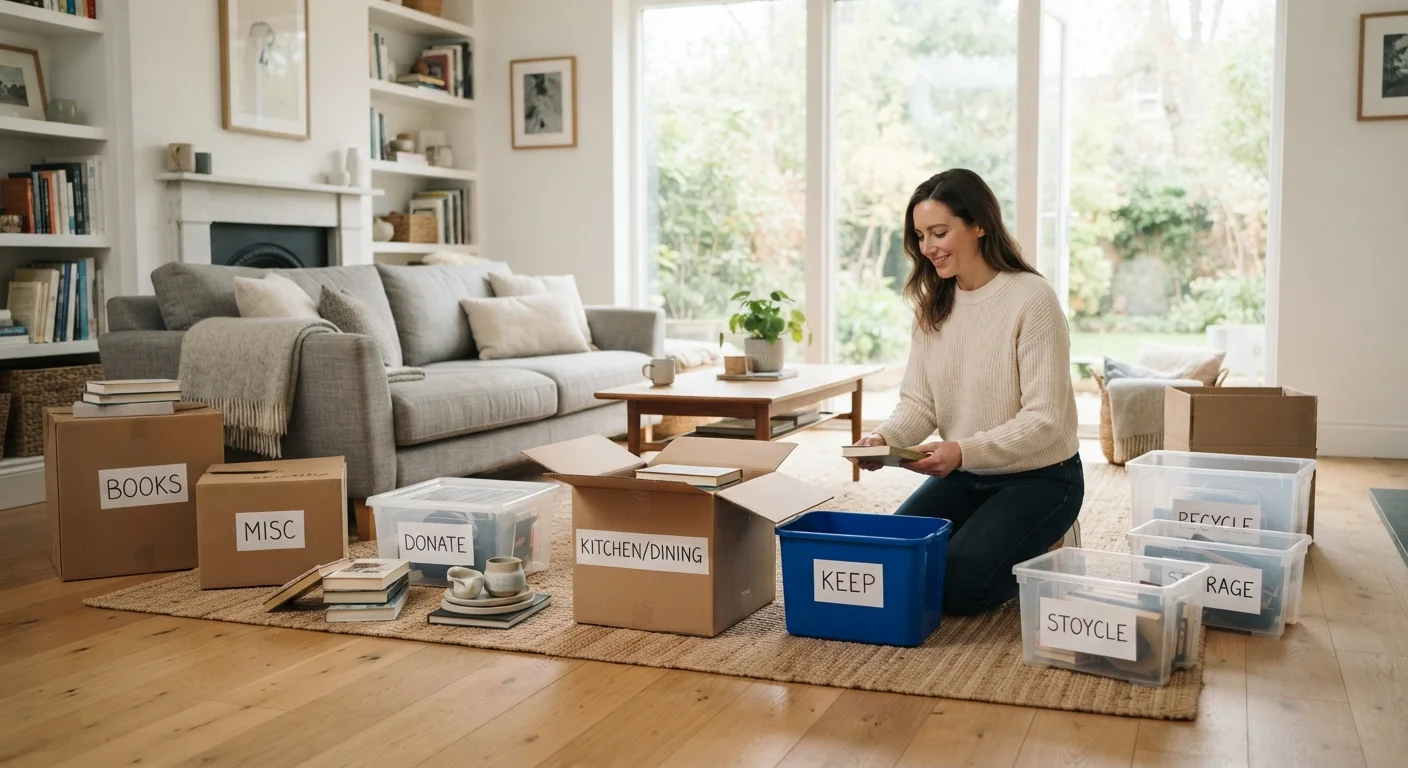
Before rearranging a single shelf, work through a honest declutter. If tackling the whole home at once feels paralyzing, start with one room - our guide on starting a declutter room by room walks through a low-pressure method that prevents burnout.
Once you've reduced what you own, organizing what remains becomes far simpler. The goal isn't a showroom - it's a space where everything has a logical home and can be returned there easily.
Before buying any storage product, photograph your space and list exactly what you need to store. Most small-space clutter is caused by owning solutions before identifying the problem.
Purchasing bins, baskets, and organizers before decluttering tends to permanently enshrine clutter rather than resolve it - a common mistake that wastes both money and space.
When in doubt about furniture scale, use painter's tape on the floor to mock up the footprint before purchasing. It takes five minutes and prevents costly returns.
Furniture that is even six inches too wide can disrupt traffic flow in a small room, making the space feel cramped and harder to navigate daily.
Think Vertical: Walls Are Underused Storage
In a compact home, floor space is the scarcest resource. Shifting your attention upward - to walls, door backs, and ceiling-adjacent areas - opens up significant storage without sacrificing room to move.
- Floating shelves above desks, sofas, or beds hold books, baskets, and display items without occupying floor space.
- Door-back organizers on pantry, closet, and bathroom doors are ideal for cleaning supplies, shoes, or accessories.
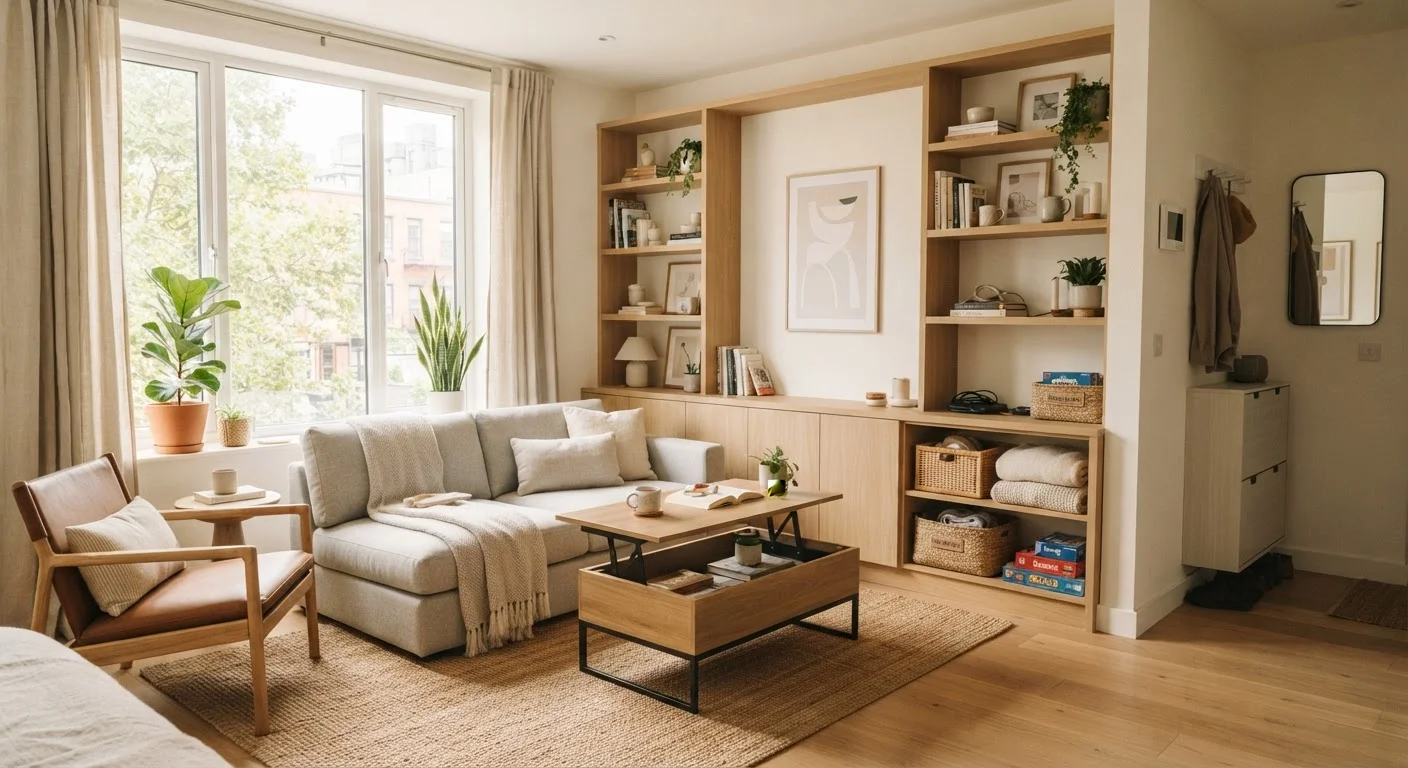
- Floor-to-ceiling shelving in a living room or hallway makes use of space that would otherwise be air.
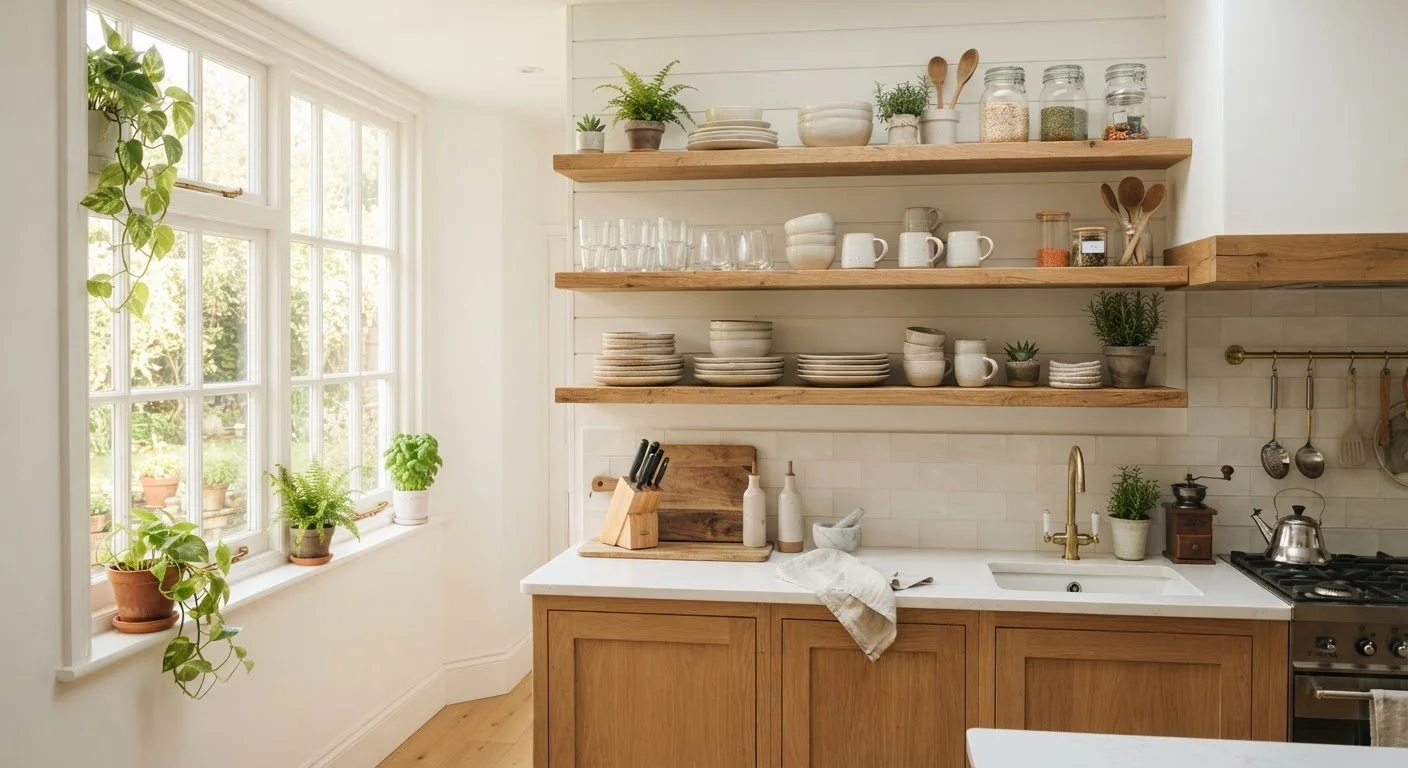
Before committing to open shelving, it's worth understanding the trade-offs. Our article on open shelving at home covers what looks great in photos versus what works in daily life.
~38%
US households living in homes under 1,400 sq ft
According to U.S. Census data, a significant share of American households occupy relatively compact homes, making space-efficient organization a widespread practical need.
80%
Of stored items rarely or never used
Professional organizers commonly cite the observation that the vast majority of stored possessions go unused for months or years, highlighting the value of regular decluttering.
Multi-Use Furniture: Every Piece Should Earn Its Place
In a small home, furniture that serves only one purpose is a luxury you may not be able to afford. Pieces that pull double or triple duty reduce the total count of items in your space while keeping function high.
Common examples include:
- Storage ottomans that function as seating, a coffee table surface, and a blanket chest.
- Bed frames with drawers underneath, replacing a separate dresser in a small bedroom.
- Folding or extendable dining tables that expand for guests and compress for everyday use.
- Sofas with pull-out beds in studios or guest-room hybrids.
When shopping for furniture, measure your space carefully before purchasing. A piece that looks proportional online can overwhelm a small room in person.
Measure Twice Before You Buy
Write down your room dimensions - including ceiling height and any architectural obstacles like radiators or door swings - before shopping for furniture or shelving. Bringing a measuring tape to the store or entering exact dimensions into an online cart prevents the most common and frustrating small-space mistake: a piece that simply doesn't fit.
Zone Your Space Without Walls
Studios and open-plan apartments present a particular challenge: without walls defining rooms, everything blurs together. Creating visual and functional zones gives your brain cues about where different activities belong - and that reduces the mental load of living in a small space.
Practical zoning techniques include:
- Area rugs
- Anchor a seating area or sleeping area distinctly from surrounding space.
- Bookshelves or room dividers
- A low bookcase placed perpendicular to a wall can separate a home office corner from a living area.
- Lighting
- Different light sources - a floor lamp for reading, pendant lighting over a dining table - signal distinct zones without any construction.
- Color or texture
- An accent wall or a distinct rug color can visually define a sleeping nook in a studio.
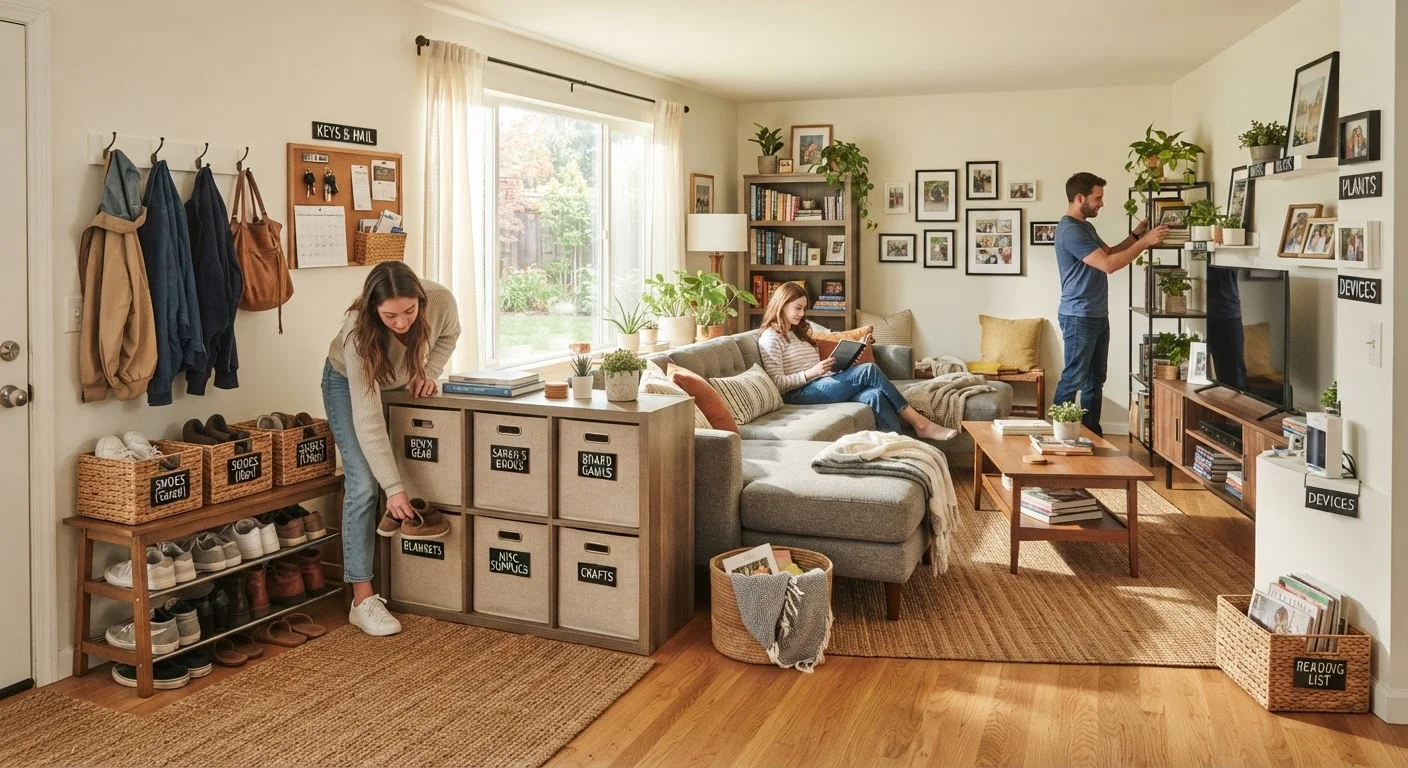
If others share your home, zoning becomes especially important for managing different habits and routines. See our guidance on organizing a home with multiple people for strategies that work when not everyone is on the same page.
Room-by-Room Strategies
Different rooms in a small home have distinct organizing challenges. Here's a focused approach to each:
Kitchen
Counter space is precious. Store only what you use daily on the counter; everything else goes in cabinets or on a wall-mounted magnetic strip for knives and tools. Use stackable containers in pantry cabinets to prevent items from disappearing behind one another.
Bedroom
Under-bed storage is one of the highest-yield moves in a small bedroom. Shallow bins on casters can hold off-season clothing, extra linens, or shoes. Keep the surface of nightstands clear - one lamp and one book, maximum.
Bathroom
A tiered caddy inside the shower, a tension-rod shelf under the sink, and a wall-mounted medicine cabinet all add storage without expanding footprint. Audit toiletries regularly - expired or unused products are surprisingly common bathroom clutter.
Entryway
Even a narrow hallway benefits from a wall hook rail, a slim shoe bench with storage underneath, and a small tray or bin for keys and mail. An organized entry sets the tone for the whole home.
Renter Considerations
If you rent your home, check your lease before drilling into walls or making permanent modifications. Many landlords permit removable adhesive hooks and tension-based organizers, which offer significant storage without causing damage. Always document the condition of walls before installing anything, even temporarily.
Maintaining Order in a Small Home
Small spaces show clutter faster than large ones - there's simply nowhere for disorder to hide. The most effective maintenance strategy isn't a weekend deep-clean; it's a collection of short daily habits that stop mess from accumulating.
- One-in, one-out rule: When something new enters the home, something of similar size leaves. This keeps possessions from slowly expanding beyond what your space can hold.
- Reset routine: A 10-minute evening sweep - returning items to their designated spots - resets the space before the next day begins.
- Visible storage for high-use items: If something is used every day, it should be easy to access and easy to put away. Friction in returning items is the most common reason clutter builds.
If your small home extends outdoors to a balcony or patio, those spaces can carry some of the load. Container gardening and vertical setups, for example, can transform a balcony into a functional extension of your home - explore options in our small-space vegetable garden guide.
Finally, when small upgrades are needed to support better organization - installing shelving, adding hooks, or improving storage fixtures - it's worth knowing which changes make the biggest difference. Our piece on small upgrades that make an outsized difference highlights targeted improvements that go a long way in any home.
Room Measurement Worksheet
A simple printable template for recording room dimensions, ceiling heights, and obstacle locations before planning furniture layouts or storage purchases.
Declutter Decision Guide
A step-by-step framework for deciding what to keep, donate, or discard - particularly useful before starting any small-space organization project.
Home Organization Community Forums
Active online communities where homeowners share before-and-after photos, ask for advice, and discuss practical solutions for small-space living challenges.