What Is Impulse Buying?
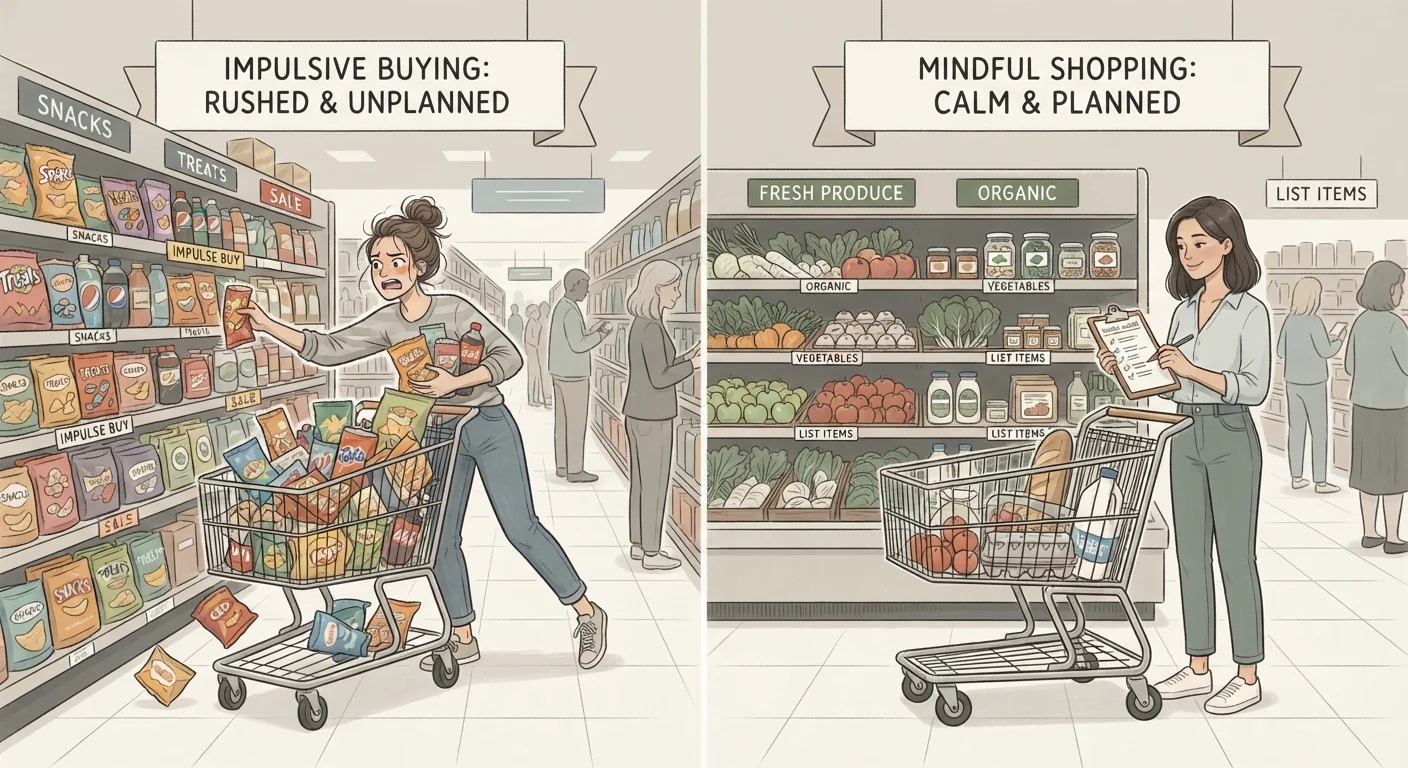
Impulse buying happens when you decide to purchase something without planning to beforehand. The trigger is almost always emotional: excitement about a sale, the fear of missing out, boredom, stress, or simply the visual appeal of a product placed strategically in front of you.
Retailers design environments - physical and digital - to encourage exactly this. Checkout lanes, limited-time countdown timers, and "frequently bought together" suggestions all exploit the same psychological mechanisms. Understanding those triggers is the first step to resisting them. For a deeper look at the mental patterns at play, see why we overspend and how to counter it.
Impulse purchases aren't always expensive - a $4 snack at the register qualifies - but the habit compounds over time and can quietly derail even a careful budget.
~33%
Share of purchases that are unplanned
Consumer behavior studies broadly estimate that roughly one-third of purchases made in retail environments were not planned before entering the store.
3 in 5
Shoppers who report impulse-buy regret
Surveys by consumer research organizations have found that a majority of adults report regretting at least some unplanned purchases within a week of making them.
What Is Considered Purchasing?
A considered purchase starts with a clearly identified need. You know what problem you're trying to solve before you start shopping. From there, the process typically involves comparing options, reading independent information, checking whether the item fits your budget, and - often - giving yourself time before committing.
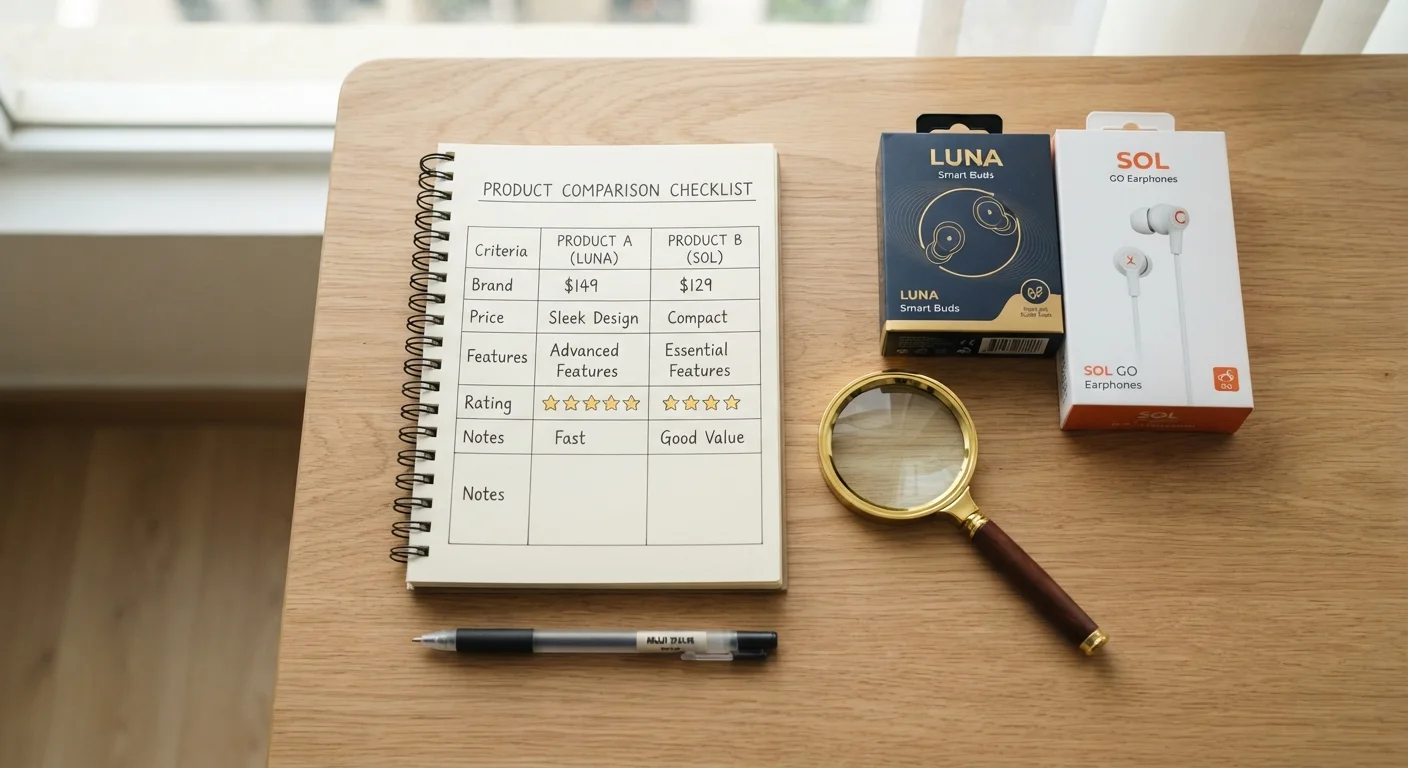
This doesn't mean considered purchasing is slow or joyless. It just means the decision is guided by logic rather than mood. A structured checklist for comparing options can make this process fast and repeatable without requiring hours of research.
Considered buyers tend to report higher satisfaction with their purchases because the item was chosen to meet a real, defined need - not to satisfy a fleeting impulse.
| Criterion | Impulse Buying | Considered Purchasing |
|---|---|---|
| Decision trigger | Emotion, novelty, or external cue | Identified need or planned goal |
| Timeframe | Seconds to minutes | Hours, days, or longer |
| Research involved | Little to none | Comparison of options and fit |
| Budget alignment | Often unplanned | Typically pre-budgeted |
| Post-purchase satisfaction | Frequently lower; regret common | Generally higher; regret less common |
| Retailer influence | High - design encourages it | Lower - consumer sets the agenda |
The Real Cost of Skipping the Pause
The financial cost of impulse buying is rarely visible in any single transaction. It accumulates. Estimates from consumer behavior research consistently find that unplanned purchases represent a significant share of total household spending - though the exact figures vary by study methodology and household income level.
Beyond the money, there's a cognitive cost: decision fatigue, guilt, and the mental load of managing items you didn't actually need. These aren't trivial. They affect how you feel about your finances generally and can make budgeting feel like an uphill battle.
One of the most reliable tools for breaking the cycle is a deliberate pause. Strategies like the 24-hour rule - where you wait a day before completing a non-essential purchase - have strong anecdotal and behavioral support. Explore a range of pause tactics that curb impulse buying to find one that fits your habits.
Low-Stakes vs. High-Stakes Decisions
Not every purchase warrants the same level of deliberation. A $5 item bought on a whim carries minimal financial risk; a $500 purchase made impulsively is a different matter. A useful personal practice is to set your own dollar threshold above which you always pause - and below which you give yourself permission to decide freely. This keeps the process sustainable rather than exhausting.
Building a More Intentional Shopping Habit
The goal isn't to eliminate quick purchases - it's to make sure that when you do buy fast, it's a conscious choice rather than an automatic one. That distinction matters.
A practical starting point: before any purchase above a personal threshold you set (say, $30), run through a short mental checklist. Do I need this? Do I already own something that does the same job? Have I compared at least one alternative? Can this wait a week?
For online shopping specifically - where friction is deliberately minimized to encourage faster checkout - a pre-purchase sanity check is especially useful. It reintroduces the friction that impulse-purchase design tries to remove.
Over time, considered purchasing becomes a habit rather than a chore. Your budget becomes more predictable, and shopping becomes something you feel good about - not something you have to recover from.