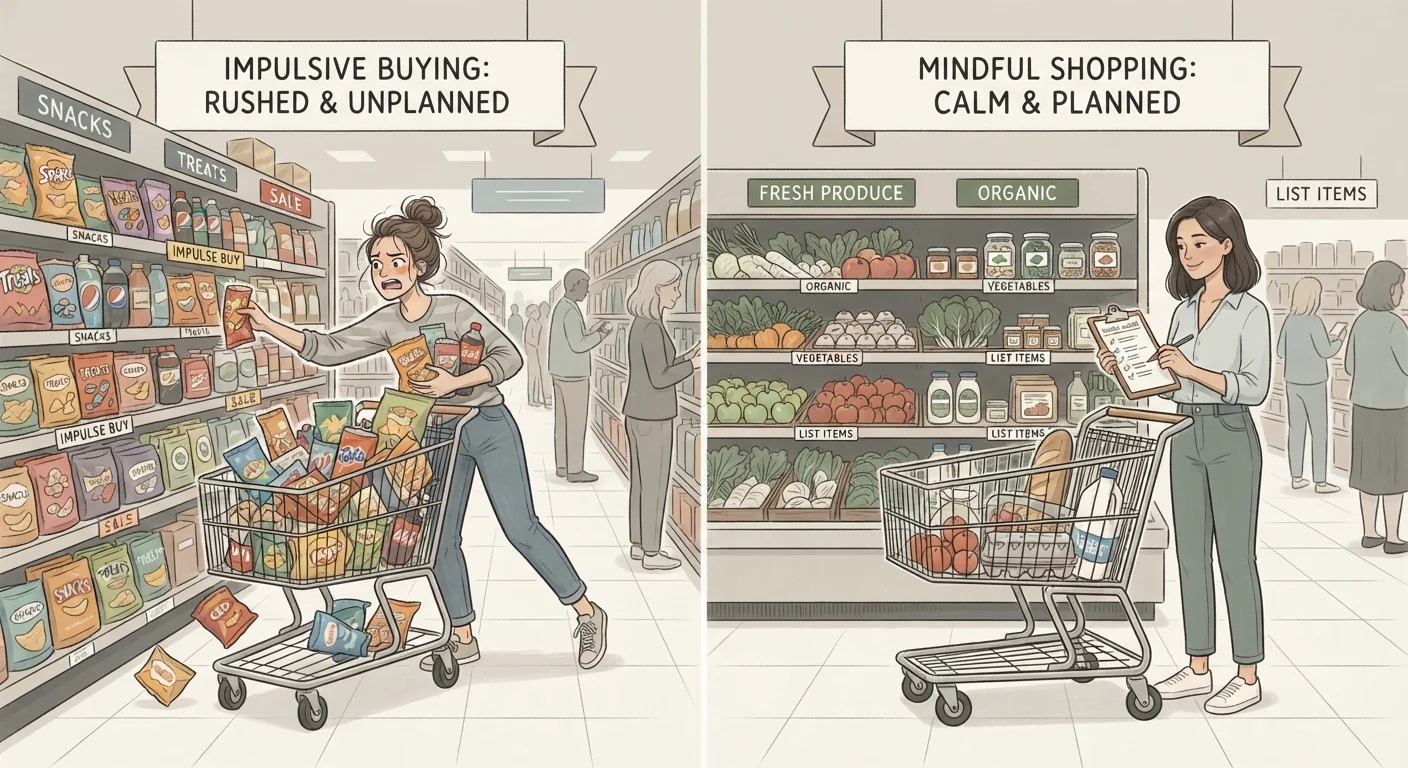

The Mechanics of Artificial Pressure
When you land on a product page and see a red countdown clock ticking down or a banner announcing "Only 2 items left in stock," your brain doesn't respond with detached curiosity - it responds with mild alarm. That reaction is intentional. Retailers and platforms engineer these signals specifically to activate the part of your brain that prioritizes avoiding loss over gaining something new.
The psychological term for this is loss aversion. Research in behavioral economics has consistently found that the pain of losing something feels roughly twice as intense as the pleasure of gaining something of equal value. Urgency tactics are calibrated to tap directly into that asymmetry.
Common artificial pressure formats include:
- Countdown timers - clocks showing minutes or hours until a price supposedly expires
- Low-stock warnings - messages like "Only 4 left" or "Selling fast"
- Social proof nudges - "23 people are looking at this right now" or "Bought 12 times today"
- Flash sale banners - limited windows that create a sense of a closing opportunity
Each format shares the same underlying mechanism: it repositions the decision from "Do I want this?" to "Will I lose this?" - and that reframing reliably speeds up purchasing behavior.
2×
Loss aversion intensity vs. equivalent gain
Behavioral economics research by Kahneman and Tversky found that losses feel approximately twice as psychologically significant as equivalent gains, a core reason urgency tactics are effective.
~60%
Online shoppers who've felt rushed into a purchase
Consumer behavior surveys have consistently found that a substantial majority of online shoppers report having made at least one purchase they later regretted after feeling time-pressured.
24 hrs
Waiting period that significantly reduces impulse buys
Consumer research and behavioral finance guidance commonly cite a 24-hour delay as a practical threshold for reducing emotionally driven, unplanned purchases.
Why Your Brain Struggles to Ignore These Signals
Understanding that a tactic is artificial doesn't automatically defuse it. This is one of the more frustrating aspects of these techniques - intellectual awareness and emotional response operate on different tracks. You can know, on a rational level, that a countdown timer resets on page refresh and still feel the pull of it.
This happens because urgency signals route through fast, automatic thinking before your deliberate reasoning has a chance to intervene. Evolutionary psychology offers a partial explanation: in environments where resources were genuinely scarce, responding quickly to scarcity cues had real survival value. That wiring hasn't disappeared just because we're shopping online.
“The best way to make people act fast is to make them feel they're about to lose something. Scarcity is one of the most powerful motivators in human psychology - and one of the easiest to simulate.”
— Robert Cialdini, Professor Emeritus of Psychology and Marketing, Arizona State University; author of 'Influence'
The consequence for shoppers is a compressed decision window - exactly what these tactics are designed to create. When you feel rushed, you're less likely to compare alternatives, question whether you truly need the item, or check whether the same product is available elsewhere at a different price. This connects directly to the broader patterns explored in why we overspend: urgency is one of the most reliable emotional levers retailers use to bypass considered thinking.
How to Recognize Artificial Versus Genuine Scarcity
Not every urgency signal is manufactured. Genuine constraints exist - limited production runs, event capacity, or a price genuinely tied to a booking window. The practical skill is learning to tell them apart quickly.
Signs a scarcity claim may be artificial:
- The countdown timer resets when you reload the page
- The "low stock" figure stays constant across multiple visits over days
- The same product shows full availability on other platforms or the manufacturer's own site
- The "sale" price has been the consistent listed price for weeks
Signs scarcity may be genuine:
- Sold-out status appears across multiple independent retailers simultaneously
- The item is a limited-edition or seasonal release with a documented production run
- Time constraints are tied to a third-party event (flights, hotel room-blocks, concert tickets)
Quick Test for Artificial Scarcity
Open the same product in a private or incognito browser window and check whether the low-stock warning or countdown timer shows the same figures. Then search for the item on one or two competing sites. If availability looks fine elsewhere and the timer restarts on refresh, the scarcity is almost certainly manufactured rather than real.
The single most reliable test: search for the product in a separate browser tab or on a competing site. Artificial scarcity rarely survives a 90-second cross-check. This is also the kind of deliberate pause described in pause tactics that curb impulse buying - small interruptions that create enough distance to think clearly.
Practical Steps to Shop Without Manufactured Pressure
The most effective defenses against urgency tactics are process-based rather than willpower-based. Trying to resist the emotional pull in the moment is harder than designing a shopping routine that sidesteps that moment altogether.
Start with need, not discovery. Entering a shopping session with a specific item and a defined price range in mind makes you far less vulnerable to impulse triggers. Browsing without a purpose creates the conditions where urgency tactics thrive - this distinction is explored in depth in impulse buying versus considered purchasing.
Use a pre-purchase checklist. Before any non-trivial purchase, run through a short set of questions: Do I have a genuine use for this? Have I checked other sources? Would I still want this tomorrow? A structured pre-purchase checklist can make this habit easy to build.
Disengage from the page before deciding. Closing the browser tab and returning later - even an hour later - reduces the emotional intensity of urgency signals considerably. If the item is gone when you return, that's useful information about your readiness to purchase, not a loss.
Shopping under artificial pressure isn't inevitable. Recognizing the mechanism is the first move; building habits that bypass it is what makes the difference over time. For a broader view of how psychology shapes spending, see practical strategies for spending less.
This article is for general informational and educational purposes only. It does not constitute financial, legal, or professional advice. Readers should consult a qualified professional for guidance specific to their circumstances.