
How Big Is the Counterfeit Problem?
Counterfeiting is not a niche concern or a problem limited to luxury goods. The Organisation for Economic Co-operation and Development (OECD) has estimated that trade in counterfeit and pirated goods represents hundreds of billions of dollars globally each year. U.S. Customs and Border Protection seizes millions of shipments annually - and those are only the ones caught at the border.
What makes this particularly relevant to everyday shoppers is that the range of affected products has expanded well beyond designer handbags. Fake phone chargers, counterfeit sunscreen, imitation vitamins, and knock-off power tools all circulate in the same channels where legitimate goods are sold. Many consumers encounter counterfeit products without ever realizing it.
Counterfeit goods
Products that are made to look like a legitimate brand's item but are unauthorized fakes - not made or approved by the actual brand.
Third-party seller
An independent business or individual selling products through a larger marketplace platform, rather than the platform selling the item itself.
Authentication
The process of verifying that a product is genuinely what it claims to be, often using serial numbers, QR codes, or official brand tools.
Authorized retailer
A seller that has been officially approved by a brand to sell its products - providing a more reliable guarantee of authenticity than informal sellers.
UL mark
A safety certification mark (from Underwriters Laboratories) that indicates a product has been tested against established safety standards. Common on electronics sold in the U.S.
Which Product Categories Are Most Affected?
U.S. Customs and Border Protection's annual seizure reports consistently flag several high-risk categories:
- Electronics and accessories - chargers, cables, headphones, and batteries are heavily counterfeited because components are cheap to replicate.
- Footwear and apparel - athletic shoes and branded clothing are among the most seized categories by volume.
- Cosmetics and personal care - fake makeup and skincare products sometimes contain unlisted or harmful ingredients.
- Pharmaceuticals and supplements - counterfeit medications or supplements may contain incorrect dosages, inactive fillers, or dangerous substitutes.
- Handbags and accessories - a well-known target, but now just one of many.
- Toys and children's products - these can fail safety standards, with implications for child safety.
It is worth noting that counterfeiting differs from buying a store-brand or generic product. Generic products are legally manufactured alternatives - counterfeits are unauthorized fakes misrepresenting themselves as something else.
How Counterfeits Enter the Market
Most counterfeit goods originate overseas and enter through a few key pathways. Large shipments are sometimes split into smaller parcels to avoid customs detection - a tactic that has grown alongside the rise of international e-commerce.
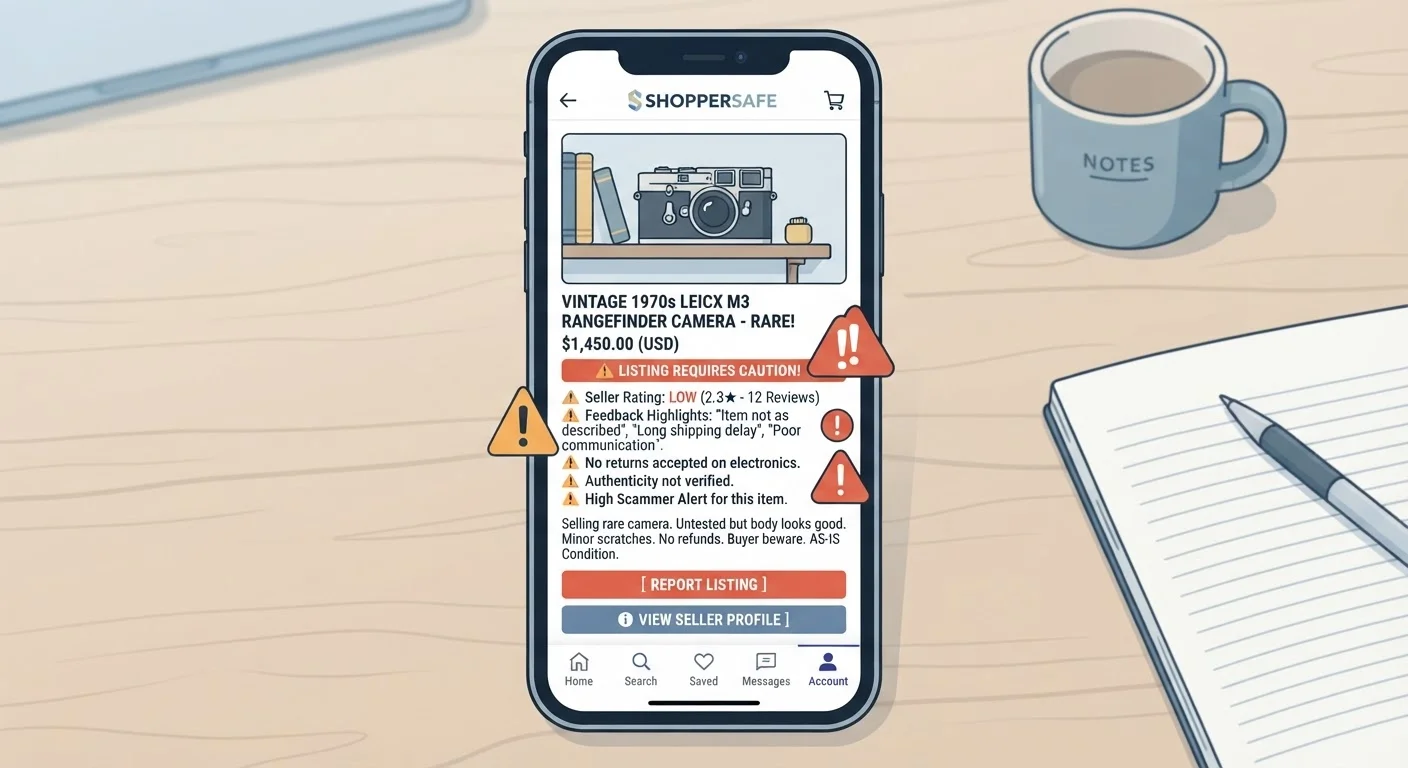
Online marketplaces present a particular challenge. Third-party seller platforms allow almost anyone to list products, and enforcement is reactive rather than preventive. Counterfeits often appear alongside legitimate listings for identical items, sometimes sharing the same product page. Knowing online marketplace red flags is one of the most practical defenses available to shoppers.
Check the Fulfillment Model, Not Just the Listing
On major marketplaces, items labeled 'fulfilled by' the platform are stored and shipped through that platform's own logistics - but the seller still determines what product gets sent. Fulfillment method is not the same as authenticity guarantee. Always cross-check the seller name and their independent rating regardless of how the item ships.
Physical channels also carry risk. Flea markets, pop-up vendors, and informal resellers operate with little accountability and are common outlets for counterfeit goods. The signals that separate reliable retailers from risky ones apply whether you're buying online or in person.
Why Counterfeits Matter Beyond Your Wallet
The financial loss of paying for a fake is frustrating, but the risks extend further. Counterfeit electronics have been linked to fires caused by substandard batteries and charging components. Fake cosmetics have been found to contain mercury, arsenic, and other substances not permitted in legitimate products. Counterfeit medications may lack active ingredients entirely - or contain harmful substitutes.
Safety-Critical Categories Deserve Extra Caution
For products where failure has direct health or safety consequences - phone chargers, power tools, sunscreen, supplements, or any medication - the stakes of buying a counterfeit are higher than a financial loss. If you cannot verify the source with confidence, purchasing from an authorized retailer is the lower-risk path, even if it costs more.
There are broader economic effects too. Counterfeiting undermines legitimate businesses, displaces workers, and in some cases funds organized criminal networks. This is not to moralize - it is simply useful context when evaluating the real cost of a suspiciously cheap deal. The full picture on avoiding bad purchases includes understanding these downstream consequences.
Practical Steps to Shop More Safely
No single step eliminates counterfeit risk entirely, but several habits together reduce exposure significantly:
- Buy from authorized sellers. When possible, purchase directly from a brand's official website or from retailers it officially lists as authorized. This is especially important for electronics, medications, and safety-relevant products.
- Be skeptical of steep discounts. A price dramatically below the standard retail range is the most persistent signal that something is off - even when everything else looks legitimate.
- Check seller credentials. On marketplaces, review seller history, ratings, and return policies. New accounts with limited feedback selling high-demand items warrant extra caution.
- Inspect packaging on arrival. Misspellings, inconsistent fonts, flimsy materials, or missing certifications (such as UL marks on electronics) are practical warning indicators.
- Use brand authentication tools. Many brands offer QR codes, serial-number verification portals, or dedicated authentication apps. Use them.
- Know your recourse. Purchase with a credit card where possible - disputes are easier to resolve. Keep receipts and packaging until you are confident the product is genuine.
For used or refurbished items, buying second-hand safely adds another layer of guidance worth reviewing before you buy.
U.S. Customs and Border Protection - Intellectual Property Rights
CBP's IPR resource center publishes annual seizure statistics and consumer guidance on identifying and reporting counterfeit goods at the border.
National Intellectual Property Rights Coordination Center (IPR Center)
A U.S. government interagency hub where consumers can report suspected counterfeit goods and access educational resources about intellectual property theft.
U.S. Consumer Product Safety Commission (CPSC) - Report a Product
The CPSC allows consumers to report unsafe or counterfeit products. Filing a report helps regulators track patterns and potentially pull dangerous goods from the market.